
Your garage door is the hardest-working opening in your home. It is the largest moving object on the property, and in a typical household it opens and closes three to five times a day, which adds up to well over a thousand cycles a year. In the 7 Rivers region, those cycles happen through some of the sharpest seasonal swings in the Midwest: humid summers along the Mississippi, a fall full of grit and leaves, and winters that alternate between freezing and thawing week after week while road salt sprays off every vehicle that pulls into the driveway.
That combination wears on springs, cables, tracks, rollers, and openers faster than the national averages suggest. The encouraging part is that most garage door failures announce themselves well before the door stops working, and knowing what you are looking at makes it much easier to judge whether a quick repair will do or whether the door has reached the end of its useful life. What follows is a plain-English guide to the most common garage door problems, how to weigh repair against replacement, and the maintenance habits that keep a door running smoothly through a Wisconsin or Minnesota winter.
Why Garage Doors Take a Beating in the 7 Rivers Region
A national number pulled out of context will mislead you. InterNACHI’s widely cited life expectancy chart puts a garage door at 20 to 25 years and a garage door opener at 10 to 15, but those figures assume normal wear and a reasonably stable climate. The Coulee Region does not always cooperate.
- Freeze-thaw cycles. Water works into the seams between panels and along the bottom of the door, then expands when it refreezes overnight. Repeat that a few dozen times each winter and seals crack, hardware loosens, and small gaps turn into leaks.
- Road salt and grit. Salt that clings to hinges, rollers, and tracks quietly corrodes the metal, while sand and gravel from area roads grind against moving parts every time the door cycles.
- Ground movement. Heavy clay soils and frost heave shift slabs and door openings slightly, so a door that closed cleanly in July can drag or bind by February.
- Summer humidity. Wood and composite doors absorb moisture and swell, and steel doors begin to rust wherever paint has chipped.
The practical takeaway is that a garage door here often ages toward the faster end of its expected range, which is why a twice-a-year inspection is worth more in this region than a vague “once in a while” approach.
The Most Common Garage Door Problems
Nearly every service call traces back to a handful of parts. Here is what tends to fail, how to recognize it, and whether it is a homeowner fix or a job for a professional.
Broken or Worn Torsion Springs
Springs are the single most common failure, and they are what makes the door feel light enough to lift by hand. They are rated in cycles rather than years: a standard 10,000-cycle spring lasts roughly 13 to 14 years at two cycles a day, but only five to six years at five cycles a day. A household that uses the garage as its main entrance can burn through a spring in half the time its neighbor does.
Warning signs include a sharp bang from the garage, a door that suddenly feels extremely heavy, or a visible gap in the coil above the door. Because torsion springs store enormous tension, adjusting or replacing them is one of the few repairs homeowners should never attempt.

Frayed or Snapped Cables
Cables work alongside the springs to raise and lower the door. When strands fray, the door starts to hang unevenly, and a cable that snaps can drop one side of the door in an instant. Look for loose or kinked cables along the sides of the door, and stop using the opener if you see or hear one slipping.
Doors That Jump the Track
Rollers occasionally pop out of the track after a bump from a car or a garage packed with stored gear. Once a door is off its track, it can jam, scrape, or fall. Do not force an off-track door closed. Leave it where it is and have it reset.
Worn Rollers, Hinges, and Bearings
A garage door that grinds, squeals, or rumbles is usually telling you about worn rollers and dry metal, not old age. Nylon rollers flatten over time, and hinges and bearings dry out. This is one of the most common “it just sounds bad” complaints, and it is typically the easiest and cheapest to fix.
Opener and Safety Sensor Troubles
The opener takes the blame for many problems that start elsewhere. A door that reverses for no reason, opens on its own, or ignores the remote often has a misaligned or dirty safety sensor, a stuck wall button, or a remote that needs reprogramming. The safety reverse test takes about a minute: close the door on a 2×4 laid flat on the floor and confirm that it reverses. If it does not, that is a safety issue worth addressing right away rather than a nuisance to live with.
Cracked Weather Seals and Bottom Rubber
The rubber seal along the bottom of the door and the weatherstripping around the frame take the brunt of the weather. When the rubber hardens, cracks, or pulls away, you get drafts, water on the garage floor, and easy access for mice. It is inexpensive to replace and one of the highest-value maintenance chores in a cold climate.
Warning Signs You Should Not Ignore
Most of the failure modes above give fair warning before they strand you. Treat any of the following as a prompt to stop and take a closer look:
- A loud bang from the garage, followed by a door that is suddenly heavy
- A gap in the torsion spring, or a cable that looks frayed or slack
- A door that moves unevenly, hesitates, or reverses without being told to
- Grinding, squealing, or scraping that was not there last month
- Visible rust, flaking paint, or cracked panels and seals
- A door that no longer sits flush with the floor
When several of these show up at once, the door is usually telling you it needs professional attention rather than another round of tightening and lubrication. For a closer look at the specific symptoms that call for a service visit, see our guide to the warning signs that your garage door needs immediate repairs.
Repair or Replace? How to Decide
This is the question that divides homeowners, and it rarely has a single right answer. A few simple tests cut through most of the guesswork.
Start with age and cycles. A door under 15 years old with one failed part is almost always a repair candidate. A door past 20 years, especially one that has already had a spring or two replaced, is living on borrowed time.
Then compare the numbers. As a rough rule, if a single repair would cost more than about a third of the price of a new door, and the door is already well into its second decade, the money is usually better spent on a replacement. That math looks even better when you factor in resale. The 2025 Remodeling Cost vs. Value Report found that a garage door replacement returned about 268 percent of its cost at resale, the highest of any project it tracks.
When Repair Makes Sense
Repair is usually the smart call when the door itself is structurally sound, only one component has failed, the door still opens and closes smoothly after the fix, and its appearance and insulation still suit the home. Replacing a spring or a set of rollers on a 10-year-old door is far cheaper than a new door and will buy years of service.
When Replacement Is the Better Call
Replacement starts to win when multiple parts are failing at once, when panels are cracked or rotting, when the door no longer seals against the opening, or when it is simply at the end of its rated life. A new door also resets the clock on springs and hardware and can cut heating losses through an attached garage, which matters when the garage shares a wall with the house.
A Practical Maintenance Routine
You do not need many tools or much time to keep a garage door healthy. A focused hour twice a year covers the essentials.
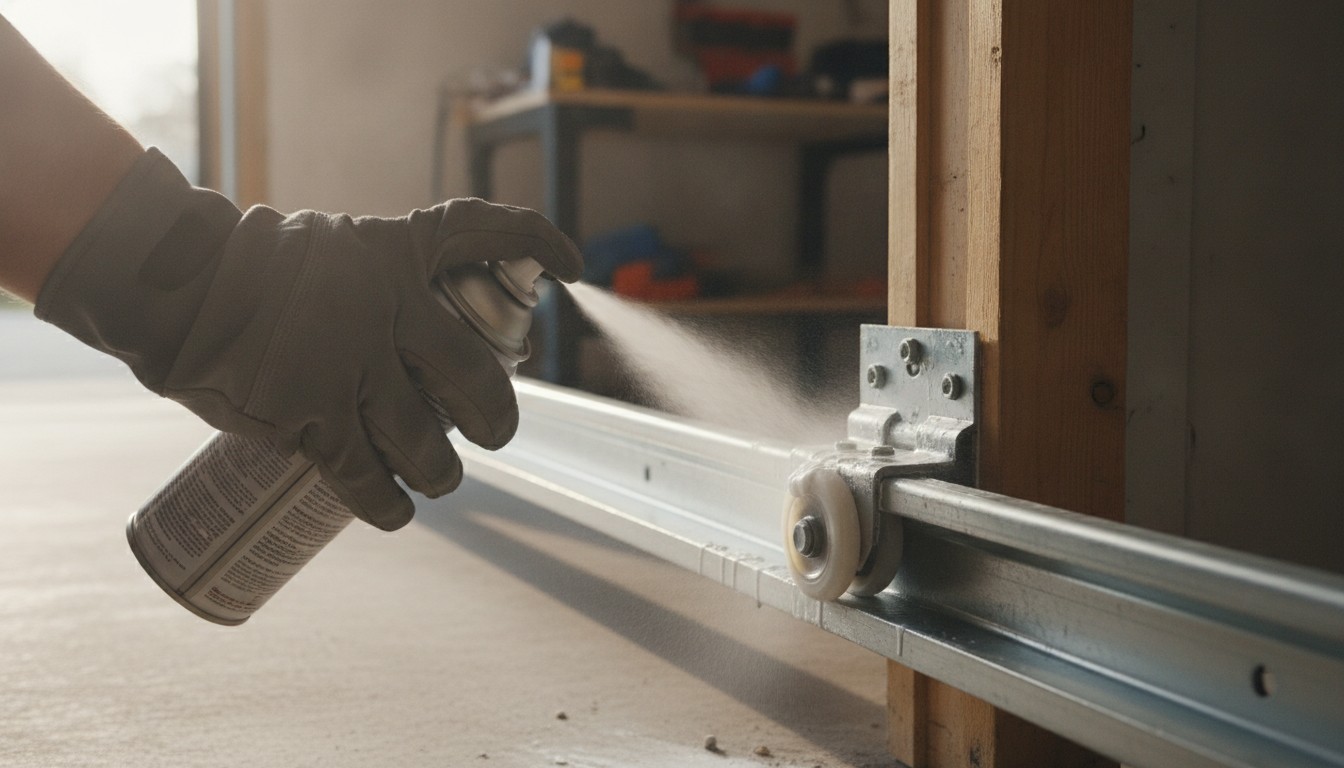
- Lubricate the springs, hinges, rollers, and bearings with a white lithium or silicone garage door lubricant. Every six months is right for a door that is used daily.
- Clean the tracks with a damp cloth or a little brake cleaner and a brush. Do not grease the tracks; they are meant to stay dry so the rollers roll instead of slide.
- Test the balance. Disconnect the opener, lift the door halfway by hand, and release it. It should stay put. If it drifts or falls, the springs need attention.
- Run the safety reverse test with a piece of wood, and check that the sensors are clean and aligned.
- Inspect and replace the bottom seal and perimeter weatherstripping as needed.
- Wash the door, touch up chips and scratches, and rinse away road salt, especially after the last snowfall.
Two of these tasks matter most in this region: a pre-winter lubrication pass, so a stiff door is not fighting cold-dried hardware in January, and a post-winter rinse to wash away the salt that would otherwise corrode hinges and rollers all summer. For a deeper look at the habits that add years to a door, see our article on how to maximize garage door longevity.
When to Call a Professional
A confident do-it-yourselfer can handle lubrication, seals, sensor alignment, remote batteries, and cosmetic touch-ups. Springs, cables, and anything involving stored tension do not belong on that list. Neither does electrical work inside the opener housing, or a door that has come off its track and cannot be safely reset.
If your door needs a repair you would rather not tackle, or you want an honest opinion on repair versus replacement before you spend money, that is the point to bring in a qualified local technician. In the La Crosse and Onalaska area, Overhead Door Company of 7 Rivers handles the spring, cable, and opener jobs that homeowners should not attempt themselves, and can assess whether a door is worth repairing before you commit to a bigger expense.
Frequently Asked Questions
What are the most common garage door repairs?
Broken torsion springs top the list, followed by frayed cables, doors that have come off their tracks, worn rollers and hinges, opener and sensor problems, and worn weather seals. Springs and cables account for a large share of service calls because they carry the load and wear out first.
How long does a garage door last?
Under normal conditions, a garage door lasts roughly 20 to 25 years. In a climate with hard freeze-thaw cycles, road salt, and heavy daily use, expect the faster end of that range. The springs usually fail long before the door itself does.
How much does garage door repair cost?
Costs vary with the part and the door. Common repairs such as spring, cable, or roller replacement typically run a few hundred dollars installed, while a full replacement costs considerably more. A local technician can give you a firm figure once they have looked at the door.
Why does my garage door open by itself?
It is usually a sensor or control issue rather than anything mysterious. Common causes include a stuck wall button, a jammed or worn-out remote, a neighbor’s remote on the same code, or a misaligned safety sensor. Clearing the obstruction, replacing remote batteries, or reprogramming the opener usually resolves it.
Garage doors reward a little attention. Handle the small things, lubricate and rinse on schedule, and watch for the early warning signs, and a door in the 7 Rivers region can stay quiet and dependable for the better part of two decades.


