
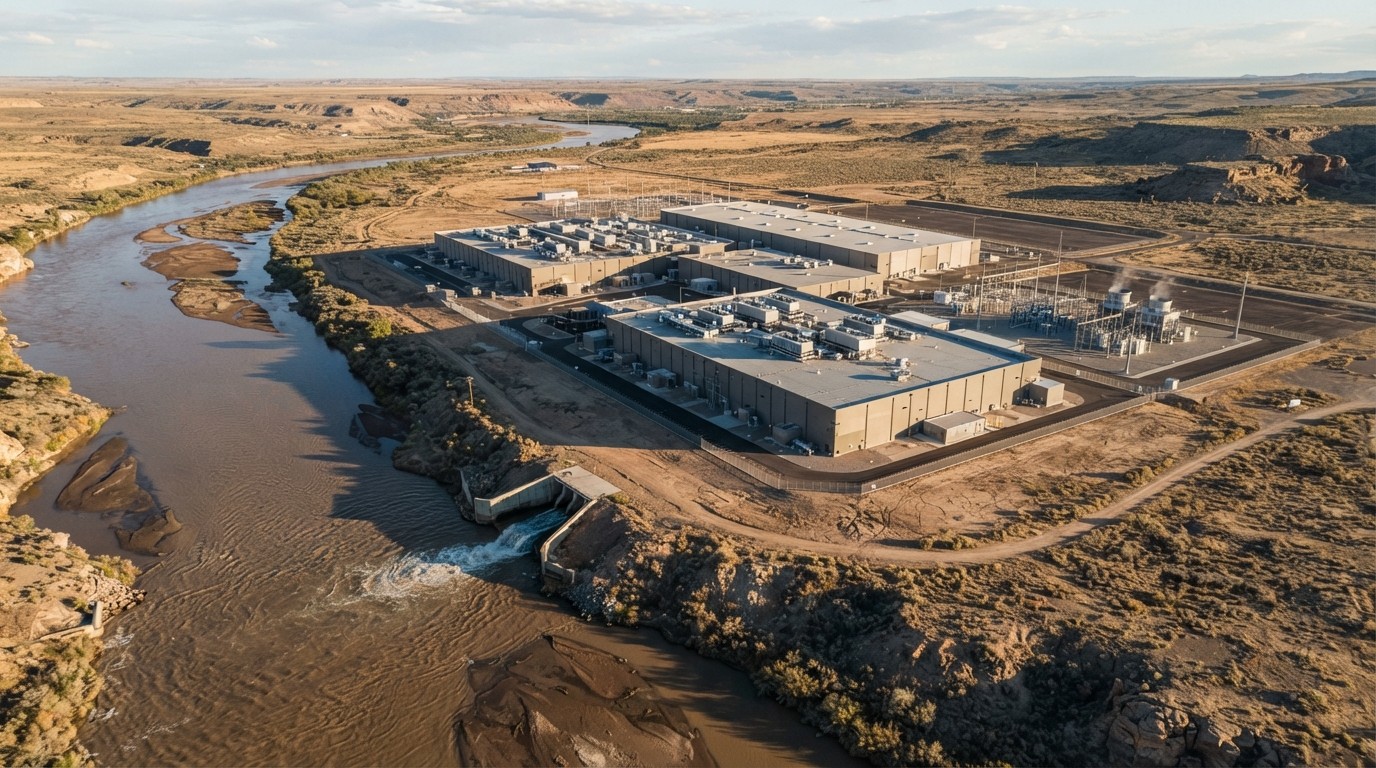
Data centers have a water problem. The cooling systems that keep servers from melting have become the most politically explosive part of the AI infrastructure buildout, and in dry regions the argument is no longer theoretical. In Northern Virginia, the world’s largest data center hub, data centers now account for about 9 percent of total potable water use on an average day, and one Google facility planned for Botetourt County is projected to need 1.2 million gallons a day, with a contract in place for 2 million. As a result, operators are searching for cooling that does not drink the local aquifer.
This is the same pressure driving the shift to subsea, cave, and Arctic facilities that has pushed builds toward natural cold sources, and it explains why immersion and liquid cooling have moved from experimental to commercial almost overnight.
The solution arriving fastest is one with a deeply contested reputation. A Swedish chemicals campaign group, ChemSec, reported in September 2026 that nearly all of the ten largest producers of PFAS, the persistent compounds commonly called forever chemicals, are expanding capacity specifically to serve AI infrastructure. The most eye-catching is two-phase immersion cooling, in which servers are submerged in a fluorinated liquid that boils directly on the chip and carries heat away as vapor. Manufacturers market it as the water-saving, energy-efficient answer to the industry’s cooling crunch.
Put simply, this is the trade-off at the center of the debate over PFAS data center cooling: a real reduction in one environmental pressure, purchased with an increase in another. But the same companies selling it are the ones now being sued and settled with over contamination, and the scientific case against PFAS is not new or contested. The useful question is not whether immersion cooling works. It is what the industry is trading away to get it, and how much of the reassuring story about closed loops and recoverable fluid actually holds up under scrutiny.
What Two-Phase Immersion Cooling Actually Does
Most people picture data center cooling as air moving past hot metal. That still works, but AI accelerators pack far more heat into a much smaller space than a conventional server, and air simply cannot carry it away fast enough. Engineers have responded with liquid, and the two main immersion designs differ in a way that matters chemically.
In single-phase immersion, servers sit in a bath of insulating liquid that never boils. Pumps push the warmed fluid through a heat exchanger and back. In two-phase immersion, the fluid boils on contact with the chip. Boiling absorbs an enormous amount of heat in one step; the vapor rises to a condenser coil at the top of the tank, recondenses into liquid, and falls back, running a passive loop with no pumps in normal operation. Fluids used this way include engineered fluorocarbons, fluorinated refrigerants, and hydrofluoroolefins, all of which sit within the broad PFAS family, which runs to more than 12,000 compounds and is often described as the largest class in organic chemistry.
Most of the technical and regulatory background here is documented by federal and academic sources, including the EPA’s plain-language guide to PFAS and the expansion survey ChemSec published alongside its top-ten producer review.
The engineering case is strong. Liquid conducts heat far better than air, with chip-level heat transfer reported in the thousands of times higher range. Cooling is the second largest energy consumer in any data center after the IT load itself, typically accounting for 30 to 40 percent of total facility energy, and the Congressional Research Service puts it at 38 to 40 percent.
A cooling system is judged by PUE, total facility power divided by IT power, where 1.0 is theoretically perfect. The Uptime Institute’s 2024 global survey recorded an industry average of 1.56, flat for the fifth consecutive year. Best reported immersion numbers cluster around 1.01 to 1.05, so the efficiency gain is real, and it comes with a near elimination of on-site water consumption, which matters enormously in water-stressed regions.
The University of Georgia’s extension service publication on how data centers affect surface and ground waters sets out the discharge chemistry in detail and explicitly notes that some non-water coolants contain PFAS requiring special treatment. The scale of the water question is significant on its own: roughly two-thirds of the data centers built since 2022 have been located in water-stressed regions, according to a Bloomberg News analysis.

Which Companies Are Expanding, and Why
ChemSec’s September 2026 analysis, the most detailed public accounting of producer capacity to date, surveyed ten manufacturers. The pattern is near-universal expansion, and the stated causes are almost explicitly AI.
The following is a snapshot of announced projects rather than a forecast, and individual timelines shift. It is drawn from ChemSec’s published expansion survey and company announcements.
| Company | Announced action | Stated driver |
|---|---|---|
| Daikin (Japan) | More than tripling perfluoroelastomer capacity by 2027; launching a “data centre hub”; new Ibaraki plant from 2027 | Semiconductors and data center immersion cooling, via DAISAVE fluorinated fluids |
| Arkema (France) | $60 million unit opened in Kentucky in 2025 to make hydrofluoroolefins; 20 percent PVDF expansion in China for 2028 | Explicitly “the rapid expansion of data centers’ cooling needs” plus battery binders |
| Chemours (US) | Launching Opteon 2P50 for two-phase immersion; requested authority to raise vinyl ether output by 40 to 100 percent | Advanced data centers and AI hardware |
| Syensqo (Belgium) | Expanding Galden PFAS cooling fluid output in Italy after 3M exited; new Georgia PVDF plant due 2027 | Data center cooling and semiconductors, marketed as “powering the AI revolution” |
| AGC (Japan) | EUR 188 million Chiba expansion of ETFE and PVDF capacity; new fluorinated membrane factory in Kitakyushu | Japanese semiconductor supply chain |
| Solstice (US) | Acquired Element Solutions in July 2026, positioning itself across the AI supply chain; called AI a “generational opportunity” | Advanced chip fabrication and thermal management |
| Dongyue (China) | About EUR 300 million PVDF and PTFE expansion from 2021 to 2025; began making the cooling fluid FC3283 in 2025 | Semiconductor manufacturing, device testing, and data center liquid cooling |
| Orbia (Mexico) | Tripled fluorinated battery electrolyte capacity in Wisconsin in December 2025; UK aerosol propellant plant due late 2026 | Batteries, electric vehicles, and refrigeration |
| Gujarat Fluorochemicals (India) | Expanded R134a capacity coming online by March 2027; fluoropolymer revenue up 15 percent year on year | Named batteries, data centers, semiconductors, and green hydrogen as “sunrise sectors” |
| BASF and Archroma | The only two moving the other way. BASF says it will exit PFAS production by 2028; Archroma markets PFAS-free textiles and stopped selling PFAS food-contact materials in 2021 | Regulatory and market pressure |
Beyond cooling fluid, semiconductors are the second major driver. ChemSec notes that an analyst at Danske Bank described PFAS in chipmaking as integrated into as many as 1,000 distinct nanometer-scale steps, and the same expansion wave includes PVDF binder and coating capacity for lithium-ion batteries in electric vehicles, laptops, and phones. The third leg is that PFAS makes good battery binder because it is chemically inert and will not break down, which is exactly the property that makes it a pollutant.
The consumer side of the same chemistry is already heavily restricted, as our coverage of the EU-wide PFAS restriction and the emergence of PFAS-free synthesis shows. The industrial side is not.
The environmental and health case against these compounds is not a fringe position. ChemSec’s executive director, Anne-Sofie Backar, put it bluntly: “Unless governments and regulators insist on a rapid phaseout, we will face a new tidal wave of forever chemicals.” As a 2026 review of PFAS in soil systems put it, they are persistent contaminants whose effects on soil microbial communities remain poorly understood, with reported impacts varying widely because laboratory designs rarely match real-world chronic, low-level, mixed-contaminant exposure. The same review flags PFAS-driven antimicrobial resistance co-selection as a specific concern, meaning PFAS may help select for microbes that resist antibiotics.
The Claims to Interrogate
This is where most reporting on the story stops and where the interesting work begins. Manufacturers and campaigners are both making claims, and the gap between them is wide enough to be worth mapping.
Claim one: PFAS cooling is a clean, green solution
The industry framing treats liquid cooling as an environmental good, and in narrow terms it is. Less water drawn, less water evaporated, less cooling energy. But the word “eco-friendly,” used in coverage quoting ChemSec’s findings, does an enormous amount of unearned work. A system that consumes less freshwater while making a new, more widely produced chemical that persists for millennia has not solved an environmental problem. It has relocated one and created another.
Claim two: most data centers are not actually doing this
The coverage of the September 2026 ChemSec report widely implies that data centers are switching en masse to PFAS cooling. They largely are not, at least not yet. Most data centers run air cooling, and single-phase liquid cooling without fluorinated fluids is far more common. Two-phase immersion remains niche. That does not make the ChemSec finding wrong, because capacity is being built years ahead of deployment, and building capacity ahead of demand is precisely what you would expect from an industry that expects to be constrained. But a reader who concludes that PFAS is currently pouring into rivers because of AI cooling would be drawing the wrong conclusion from a real report.
Claim three: the fluid is contained in a closed loop
This is the load-bearing environmental claim, and it has never been independently audited at scale. Vendors describe a sealed system in which fluid is recovered and reused, and there are legitimate reasons for confidence. The Environmental and Energy Study Institute concluded that direct PFAS pollution from data centers is difficult to ascertain and likely limited, because cooling systems generally run as closed loops. That is a real finding from a specialist institute, and it carries weight.
Independent experts are more guarded, and their reservations are worth hearing directly. Kyle Doudrick, an environmental engineering professor at the University of Notre Dame, told The Hill that a lot of these cooling systems are indeed closed loop, meaning it is not like you have fluorinated chemicals flowing in and out of the data center. His concern was the qualifier: no closed system is perfect, these chemicals leak out over time, which is probably true, and nothing is 100 percent sealed.
Lenny Siegel, executive director of the Center for Public Environmental Oversight, made a related point in the same report. Even with a closed loop, he would still be concerned because eventually they will make it into the environment, asking what data centers will do when they are done with the fluid. His conclusion was that closed loop is a great concept, but it does not deal with leaks or long-term disposal.
It is also not the same as a demonstration that no release occurs. A closed loop is only as good as its weakest seal over a decade of thermal cycling, servicing and hardware swaps, and environmental groups point to leaks, servicing and disposal as the routes by which persistent compounds escape.
Nobody has produced a rigorous long-term leakage dataset for a fleet of immersion tanks, because the fleets do not yet exist in the numbers needed. What exists is manufacturer reassurance and a plausible mechanism, and readers should understand the difference. One industry response to that gap is worth noting: the fluid’s expected emissions rate has been put at no more than 2 percent per year in a sealed, closed-loop system, with releases expected to be tightly controlled. That is a vendor figure, not a measured one.
Claim four: this is a definitional question
ChemSec classifies Chemours’ Opteon 2P50 as a PFAS. Chemours disagrees, arguing that based on its chemical properties and decomposition behavior, the substance is not part of that class. The company also notes that two-phase immersion, by its nature, runs as a closed system, and the substance should not be released. Both positions are on the record and both should be represented.
Neither side is simply wrong, and that is the point. There is still no unified international definition of PFAS, which is why a class-wide ban remains a legal question rather than a solved one. It is a live example of a chemical that some regulators treat as regulated, some manufacturers treat as unregulated, and which degrades into a persistent acid, trifluoroacetic acid, in the environment regardless of which label it carries.
The Health Case, Which Is Not New
None of this changes the established science, and readers deserve a clear statement of what is known rather than a suggestion that a new cooling method has somehow weakened the evidence. The case against PFAS has been building for decades, and the regulatory response has followed.
These are documented associations, not a claim that any individual’s health problems were caused by a nearby data center. Scientists have argued that PFAS contamination has already crossed a planetary boundary, the threshold beyond which environmental damage becomes effectively irreversible, and ChemSec has noted detection in the blood of more than 99 percent of people worldwide. Research links chronic exposure to a substantial list of health outcomes:
- Cancer, with toxicological programs treating PFAS as carcinogenic on the animal evidence.
- Liver and kidney dysfunction, which are among the most consistently reported target organs.
- Immune suppression, including reduced vaccine response in children.
- Thyroid and hormonal disruption, which affects growth, metabolism and development.
- Reproductive and developmental harms, including low birth weight.
- High cholesterol and broader metabolic disruption.
One measurement is worth noting because it shows how ordinary the exposure has become. The Environmental Protection Agency’s enforceable drinking water limits for PFOA and PFOS are 4.0 parts per trillion, and the agency’s health-based goal for both is zero, on the reasoning that there is no level of exposure without risk of health impacts. Those limits are routinely exceeded. Concentrations in wastewater treatment plant effluent commonly exceed 100 nanograms per liter, roughly 25 times the enforceable limit, and researchers note that even incomplete degradation of PFAS releases fluoride ions that stress microbial and ecological systems. In animals, the evidence is substantial enough that PFAS is treated as immunotoxic and carcinogenic.
The regulatory trajectory is equally clear.

In June 2026, the EPA, the US Department of Justice and the West Virginia Department of Environmental Protection announced the first comprehensive federal settlement with a major PFAS manufacturer, requiring over $450 million in penalties and relief from Chemours for releases into the Cape Fear River, the Delaware River and the Ohio River. That company is now marketing a new PFAS cooling fluid for data centers. The same company has also agreed a separate $455 million settlement with North Carolina, and advocacy groups including the Southern Environmental Law Center have argued publicly that even the federal settlement understates the real liability and gives the company excessive credit for limited ability to pay.
The settlement terms are set out in the EPA’s own summary of the Chemours agreement, and the advocacy critique comes from the Southern Environmental Law Center.
The Ecological Case, Which Almost Nobody Covers
Human health dominates the public conversation about PFAS, and it deserves the attention. But a data center story that stops at human risk is missing the majority of the environmental picture, and the environmental dimension is where a leak would do the most damage.
PFAS do not degrade. They persist in soil and sediment, bind to organic matter and minerals, and move slowly through groundwater rather than disappearing. Long-chain compounds such as PFOS and PFOA are less soluble in water and preferentially partition into sediment and tissue.
That matters because the compartments which matter most for long-term exposure are exactly the ones hardest to remediate. A 2026 review in Environmental Science: Water Research and Technology noted rising burdens particularly in Africa, where monitoring remains sparse even as industrial, agricultural and urban emissions grow.
Aquatic systems are where bioaccumulation is best documented, and the effects extend well beyond the facility boundary. Bottom-dwelling fish show higher accumulation than pelagic species, and contamination has been detected in marine mammals including seals, whales and dolphins, with high concentrations in muscle and liver tissue. The documented consequences include:
- Immune suppression or dysregulation, reducing the animal’s ability to fight infection.
- Kidney and liver dysfunction, indicating significant physiological stress.
- Oxidative stress at the cellular and molecular level, with associated organ damage.
- Impaired reproduction, with zebrafish exposed to PFOA showing reduced fertilization and hatching success.
- Population-level effects, where the losses show up in recruitment rather than in individual animals.
Plants and soil life are affected too, and this is the least discussed part of the picture. Crops can absorb PFAS from soils treated with contaminated biosolids or irrigated with polluted water, so the exposure route can run from a contaminated site into the food supply and then into the people and animals that eat it. In soil, PFAS alter microbial community composition and function, with impacts on nutrient cycling. A 2026 review in Environmental Science: Critical Reviews documents the soil microbial picture, and the wildlife and aquatic accumulation data are collated in a 2026 review published in Environmental Science: Advances.
The same soil review specifically highlights antimicrobial resistance co-selection as a concern: PFAS may select for microbes that are simultaneously resistant to antibiotics. That is a soil-level effect with direct human health consequences, and it operates on a timescale that no facility retrofit addresses. For readers tracking the wider contamination picture, the way PFAS travel through rainwater and drinking water supplies is the reason this class of chemical is treated differently from conventional industrial pollutants.

What Actually Determines the Risk
None of the above means readers should panic, or that building a data center in 2026 is a uniquely terrible idea. It means the risk is structural rather than incidental, and it is worth being precise about the variables that govern it.
Volume matters most, and it is unknown. Neither the Environmental and Energy Study Institute nor ChemSec produced a global emissions inventory for data center PFAS. There is no public number for how much PFAS is currently in data center cooling systems worldwide. A leak from a small installation and a leak from a large one are not the same event, and nobody can currently say which is being discussed.
Fluid chemistry is the second variable, and it is the one most in dispute. Short-chain compounds are more mobile in water and travel further, which sounds safer but means they contaminate more broadly. Long-chain compounds accumulate in tissue and sediment, which concentrates exposure where organisms live. Neither profile is obviously better, and the total inventory is not yet known well enough to compare them for a given site.
Containment and maintenance practice is the third, and this is where regulation would have the most leverage. Closed loops are standard. Seal failure, servicing spills and end-of-life disposal are the realistic routes out, and all three are operational decisions rather than chemical properties.
A facility that documents its fluid inventory, its seal inspection schedule and its end-of-life handling could in principle be auditable. At present, no such standard exists, and a system that cannot be audited cannot be trusted by default.
Regulation is the fourth variable, and it is moving, though unevenly. Europe is furthest ahead, with a bloc-wide restriction process under way and national bans already in place in Denmark and France, with Sweden following in 2028. The EPA has settled with individual producers and set drinking water standards. None of that touches semiconductor manufacturing or data center cooling, both of which have been carved out of or deferred in European evaluations, and both of which are exactly where the AI-driven expansion is happening. The regulation is arriving at the consumer end of the pipeline while the growth is at the industrial end.
There is one further, quieter risk worth naming. Immersion cooling is a step change in rack density, with two-phase systems handling on the order of 100 to 200 kilowatts per tank and single-phase systems pushing 200 kilowatts per rack.
Higher density means more fluid in a smaller space, which means a single failure event involves a larger quantity of persistent chemical. No one has modeled this, and the compounding of a newer, denser technology with a chemical that does not degrade is the part of this story most likely to be underwritten by accident in the next decade.
What Would Make This Better
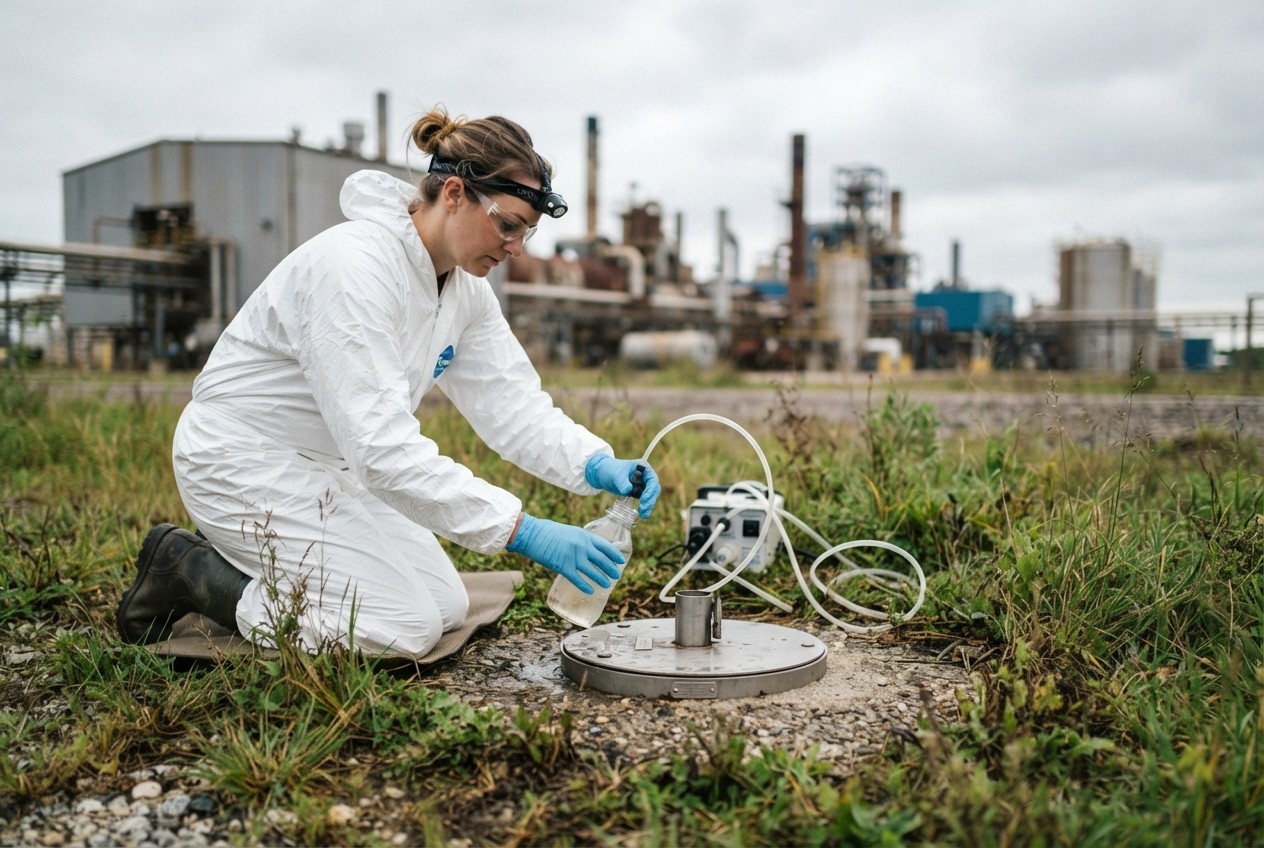
There are concrete things that would change this from a manageable trade-off into a genuine one, and none of them require a breakthrough. They require disclosure and standards that do not currently exist. Five changes would matter most:
- Mandatory fluid inventories, so operators report how much fluorinated fluid sits on each site, converting an unknown into a measurable quantity.
- Independent groundwater monitoring at the site boundary, which would let the closed-loop claim be tested rather than asserted.
- A certified seal integrity and servicing standard, addressing the most likely real failure mode rather than the most discussed one.
- Mandatory end-of-life handling rules, so decommissioning does not become an unmonitored release.
- Extending existing restrictions to cover data center cooling and semiconductor inputs, rather than exempting them, so capacity is not built out in a regulatory gap.
There are also reasons for measured confidence. The same producers that are expanding are the ones with the most to lose from a future liability, which is why analysts at Danske Bank warned that PFAS represent the hidden risk of the AI boom with escalating potential for multibillion-euro remediation and litigation exposure. That cuts both ways, but it does mean the incentive to design toward containment and recovery is real and is likely to grow with the litigation rather than ahead of it.
Frequently Asked Questions
Are data centers poisoning rivers with forever chemicals?
No confirmed case of data center PFAS contamination harming people has been established, and most data centers do not use PFAS cooling. Air cooling and single-phase liquid cooling remain far more common, and the Environmental and Energy Study Institute has concluded that direct PFAS pollution from data centers is hard to measure and likely limited because cooling systems are generally closed loops.
That is a genuine finding, and it should be stated as clearly as the concerns. It is also a conclusion about sealed systems rather than a demonstration that no release occurs over a facility’s life, and long-term leakage data does not yet exist for immersion fleets at any meaningful scale.
Is two-phase immersion cooling better for the environment than air cooling?
It is better on two specific measures: it uses far less water and less energy. It is worse on a third that those two measures do not capture, which is the chemical persistence of the fluid it depends on. Both facts are true simultaneously, and any account that reports only the first is incomplete.
What happens if PFAS cooling fluid leaks?
PFAS do not break down. They persist in soil and sediment, and long-chain compounds preferentially accumulate in living tissue. The most likely routes out of a closed loop are seal failure, spills during servicing, and disposal at end of life. In aquatic settings, bottom-dwelling fish accumulate higher concentrations than pelagic species, and contamination has been detected in seals, whales and dolphins in muscle and liver tissue. The realistic long-term consequence is a persistent, low-level contamination problem rather than an acute poisoning event, which is exactly what makes it hard to detect and easy to underestimate.
Do I need to worry about PFAS near my home?
If you are concerned about PFAS generally, this story is one of many industrial sources, and drinking water remains the dominant route of exposure for most people. Where your local water utility draws from, and whether it has tested, matter far more than whether a data center is nearby, since the closed-loop design means proximity to an installation is a much weaker risk signal than proximity to a contaminated aquifer.
One case shows the distinction clearly. In Morrow County, Oregon, Amazon settled for $20.5 million in March 2026 over claims that its data centers played a role in nitrate pollution. The nitrates came from agricultural fertilizer, animal waste and food-processing wastewater, and had been accumulating in the Lower Umatilla Basin aquifer since the early 1990s, long before any data center arrived. Amazon does not admit wrongdoing and says its facilities draw from the same supply as residents without adding nitrates. What the case illustrates is that a facility can concentrate an existing contamination problem through evaporation and discharge, which is a water-quality story rather than a PFAS one.
Will regulators ban PFAS in data centers?
Probably eventually, and probably later than the deployment curve. Europe’s restrictions focus on consumer products, and data center cooling and semiconductor manufacturing have been among the sectors deferred from or excluded from evaluations, which is precisely where the AI-driven expansion is concentrated. The most likely near-term developments are disclosure and monitoring requirements rather than prohibition, since a ban on a cooling technology with no practical substitute would create a different problem.
Which companies are expanding PFAS production for AI?
ChemSec’s September 2026 survey of the ten largest producers found nearly all expanding, with two exceptions. Daikin is more than tripling perfluoroelastomer capacity by 2027 and has launched a data center hub. Arkema opened a $60 million hydrofluoroolefin unit in Kentucky it tied directly to data center cooling demand. Chemours is launching Opteon 2P50 for two-phase immersion. Syensqo expanded its Galden cooling fluid output in Italy after 3M’s exit. AGC, Solstice, Dongyue, Orbia and Gujarat Fluorochemicals are all expanding into the same market. The only companies moving the other way are BASF, exiting PFAS by 2028, and Archroma, which markets PFAS-free alternatives.
The Honest Accounting
Data centers face a real and worsening thermal problem, and the engineering response has been fast and largely effective. Two-phase immersion genuinely reduces water consumption and energy use, and in a dry region those are wins worth having.
But the fluid that makes it work belongs to a chemical class that does not degrade, is already detected in the blood of nearly everyone alive, has crossed what scientists consider a planetary boundary, and is now being produced in greater quantities specifically to serve this application. The water savings are real. So is the persistence. An industry that has spent decades restricting PFAS from cookware and clothing is now expanding it into critical digital infrastructure, in regulatory gaps, with no fluid inventory, no leakage standard and no independent auditing.
That does not make the cooling technology wrong. It makes the trade-off explicit, and until the disclosure and monitoring standards that everyone sensible agrees are necessary actually exist, the burden of proof still sits with the people producing the chemical rather than the people living downstream of it.


