
Every tap, click, and AI-generated prompt funnels through a sprawling network of sustainable data centers—vast facilities filled with servers that form the silent backbone of modern life. Yet as global computing demand explodes, so does the heat these machines produce.
Data centers consumed roughly 415 terawatt-hours of electricity in 2024, according to recent global energy and AI performance benchmarks, accounting for about 1.5% of global demand, and that number could double by 2030. The energy required for data center cooling is reaching unsustainable levels, prompting a new question: what if the planet itself could serve as the air conditioner?
Around the world, engineers are reimagining how to manage the heat of the digital age at extreme data center locations. From underwater facilities off China’s coast to servers sealed in mountain caves in Norway, builders are letting nature handle the cooling. These bold designs are transforming how we think about the physical footprint of the internet and how it can align with sustainable goals, echoing the latest priorities for future-proofed digital architecture that treats energy, cooling, and siting as first-class design problems.
Engineers are increasingly abandoning the idea of fighting local climates and are instead choosing to integrate digital infrastructure directly into the Earth’s coldest or most thermally stable regions. Submerged server pods, mountain-vaulted facilities, and Arctic air-cooled campuses represent the new frontier of sustainable IT. These sites demonstrate that the physical location of a data center is no longer just a real estate decision; it is a critical cooling technology in its own right.
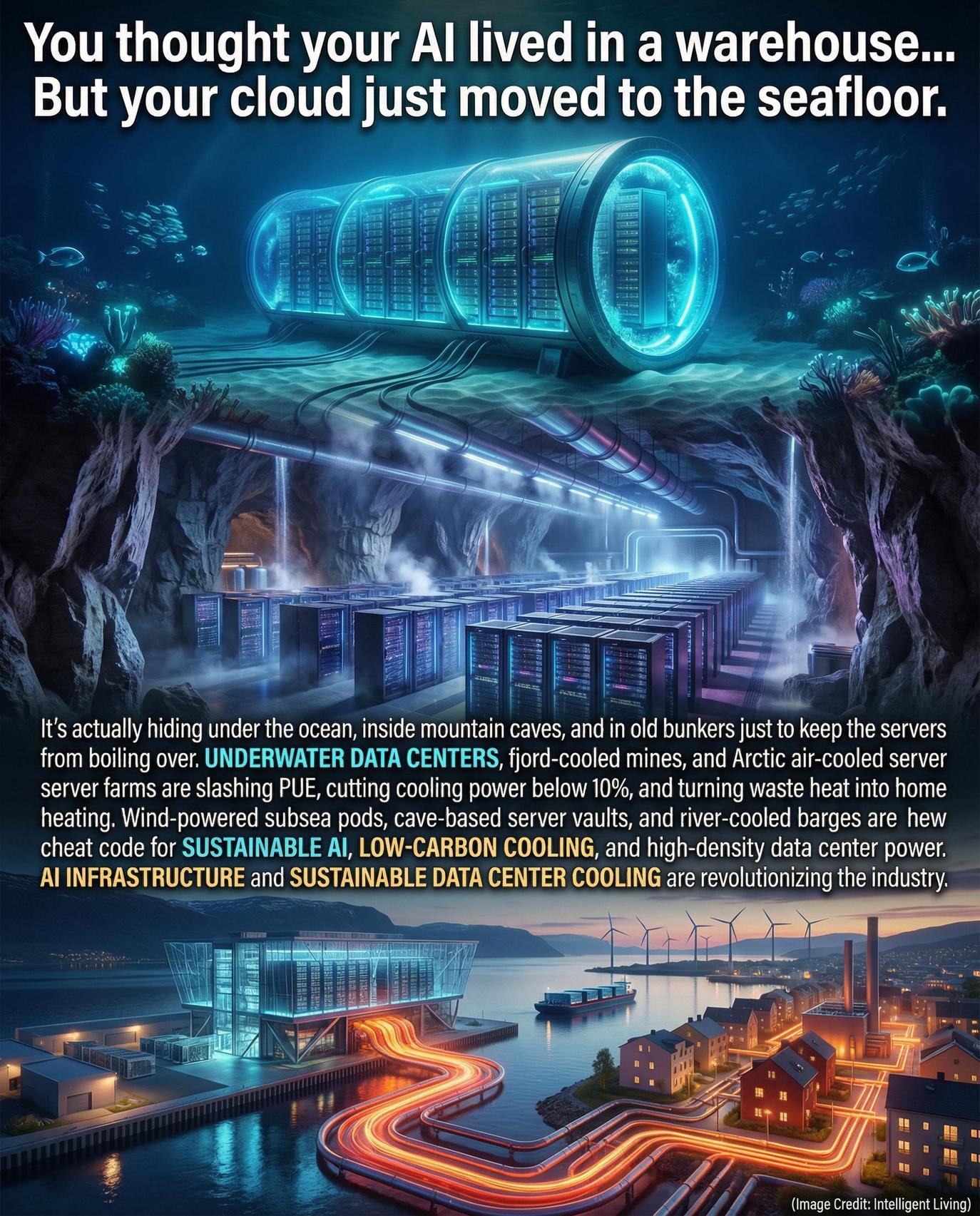
The New Geography of the Cloud: Cooling by Nature
- Resting nearly 35 meters below the surface, the Shanghai Lin-gang underwater data center harnesses turbulent offshore wind and cold seawater to sustain optimal operating environments.
- The Tencent Gui’an Qixing data center in Guizhou province takes advantage of natural cave structures and underground temperatures to minimize cooling energy.
- In Norway, the Lefdal Mine Datacenter and Green Mountain facilities use deep fjord water at 8°C to achieve remarkable energy efficiency.
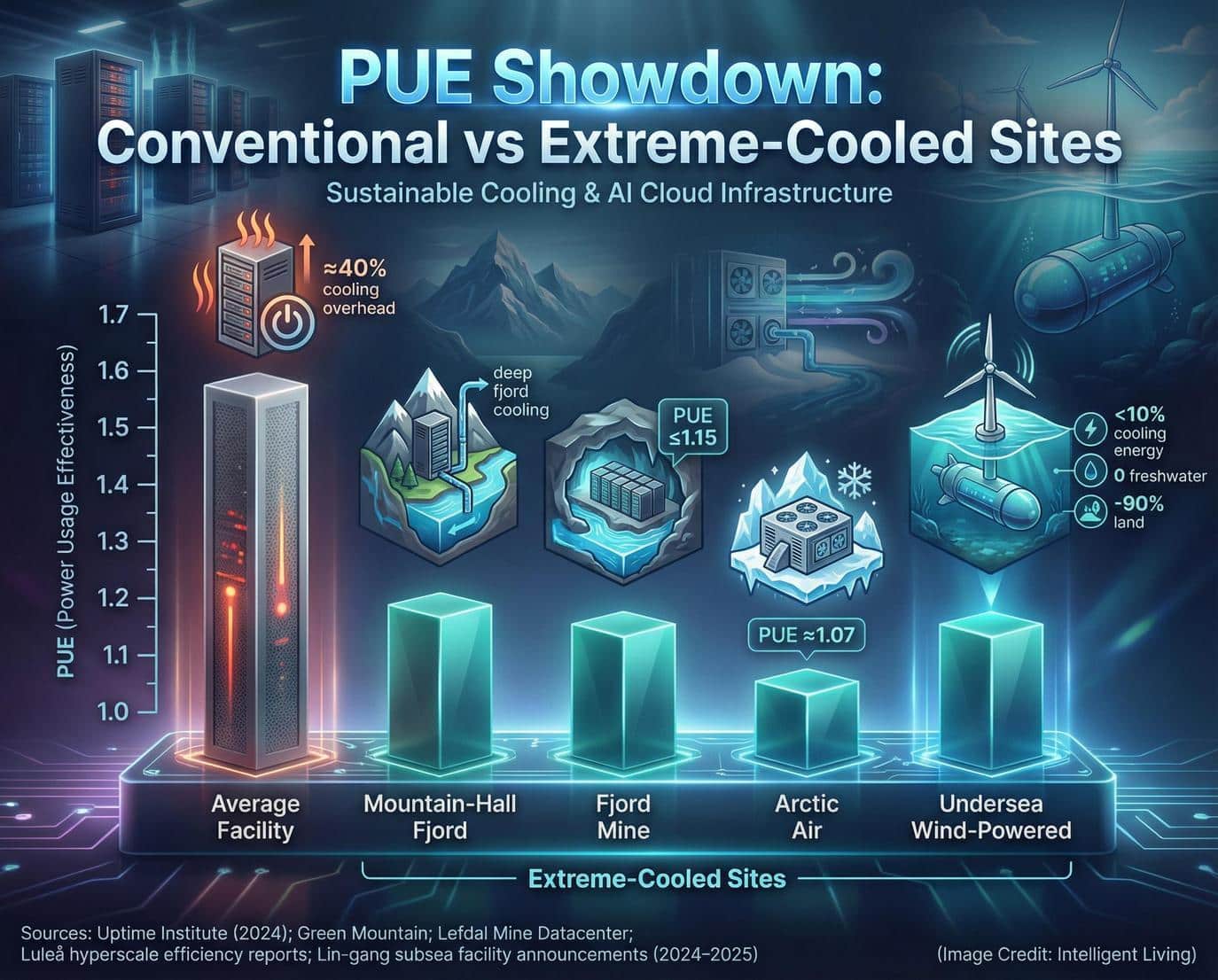
- Meta’s Luleå campus in Sweden relies on Arctic air as a free cooling source, boasting an average PUE (Power Usage Effectiveness) near 1.07.
- Finland’s Google Hamina site and California’s Nautilus floating platform each use seawater and river-loop cooling systems to eliminate conventional chillers.
- In Stockholm, data centers now plug into the city’s district cooling network, returning their excess heat to nearby homes.
Real-world installations now demonstrate that physical location serves as the most effective cooling asset in an engineer’s toolkit, even as physical limitations in high-performance chip production keep pushing datacenter power and cooling demand higher.

The Cheat Code: Move Compute to the Cold
Strategically placing server clusters in high-efficiency ambient environments provides a direct path toward maximizing Power Usage Effectiveness (PUE). By positioning servers where ambient air or water temperatures are naturally low, operators can drastically reduce their dependence on energy-hungry chillers, especially when combined with smarter server backup strategies for sustainable IT that avoid doubling cooling overhead for redundant infrastructure.
Deep-Sea Computing and Wind-Powered Stability
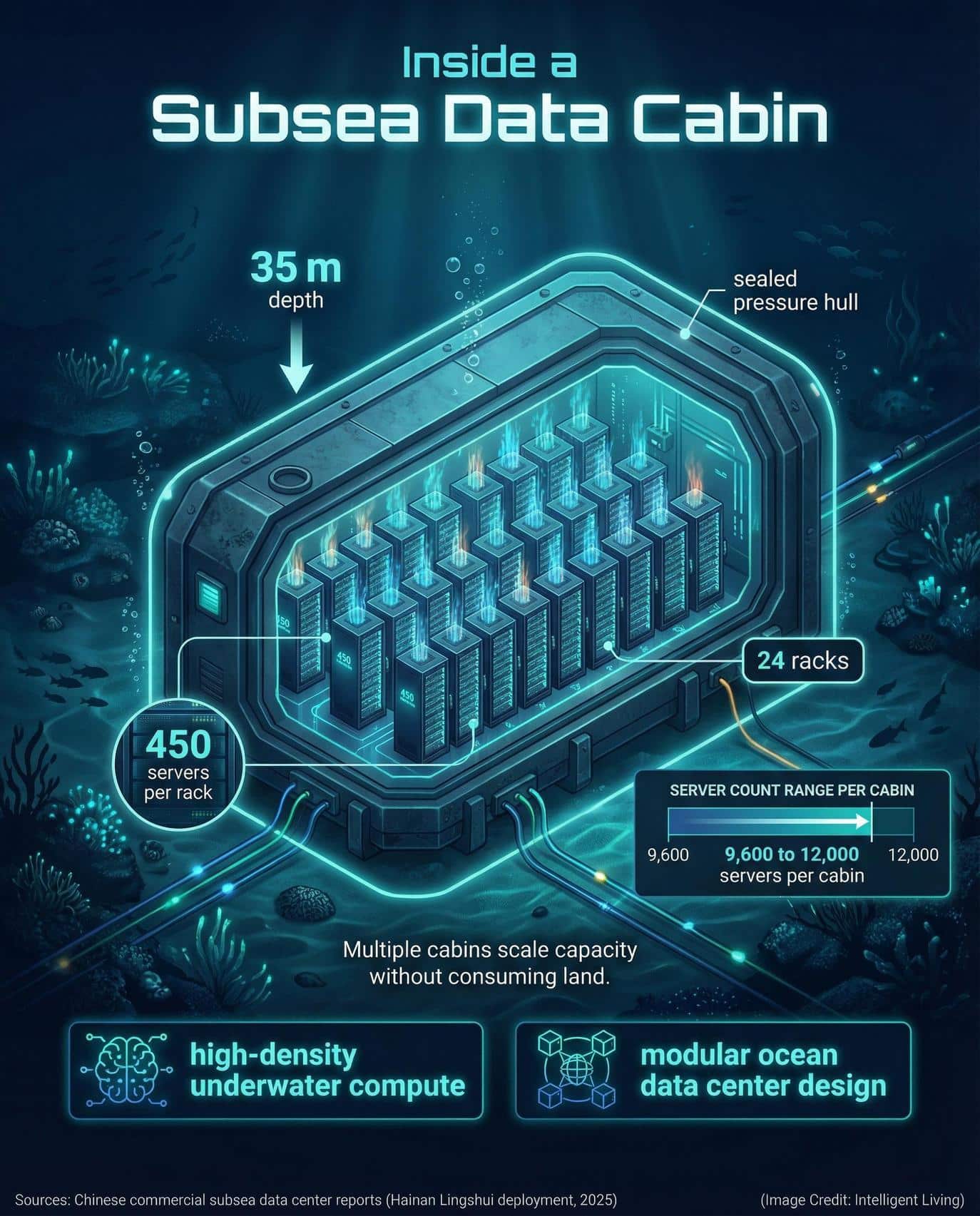
In Shanghai’s Lin-gang district, engineers built a 24-megawatt underwater facility that draws on offshore wind for power and cold seawater for cooling. Designers claim the system cuts cooling energy to below 10% of total consumption while targeting a PUE of 1.15, which sits significantly lower than the global average of 1.5. Meanwhile, on Hainan Island, smaller underwater cabins, each containing about 24 server racks, demonstrate how modular ocean computing could scale up without taking valuable land space.
Subterranean Vaults and Natural Data Center Temperature Control
A thousand kilometers inland, Tencent’s Gui’an Qixing facility uses five interconnected caves to stabilize temperature and humidity naturally. This subterranean approach allows the center to run hundreds of thousands of servers while achieving an impressive PUE near 1.1. The design also offers a physical resilience advantage by protecting critical hardware from environmental volatility.
The cave environment provides several key advantages for high-density computing:
- Thermal Stability: Natural rock formations moderate humidity and temperature without active mechanical intervention.
- Physical Resilience: The underground layout protects critical infrastructure from weather extremes and surface-level disasters.
- Environmental Harmony: Subterranean builds reduce visual impact and noise pollution for surrounding communities.
These deep-rock builds mirror China’s push toward scaling massive clusters of high-density accelerators assembled from dense chip pods that demand aggressive rack-level cooling. Maintaining such high power density requires the consistent ambient environment provided by the limestone geology.
Fjord Seawater Loops and Arctic Airflow
Across the Nordic region, the strategy goes even further. Green Mountain in Norway transformed a former NATO ammunition depot into a secure server haven cooled by fjord water to ensure year-round efficiency.
A nearby site, the Lefdal Mine Datacenter, pumps 8°C water from deep beneath a fjord through heat exchangers to cool racks with minimal energy use. Similarly, Meta’s Luleå facility on the edge of the Arctic Circle takes advantage of sub-zero winter air, channeling it through efficient ventilation systems that eliminate the need for mechanical chillers for much of the year.
Repurposing Industrial Infrastructure for Urban Heat Recovery
Repurposing deep geological assets, this facility utilizes continuous subsurface water loops to provide consistent, energy-free thermal management. Similarly, Meta’s Luleå facility on the edge of the Arctic Circle takes advantage of sub-zero winter air, channeling it through the Arctic-based campus in Northern Sweden, which eliminates the need for mechanical chillers for much of the year.
Further south, Google’s transformation of a Finnish paper mill into a sustainable data center uses seawater from the Bay of Finland for cooling, demonstrating how industrial repurposing anchors a modern circular economy. The Nautilus data barge in California takes the same principle to a new extreme—a floating facility cooled by a closed-loop river water system that never lets external water touch the servers. In Stockholm, the city itself has become part of the cooling system: a district cooling network circulates cold seawater through data centers, which then return warm water to heat local buildings. It’s a closed loop where waste heat becomes a resource. Cities are running the same logic on other buried infrastructure, since sewage heat recovery treats the sewer under a street as a year-round, free heat source that is already installed.
Each of these examples shares a common philosophy: use local climate and geography to cut emissions, water use, and operational costs while extending the lifespan of critical hardware. A different route to the same goal makes the water on site: atmospheric water harvesting can now run on a facility’s own low-grade waste heat.

9 Extreme Cooling Locations—And What Each One Buys You
Around the globe, data center designers are redefining what it means to build for efficiency. These nine locations represent more than geographic quirks—they are testbeds for how local climates and natural resources can lower power consumption while improving sustainability. Each site demonstrates a unique cooling method tied to its landscape, energy source, or environmental strategy.
1. Under the Ocean, Powered by Wind (Shanghai Lin-gang, China)
Thirty-five meters beneath the surface near Shanghai, this wind-powered underwater data center is powered almost entirely by offshore wind energy. Its seawater-based cooling system eliminates the need for traditional chillers, cutting overall cooling power to below ten percent of total usage.
Engineers estimate a PUE of just 1.15, showcasing a benchmark in efficiency. The project combines renewable energy generation and innovative cooling, illustrating how coastal megacities can host carbon-conscious digital infrastructure. It also highlights China’s ambition to integrate green technology into its rapidly growing data economy.
2. Subsea Server Cabins (Lingshui, Hainan, China)
Positioned at a depth of roughly 115 feet off the Hainan coast, small modular undersea data cabins operate in the ocean’s thermal stability.
Each module can be retrieved or redeployed, allowing for flexible scaling based on regional demand. Together, these cabins demonstrate how modular engineering could reshape coastal data storage without overloading terrestrial grids.
3. Cave-Integrated Servers (Tencent Gui’an Qixing, Guizhou, China)
Built within limestone caves in Guizhou province, Tencent’s Gui’an Qixing facility represents a monumental fusion of geology and technology. The cave environment naturally moderates temperature and humidity, reducing reliance on active cooling systems. Housing hundreds of thousands of servers, it achieves a reported PUE near 1.1.
The structure’s underground layout offers resilience against external temperature fluctuations and natural disasters. By using existing rock formations, it minimizes visual impact and land disturbance while delivering world-class performance.
4. The Mountain Bunker (Green Mountain, Norway)
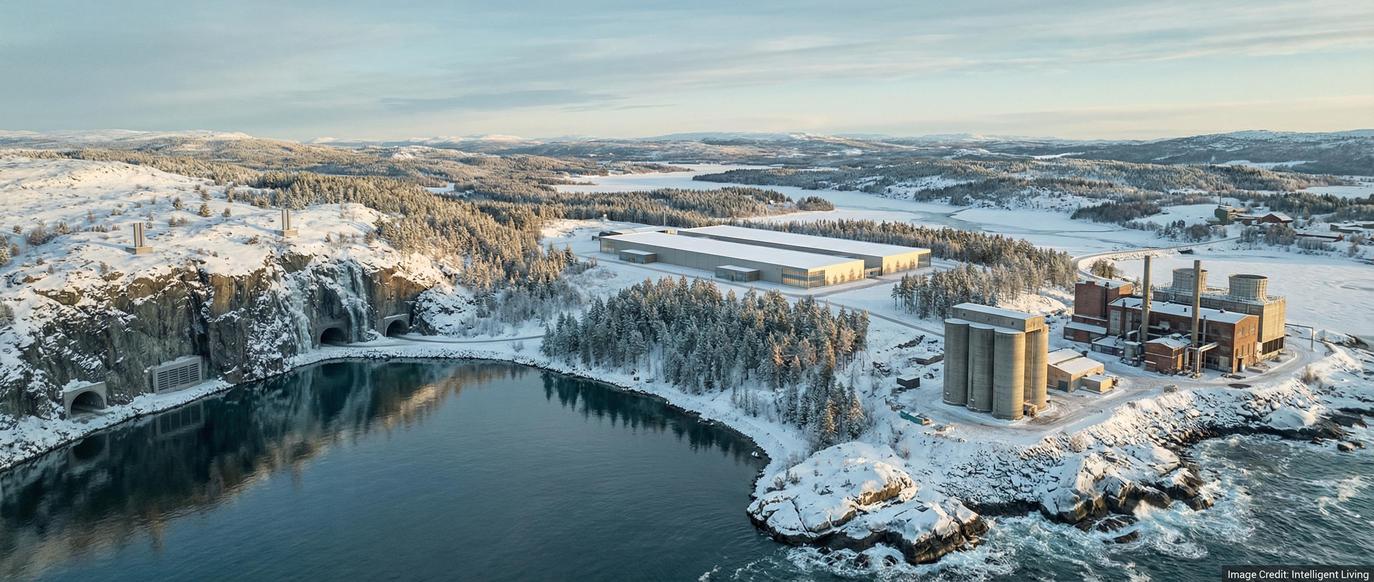
Green Mountain operates in a repurposed NATO ammunition facility along Norway’s coast, running a former military bunker converted into a fjord-cooled haven. This subterranean data center leverages the region’s cold climate for year-round efficiency and consistently reports a PUE of around 1.18, combining security with environmental responsibility. Its underground halls ensure steady conditions for hardware longevity.
The fjord-cooled design also keeps water consumption extremely low compared with traditional cooling towers. The project underscores Norway’s success in balancing renewable power, privacy, and sustainability within industrial design.
5. The Fjord Mine (Lefdal Mine Datacenter, Norway)
Inside a former graphite mine, Lefdal Mine Datacenter harnesses 8°C seawater pumped from an adjacent fjord to regulate temperatures. The cold water passes through heat exchangers that cool servers efficiently without mechanical chillers. Its infrastructure supports high-performance computing and energy reuse strategies, including plans for waste heat recovery.
The site demonstrates how deep geological formations can become digital assets. The fjord mine represents an evolution from extractive to regenerative use of Earth’s resources.
6. Arctic Air Cooling (Meta, Luleå, Sweden)
Meta’s Luleå data center near the Arctic Circle uses outside air that often remains below freezing, providing natural “free cooling” for most of the year. Advanced airflow design allows it to maintain a PUE as low as 1.07.
The center illustrates how climate-aware architecture can turn extreme environments into assets. Its reliance on renewable hydropower and chilled air makes it one of the cleanest hyperscale sites worldwide. The project sets a standard for integrating green energy into cloud infrastructure in cold climates.
7. Seawater Repurposed Industry (Google, Hamina, Finland)
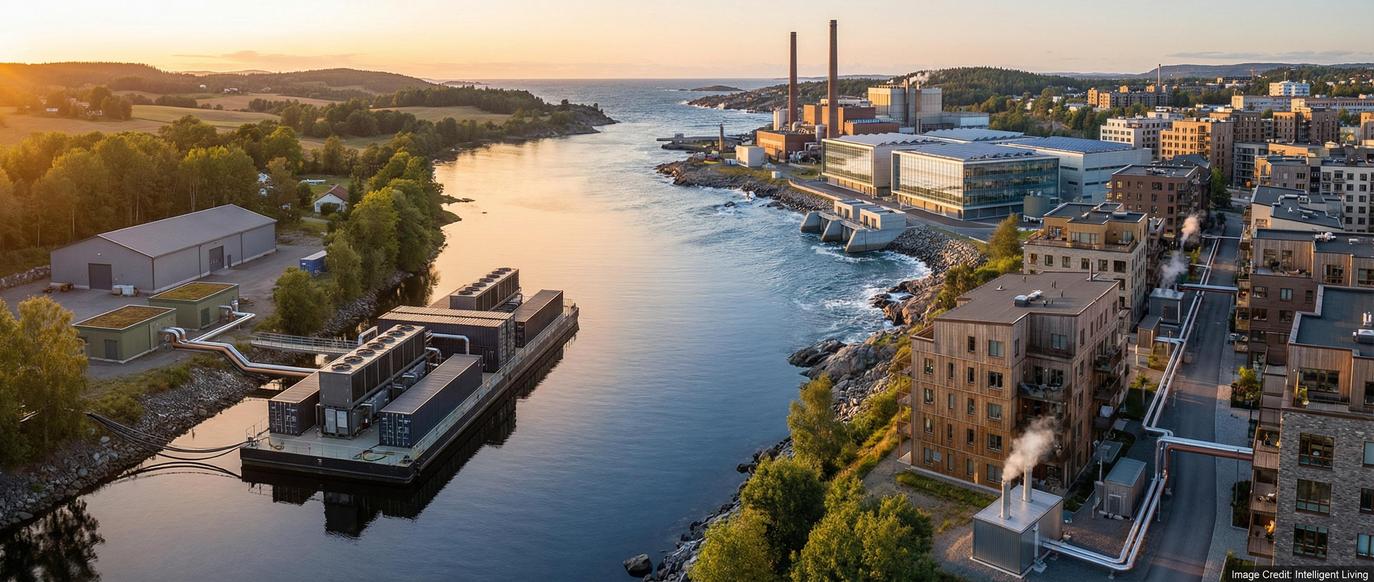
In Finland, Google transformed a disused paper mill into a next-generation data center that uses seawater from the Bay of Finland for cooling, reducing freshwater use and energy costs. This reuse of industrial infrastructure conserves materials and reduces construction waste.
The system recycles cooling water through a closed loop, maintaining strict environmental compliance. It is a blueprint for converting old industrial zones into sustainable digital campuses. The site also anchors a growing regional ecosystem of cloud and connectivity infrastructure.
8. Floating Cloud Infrastructure (Nautilus, Stockton, USA)
The Nautilus floating data center anchors on a river in California and relies on a closed-loop water-cooled barge design that never mixes external water with its internal flow. Its design removes the need for cooling towers, cutting noise and water evaporation.
With a PUE near 1.15, the platform delivers strong energy efficiency while remaining mobile. Its barge-based structure allows deployment near demand centers without major construction. Nautilus proves that mobility and sustainability can coexist in cloud operations.
9. Urban Heat Recycling (Stockholm, Sweden)
Through Stockholm’s community-driven heat recovery initiatives, data center thermal byproducts are reclaimed as an urban resource for residential heating. Cold seawater first cools the servers, and the warmed water is redirected into the city’s heating grid.
This circular model provides up to ten percent of Stockholm’s residential heating during winter months. It demonstrates how digital infrastructure can serve community sustainability goals. The approach also helps data centers achieve near-zero thermal waste while reducing overall city emissions.
Data Center Pattern Emerging: Efficiency, Water, and Geography
When you line up these projects side by side, a clear trend appears. Energy efficiency is now inseparable from location intelligence. Builders are no longer asking how to make air conditioners more powerful but where the environment itself can take over part of the job.
The rise of AI computing has radically changed the economic math of infrastructure. As processors draw more power and release more heat, the cost of every kilowatt-hour grows, making naturally cold regions, underground sites, and water-based designs far more attractive. It has also created a second pressure point, since the most water-efficient high-density designs rely on fluorinated coolants. Our coverage of PFAS data center cooling and its environmental risk examines that trade-off.
Analyses of systems exceeding current power grid boundaries show how multi-megawatt AI systems are already testing grid capacity and cooling infrastructure. This shift reflects a larger sustainability mindset, where carbon-aware computing and GreenOps practices treat compute as a steerable, low-carbon workload rather than a fixed energy drain.
Circular Energy Networks and Integrated Urban Infrastructure
Cities with district cooling networks, like Stockholm, are leading a new wave of integrated infrastructure. Routing heat from data centers into urban heating systems reduces waste and improves residential resilience during colder months. The same district networks can be fed from below ground, as sewage heat recovery shows in Toronto, Denver and Warsaw, where a municipal sewer becomes a free year-round heat source. These urban projects echo broader frameworks for decarbonizing urban infrastructure that use waste heat and renewable-powered thermal networks to shrink emissions across entire districts, a shift increasingly tracked by automated systems for monitoring climate performance that measure the climate impact of digital infrastructure.
What Could Backfire: The Hidden Costs of Extreme Cooling
Technical and Ecological Trade-offs of Submerged Servers
Specialized materials and pressure-resistant housings inevitably escalate construction and long-term maintenance overhead. Underwater servers are costly to maintain and nearly impossible to repair quickly. Seawater, although an effective heat sink, is highly corrosive. Specialized materials and pressure-resistant housings drive up both construction and maintenance costs. There are also unanswered questions about marine ecology, such as temperature discharge impacts and long-term seabed disturbance.
Maintenance Hurdles and Thermal Density in Subterranean Halls
Cave-based and underground centers face their own challenges. Digging into mountains or reusing mines requires extensive geological surveys and can make expansion expensive.
Once built, access for upgrades or emergency repairs is more complex than in surface-level facilities. As operators pack in accelerators and architectures dependent on high-bandwidth memory throughput to support AI workloads, the thermal load inside these confined spaces increases, demanding even more sophisticated cooling and monitoring systems.
Regulatory Compliance and Environmental Resilience Challenges
Even water-loop systems that rely on rivers or fjords must comply with strict environmental regulations to prevent thermal pollution. Operators in temperate zones may also face warming water temperatures as climate change intensifies, reducing the cooling advantage.
Ultimately, these are early steps in a long experiment. The global drive for digital efficiency must always weigh sustainability benefits against engineering feasibility and ecological responsibility, a tension also visible in fusion-powered energy concepts for AI infrastructure that aim to rewrite the balance between compute demand and power supply.
Harnessing Earth’s Natural Systems for Scalable Digital Growth
Aligning massive technological scale with responsible environmental stewardship ensures that digital growth remains compatible with regional grid capacities, protecting the underlying fiscal value of climate-resilient server facilities.
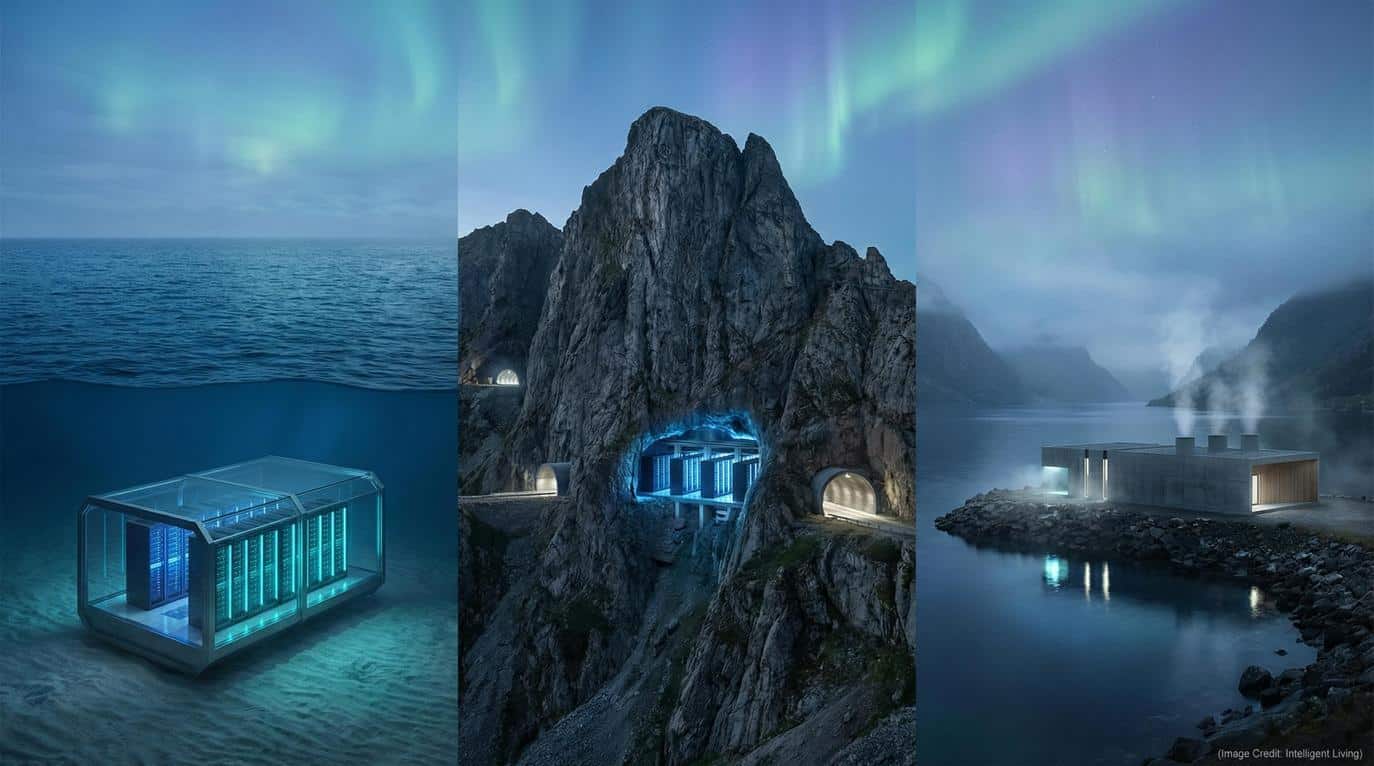
Merging technological ambition with environmental stewardship allows digital growth to continue without overwhelming regional energy grids. Future facilities will likely utilize even more sophisticated hybrid models, combining subsea placement with advanced data center cooling innovations such as immersion tanks and water-saving designs to eliminate waste entirely. In this new era, the most valuable digital assets will be those that exist in perfect harmony with the coldest, most resilient landscapes on the planet.
Essential Intelligence on Global Data Center Siting
How Does PUE Measure Cooling Efficiency?
Power Usage Effectiveness (PUE) tracks the ratio of total facility power to actual compute energy, mirroring the thermal constraints found in monolithic 3D AI chips and datacenter efficiency, where hardware and cooling are tightly linked.
Why Are Underwater Data Centers Gaining Popularity?
Submerged facilities leverage stable seawater temperatures for constant cooling and often sit near coastal wind farms, though AI datacenter bottlenecks in GPU energy efficiency mean location is only one part of the sustainability puzzle.
Can Extreme Cooling Sites Support High-Density AI?
Arctic and deep-rock sites provide the massive thermal headroom required to cool modern AI supernodes and liquid-cooled chip clusters effectively without consuming massive amounts of grid power.
Is Waste Heat Recovery Viable in Urban Centers?
Urban data centers can route server exhaust into district heating networks, much like carbon-smart cities using AI and IoT timing to cut emissions treat infrastructure and building loads as one coordinated system.
What Risks Accompany Mountain and Mine Data Centers?
Geological facilities offer security and natural insulation but require specialized infrastructure and complex logistics for hardware maintenance or emergency repairs within confined spaces.


