
Weekly care keeps pool water clear, sanitary, and safe to swim. Yet small lapses can snowball quickly, especially in warm weather or after heavy use. Recognizing early cues and knowing what they mean helps you correct problems before water turns cloudy or green. This article walks through telltale signs, the chemistry and circulation issues behind them, and a practical same-day response you can use right away. You will also learn how to set a weekly rhythm that fits your pool’s sun exposure, bather load, and equipment so routine tasks prevent repeat flare-ups.
Early Warning Signs Weekly Care Should Catch
Cloudiness after sun or a weekend crowd, a slippery film on steps, or a strong “chlorine” odor are early cues your routine missed something. True chlorine has little smell; that odor usually comes from chloramines, which form when free chlorine is too low to oxidize bather waste. Green dust along grout lines or under ladders points to algae taking hold in low-flow zones. A stuck skimmer weir or a pump strainer basket full of leaves cuts circulation, letting debris settle and consume sanitizer. Some owners handle these checks themselves; others rely on a weekly pool maintenance service to keep these details from slipping through the cracks during busy weeks.
What Those Symptoms Usually Mean: Chemistry and Circulation
Cloudy water often signals low free chlorine (FC) or high combined chlorine (CC), commonly after a party where sunscreen, sweat, and organic load consumed sanitizer. High pH weakens chlorine’s killing power; as the Centers for Disease Control and Prevention notes, chlorine’s ability to kill germs drops as pH rises above about 7.8, letting algae take advantage of warm water and sunlight. Low total alkalinity (TA) can let pH drift, while very high TA can trap pH high. Cyanuric acid (CYA) protects chlorine from the sun, but too much CYA binds too much of it, reducing its effectiveness. A dirty cartridge, clogged DE grids, or a sand filter overdue for backwashing reduce flow, creating dead spots where biofilm forms. After heavy rain, dilution can drop FC and TA while washing in phosphates and debris that feed algae.
A Same-Day Diagnostic Checklist
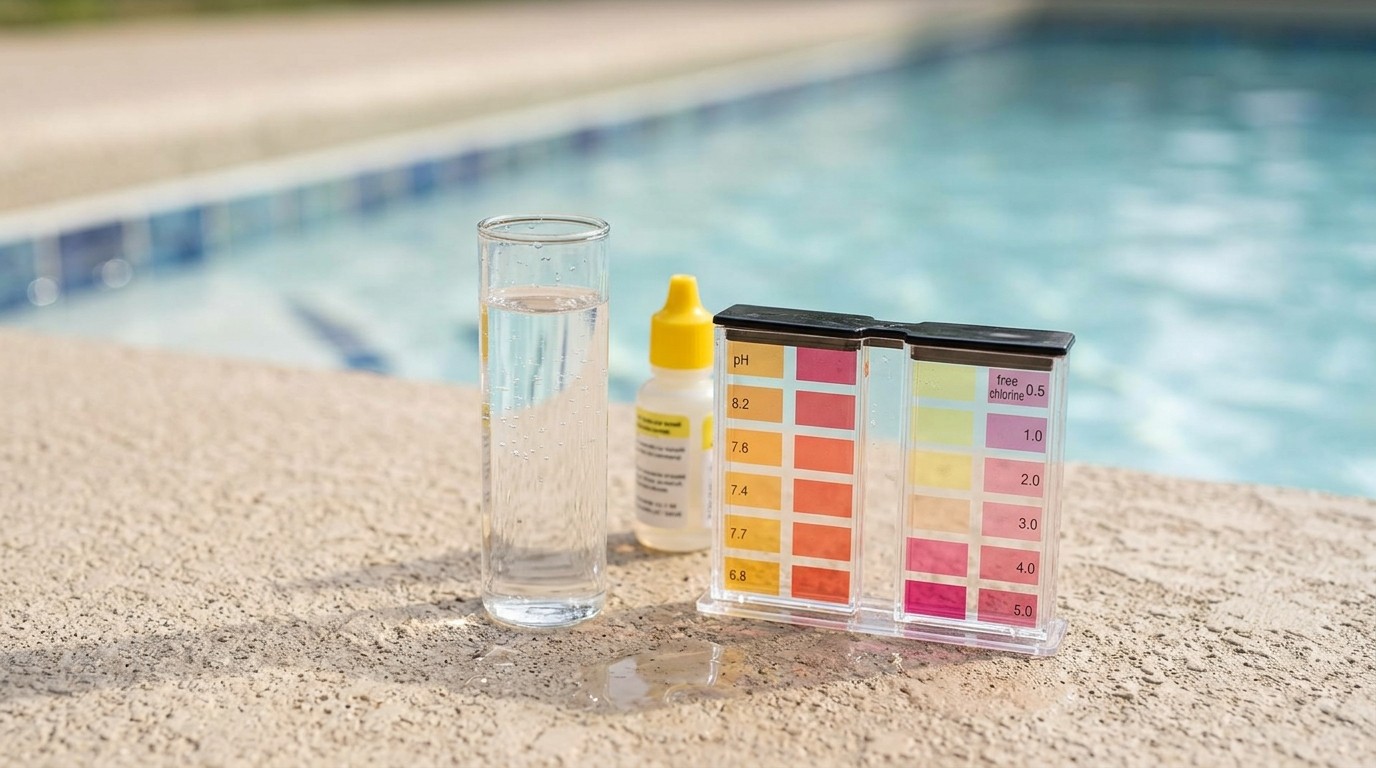
Test first, treat second. Use a reliable drop test (FAS DPD if available) for FC and CC, then measure pH, TA, and CYA. Write each reading down. Next, note filter pressure. Compare the gauge to your clean baseline; a big rise suggests a clogged filter, while a big drop may mean a flow restriction or air leak. Look for weak return jets, air bubbles under the pump lid, and a weir stuck open or closed. Empty the pump basket and skimmer baskets.
Brush walls, steps, tile, and behind ladders to break up biofilm that shields microbes from sanitizer; vacuum visible debris. If the pool is dusty with fine particles, consider vacuuming the waste briefly to avoid pushing it through a tired filter. With salt systems, inspect the cell for scale; a chalky film reduces chlorine production. Finally, confirm run time. Warm water above typical midsummer levels and a full pool schedule often need longer daily circulation than in shoulder seasons.
Corrections You Can Make Within 24 Hours
Prioritize sanitizer and pH. If FC is low or CC is present, add liquid chlorine to reach a strong target for your CYA level, and run the pump continuously for several hours. If pH is high, add diluted muriatic acid in small portions, spaced at least 15 minutes apart, with the pump on and returns aimed for good mixing. Avoid adding acid and high-dose chlorine at the same moment in the same spot. If TA is low, stabilize it with baking soda, then fine-tune pH. Brush again after dosing; brushing exposes algae and film to the fresh chlorine you just added.
Restore flow. Backwash a sand or DE filter until the sight glass runs clear, then rinse. For cartridges, hose pleats top to bottom, and use a cleaner if oils are present. Clear the skimmer throats and free the weir. If the salt cell was scaled, follow the manufacturer’s cleaning procedure and consider using the system’s “boost” or “super chlorinate” mode temporarily. Clarifiers can help bind fine haze for filtration, but flocculants, while faster, require vacuuming to waste and can lower water level. That tradeoff makes the clarifier the gentler first choice if you cannot afford a major top-off right now.

Build a Weekly Rhythm That Prevents Repeat Flare-Ups
Weekly maintenance works best when it matches how you use your pool. After a birthday party with lots of sunscreen and kids in the shallow end, plan an extra brush, a higher chlorine target that evening, and a longer overnight pump runtime. After a thunderstorm that dumps leaves and warms the water, empty baskets early, skim, and test FC and pH ahead of your usual schedule. Adjust daily circulation with temperature; hotter weeks often need more hours to keep return jets brisk and corners moving.
If you rely on trichlor tablets, remember they add CYA. Over time, CYA can climb and make chlorine sluggish, so rotate in liquid chlorine or adjust the salt cell output to maintain active FC without letting CYA creep. Keep a simple log of FC, pH, filter pressure, and any unusual events; patterns appear quickly, and small changes become easy to predict and prevent. For a wider look at routine care and safety around the water, this guide to keeping your pool clean and safe covers the essentials.


