
Boston’s housing mix of triple-deckers, rowhouses, and dense mid-rise buildings creates real-world logistics for junk removal. Tight stairwells, one-way streets, and limited curb space can slow a pickup that would be simple in a wide suburban driveway. A little preparation goes a long way. By staging items, confirming what can be hauled, and planning access for crews and trucks, you protect floors and walls, shorten on-site time, and reduce stress on pickup day. This guide focuses on practical steps you can take before anyone arrives: sorting and measuring bulky pieces, safely handling prohibited materials, arranging parking and elevator access, breaking down large items, and routing what’s still usable to donation or recycling.
Measure, Sort, and Stage Items Before Pickup
Start with measurements. Compare your largest pieces to door widths, hallway clearances, and the diagonal of stair landings. A sectional sofa, upright dresser, or box spring can snag on a tight 90-degree turn if no one checks the stair run ahead of time. Group items by type: furniture in one area, bagged household debris in another, and stacked, broken-down, flattened cardboard. Use heavy-duty contractor bags for loose trash and small offcuts of wood or plaster; label bags with room names to keep the carry-out path organized.
Consolidating by material improves loading efficiency. Bundle loose lumber with tape into manageable 3- to 4-foot lengths, and keep metal pieces like bed rails together for faster carry and safer stacking on the truck. If you’re comparing local junk removal services in Boston, MA, ask how they price mixed loads, whether bagged debris counts the same as loose items, and if they prefer items staged on one floor or at curb level. Clear a straight path from each room to the exit by moving rugs, shoe racks, and low tables well before the crew arrives.
Items Most Haulers Won’t Take and Safe Alternatives
Separate materials that most junk crews cannot legally haul. Common examples include household hazardous waste like oil-based paint, paint thinner, solvents, motor oil, gasoline, pesticides, and propane cylinders. Refrigerators, freezers, and air conditioners contain refrigerants that require handling by certified technicians; many haulers can take them for a fee if they partner with a qualified recycler, but this practice isn’t universal. E-waste such as CRT monitors, old TVs, and certain batteries also require special processing. Keep these items aside so the truck doesn’t arrive to a pile that it can’t take off the property.
Plan parallel disposal paths. Many communities host household hazardous waste drop-off days; retailers often accept rechargeable batteries and small electronics; appliance manufacturers or utilities sometimes offer take-back or rebate programs for fridges and window AC units. If you are unsure about an item, list it in writing and confirm acceptance before scheduling. This one step prevents the most common pickup day failure: crews arriving to a mixed pile that includes a single prohibited item, which can delay the entire job.
Parking, Stairways, and Elevator Logistics in Boston Buildings
Trucks need safe, legal curb access. On narrow streets, even a few extra car lengths can determine whether a box truck can park without blocking traffic. Move personal vehicles the night before to open space in front of your building, and coordinate with neighbors when possible. In walk-up buildings, clear stairways of strollers, wall hooks, or plants, and protect corners on tight landings with moving blankets. In elevator buildings, ask your property manager about service elevator hours, padding requirements, and whether you need to give advance notice for large items.
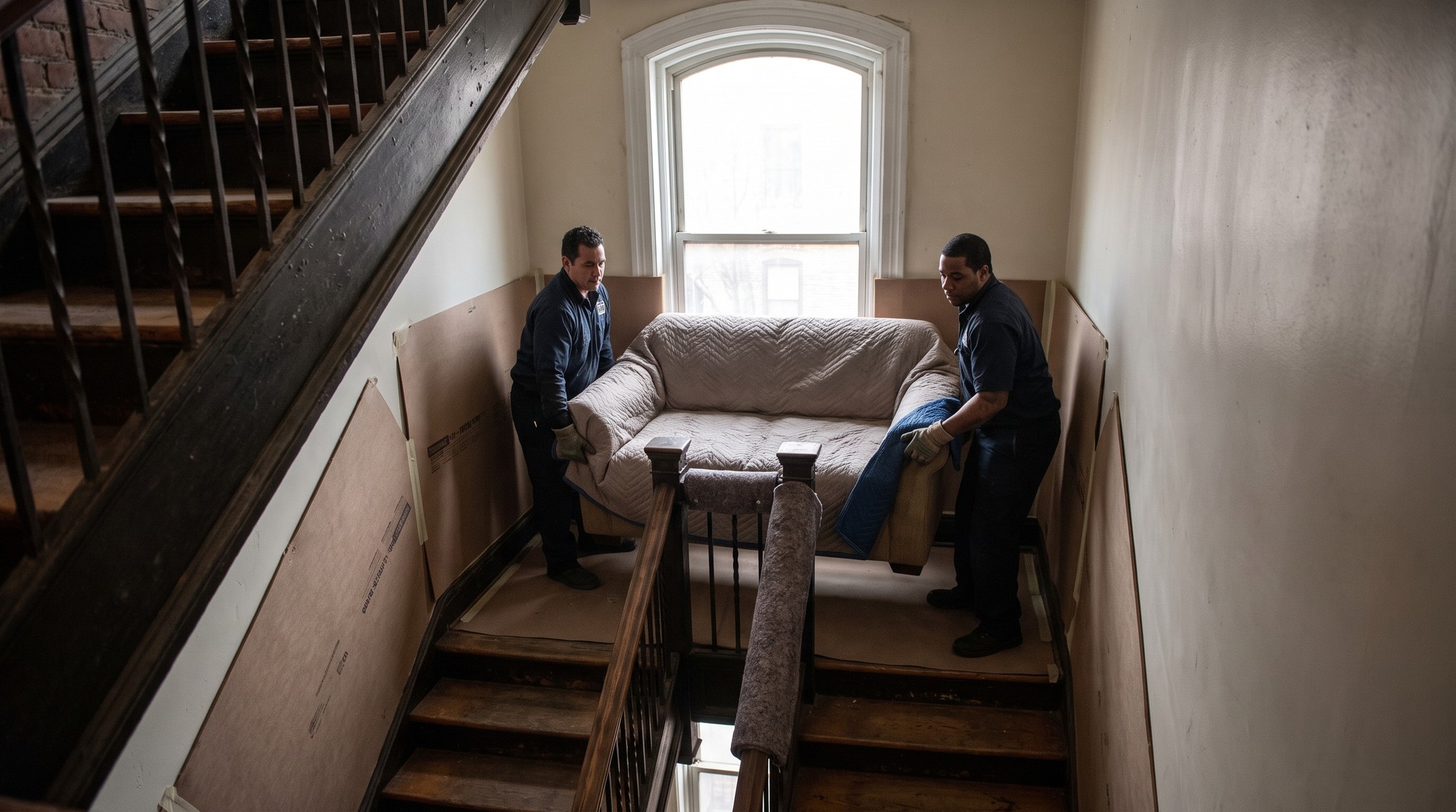
Two realistic scenarios illustrate why logistics matter. In a third-floor walk-up with a tight turn between the second and third flights, pre-measuring a queen box spring may reveal it won’t clear; plan to cut it or switch to a split foundation instead of discovering the problem mid-carry. In a small downtown office, confirm loading dock hours and the route from dock to suite; some buildings restrict access to certain times, so aligning your pickup window with the service elevator schedule prevents idle time and extra trips from a distant curb.
Make Bulky Pieces Move Ready: Disassembly and Safety
Disassembly speeds everything up and reduces wall scuffs. Remove sofa legs, take dining tables off their bases, and break down bed frames with a hex key or Phillips screwdriver. Bag and tape hardware to one piece so nothing goes missing. Empty drawers and tape them shut or remove them entirely to cut weight. For appliances, unplug cords and secure them with tape; for a washer, shut off water, disconnect hoses, and cap the lines. If a fridge must move, remove doors for clearance and defrost in advance to avoid water drips on stairs.
Protect your home and the crew. Roll up area rugs and use cardboard or a ram board to protect high-traffic floors. Wrap glass tabletops or mirrors in moving blankets or thick cardboard and label them as fragile on both sides. Keep pets contained in a separate room so they do not slip out through open doors while keeping the route to the truck open. On pickup day, turn on hallway lights, prop doors with wedges where allowed, and keep a clear staging zone outside the unit so items can be dolly-loaded and strapped with tie-downs quickly.

Reuse First: Donation, Recycling, and Data-Safe Disposal
Before anything goes on a truck, identify what you can reuse. A little planning around eco-friendly waste disposal keeps far more usable items out of landfill. Local donation centers often accept gently used bookcases, tables, and metal bed frames if they’re structurally sound and free of heavy stains or odors. Clean surfaces and take well-lit photos so schedulers can prequalify items. Bag textiles separately for textile recycling programs rather than tossing them. Scrap metal, from broken exercise equipment to shelving, can go to a metal recycler; keeping it separate from general debris makes diversion easier.
Handle data-bearing items carefully. Wipe computer hard drives, remove SIM cards from phones, and shred paperwork containing personal information before disposal or recycling. For old TVs, e-waste events and specialized recyclers are safer than treating them as general junk. If you are dealing with a renovation pile that includes drywall, plaster, and lumber, keep screws and nails facing inward when bundling wood, and separate clean wood from painted or treated lumber to match facility restrictions.
A well-prepared junk pickup in Boston comes down to three things: staged items, clear access, and correct routing for anything hazardous or reusable. When you measure large pieces, confirm what can and cannot be hauled, plan legal curb space or elevator time, and pre-disassemble bulky items, the crew can load efficiently and minimize trips through tight halls. Whether you are clearing a basement after a renovation or turning a rental unit between tenants, these steps keep the day predictable and safe for everyone involved.

