
Creatine has spent three decades as the gym-goer’s supplement, prized for squeezing a few extra reps out of a hard training session. So when Texas A&M University reported that middle-aged adults gained lean tissue and strength without a structured workout program, headlines were quick to follow. Creatine, they suggested, was something you could take while sitting still.
The evidence is more interesting than that and more useful. The new trial is real, but it sits inside a much larger body of research that has to be read alongside it. This article unpacks exactly what the study measured, why “lean tissue” is not the same thing as muscle, and what creatine can and cannot do when it is not paired with training.
What the Texas A&M Study Actually Found
The trial, published in the Journal of the International Society of Sports Nutrition and led by Dr. Richard Kreider of the university’s Exercise and Sport Nutrition Lab, enrolled 73 healthy, sedentary adults aged 45 to 65. Sixty-four of them completed the full 12 weeks and were analyzed, with an average age of about 54 and 40 women among the completers.
Both the Texas A&M University summary and the published trial describe the same straightforward design.
Participants chose whether to join a supervised program of resistance and aerobic training three times a week, plus a 10,000-step daily target, or to stay in a non-exercise group. Within each group, they were then randomly assigned, double-blind, to take either creatine monohydrate or a placebo: 10 grams a day, split into two 5-gram doses.
The results split cleanly:
- Creatine without training: participants who took creatine but did not join the exercise program gained roughly 2.4 pounds of lean tissue and improved their leg press and bench press strength.
- Creatine with training: those who combined creatine with the exercise program gained about 3 pounds of lean tissue, plus larger strength gains and a longer time to exhaustion.
- No aerobic bonus: creatine did not improve aerobic capacity beyond what exercise alone delivered, which fits the view that it mainly supports short, powerful efforts.
- Fat loss with muscle protection: in the exercise group eating a modest calorie deficit, creatine users added nearly 3 pounds of lean tissue while losing fat and cut body-fat percentage more than the placebo group. The authors believe this is the first time a diet-and-exercise trial has shown that extra effect from creatine.
That first point answers what many people type into a search bar: what happens if you take creatine but do not work out? According to this trial, something measurable happens, but the word doing a lot of quiet work is “lean.”
The study was funded by the WoodNext Foundation through the Texas A&M Foundation. As with any single trial, it is one data point rather than a verdict, and reading it honestly means pairing it with the wider research rather than treating it as a standalone headline.
Why “Lean Tissue” Is Not the Same as Muscle
The study measured body composition with DXA scans, which estimate lean tissue, not muscle directly. Lean mass is everything in the body that is not fat: water, organs, bone, connective tissue, glycogen, and muscle. That distinction matters when a headline claims creatine “built muscle” without training.
Specialists who were not involved in the research have made the same point. Lean mass and muscle are not interchangeable, and a rise on a DXA scan does not automatically translate into new contractile muscle. Creatine is also known to pull water into muscle cells, so part of any early lean-tissue gain is intracellular water rather than new muscle protein.
None of that makes the finding worthless. It simply narrows the claim. In middle-aged adults, creatine appeared to help preserve or add lean tissue and strength over 12 weeks, even without a structured program. How much of that was new muscle, and how much was water and other lean components, is the open question the study itself cannot settle.
Creatine Alone Still Is Not a Substitute for Training
The most important context for this study is the wider evidence base, and it points in a clear direction.
- A 2025 meta-analysis in Nutrients pooled 69 studies. Combined with resistance training, creatine improved bench-press strength by about 1.4 kilograms on average. Taken without training, it showed no significant strength effect at all.
- The International Society of Sports Nutrition position stand states that creatine alone, without a resistance-training program, is unlikely to produce substantial gains in muscle strength and function.
Read against that backdrop, the new trial is best understood as a signal about lean tissue and strength preservation in middle age, not as evidence that creatine replaces exercise. If your goal is to build noticeable muscle, training remains the non-negotiable input, and creatine stays the amplifier. How creatine supports muscle growth alongside a training routine breaks that relationship down in more detail.
The Dose in This Study Was Higher Than Most People Take
One detail the headlines skipped: the trial used 10 grams per day, roughly double the standard maintenance dose of 3 to 5 grams that most everyday users take. Hitting 10 grams from food alone would also mean eating several pounds of meat or fish daily, which is one reason supplementation is the practical route.
The table below places the study’s protocol next to common practice.
| Approach | Daily creatine | Duration | What it is for |
|---|---|---|---|
| Standard maintenance | 3 to 5 g | Ongoing | Keeping muscle stores topped up |
| Optional loading phase | About 20 g | 5 to 7 days | Saturating muscles faster, then reducing to maintenance |
| New Texas A&M trial | 10 g | 12 weeks | Testing lean tissue, strength, and body composition in adults 45 to 65 |
The practical point is that the results belong to a higher dose than many people use. Standard guidance for healthy adults is 3 to 5 grams a day, a figure echoed by clinical references such as the Mayo Clinic’s creatine overview.
Extrapolating a high daily dose in 45-to-65-year-olds to every age and every dose is a stretch the data does not support. If you are choosing a product, form matters less than consistency: micronized creatine simply dissolves more smoothly, while plain monohydrate remains the best-studied option.
Who Might Actually Benefit From Creatine Without Exercise
If creatine without a gym routine is not a muscle shortcut, it may still be a reasonable tool for specific people.
- Middle-aged and older adults worried about age-related muscle loss, since they were the group studied.
- People who cannot train consistently because of injury, illness, travel, or time, for whom a modest lean-tissue benefit is better than none.
- People with low dietary creatine, including vegetarians and vegans, who may respond more to supplementation.
- Anyone training lightly already, since creatine still helps most when it supports whatever activity you do.
The study also came with honest limitations. Participants chose whether to exercise, so the groups were self-selected rather than perfectly comparable, and the sample was small.
The metabolic and cognitive findings were labelled exploratory by the authors, and early signals about brain energy remain unsettled, as ongoing research into creatine and brain energy shows. Protein intake averaged about 0.94 grams per kilogram of body weight per day, which sits on the low side for this age group and leaves open whether more protein would amplify the results.
Independent experts have stressed that creatine works best as an adjunct to resistance training, adequate protein, and general activity, not as a replacement for any of them.

What the Study Found on Memory, and Why It Is Not a Brain Boost Yet
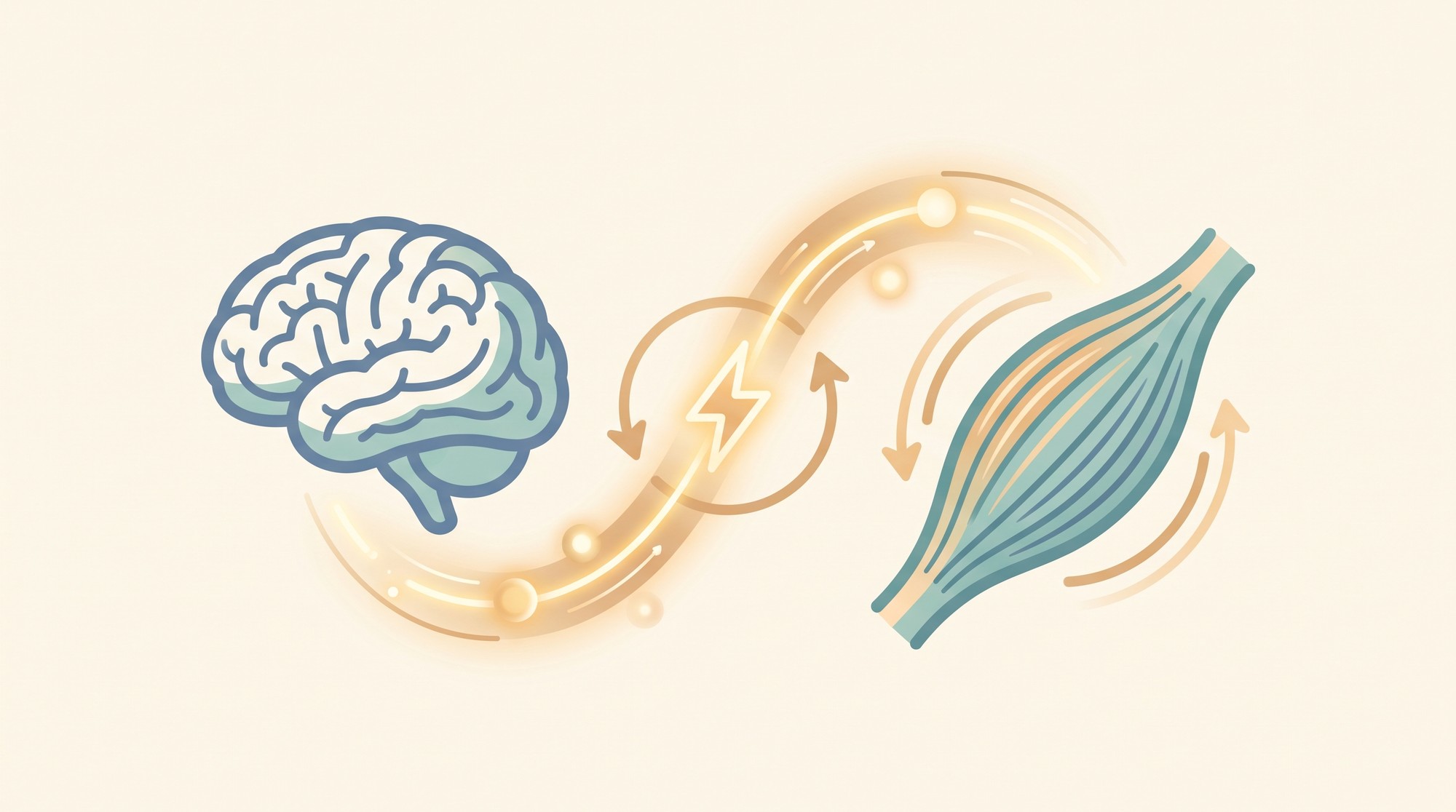
The trial did not stop at muscle. It also ran a full battery of memory and attention tests on the logic that creatine feeds the same energy system in the brain that it does in working muscle.
Most of the cognitive measures did not change. One task, delayed word recall, improved modestly in the non-exercise creatine group at the six-week mark, and the picture was mixed elsewhere.
The researchers were careful about that result. They had prespecified the individual cognitive tests as exploratory rather than confirmatory, and the paper is direct about the limits. In its conclusion, the team writes that creatine “may help middle-aged and older adults maintain muscle mass and strength while favorably affecting selected markers of health and cognitive function,” before adding that “individual cognitive and biomarker findings should be interpreted as exploratory” (full open-access study).
That is the right frame for readers: an encouraging signal about energy and memory, not a supplement that reverses cognitive decline.
Safety, Side Effects, and Medication Questions
Creatine monohydrate is one of the most studied supplements on the market. A 2025 review of 685 clinical trials found no significant difference in reported side effects between people taking creatine and those taking a placebo.
Two caveats are worth knowing:
- Creatine can raise blood creatinine, a natural byproduct that doctors also use as a marker of kidney filtration. The rise usually reflects the supplement rather than kidney damage, but it can complicate routine blood tests if your clinician does not know you are taking it.
- Anyone with existing kidney disease or taking medication that affects kidney function should speak to a clinician before starting.
That second point is where a common search query lands. Lisinopril is a blood-pressure medication, an ACE inhibitor, frequently prescribed for conditions in which kidney function is monitored.
There is no established dangerous interaction between lisinopril and creatine. But because the two touch the same blood-test markers, the sensible move is to tell your prescriber you are considering creatine so any lab results are read in context.
Practical Takeaways
- Do not treat creatine as a workout replacement. The evidence still favors creatine plus training for real muscle growth.
- Expect modest, hard-to-see changes without exercise. A couple of pounds of lean tissue over 12 weeks is meaningful in midlife, but it is not a visible transformation, and some of it is water.
- Mind the dose. Standard maintenance is 3 to 5 grams a day; the new study used 10.
- Stack the fundamentals. Resistance training, enough protein, and consistent activity do the heavy lifting, as covered in a science-based guide to creatine after 50.
- Build the basics too. Sleep, protein, and regular movement still do most of the work, as these natural ways to build muscle mass make clear.
- Check with a clinician first if you have kidney concerns or take medication that affects kidney function.
Frequently Asked Questions
Is creatine good for you without exercise?
Creatine is safe for most healthy adults at recommended doses, with or without exercise. The real question is benefit rather than safety. Without training, the evidence points to modest gains in lean tissue and strength rather than dramatic muscle growth, and part of that lean-tissue increase reflects water drawn into muscle cells.
What happens if I take creatine but do not work out?
Based on the new 12-week trial, middle-aged adults who took 10 grams a day without a structured program gained about 2.4 pounds of lean tissue and got stronger on leg press and bench press. The effect was smaller than for people who also trained.
Why did I gain 10 pounds after taking creatine?
Creatine draws water into muscle cells, so a rapid jump on the scale in the first weeks is usually water, not fat. It is expected, it is not a sign the supplement is failing, and it is one reason raw body weight is a poor way to judge creatine on its own.
Can I take creatine if I take lisinopril?
There is no established dangerous interaction between the two, but lisinopril is often prescribed in situations where kidney function is watched closely, and creatine can shift creatinine readings. Speak to your prescriber before adding creatine so your test results stay interpretable.
How long does creatine take to work?
Muscle stores typically rise within one to four weeks, depending on dose and whether you use a loading phase. Visible changes in strength or body composition usually take several weeks of consistent use, which is why the new trial ran for 12 weeks.
The Bottom Line
The new Texas A&M trial is a genuine addition to the creatine literature, and its most useful message is subtler than the headlines. Creatine without exercise is not a way to build a gym body from the sofa. It is, however, a promising low-cost tool for helping middle-aged adults hold onto lean tissue and strength, especially when training is difficult or inconsistent.
The smartest reading keeps both halves together: take creatine, keep the dose in mind, and pair it with whatever movement and protein you can manage. The supplement makes the effort work better. It does not replace the effort.


