
Family history research is more accessible than ever, but better access does not automatically produce better answers. A family ancestry DNA test can offer useful genetic clues and introduce possible relatives, yet it is only one part of a careful research process.
The strongest family histories connect DNA evidence with records, photographs, family interviews, maps, newspapers, and clear research notes. Each source has limits, but several independent sources that point to the same conclusion can create a much more reliable picture.
Key Takeaways
- DNA can identify biological connections and research leads, but it cannot replace documentary evidence.
- Family stories are valuable starting points, although details should be checked against records.
- Genetic ancestry estimates are statistical comparisons, not complete statements of culture, nationality, or identity.
- Good genealogy starts with known facts, works backward, and records uncertainty honestly.
- Privacy settings and unexpected discoveries deserve attention before genetic information is shared.
Why Family History Research Looks Different in 2026
Digitized archives, searchable newspapers, shared family trees, and consumer DNA tools have made it easier to locate information from home. Still, researchers need to evaluate names, dates, places, and relationships rather than accepting the first result that appears. A family story may identify the wrong town while still preserving a useful clue about the correct county, occupation, or migration route.
What DNA Can Add to Genealogy
DNA is evidence that can help test a family history question. Shared matches may suggest relatives to investigate, while match lists can reveal recurring surnames or locations. An ancestry estimate may also point toward regions worth researching. However, genetic ancestry is distinct from race, ethnicity, nationality, and personal identity, as explained in guidance on genetic ancestry and identity.
Use DNA to generate a focused question. For example, several matches from one rural county may support further research into a suspected great-grandparent who disappeared from the records after moving away. Results from DNA home testing kits work best when they are checked against documents rather than treated as final answers.
Why DNA Results Are Not a Complete Family Tree
People inherit only part of each ancestor’s DNA, and the amount inherited varies across generations. That means a documented ancestor may leave little or no detectable DNA in a descendant’s test. Siblings also inherit different combinations of DNA from the same parents, so their estimates and distant-match lists can differ.
Testing companies may revise ancestry estimates when their reference data and methods change. Treat changing percentages as updated interpretations, not proof that a family history has changed. A regional estimate can be helpful context, but it does not establish a precise ancestor, cultural tradition, or modern nationality.

How to Start With Records and Family Stories
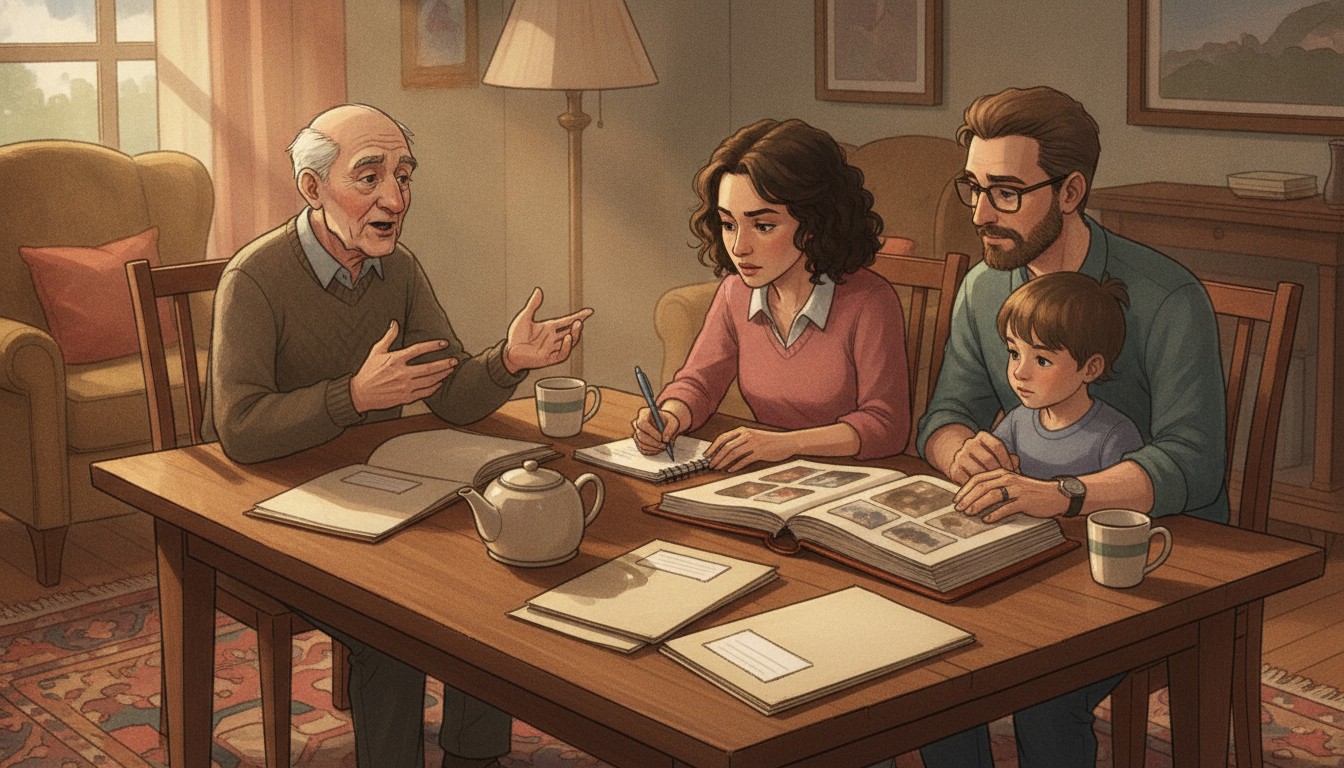
Begin with yourself and work toward the unknown. The names, dates, places, and relationships found in family documents provide a practical foundation for further searches.
- Record your own vital details, then add parents, grandparents, and earlier generations.
- Collect certificates, letters, family Bibles, obituaries, photographs, and notes written on photographs.
- Interview relatives with open-ended questions about moves, jobs, nicknames, and family traditions.
- List alternate spellings, maiden names, and informal names.
- Mark every detail as confirmed, possible, disputed, or unknown.
How to Compare DNA Clues With Written Evidence
Start with one question, such as identifying the parents of a great-grandparent. Build a timeline of births, marriages, residences, occupations, military service, and deaths. Then group DNA matches by shared relatives, repeated surnames, or common locations. A conclusion becomes stronger when independent records support it.
For example, census entries may show a family moving between states, newspapers may identify an occupation, and DNA matches may connect the researcher to relatives who remained in the earlier community. DNA should test a theory, not force unrelated people into a preferred family tree.
Common Research Mistakes to Avoid
- Copying an online tree without checking its sources.
- Assuming a repeated family story is fully accurate.
- Treating an ancestry percentage as an exact measurement.
- Ignoring adoption, name changes, translation differences, and spelling variations.
- Confusing a possible DNA relationship with a documented relationship.
- Accepting one record as proof when several people share the same name.
Privacy and Emotional Considerations
Genetic research can reveal unknown relatives, adoption, misattributed parentage, or long-hidden family secrets. Review account options before uploading or sharing data, and avoid posting information about living relatives without their permission. Genetic information can affect relatives who did not choose to be tested, so sensitive findings deserve patience and discretion.
A Simple Family History Research Plan
- 1. Choose one clear research question.
- 2. Gather family knowledge and original documents.
- 3. Create a timeline for each person involved.
- 4. Compare reliable records from multiple sources.
- 5. Review DNA patterns that support or challenge the theory.
- 6. Save source details, search dates, and notes about uncertainty.
- 7. Revise conclusions when new evidence appears.
Frequently Asked Questions
Can DNA Prove Ancestry?
DNA can provide evidence of biological relationships and suggest ancestral origins. It usually cannot prove a complete family story on its own.
Why Do Siblings Receive Different Results?
Each sibling inherits a different mix of DNA from the same parents, which can affect estimates and distant genetic matches.
Can DNA Replace Genealogy Research?
No. Records provide names, dates, places, and life details that DNA results alone cannot supply.
What if DNA Conflicts With a Family Story?
Pause before reaching a conclusion. Review records, test family tree connections, and consider possibilities such as adoption, migration, or incomplete family knowledge.
How Should Genetic Ancestry Be Described?
Use careful phrases such as “the results suggest” or “the evidence points toward.” This keeps genetic clues separate from cultural identity and family experience.
Conclusion
DNA can open productive new paths in family history research, but it works best alongside documents and lived family knowledge. When researchers carefully compare clues, preserve uncertainty, and respect privacy, they can build a family history that is both more accurate and more meaningful.


