Camden’s Georgian terraces, Victorian villas, and mansion blocks are a big part of why tenants pay a premium to live there. They are also among the hardest homes in London to make energy efficient.
That challenge now has a deadline. Every privately rented home in England and Wales must reach an Energy Performance Certificate (EPC) rating of C by 1 October 2030, unless a valid exemption applies. For landlords of period property, the question is how to get there without stripping out the features tenants value.
The answer usually lies in careful, staged retrofit rather than wholesale change. Getting the order right and understanding local rules is where experienced Camden estate and letting agents and specialist assessors earn their keep. This guide explains the rules, the most heritage-friendly upgrades, and the funding available.
Key Takeaways
- Rented homes face a band C minimum from autumn 2030, with spending capped at £10,000.
- Camden’s 40 conservation areas cover about half of the borough.
- Heritage status gives only a limited exemption, not a blanket one.
- Reversible upgrades such as secondary glazing and draught-proofing suit period homes best.
- Government heat pump grants worth up to £7,500 are still on offer.
The 2030 Deadline Explained
The Minimum Energy Efficiency Standard currently requires rented homes to reach at least EPC E. In January 2026, the government confirmed the bar will rise to C for new and existing tenancies alike from 1 October 2030, as part of its EPC reforms and MEES changes for private rented property.
| Rule | Detail |
|---|---|
| Current minimum | EPC band E |
| New minimum | Band C, effective autumn 2030 |
| Cost cap | £10,000, or 10% of property value if lower |
| Qualifying spend | Work completed from 1 October 2025 counts towards the cap |
| EPC validity | Ten years |
Progress is already happening across England. English Housing Survey figures show the share of private rented homes in band D fell from 43% in 2022 to 37% in 2024, while band C rose from 42% to 48%.
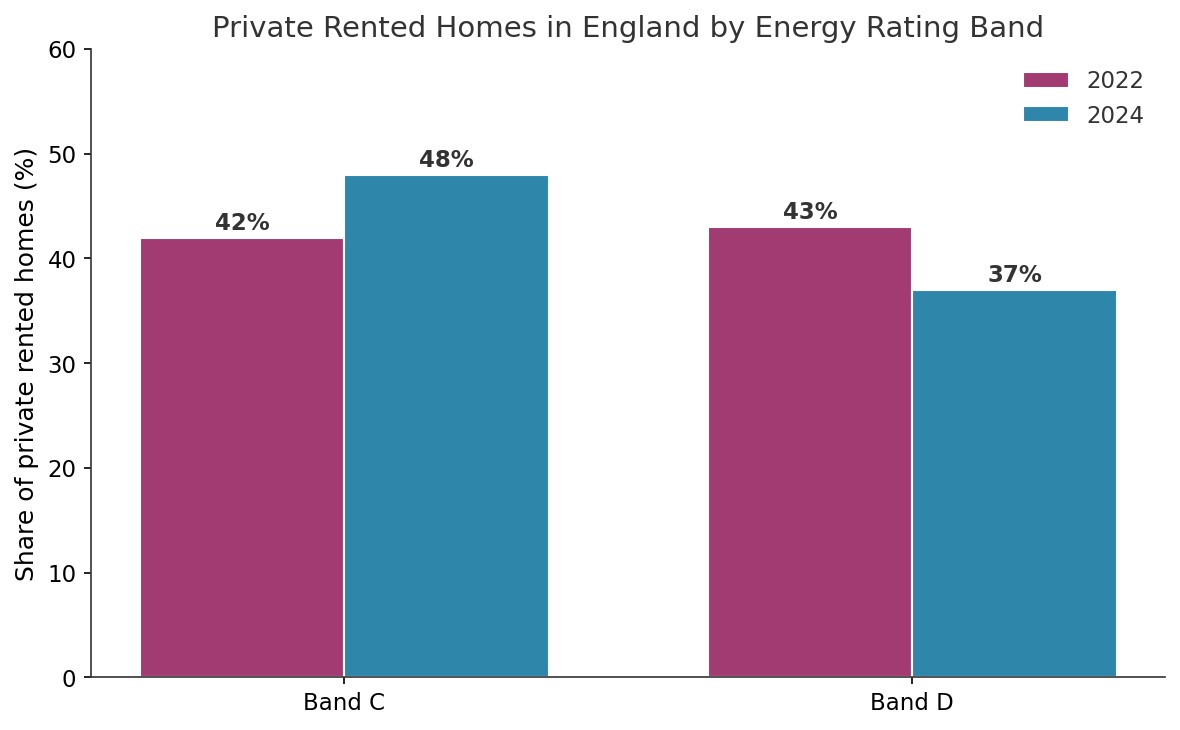
Figure 1: Energy rating bands across England’s rental sector, 2022 and 2024. Source: EHS.
Upgrades are not cheap. The government’s latest energy efficiency findings estimate that bringing a home up to band C cost an average of £7,480 across all tenures in 2024.
Why Camden’s Period Homes Need a Different Approach
According to Camden Council’s guidance on conservation areas, the borough has 40 conservation areas spread over roughly half its land. Altering a property in one of them usually requires planning permission, and listed buildings face stricter controls still.
The council says it supports sensitive retrofitting in these areas while recognising that historic buildings can be harder to adapt. That makes planning and specialist advice essential before any work begins.
Flats add another layer of complexity. Many Camden rentals sit in converted houses or mansion blocks, where leases often require the freeholder’s consent before alterations to windows, walls or heating. Checking the lease early prevents costly delays, and a joined-up approach with neighbours can sometimes make building-wide upgrades more affordable.
| Exemption myth: Heritage status does not automatically excuse a rental from the energy rules. An exemption applies only where compliance would unacceptably alter a building’s character or appearance, and it must be registered. Exemptions on this basis are valid for 10 years. |
Older solid-walled buildings also behave differently from modern ones. Measures that trap moisture, such as some forms of internal or external wall insulation, can cause damp problems if they are not specified by someone who understands traditional construction.
Heritage-Friendly Upgrades That Improve Ratings
The most effective approach starts with low-impact, reversible measures before moving on to bigger interventions.
| Measure | Typical heritage impact | Notes |
|---|---|---|
| Draught-proofing | Low | Cuts heat loss around sash windows and doors |
| Loft insulation | Low | Keep ventilation paths clear in older roofs |
| Secondary glazing | Low to moderate | Often more acceptable than replacing original windows |
| Heating controls and LED lighting | Very low | Quick wins that support a better rating |
| Heat pump | Moderate | Siting and noise need care in dense streets |
| Internal wall insulation | Moderate to high | Needs breathable materials and expert design |
Secondary glazing brings a welcome side effect in busy Camden streets: less noise. If you are weighing up acoustic upgrades as well, this explainer on designing quieter rooms sets out the principles of mass, decoupling and flanking control.
| Pro Tip: Commission an EPC before you plan any work. Under the new rules, a certificate will also be needed at the marketing stage. The assessor’s recommendations show which measures will move the rating furthest, so you avoid spending on upgrades that add little. |
Low-Carbon Heating Options
Replacing a gas boiler with a heat pump can lift a rating significantly. The Boiler Upgrade Scheme offers £7,500 towards an air source or ground source heat pump and £2,500 towards an air-to-air heat pump, with a heat battery grant planned.
Ground source systems need outdoor space that many Camden homes lack, so air source units are more common in the borough. Interest in heat from beneath our feet is growing elsewhere too, as shown by new projects in enhanced geothermal systems.
What Is at Stake for Camden Landlords
Camden remains one of London’s most expensive rental markets. The Office for National Statistics put the borough’s average private rent at £2,819 a month in August 2026.

Figure 2: Average monthly private rent in Camden by property size, August 2026. Source: ONS.
Flats and maisonettes in the borough averaged £2,407 a month. With rents at these levels, a home that cannot legally be let after 2030 represents a serious loss of income. Even a short void while emergency works are carried out could outweigh the cost of planned upgrades.
A well-presented, warmer home also tends to attract stronger tenant interest. Lower energy bills are increasingly part of how renters compare properties, and good energy ratings feature prominently in listings. Warmer, quieter rooms can also help reduce tenant turnover.
Common Retrofit Mistakes in Older Homes
Well-meant upgrades can backfire in traditional buildings. These are the errors that most often cost landlords time and money:
- Blocking ventilation. Sealing every gap without planned airflow can lead to condensation and mould.
- Using non-breathable materials. Modern plasters and paints can trap moisture in solid brick walls.
- Replacing sash windows without checking. Original windows may be protected, and removal can harm character.
- Chasing points, not performance. Some measures lift a rating on paper while doing little for comfort.
- Ignoring tenant disruption. Major works in an occupied home need careful scheduling and notice.
Avoiding these pitfalls protects both the building and your return on investment.
A Practical Retrofit Roadmap
- Get a fresh EPC and survey. Understand the current rating and the building’s construction.
- Check planning status. Confirm whether the property is listed or in a conservation area.
- Start with fabric basics. Draught-proof, insulate the loft and upgrade controls first.
- Plan bigger measures carefully. Use specialists for wall insulation, glazing and heat pumps.
- Record your spending. Keep invoices to evidence the cost cap if an exemption is needed, as spending between October 2025 and September 2029 counts.
Some owners also explore solar panels where roofs allow. If you do, it is worth understanding how panels are handled at the end of their life, covered in this piece on solar panel recycling.
Local guidance makes a difference throughout. One seller, reviewing Plaza Estates on Trustpilot, described their experience selling an apartment through the firm as exemplary, the kind of service landlords rely on when weighing up whether to upgrade, let or sell. The confirmed MEES timetable is what makes that decision time-sensitive.
Frequently Asked Questions
Do listed buildings need to meet EPC C by 2030?
Not always. An exemption may apply where meeting the standard would unacceptably change how the property looks or feels historically, but it must be justified and registered. Many listed homes can still adopt some improvements.
How much will I have to spend to reach EPC C?
The government cost cap is £10,000 per property, or 10% of the property’s value if that is lower. Spending on qualifying upgrades since October 2025 already counts.
Can I install a heat pump in a Camden conservation area?
Often, yes, but siting, noise and visibility matter. Check with Camden Council before installation, as planning permission may be needed depending on the property and its location.
Is secondary glazing allowed in period homes?
It is usually viewed more favourably than swapping out historic windows, because it can be removed without damaging historic fabric. Listed buildings may still need consent, so confirm first.
What grants can landlords use?
The main one is a £7,500 grant for air source and ground source heat pumps, rising to £9,000 for eligible off-gas homes between 21 July 2026 and 31 March 2027.
Protecting Character and Income Together
Meeting EPC C in a Camden period home is entirely possible with the right sequence of work. Start with reversible fabric upgrades, respect the building’s construction, and use grants where they fit. Spreading the work over several years also eases cash flow and lets you measure results before committing to bigger measures. Landlords who plan now can protect both the heritage that makes their homes special and the rental income that depends on them.