
Are generators waterproof? No, most are not. Do not expose them to rain, snow, or standing water while operating. If you’re wondering whether generators are waterproof, assume they need protection. Only trust a manufacturer’s statement that says otherwise.
A generator can sometimes run in wet weather. It must be outdoors. It must be well ventilated. It must be under a purpose-built cover.
Never place a running generator in a garage, shed, or enclosed area to keep it dry because exhaust can create a carbon monoxide hazard. Safe operation depends on keeping electrical components dry while maintaining proper airflow and outdoor clearance.
Key Takeaways
- Most portable generators are not waterproof and should not be exposed directly to rain, snow, standing water, or other wet conditions.
- A generator may operate during wet weather only when manufacturer guidance allows it and a purpose-built running canopy keeps electrical components dry without blocking airflow or exhaust.
- Keep portable generators outdoors and at least 20 feet from the home, with exhaust directed away from doors, windows, vents, and other openings to reduce carbon monoxide risk.
- Safe use also depends on dry, outdoor-rated cords, protected connections, proper GFCI use where required, and stopping operation if water reaches outlets, controls, or internal electrical parts.
Waterproof vs. Weather-Resistant Generators
Outdoor use does not mean a generator can sit uncovered in precipitation. Some housings may be weather-resistant, but outlets, control panels, wiring, and connections can still be vulnerable to moisture. Check the owner’s manual for your model’s limits and instructions.
Water can enter receptacles, damage insulation, promote corrosion, or create unintended paths for electrical current.
People asking whether generators can get wet should distinguish between protected outdoor operation and direct exposure to rain or standing water. Keep sensitive components dry while preserving airflow around the engine and exhaust.
Can a Generator Run in the Rain?
The answer to “can a generator run in the rain” depends on the manufacturer’s instructions and whether suitable protection is available. Running a generator in the rain without protection can expose users to energized wet surfaces and damage internal components.
OSHA guidance says to keep generators dry and to operate them under an open, canopy-like structure rather than leave equipment exposed in rain or wet conditions.
Before starting the unit on a rainy day, make sure the surface is firm, level, and free of standing water. Keep plugs and connections off the ground, and never touch controls with wet hands. If the manual says to wait until precipitation passes, do so.
A safer wet-weather setup includes:
- A manufacturer-approved or purpose-built running canopy.
- Open airflow for cooling and exhaust.
- A dry, level surface that drains properly.
- Outdoor-rated cords with intact insulation.
- Dry access to the controls and receptacles.
These steps reduce moisture exposure, but they do not turn an ordinary generator into waterproof equipment. If water reaches electrical parts, shut the unit down safely. Do not rely on improvised protection.
Why Water Around a Generator Is Dangerous
Electricity can travel through water, wet surfaces, damaged cords, or the human body. This creates a risk of electrical shock when someone contacts a wet receptacle, plug, frame, or appliance. Water intrusion can also cause short circuits, trip protective devices, and damage connected electrical equipment.

Moisture may also cause problems after the storm. Corrosion can develop on terminals or internal contacts even after surfaces appear dry. Generators in wet conditions need protection and inspection before the next use.
Common hazards include:
- Shock or electrocution from wet connections.
- Short circuits inside outlets or controls.
- Corrosion that reduces reliability.
- Slips and trips around cords on wet ground.
- Overheating caused by a poorly designed cover.
Treat the generator, cords, and connected loads as one electrical system. Keeping only the engine dry does not solve the problem if plugs or extension cords sit in water. Protection must address rain, runoff, airflow, and safe access.
Should You Cover a Generator in the Rain?
Yes, but only with a cover designed for operation. Do not place a normal storage cover over a running engine. Purpose-built generator covers protect vulnerable areas while allowing heat and exhaust gases to escape.
Avoid plastic tarps, tightly wrapped covers, boxes, or small tents that can trap heat or redirect exhaust. A high-quality running canopy should fit the generator and maintain the clearances the manufacturer requires. Blocking cooling can create a fire or equipment hazard.
Look for a running cover that:
- Fits the generator’s size and style.
- Shields outlets and controls from wind-driven rain.
- Keeps exhaust completely unobstructed.
- Allows cooling air around the engine.
- Remains stable during expected wind and bad weather.
A canopy is only one part of generator safety. You still need correct placement, dry connections, suitable cords, and the required grounding method. If water reaches electrical components, stop operation and correct the setup before restarting.
Safe Placement During a Power Outage
Keep fuel-burning generators outside because their exhaust produces carbon monoxide. CDC and CPSC guidance says to operate portable generators at least 20 feet from the home, with exhaust directed away from windows, doors, vents, and other openings. Never use one in a garage, basement, shed, carport, or porch.
Choose a stable location where runoff moves away from the frame rather than pooling beneath it. Keep the generator outdoors away from roof drainage and flood-prone areas. Consider wind direction so exhaust does not move toward occupied buildings.
Homeowners deciding between a portable unit and a permanently installed system can compare portable and standby generators before storm season arrives.
For homeowners planning backup power, Grounded Electric can help evaluate transfer equipment, electrical connections, and safer ways to connect generator power to a home.
A qualified electrician can identify backfeeding risks and determine whether the installed system meets applicable requirements. The generator manufacturer’s instructions still control how the unit should be operated.
Extension Cords, GFCIs, and Connections
Use cords rated for outdoor use and sized for the load they will carry. Damaged insulation, loose connectors, undersized conductors, or wet plugs can make a careful setup dangerous. Keep every connection dry and elevated where water cannot collect around it.
OSHA requires ground-fault circuit interrupter protection for many receptacle outlets on construction sites and calls for grounding cord- and plug-connected equipment used in damp or wet locations. Grounding depends on generator design and the connection method, so follow the manual and applicable rules.
If you are unsure about the setup, have a qualified electrician review it before severe weather.
Before energizing loads:
- Inspect cords for cuts, crushed insulation, or damaged plugs.
- Confirm cords are rated for outdoor use.
- Keep connectors away from puddles and traffic paths.
- Connect loads within the generator’s rated capacity.
- Use GFCI protection where required.
After connecting loads, watch for tripped protection, overheating, sparking, unusual smells, or unstable operation. Stop the generator if anything appears abnormal. Never handle plugs or controls with wet hands or while standing in water.
What to Do If a Generator Gets Wet
If a generator becomes soaked, flooded, or has water inside outlets or controls, do not restart it simply to test whether it works.
Shut it down if you can do so without touching wet, energized parts, then follow the manufacturer’s guidance for drying and inspection. Professionals should evaluate equipment that has been submerged before reuse.
After significant water exposure:
- Disconnect loads only when it is safe.
- Shut the generator down and let it cool.
- Do not open energized electrical sections.
- Do not bypass breakers or protective devices.
Have damaged or submerged components evaluated before restarting.
Water damage is not always visible from the outside. Corrosion, insulation damage, or trapped moisture may create faults later. Professional service is safer than operating a generator with unknown internal damage.
Prepare Before, During, and After Storms
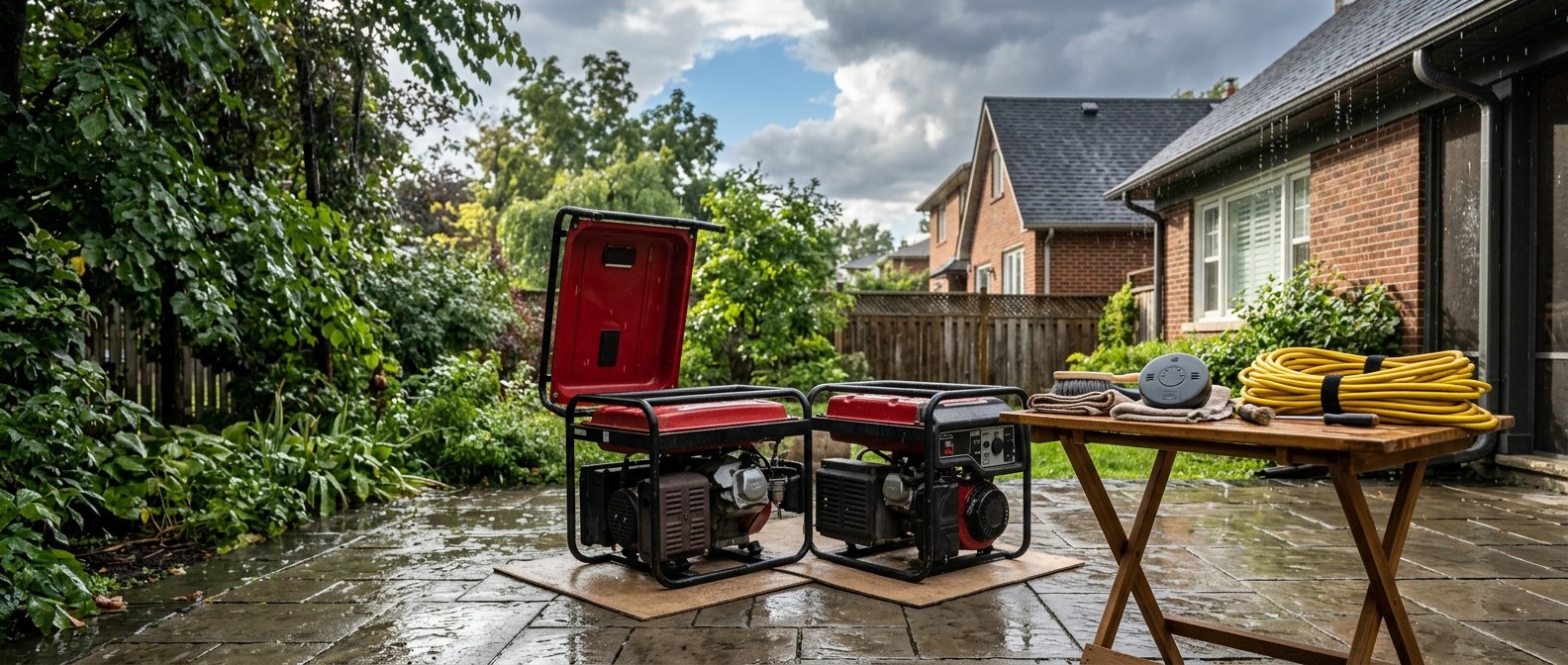
Before severe weather, read the manual, test the unit in dry conditions, inspect cords, and confirm that the running canopy fits correctly. Install and test CO alarms inside the home, and store the generator dry when it is not operating. Preparation reduces risky improvisation during an outage.
When operating your generator in wet conditions, check for pooling water, moving covers, blocked airflow, or cords shifted onto wet surfaces. Stop use if conditions exceed the generator’s limits or overwhelm its protective equipment. Never sacrifice ventilation to keep the unit dry.
After the storm, allow the generator to cool before moving it or removing protection. Inspect outlets, cords, and controls for water intrusion or damage, then store the unit only after it is dry.
If you are asking whether a generator should be out in the rain, remember that safe outdoor use depends on approved protection, correct placement, and the manufacturer’s instructions.

