
When it comes to large data centers, managing heat is a critical challenge that directly impacts the operational efficiency and longevity of the equipment. As demand for data storage and processing capacity skyrockets, traditional cooling methods are increasingly unable to meet the needs of modern, high-density data centers. This has spurred a wave of innovation aimed at developing more efficient, sustainable, and cost-effective cooling solutions.
These advancements are not just about keeping servers at optimal temperatures; they’re also about redefining energy consumption patterns and reducing the carbon footprint of data storage facilities. In this article, we explore the latest technological breakthroughs in data center cooling solutions that are setting new standards for the industry.

Immersive Cooling Technologies
Immersive cooling represents a paradigm shift in data center temperature management. Submerging servers and other equipment directly into non-conductive liquids can significantly reduce cooling energy consumption by up to 95% compared to air cooling. Not only does immersive cooling offer superior efficiency, but it also allows for higher-density setups, paving the way for more compact and powerful data centers.
The environmental benefits of immersive cooling are equally impressive. Since the cooling fluid is reusable and the system itself emits significantly lower amounts of greenhouse gases, this approach aligns well with the growing emphasis on sustainability within the tech industry. Furthermore, immersive cooling systems are remarkably quiet, contributing to a more pleasant working environment in and around data center facilities.
With traditional and emerging cooling methods, noise levels have always been a major concern, making immersive cooling a game-changer for both efficiency and user experience. It’s important to note that while immersive cooling is certainly a viable option, it may still be too costly for many data centers to implement at scale.
Advanced Air Management Strategies
While liquid cooling represents a cutting-edge approach, advancements in traditional air cooling cannot be overlooked. Engineers have developed sophisticated air management techniques that optimize airflow, reducing the amount of cooled air needed to maintain optimal temperatures. By employing advanced computational fluid dynamics (CFD) models, data centers can now precisely target hot spots, improving overall efficiency.
Coupled with these technological advancements, there’s a growing trend toward using economizers in air-cooled data centers. These systems leverage the outside air to cool facilities, significantly reducing the reliance on mechanical cooling during cooler months. This cuts energy consumption and extends the life of traditional cooling equipment by reducing operational hours.

AI-Driven Cooling Solutions
Artificial intelligence (AI) is revolutionizing how data centers are cooled. By analyzing vast amounts of operational data in real-time, AI algorithms can predict cooling needs and dynamically adjust cooling systems to operate at peak efficiency. This predictive cooling approach minimizes energy consumption and anticipates potential system failures before they occur, reducing downtime and maintenance costs.
AI enables the development of autonomous data centers that can self-regulate their cooling practices based on external temperature conditions and internal heat generation trends. This level of automation and efficiency was unimaginable a decade ago and represents a significant leap forward in data center technology.
Environmental and Economic Sustainability
The shift towards more efficient cooling solutions is not solely driven by technological feasibility but also by environmental and economic imperatives. Cooling innovations enable data centers to dramatically reduce their water usage — a critical consideration in regions where water scarcity is a growing concern. Data centers can significantly lower their environmental impact by adopting technologies such as air economizers and liquid cooling.
On the economic front, these cooling technologies offer the potential for substantial cost savings over conventional cooling methods. Lower energy consumption translates into lower operating expenses, making green cooling solutions an environmental responsibility and a sound business strategy. This dual benefit is likely to drive the widespread adoption of these technologies across the data center industry.
The Role of Renewable Energy in Cooling Technologies
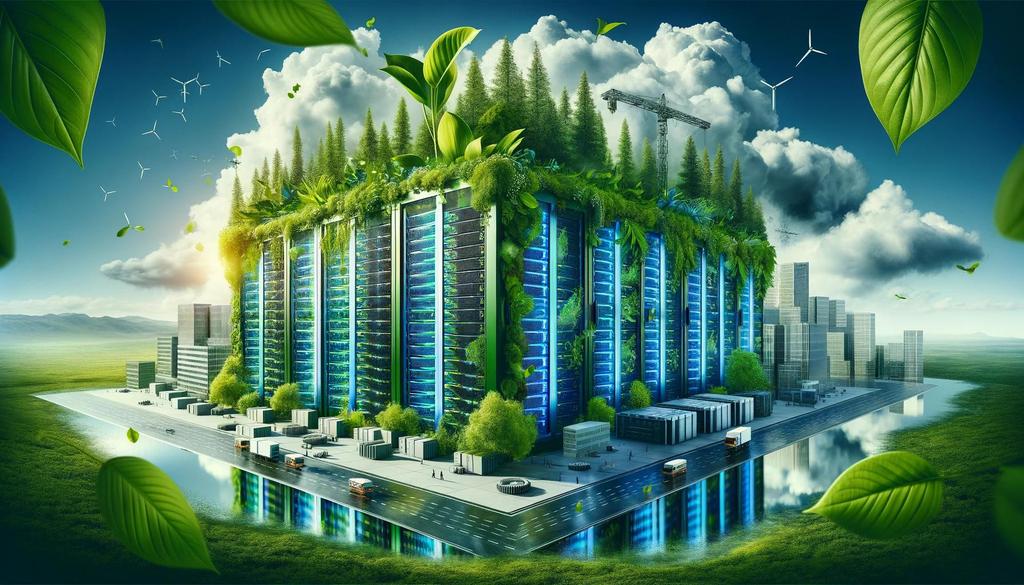
Integrating renewable energy sources, such as solar and wind power, into data center cooling systems marks a significant advancement toward sustainability. By harnessing the power of nature, data centers can operate more autonomously from the grid, reducing their carbon footprint and mitigating the environmental impact of their cooling needs. This transition reflects an ethical commitment to the planet and offers a hedge against fluctuating energy prices.
Renewable energy can be particularly synergistic with liquid cooling systems. For instance, solar energy can directly power the pumps and controllers necessary for circulating cooling fluids, making the cooling process even more energy-efficient. The fusion of renewable energy with innovative cooling technologies exemplifies how the data center industry is evolving to meet the demands of an environmentally conscious marketplace.
Modular Cooling Systems for Scalability
Modular cooling systems are emerging as a versatile solution capable of adapting to the dynamic needs of data centers. These systems can be precisely scaled to match the cooling requirements of specific server racks or zones within a facility, eliminating inefficiencies associated with overcooling. Modular systems can drastically reduce energy consumption by focusing on delivering cooling exactly where and when it’s needed.
In addition to energy efficiency, the modular nature of these systems simplifies maintenance and upgrades. Data center operators can easily add or replace modules to accommodate expanding capacity or incorporate newer, more efficient cooling technologies. This flexibility is invaluable in an industry where rapid technological advancement is the norm, ensuring that data centers remain at the forefront of cooling efficiency without extensive overhauls.

Water Conservation Techniques in Cooling
Water usage in data center cooling has become increasingly scrutinized, given global concerns over water scarcity. Innovations in cooling technology are now addressing this issue head-on by significantly reducing the amount of water required for data center operations. Closed-loop cooling systems, for example, recycle water within the cooling process, minimizing waste and the need for freshwater sources.
Emerging technologies that utilize air-to-air heat exchangers and dry cooling techniques represent another approach to minimizing water use. These systems can effectively transfer heat without relying on water, making them ideal for deployment in arid regions or areas with strict water-use regulations. The adoption of such technologies underscores the data center industry’s commitment to not only energy efficiency but also water conservation.
Edge Computing and Cooling Considerations
The rise of edge computing, which involves processing data closer to its source, presents unique cooling challenges and opportunities. Edge data centers are often smaller and located in more diverse environments than traditional facilities, requiring cooling solutions that are both compact and adaptable to varying climate conditions. This has spurred innovation in cooling technologies designed specifically for the constraints and requirements of edge computing.
Cooling solutions for edge computing must also address the need for reliability and low maintenance, given the remote location of many edge facilities. Passive cooling technologies, which rely on natural environmental conditions to facilitate heat exchange, show great promise in this arena. Additionally, the use of ruggedized cooling components that can withstand harsh conditions ensures that edge data centers remain operational, regardless of their physical environment.
Data Center Cooling: Advancements and Sustainability
Technological advancements in data center cooling are driving sustainability, efficiency, and scalability across the industry. These innovations are not just about keeping servers cool; they’re also shaping the future of energy consumption patterns and environmental responsibility. As the demand for data continues to grow, so too will the need for cutting-edge cooling solutions that can support this exponential growth while minimizing its impact on our planet.


