
Long before the AI boom, data centers were already high-value assets, driven by the relentless demand for cloud services. Yet, when OpenAI showcased the true potential of artificial intelligence, the global thirst for data exploded to unprecedented levels. Suddenly, these facilities became indispensable for intensive AI training, prompting companies like Tesla and Meta to invest billions in their development.
But like any high-stakes venture, data center investing is filled with unique challenges. To determine if it’s the right move for you, we need to explore the business model and navigate the risks.

Understanding the Data Center Business Model
Data centers are facilities that acquire, store, and process data for users located remotely. These facilities rely on tenants, who pay a fee to use the infrastructure and services. Data center tenants are companies that store, process, and use data. They can generally be classified into three main categories:
- Networks: Social media platforms and large-scale networks like Facebook and LinkedIn.
- Cloud providers: Companies offering cloud infrastructure and services, such as Oracle.
- Enterprises: A wide range of businesses, including those in healthcare, finance, government, and education.
Tech giants like Amazon, Google, and Microsoft often prefer to build their own private cloud infrastructure, giving them complete operational control. This involves acquiring land, negotiating complex power agreements, and constructing massive hyperscale facilities. While owning provides autonomy, these companies will still lease space in other data centers when it makes strategic or economic sense.
REITs like Digital Reality Trust and CoreSite are well known in the industry to provide their cloud infrastructure to tenants like IBM, Oracle, and Facebook, but they don’t usually disclose this information publicly in SEC filings for security purposes.
In such shared spaces, the data center is known as a multi-tenant type. Here, each tenant is assigned a single server rack, and several optical fiber cables from these servers (clients) converge in a meeting room, from where data is sent to the global internet network’s fiber optic cable(s).
Decoding Lease Agreements and Running Costs
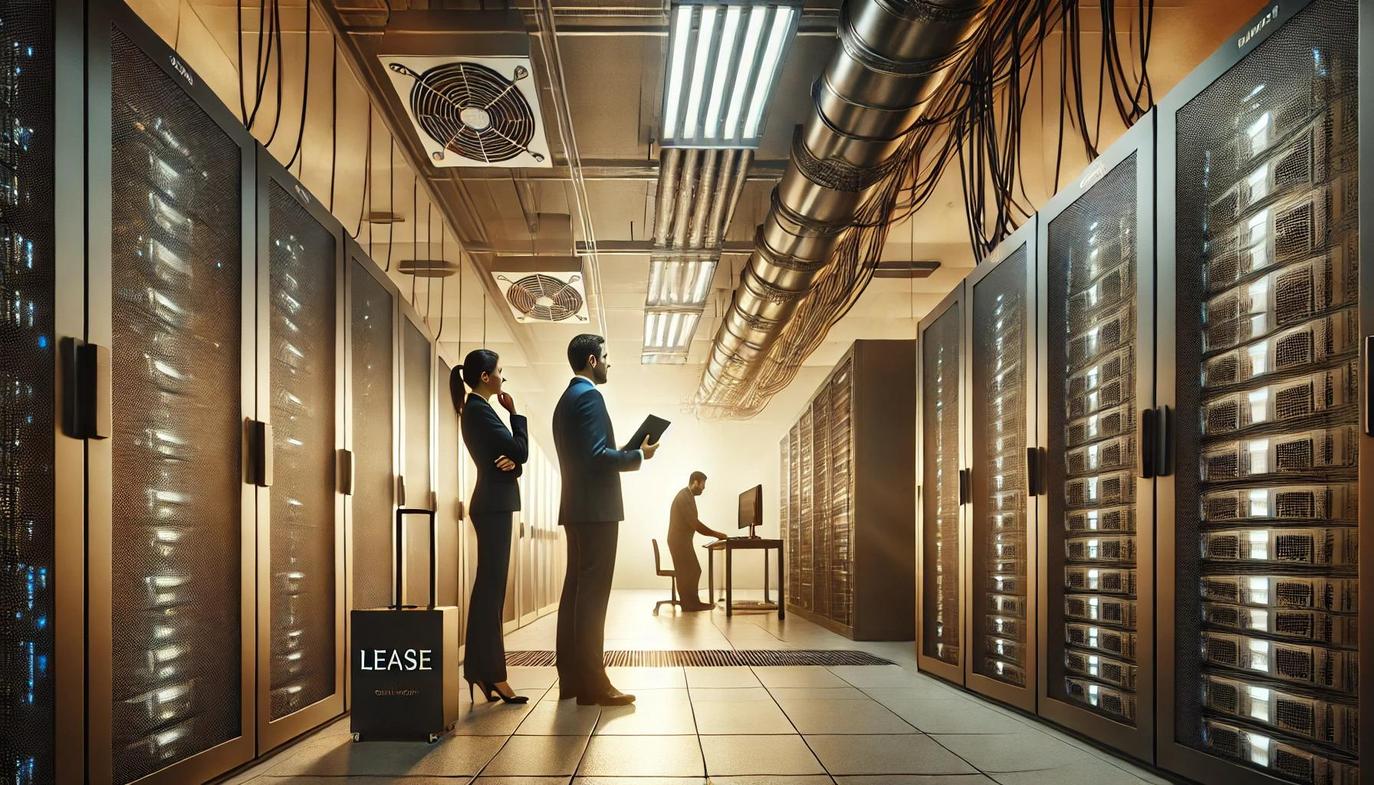
Whether it’s a network, cloud provider, or enterprise, data center tenants prefer long-term leases of at least 10 years to avoid displacement after investing heavily in their infrastructure. The cost of this lease is subject to the negotiation between the two parties. But the bottom line is the REIT or landlord has to provide water and electricity, while the tenant buys their preferred servers, server racks, computers, and air handling units. Tenants also pay for the wiring (fiber optic, RF cable assemblies, etc.) to fit into the installed suite. Landlords often provide improvement allowances to the tenants to help them set up.
As for the running costs, each tenant pays for the electricity consumed by their servers, which the landlord meters and bills them every month. Power is the most significant cost, so the tenant can negotiate for full-service gross lease agreements that cover all other costs except electricity.
The Role of Colocation in the Ecosystem
Some small data center customers might not have the resources to run the leased data center or pay for the long term lease contract. Colocation helps such customers as it is a concept that allows resourceful colocation groups to sign master leases with the REITs, then buy and fit the hardware (servers, racks, cabinets, air handling units, wiring, etc.), and sell individual racks, servers, or cabinets to these small customers. Essentially, colocation groups act as wholesalers in the data center market. They lease large-scale capacity from landlords and then partition it, selling smaller, more manageable units of space and power to individual customers.
What Makes Data Centers Attractive to Tenants?
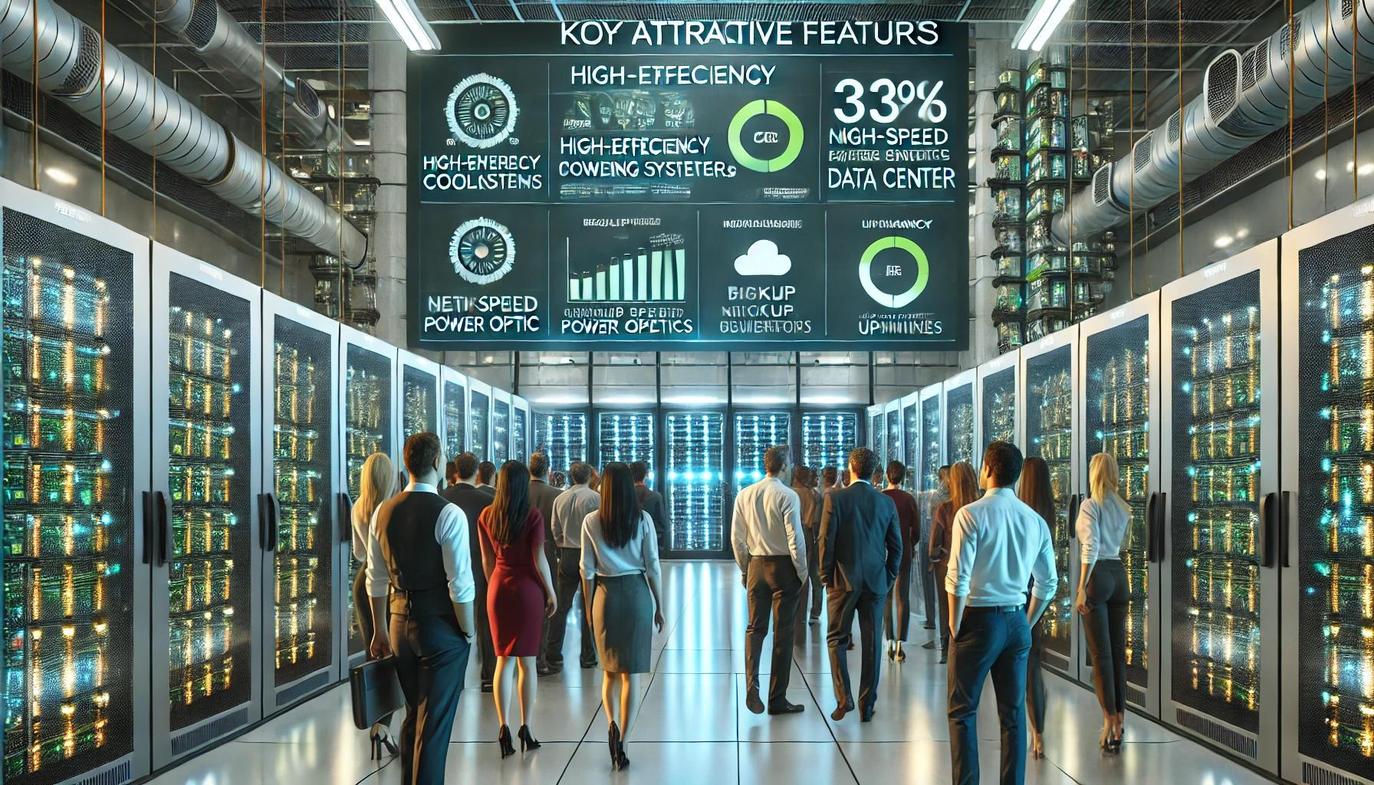
As a landlord or REIT, there are four factors to consider if you want to make your data center attractive to networks, cloud providers, enterprises, and colocation groups.
Access to Affordable and Reliable Power
Servers are power-hungry machines and need full-time cooling, so the local utility electricity cost per kilowatt-hour is a big factor to consider, as tenants have to pay their power bills. Microsoft previously experimented with underwater data centers to reduce power bills associated with cooling. Although such a setup needs costlier external hardware and cabling to connect to the surface (such as molded cable assemblies), it shows the significance of power bills in maintaining data centers.
Power reliability is also critical because servers must have zero downtime, which means each data center must have at least one source of backup power. Generators and UPSs are critical in these installations.
Connectivity
Proximity to customers or other data centers helps to reduce latency and long-distance high-bandwidth requirements. Movie streaming services, for instance, should have their servers in big cities near their customers. Financial players, on the other hand, must have their servers close to the stock exchange to reduce latency, which shaves critical microseconds from their execution times.
Security
The security in data centers should go beyond keycards. Depending on its size, the facility should have at least a dozen security personnel and feature man-traps where anyone going inside the server rooms must leave their devices behind.
Geographical Location
A location with low risks of natural disasters is a major selling point because events like floods, earthquakes, and hurricanes can create massive and costly downtimes.
Navigating the Key Challenges of Data Center Investing
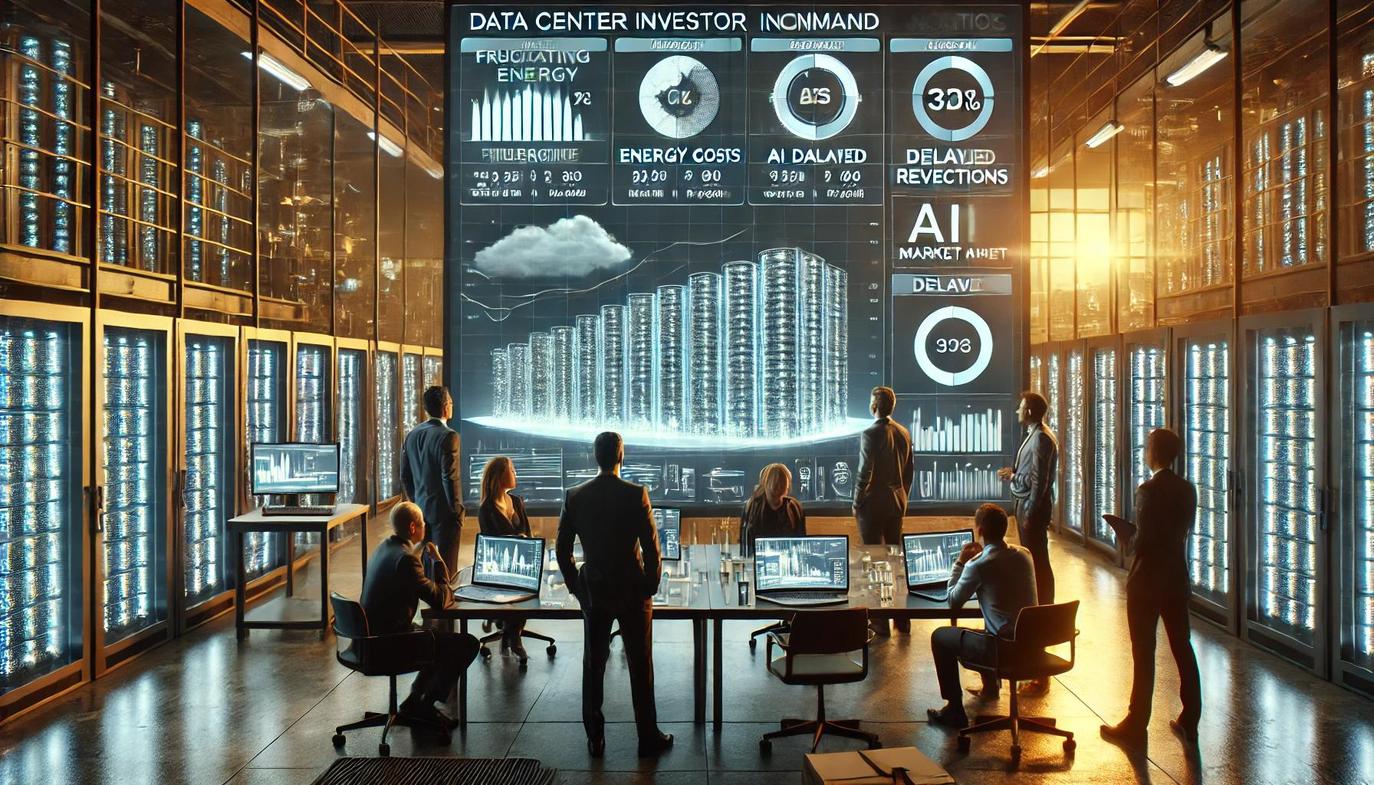
As an investor, you should take a measured approach to this industry because of these challenges.
The AI Boom Might Slow Down
One potential headwind is the maturation of the AI industry itself. As AI companies exhaust readily available training data and develop more efficient models like DeepSeek, the explosive demand for raw compute power could begin to stabilize. This shift may temper the need for endless expansion, potentially slowing the sector’s meteoric growth.
Delays in Generating Revenue Once Complete
Once data center construction is complete, revenue generation is not immediate, as hiccups like delays in grid connection and customer acquisition can leave the coffers empty for a while.
Rising Power Costs
As the demand for electricity increases across all US states, primarily fueled by the AI boom, the cost of power has been on the rise. Rising natural gas prices and investments in the grid are also contributing to this increase. Electricity accounts for a major chunk of data center expenses, making this a significant barrier to entry.

Final Thoughts on Data Center Investments
Investing in data centers remains a compelling opportunity, especially with the relentless push from the AI sector and the broader trend of digitalization. While the U.S. market is competitive, the increasing demand for AI workloads presents significant short-term potential. The real frontier, however, may lie in emerging markets across the Asia-Pacific region, where the demand for cloud services and smart city infrastructure is just beginning to accelerate. These regions offer a chance to build a foothold in a less saturated environment, capturing growth as more businesses transition to digital-first operations.
Ultimately, the decision to invest hinges on balancing the high operational costs—particularly for power—and the risk of market fluctuations against the massive potential for returns. For savvy investors who can navigate the complexities of power agreements, tenant negotiations, and strategic geographical placement, data centers represent a critical piece of the world’s digital backbone. As our reliance on data deepens, the value of these facilities is poised to grow, making them a strategic addition to any forward-thinking investment portfolio.
Frequently Asked Questions About Data Center Investing
What are the biggest risks when investing in data centers?
The primary risks include rising power costs, which directly impact operational expenses, and potential market slowdowns if the demand for AI training data or services plateaus. Additionally, there are significant upfront costs and potential delays in generating revenue after construction is complete.
Why is geographical location so important for a data center?
A data center’s location is crucial for several reasons. It needs access to affordable and reliable power, strong fiber optic connectivity to reduce latency, and must be in an area with a low risk of natural disasters like floods or earthquakes to ensure zero downtime.
How do data centers make money?
Data centers generate revenue by leasing space and providing services to tenants, which can be networks, cloud providers, or large enterprises. These tenants pay fees for the use of the facility’s infrastructure, power, and connectivity, often through long-term lease agreements.
What is the difference between a hyperscale and a colocation data center?
A hyperscale data center is a massive facility typically built and operated by a single large company (like Google or Amazon) for its own use. A colocation data center, on the other hand, is a multi-tenant facility where various smaller companies can lease space, power, and cooling for their own servers.


