
The digital landscape fractured and reformed in 2025, transcending the era of simple chatbots to enter a period defined by integrated, self-directed intelligence. This transformation marked the moment when artificial intelligence ceased being a reactive tool and emerged as a proactive assistant, capable of navigating complex reasoning and anticipating user intent with startling accuracy.
As OpenAI’s GPT-5 and Google’s Gemini 3 blurred the lines between machine logic and human choice, a distinct and resilient intelligence ecosystem began to take root across global industries. This rapid evolution forced a worldwide reckoning with the physical and ethical boundaries of innovation. While generative video platforms like Sora 2 and Veo 3 unlocked unprecedented creative potential, the massive compute requirements of these models placed immense pressure on energy grids and infrastructure.
These eleven breakthroughs define a year of transition, where the focus shifted from what AI can say to what it can actually do, paving the way for the deeply autonomous systems that will define our experience in 2026.

1. The Era of Deep Reasoning: How GPT-5 and Gemini 2.5 Standardized Machine Logic
In 2025, artificial intelligence entered what experts called the era of deep reasoning.
OpenAI’s GPT-5 fundamentally redefined user engagement by autonomously scaling its reasoning depth to match task complexity; the model scales its logic with a flexible reasoning architecture that OpenAI has detailed to ensure safety and performance.
At the same time, Google advanced its Gemini line with Gemini 2.5, a major step in multistep reasoning chains that sustain logic over extended contexts. The synergy between these two leading systems demonstrated how AI could become more adaptive, consistent, and context-aware in real-world scenarios. By proving that AI must reason rather than merely react, these tech giants effectively rewired global industry expectations before the year’s end.
Comparative benchmarks of frontier models like Gemini 3, GPT-5.1, Claude 4.5 and DeepSeek reinforced how quickly these systems were converging in capability. At the same time, their design philosophies began to diverge more sharply than ever before.
2. Daily-Driver Intelligence: The Multimodal Integration of Gemini 3 and GPT-5
When Google released Gemini 3, a unified multimodal interface that effectively brought advanced intelligence to everyday users, this release felt less like a standard upgrade and more like an official declaration: multimodal AI had arrived for the average user. The multimodal capabilities of Gemini 3 allowed users to process text, visuals, and video in real time. This made the model highly effective for a variety of routine responsibilities:
- Summarizing complex business meetings into actionable notes
- Generating educational visuals for classroom settings
- Analyzing short video clips for subtle contextual cues
These practical applications ensured that AI could move beyond simple text-based interactions into a truly visual workspace. GPT-5’s late-year updates improved tool integration and speed, making the model easier to embed across consumer apps, from productivity software to creative tools.
Together, these systems brought the idea of an AI that lives alongside the user closer to reality. Instead of feeling like a research demo, 2025’s updates turned advanced models into daily-driver intelligence engines that power workflows, entertainment, and learning. For the first time, it became clear that AI isn’t just a background assistant—it is evolving into an active, everyday collaborator.
3. The Rise of Autonomous Agents: Moving from Conversation to Operational Work
One of the most defining shifts of 2025 was the rise of AI agents that could take real actions on behalf of users.
OpenAI introduced its ChatGPT Agent, capable of using the computer to perform multistep tasks, like organizing files or scheduling appointments, directly within a desktop environment. Google followed closely with its Gemini Computer Use and Project Mariner, showcasing similar functionality that blended reasoning with real-time action.
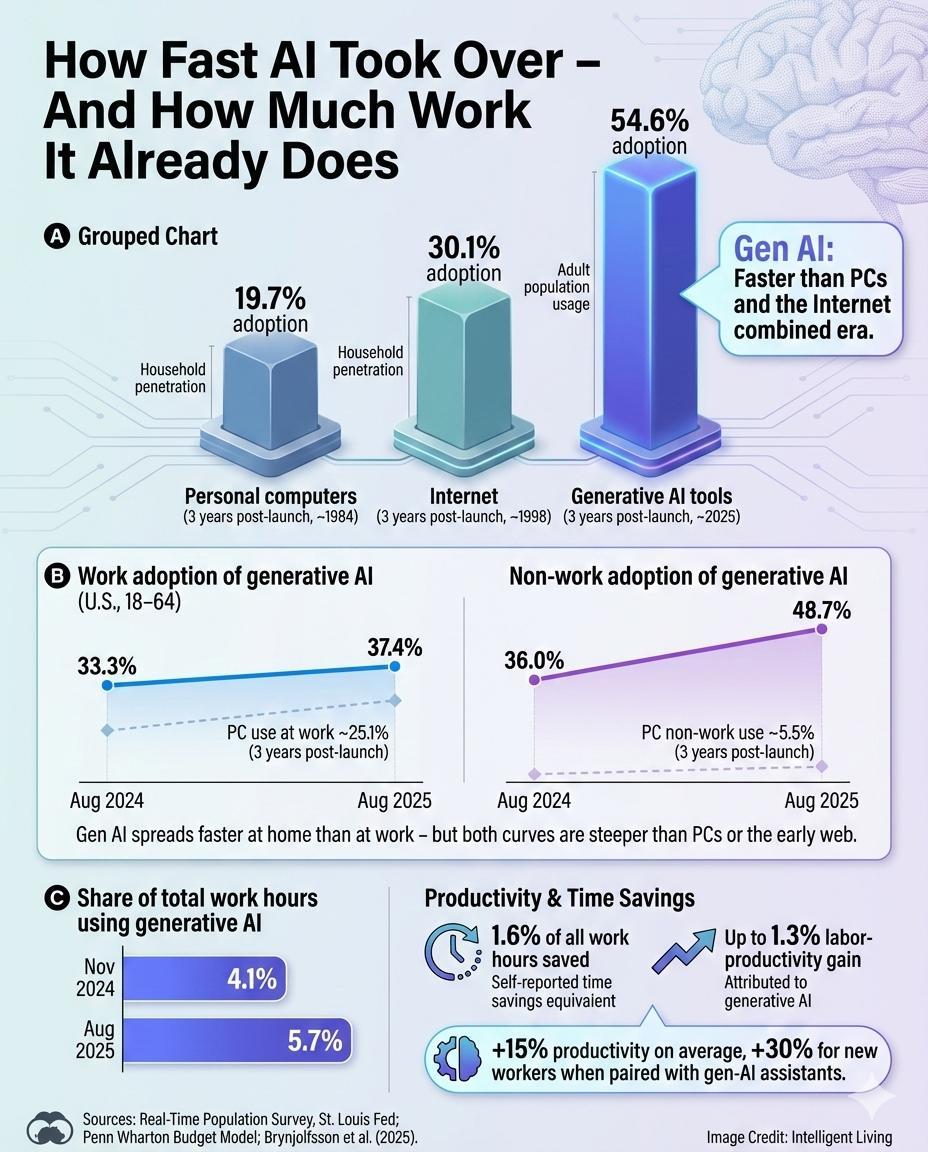
This new generation of agents turned AI from a conversational assistant into an operational partner. Enterprises moved quickly to build internal workflows powered by these agents. Daily users simultaneously began to recognize the immense time savings offered by these intelligent automation tools.
As AI-driven automation started redefining how teams work, particularly at entry-level positions, structural shifts in the workforce signaled a larger restructuring of digital labor heading into 2026.
4. Video Generation Jumped from “Wow Demo” to an Actual Platform Layer
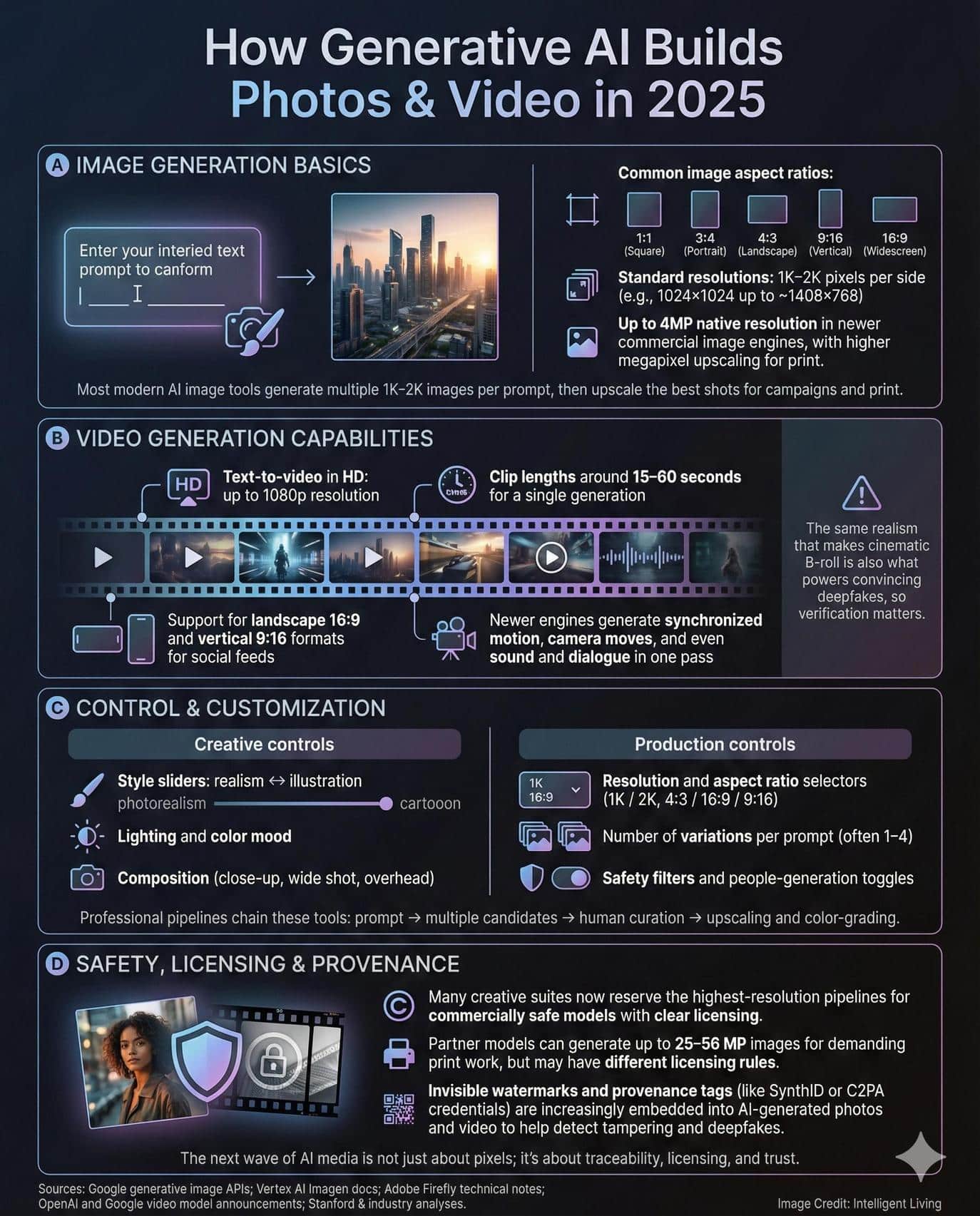
Generative video experienced its breakout moment in 2025. OpenAI’s Sora 2 and Google’s Veo 3 transformed AI video generation from a flashy experiment into a scalable creative tool, with Sora’s second-generation model and Veo 3’s Vertex AI rollout designed for real production workflows.
Sora 2 set a new bar by producing cinematic-quality scenes with realistic lighting and physics. Simultaneously, Veo 3 achieved seamless integration within Google’s cloud infrastructure. This allows creators to generate and edit high-resolution videos directly through intuitive text prompts.
This surge in capability triggered a profound tension between creative exhilaration and systemic dread. Creators celebrated the democratization of video production, but policymakers worried about the flood of synthetic media and misinformation.
As discussed in TIME, the line between real and artificial visuals grew thinner by the month. The next frontier became not just about creating video but about ensuring authenticity—a challenge that will dominate 2026 as video provenance and verification technologies mature.
5. Trust Tech Became Part of the Product: Watermarks, Provenance, and Verification
In response to the growing wave of synthetic media, 2025 saw a surge in trust technology designed to prove what is real. OpenAI built visible and invisible watermarks into Sora’s content using C2PA-compliant content credentials, while Google expanded its SynthID watermarking system to include video verification within Gemini’s creative suite. These efforts aimed to make AI-generated media traceable without stifling creative freedom.
Understanding verification tech is quickly becoming as essential as basic digital literacy. As synthetic media spreads, guides providing strategies for verifying synthetic media are becoming as important as the creative tools themselves. This convergence of tech and trust represents one of 2025’s most important social shifts—and a precursor to the transparency battles expected in 2026.
6. The Energy Imperative: Sustaining the Compute Demands of Frontier AI
Energy requirements surged alongside model intelligence, placing immense pressure on global power infrastructures. Global data centers consumed significant amounts of electricity in 2024—about 1.5% of total consumption—a figure expected to double by 2030.
The compute intensity required for models like GPT-5 and Gemini 3 accelerated this energy trajectory. Nations and corporations alike were compelled to scrutinize the environmental costs of perpetual model scaling. The industry focused on hardware optimization and infrastructure reinvention to manage these growing demands. Several key technological shifts began to suggest dramatic efficiency gains:
- Exascale supercomputer deployments such as Europe’s JUPITER and Google’s Ironwood supercomputers
- Photonic processors that use light to accelerate data movement
- Monolithic 3D AI chips delivering fourfold increases in energy efficiency
These innovations suggest that the next leap in AI capability may depend more on physical architecture than algorithmic tweaks. Carbon-aware computing strategies began to redefine cloud cost management by linking financial performance with environmental impact.

7. Data Centers Started Reinventing Themselves (Photonic Networking + New Chip Architectures)
Following the growing energy challenge, 2025 became the year data centers underwent their most dramatic transformation in decades. Photonic networking emerged as a critical solution, utilizing light instead of electricity to facilitate faster, cooler data transmission. Tech leaders began testing light-based interconnects that reduced latency and slashed power consumption.
Meanwhile, innovations in 3D chip stacking and heterogeneous computing redefined how AI workloads were distributed. Instead of relying solely on traditional GPUs, new architectures layered specialized accelerators to handle reasoning, vision, and memory-intensive tasks simultaneously. These developments represent a fundamental redesign of how AI’s “brain” connects to its “body.”
8. Open-Weight Reasoning Had a “DeepSeek Moment”
While proprietary models typically dominate the field, China’s DeepSeek R1 changed the game in 2025. By releasing a fully open reasoning system that rivaled closed competitors, they proved that transparency could be a competitive advantage. Early analyses of DeepSeek’s open local reasoning models helped developers understand how to adapt the architecture for their own use.
The global developer community quickly integrated the DeepSeek architecture into open research projects. This move effectively catalyzed a new era of collaborative, high-speed AI development.
Western labs responded as Meta launched Llama 4 multimodal models, while Alibaba’s Qwen3 open-weight family and Mistral’s open reasoning model expanded the global open ecosystem. These moves collectively shifted AI from a centralized race to a distributed evolution, empowering smaller nations, startups, and independent researchers to participate in frontier development.

9. Llama 4 and Qwen3 Accelerated the Multipolar AI Era
2025 underscored that the future of AI wouldn’t belong to a single nation or company. Meta’s Llama 4 and Alibaba’s Qwen3 represented the rise of multipolar AI, where open innovation created parallel spheres of influence. Each ecosystem developed its own cultural and regulatory norms, shaping how AI was trained, deployed, and shared.
This global diversification mirrored earlier eras of the internet but moved at unprecedented speed. As cross-border cooperation blended with healthy competition, the “AI Cold War” narrative began to soften. This shift from domination to coexistence suggests that 2026 will be the year AI matures into a genuinely global collaboration platform.
10. Europe’s AI Rules Matured for General-Purpose Models
While the tech world raced ahead, regulators in Europe quietly reshaped the legal landscape. In mid-2025, the European Commission finalized its EU General-Purpose AI Code of Practice for frontier models, offering detailed guidance for companies deploying large models under the EU AI Act. The rules clarified documentation, transparency, and copyright accountability for general-purpose AI, marking the first major governance milestone for frontier models.
These guidelines, shaped alongside labs like OpenAI and Mistral, proved that innovation and oversight can thrive in the same room. Europe’s example is expected to influence global standards in 2026, potentially harmonizing compliance practices across jurisdictions.
11. AI Entered the Physical World More Credibly (Robotics + Embodied Reasoning)
Beyond screens and servers, 2025 was also the year AI began mastering the physical world. Google DeepMind’s Gemini Robotics 1.5 bridged reasoning and movement by allowing robots to learn complex physical tasks through simple, natural-language instructions.
Foundational intelligence met heavy machinery as robotic foundation models and general-purpose machine training allowed robots to adapt on the fly, moving far beyond the era of rigid, pre-set instructions. As embodied AI becomes more capable, 2026 could mark the beginning of robots that not only perform but also understand why they act.

What to Watch in 2026 AI Inference
- Agent Ecosystems Mature: Expect AI agents to become fully integrated across consumer and enterprise ecosystems, blurring lines between software and staff.
- Efficiency Becomes the Competitive Edge: Innovation shifts toward lower power consumption, on-device reasoning, and hardware sustainability.
- Verification by Default: Authenticity tools like SynthID and C2PA move from optional to mandatory in digital media platforms.
- Open Innovation Expands: More nations and labs embrace open-weight models, accelerating multipolar collaboration.
- AI Legislation Scales Globally: The EU’s Code of Practice becomes a template for new policies in Asia and the Americas.
- Robots Learn by Doing: Embodied AI transitions from prototypes to early production environments in logistics, manufacturing, and care sectors.
- AI Literacy Becomes Essential: Users learn to verify, supervise, and collaborate with AI tools as part of everyday digital skills.
Shaping the Intelligence of Tomorrow: A Look Toward 2026
What we witnessed in 2025 wasn’t simply a checklist of technical wins; it was the moment our dynamic with technology shifted forever. We have moved into a space where AI functions as a genuine collaborator, sharing the load of creativity, logic, and operational management. From the sophisticated reasoning chains of GPT-5 to the critical energy-saving potential of photonic chips, the balance between raw intelligence and sustainable infrastructure is being carefully recalibrated to support a more resilient digital future.
As we stand on the threshold of 2026, the focus must shift from the power of these AI models to the responsibility of those who deploy them. The frameworks established over the past year—spanning from European governance to verification protocols like C2PA—provide the necessary guardrails for a world where synthetic and organic reality frequently overlap. Thriving in this new landscape demands both technical savvy and a firm ethical compass, anchoring these powerful tools to the actual needs of our communities.

Essential Insights into 2025 AI Breakthroughs
1. What was the most significant AI model release in 2025?
OpenAI’s GPT-5 and Google’s Gemini 3 led the year by introducing deep reasoning and real-time multimodal processing as standard features.
2. How did AI agents change personal productivity?
Agents like Project Mariner and ChatGPT Agent began performing multistep tasks inside desktop environments, moving beyond conversation to actual operational work.
3. Why is energy consumption a major concern for AI?
The massive compute power required for frontier models surged data center electricity demands, forcing a shift toward hardware optimization and greener power solutions.
4. Can AI-generated videos be verified for authenticity?
Yes, tools like SynthID and C2PA-compliant watermarking were integrated into platforms like Sora 2 to help users track and verify the provenance of digital media.
5. What is the impact of open-weight models like DeepSeek?
Open-weight systems like DeepSeek R1 and Llama 4 democratized advanced reasoning, allowing smaller developers and startups to compete with proprietary tech giants.


