
Today, food waste is a global problem due to mass food production in uncertain situations (like the current pandemic) and improper food management (including inadequate preservation methods and over-buying) on the consumer level. As a result, over half of food waste occurs in households, and almost one-fifth is wasted during processing.
And while the pandemic has worsened the situation, food waste has been one of the leading global environmental issues long before the coronavirus appeared. Food waste is also energy and water wasted – the resources required to grow, harvest, package, and transport. Furthermore, food waste on a landfill decays and produces methane, a potent planet-warming greenhouse gas.
World Wide Fund for Nature (WWF) reports:
About 11 percent of all the greenhouse gas emissions that come from the food system could be reduced if we stop wasting food. In the US alone, the production of lost or wasted food generates the equivalent of 37 million cars’ worth of greenhouse gas emissions.”

The challenge in reducing global food waste is spoilage. Hence, plastic packaging supports the safe distribution of food and keeps it fresh as it travels over long distances. For example, wrapping a cucumber with just 1.5 grams of plastic film can extend its shelf life from three to fourteen days; selling grapes in trays or plastic bags reduces in-store waste of the fruit by 20%.
Unfortunately, plastic waste is also one of the top global environmental issues of our day. However, Zero Waste Scotland estimates reveal that food waste’s carbon footprint can be higher than plastic. It found that Scottish households generate approximately 456,000 tonnes of food waste, which contributes to around 1.9 million tonnes of CO₂ emissions, and only 224,000 tonnes of plastic waste, about 0.73 million tonnes of CO₂ emissions.
Iain Gulland, Zero Waste Scotland’s chief executive, said:
“It might seem bizarre, but scraping that leftover lasagna, mince, or salad from your plate into the bin is seriously damaging the planet because when those scraps of pasta and lettuce which you never got around to eating end up in landfill, they rot. And as they break down, they emit methane, which is many times more harmful in the short-term to our climate than carbon dioxide (CO2).
Food waste is actually a bigger cause of climate change than plastics. It is still vital that we continue to reduce plastic waste, which remains an extremely serious issue. But as more people ditch single-use plastics as awareness grows of the wider impact of plastic waste, including pollution, we will send a strong message on the damage caused by binning leftovers and other wasted food.”
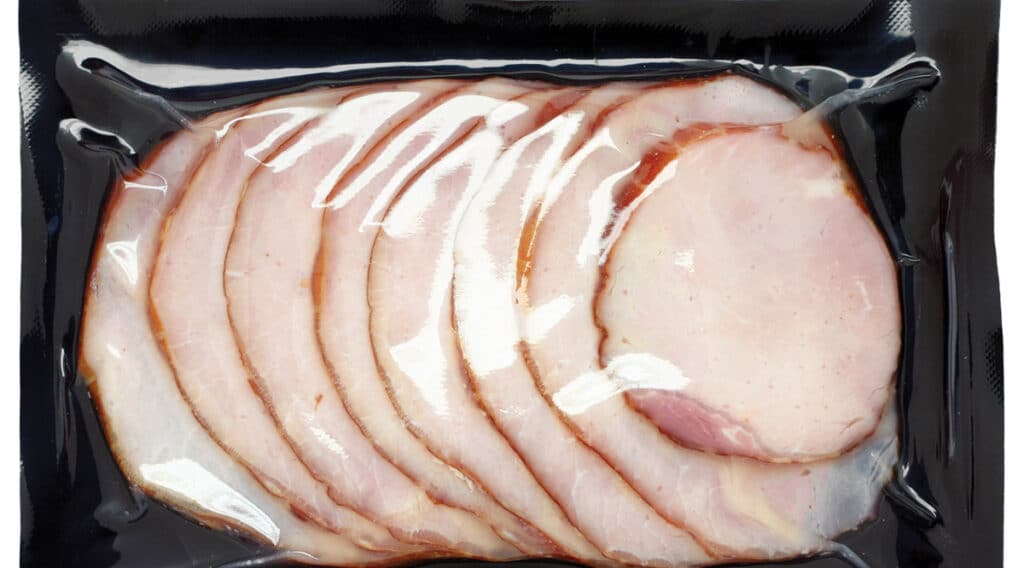
Therefore, packaging can be seen as a tool for fighting climate change from the food waste perspective. Furthermore, plastic packaging is lighter and more flexible than glass and cardboard (the alternatives), reducing transportation costs and carbon emissions. But that doesn’t cancel out the reality that it is also causing climate change.
Nevertheless, we can’t remove plastic from the equation and say we are sustainable. So, what do we do? That’s the question many scientists have been battling. It all comes down to the elements the material is made of and how the packaging is designed.
In response, companies and researchers are developing innovative new active antimicrobial packaging materials. These exciting materials raise the safety standards and prolong the shelf-life of foods without the need for preservatives. In addition, some people have gone so far as to make plastic out of biodegradable material, solving the food waste and plastic waste crisis’ both in one go!
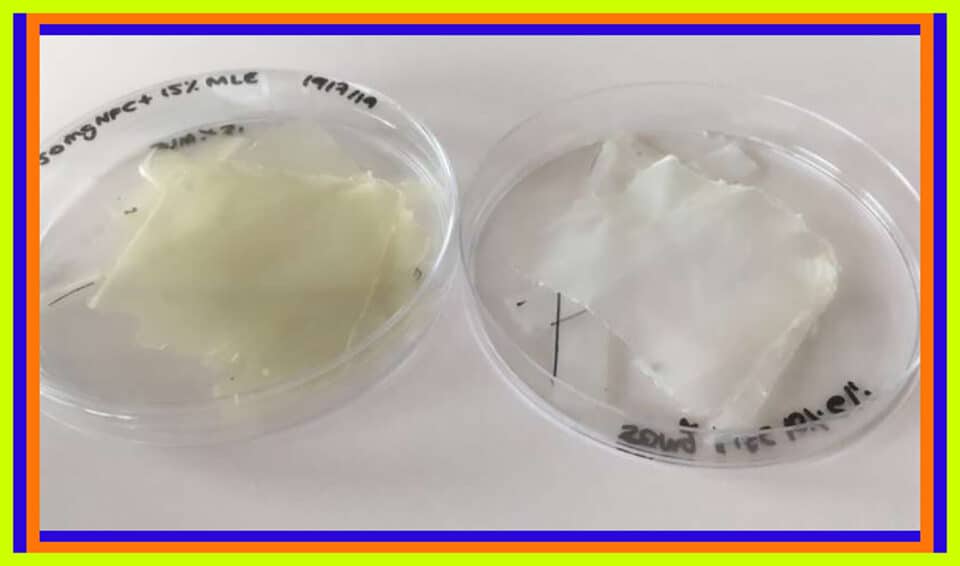
One such eco-friendly bioactive plastic, made by researchers from the University of Aveiro in Portugal and the University of Cadiz in Spain, uses mango leaf extracts to fend off common food pathogens and ultraviolet light. The team even collected the mango leaves from pruning remains at a local farm. Then, they combined the extract with nanocellulose from paper processing, producing a film with antimicrobial and antioxidant properties that is also resistant to UV light, speeding up food spoilage.
Another brilliant development, by NTU-Harvard SusNano, is a biodegradable plastic wrap made from non-toxic, naturally-occurring materials that release natural compounds capable of killing various fungi and E.Coli. In addition, the fibers in the packaging respond to indicators of food ripening (additional humidity or certain enzymes) by releasing microscopic quantities of antimicrobial compounds, helping to prevent contamination.
They demonstrated the material’s efficacy by wrapping a pack of strawberries with it and another batch with traditional plastic packaging. The strawberries in the new wrap stayed mold-free for seven days, while the other strawberries only lasted four days. Therefore, intelligent biodegradable packaging can reduce the amount of food thrown away while also addressing the plastic pollution problem.

It would make a significant difference if all packaging were made like this. Up to 10% of global greenhouse gas emissions come from food that is never eaten. Furthermore, 60% of the over 8.3 billion tonnes of plastic produced since the 1950s has ended up in the environment or landfill. Biodegradable antimicrobial packaging is a solution to both these problems.
There are plenty more ideas in the making too! For example, Ph.D. candidate Nur Alim Bahmid found that adding mustard seeds to packaging or even the food itself can extend the lag phase of antimicrobial growth in chicken, fish, and beef for two to three days at room temperatures.
He also found that basil, cinnamon, clove, lemongrass, oregano, rosemary, and sage are also good candidates. They contain high amounts of antimicrobial compounds, inhibiting various bacteria, mold, and yeasts from spoiling food. Although, many of these ingredients pose a significant challenge, with excessive levels affecting the sensory experience of food.

- And there are many other
- in this field of research, including food packaging with metal ions, silver nanoparticles, bacterial cellulose, and plastic film infused with essential oils and coated with clay nanotubes. For example, a team of scientists from the Indian Institute of Technology Hyderabad preserved tomatoes for approximately 30 days without microbial spoilage using a plastic material made with silver nanoparticles and bacterial cellulose. Meanwhile, a different team of scientists created a plastic film. They substituted the plasticizers with essential oils and coated the material with clay nanotubes, preventing over-ripening and microbial growth.
Suppose we ramp up packaging innovations like these to commercial scales and have them take the place of conventional plastic. In that case, the material could significantly impact the growing environmental issues plaguing the planet today.


