
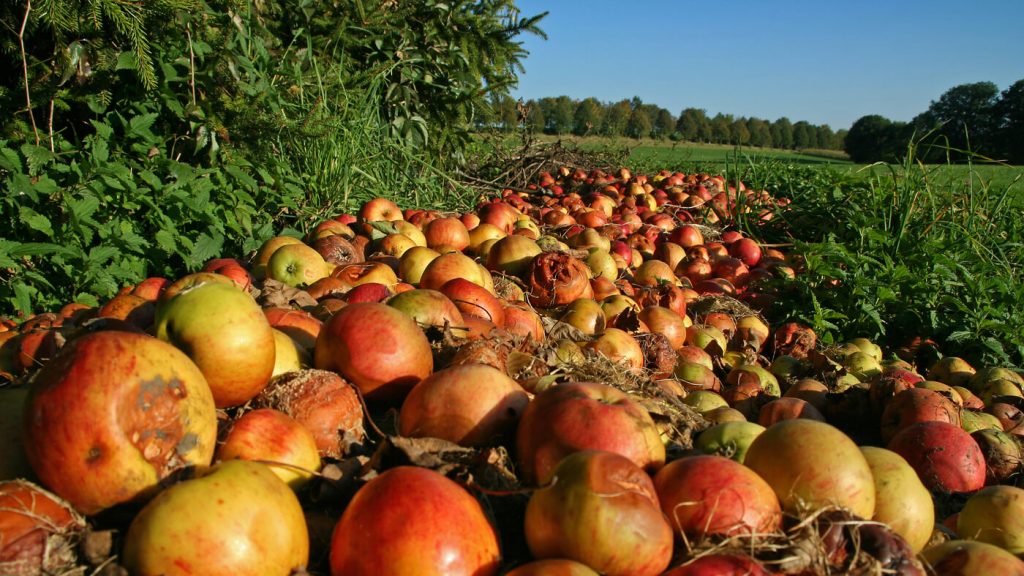
A new report on food waste in primary production in the UK has been released by government-backed, waste reduction body Wrap. The detailed study highlights that more than £1 billion of food is thrown away before it even leaves farms every year. That is the equivalent of 3.6 million tons of wasted food, which is 10 times more than what retailers throw away. Of that, 2 million tons of edible surplus does not make it to a retailer or other intended buyers.
Peter Maddox, the director of Wrap, says the research had helped identify key sources of waste. He said:
There is huge potential to reduce the amount of surplus and waste by promoting best practice, and that’s where our work is now focused. We want to increase redistribution of surplus food as has happened across the retail sector.
Wrap is going to assist the industry in resolving the issue through a network designed to connect farmers and small-scale producers to distributors. This includes identifying new outlets for surplus food, including charities, and connecting them with the source. It is also working with farmers and retailers to improve guidance on setting quality standards.

So why is it that all this edible food is going to waste and never reaching a retailer or other intended buyer? A lot of it has to do with crop rejection by retailers, the produce do not meet their quality standards. Other reasons include fluctuations in demand or problems during storage or packing.
If the farms don’t use the wasted food to feed livestock or distribute it to charities, they dispose of it by ploughing it back into fields, compost it, or use it to create energy.
The most likely vegetable to be thrown away is sugar beet, with 347,000 tons wasted every year. The food with the highest waste by value is poultry, accounting for £85 million in 2017, according to the report. The overall annual bill for waste is equivalent to more than £300 for each citizen.
Jack Ward, the chief executive of the British Growers Association, said:
As the sustainability of our food production systems comes under increasing scrutiny, reducing waste at every point in the food supply chain will be an increasing priority.
Large supermarkets and manufacturers have pledged to halving waste from “farm to fork” by 2030 in efforts to drive down the UK’s annual £20 billion food waste bill. As part of this, Wrap and the food and grocery charity IGD set a series of milestones for businesses to reduce waste at every stage of the supply chain.


