
Ford says the coming 2027 Fathom electric pickup will start at $28,350 and send over a projected 10 kW of home-ready AC power straight from the truck, with no big wall-mounted inverter box to buy. That one design change is why the Ford Fathom pitch as the cheapest American EV matters for backup power. The truck is not on sale yet, and Ford has not published battery size or final install pricing, so this is a pre-production explainer of what cheap backup really buys.
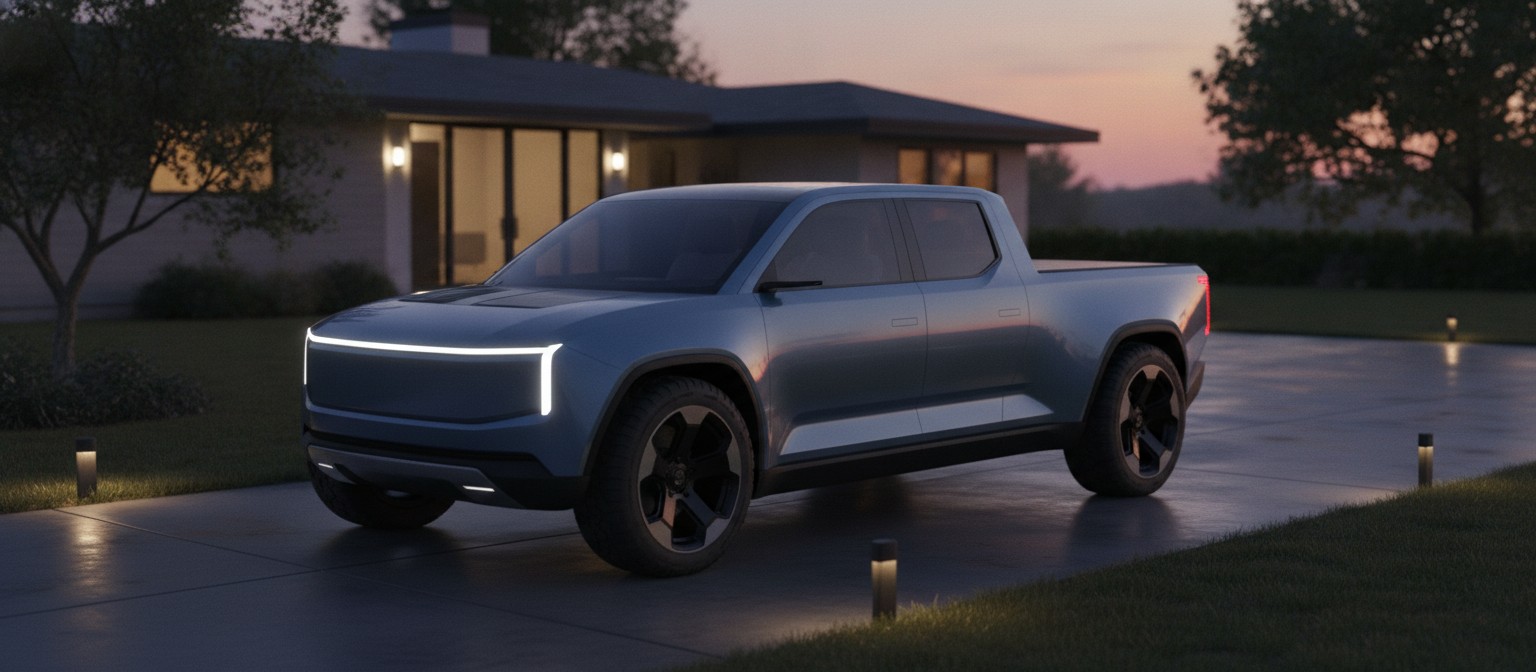
What Ford actually announced on Oct. 27
On Oct. 27, 2026, Ford described two home hardware options for the Ford Fathom mid-size truck, due in 2027. The base Home Power Station is expected to cost about $650 and supports lower bills by charging when power is cheap and sending power back when power is costly. The Home Backup Power package bundles that station with a backup panel for outage use and is expected to cost about $2,100 in hardware.
Ford said the truck can deliver over a projected 10 kW of AC power to a home, which would cover essentials like a refrigerator plus a central air conditioner for about half a day in Ford’s example. It also said both setups can join virtual power plants, where parked trucks feed the grid during strain, but it did not name installer partners or final payout rates.
Why putting the inverter in the truck cuts the bill
An EV battery stores direct current, or DC. A house runs on alternating current, or AC. Something has to convert DC to AC before truck power can run home circuits.
On the discontinued F-150 Lightning, that converter lived on the wall. Buyers needed an expensive external DC to AC inverter as part of the home system. On Fathom, Ford says the inverter lives inside the truck’s E-box, one of five main electrical modules developed for its Universal EV platform after Ford acquired startup Auto Motive Power in 2023. The wall unit becomes a simpler and cheaper connection point because it no longer does the heavy conversion work.
Ford calls Fathom the first EV from a U.S. automaker under $30,000 to skip the separate wall inverter at this output. That claim is about price plus design, not about inventing bidirectional charging. The Tesla Cybertruck is one other example with an onboard inverter. Other EVs already send power back. They just ask the homeowner to pay for the wall inverter to make it happen. Ford says Fathom is designed to meet UL 1741 and IEEE 1547 interconnection requirements, with SAE J3068 handling the high-power AC signaling to the wall unit.
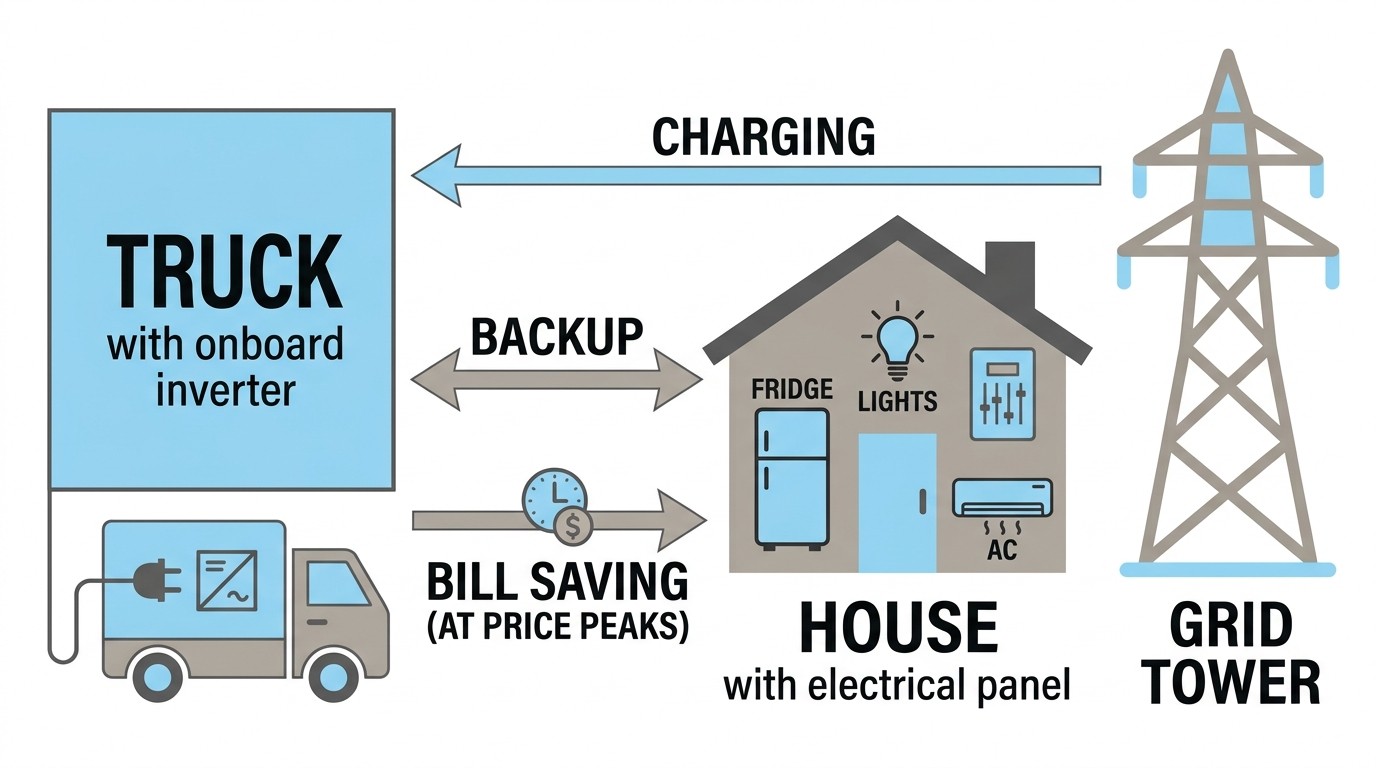
kW vs. kWh in plain English, with real house numbers
kW is size. kWh is amount. A 10 kW rating means the truck can run many things at the same instant, up to 10,000 watts at once. A kWh number means how long that pace can last. A 1,000-watt load running for one hour uses 1 kWh.
The average U.S. home uses about 28 to 30 kWh per day, according to the U.S. Energy Information Administration. That average hides big swings. A central air conditioner may draw about 3,000 watts while running. A modern refrigerator averages only about 55 watts across a day, though it draws more in short cooling bursts and needs a brief surge to start. Lights, WiFi, phone chargers, and a laptop together may add only a few hundred watts.
At 10 kW of output, starting and running those essentials at the same time is realistic for many homes. Running everything at once is not. Electric heat, electric water heating, an electric range, and central air together can exceed 10 kW quickly. Which circuits you back up matters as much as the truck rating, and your electrician decides that during installation.
Ford has not published Fathom usable battery capacity, so exact outage hours cannot be calculated yet. Think of it as a simple division once that number arrives: usable kWh kept for the house divided by your average kW draw equals backup hours, minus whatever range you save for driving.
What 10 kW can and cannot run
For a buyer wondering what backup power really buys, it helps to sort loads by size. These are typical running draws, and actual models vary, so check nameplates before you plan circuits.
- Fits easily together under 10 kW: refrigerator, freezer, lights, WiFi router, phones and laptops, TV, gas furnace blower, and sump pump.
- Fits with care: refrigerator plus a window air conditioner or a smaller central air unit.
- Fits in short bursts: microwave, coffee maker, washing machine without electric drying.
- Likely too much at once: whole-home electric heat, electric water heater plus central air plus electric range, two large air conditioners starting together.
- Watch the startup surge: motors in air conditioners and some refrigerators pull extra power for a second or two at start. Ford notes that soft-start devices can reduce that spike, but they add cost.
- Plan one big load at a time: run the microwave or the air conditioner compressor start alone, then add small loads back, to stay under the 10 kW ceiling.
In short, essentials fit with room to spare. Comfort cooling for part of the home fits. Heating a whole home with electricity or cooking a full electric meal during an outage may require choices.
What is included, and what still needs install work
The truck price does not make a home backup-ready by itself. Ford’s expected hardware covers the wall connection and backup switching, but a licensed electrician still has to install it, and the utility still has to approve export where required.
Budget for three layers. First, the truck at a $28,350 starting MSRP. Second, about $650 for bill management hardware or about $2,100 for the outage backup package, based on Ford’s early estimates. Third, installation labor, possible electrical panel work, permits, and any soft-start parts, which Ford has not priced and which can vary widely by home.
That third layer is where older coverage of vehicle-to-home systems ran into trouble. For existing bidirectional setups, installation has run up to $10,000 depending on how much electrical work a home needs, as reported by TechCrunch. Ford has not said Fathom installs will be cheaper, only that the hardware should be. Ask for a site quote before counting on savings.
Fathom vs. F-150 Lightning home backup cost
The comparison that matters is hardware plus install, not truck price alone. Lightning taught buyers that the wall system could rival a home battery quote. Fathom aims to shrink the wall part of that quote.
| System | Hardware estimate | What the hardware does | Install |
|---|---|---|---|
| Fathom Home Power Station | About $650, projected | Bill management, charge cheap and send power back at pricey times, plus grid services with an active plan or trial | Extra, not yet priced |
| Fathom Home Backup Power package | About $2,100, projected | Adds a backup panel so selected circuits switch to truck power during an outage | Extra, not yet priced |
| F-150 Lightning Charge Station Pro plus Home Integration System | $1,310 Charge Station Pro plus Home Integration System hardware, $5,205 combined | External DC to AC conversion on the wall plus backup switching | Often several thousand dollars, with past Sunrun all-in quotes around $8,900 to $9,400 reported by Fortune |
| Typical small standby generator | $400 to $2,700 for portable units, $3,500 to $6,000 for the standby unit alone | Fuel-based backup with no driving value | $3,000 to $10,000 for standby install. See our portable vs. standby generator comparison for the full range. |
The takeaway is narrow but real. Fathom moves the costly inverter from the wall into the truck, so the remaining wall bill drops by about half for bill management and about 60 percent for backup hardware compared with Ford’s first generation gear. The electrician’s portion remains. A home that needs a panel upgrade will still feel it.
Virtual power plants and lower bills, without the hype
Ford says Fathom owners with the right hardware and an active plan or trial can use Home Power Management to buy low and use truck power when rates are high and can enroll in virtual power plants that pay fleets of batteries to help the grid. In plain terms, the truck can shift a home’s grid use away from costly hours or send small amounts back when the local grid is stressed.
Ford has not said what owners might earn. Outside estimates of over $1,000 per year depend on utility, program design, and how often you stay plugged in. Treat that as a possibility, not income. Programs vary by state, enrollment is optional, and frequent cycling can affect long-term battery health, which is why warranty terms will matter once Ford publishes them.
For context on why utilities care about parked batteries, our recent look at electric trucks as grid assets and why bidirectional charging is the catch walks through the five conditions that have to line up before export pays: reverse-ready hardware, export permission, parked hours, warranty cover, and a real price for the service. Fathom helps with the first. The other four still sit with the utility, the installer, and the contract.
What Ford has not said yet
Several facts needed for a buying decision are still missing because the truck is pre-production. Ford describes output as over a projected 10 kW but has not said whether that is continuous or short-term peak, which matters for motors that surge at start. It has not published usable battery capacity either.
Ford has not named install partners, published install price ranges, or detailed which electrical panels will need upgrades. It requires an active plan or trial for energy features but has not detailed that cost. It also has not published warranty terms for bidirectional use. Until those arrive, the honest summary is that hardware should cost much less than Lightning-era gear, while total installed cost and real backup duration remain to be proven.
Frequently asked questions
Can the Ford Fathom power a house?
Ford says it will be able to send over a projected 10 kW of AC power to a home with the right Ford home hardware, professional installation, and utility approval where needed. That is enough for essentials plus selective cooling in many homes, not a whole electrified home running everything at once. The truck is due in 2027, and final specs are pending.
How long can it keep a fridge and air conditioner running?
Ford’s early example is about half a day for a refrigerator plus air conditioning. That depends on the air conditioner size, thermostat setting, outdoor heat, what else is running, and how much battery you reserve for driving. Ford has not published battery capacity, so treat that example as illustrative until final numbers arrive.
What is the difference between kW and kWh for home backup?
kW is how much you can run at once. kWh is how long you can run it. A 10 kW truck can start many appliances together, but backup hours come from stored energy. Divide the kWh you set aside for the house by your average kW draw to estimate hours.
What do you need besides the truck?
For lower bills without outage backup, Ford points to the Home Power Station plus an active plan or trial. For outage backup, you need the Home Backup Power package with its backup panel, plus electrician install, permits, and utility permission where required. Neither hardware estimate includes installation.
How much cheaper is it than the F-150 Lightning setup?
Ford expects about $650 for the power station versus $1,310 for the prior Charge Station Pro and about $2,100 for the backup package versus $5,205 for the prior Home Integration System. That is roughly half and roughly 60 percent less for hardware. Installation is extra in both generations and varied widely for Lightning.
Is the Fathom on sale now?
No. Ford describes Fathom as a 2027 mid-size electric truck starting at $28,350 MSRP. Details on trims, battery options, install partners, and program payouts are expected closer to launch.
The bottom line for a buyer
The cheapest American EV earns its price tag by skipping the most expensive part of home backup. Moving the inverter into the truck should cut wall hardware to about $650 for bill help or about $2,100 for outage backup before installation, far below Lightning-era wall costs. What that buys is selective backup for food, light, connection, and some cooling, not unlimited whole-home power, and the total cost still depends on your panel, your utility, and how much battery you keep for driving. If your outage plan is essentials plus one air conditioner, Fathom looks like a practical second use for a truck you already want. If your plan is everything on at once, keep the generator quote too.


