
Greenhouses are described as being “invaluable for creating a protected growing environment” by The Royal Horticultural Society. The structures provide an enclosed and controlled environment to grow fruits and vegetables. It sounds hi-tech, but gardeners have been using them for many hundreds of years. Of course, today they are connected to the electricity grid and require a substantial amount of energy and water.
The senior natural resources officer at the Food and Agriculture Organization of the United Nations, Olivier Dubois, who also co-ordinates its program on energy, said:
The greenhouse model is part of a series of farming systems that try to optimize the use of land and produce the maximum… food on a small amount of land. Which is great, because it’s part of the whole need to be very efficient in the way we use resources.
The problem is you need to also look at the other inputs and resources needed to produce the food. So, if you’re in a place where you don’t have a lot of water, you need to think twice before promoting that kind of model.
The Netherlands is well known for its widespread adoption of greenhouse technology. Marc Middeldorp, manager for design and engineering at Van Der Hoeven, told CNBC’s Sustainable Energy:
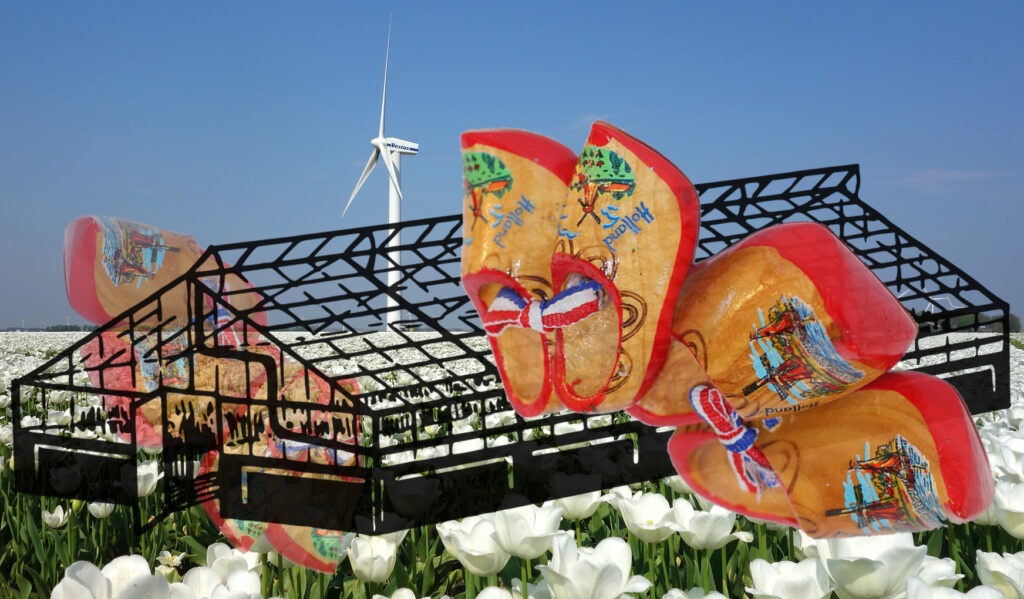
Greenhouses are just as Dutch as wooden shoes and tulips. It’s a cliché, but it’s true.
Van Der Hoeven is a firm founded in 1953 that specializes in horticultural developments. It’s involved in schemes that produce fruits and vegetables using greenhouse technology. Middeldorp says that controlling variables such as humidity, temperature, and levels of pests and insects, so the indoor environment is perfect can be quite an energy-intensive process.
He said:
There is a demand, definitely, for clients to build sustainable greenhouses with efficient use of energy and to reduce as much as possible the use of freshwater, electricity. And that’s where our challenge lies at the moment.
Dutch authorities also aim to make the sector more sustainable. Therefore, from this year forth, all new greenhouses in the country will have to be climate neutral. The government says the requirement can be met through any means fit, such as the use of measures designed to save light, solar power, and geothermal applications.
To help with the transition, there is a company called Solho headquartered in the Dutch city of Delft, that has developed the sustainable tech for the greenhouse sector. Its Solar Powered Horticultural Off-grid Unit (SPRHOUT) unites solar power with thermal energy storage. It’s claimed to be “the most effective renewable-based system to ensure the energy self-sufficiency of greenhouse facilities.”
Adriano Desideri, Solho’s CEO and co-founder said:
It uses solar energy as an input to generate all the energy flows required to operate the greenhouse farm: heating, cooling, and electricity.
The solar panels are also used to heat water, which is kept in an innovative Thermal Energy Storage unit (TESMOD). Desideri continued:
We harvest this thermal energy: either for heating, or for cooling through a thermal chiller, or for electricity through a power unit. In this way, we end up with a system that uses only the sun to generate all the energy streams required to operate the greenhouse farms.

The dual system opens the door to incomparable growth opportunities for manufacturers and developers of greenhouse farms. It enables them to deliver sustainable food provision, which is one of humanity’s biggest challenges today and into the future.
SOLHO writes on its website:
Our vision is a world in which vegetables are grown wherever people need, in an environmentally sustainable way, overcoming and counteracting water scarcity and climate change to ensure a future to our growing humanity.
There’ll be nine billion humans on Earth three decades from now. With all the new people joining, demand for food will rise by at least 60%, and agriculture will have to double food production. All of this surplus to sustain the global population will have to happen with a lower environmental impact and by using fewer resources. Greenhouses powered by renewables could stand up to the challenge.


