
Warehouse efficiency used to come down almost entirely to layout and labor management. Today, a third factor has entered the equation: autonomous mobile robots, or AMRs. These systems are changing how goods move through a facility, and the operational improvements they deliver go well beyond simply replacing a worker pushing a cart.
What Makes AMRs Different From AGVs?
AMRs differ from older warehouse automation in a fundamental way. Traditional automated guided vehicles (AGVs) follow fixed paths, usually marked by magnetic strips, wires, or floor tape, and require significant infrastructure investment to install and reconfigure. AMRs, by contrast, use onboard sensors, cameras, and mapping software to navigate dynamically. They understand their environment, adjust their routes around obstacles, and can be redeployed to new tasks or zones without ripping up the floor.
That flexibility is a big part of why AMRs have become the more practical entry point for warehouses exploring automation, especially those that cannot justify a major infrastructure overhaul just to test whether robotics will pay off.
Operational Benefits of AMRs
The most immediate improvement AMRs deliver is a reduction in walking and transport time. Research on warehouse operations consistently finds that workers spend a disproportionate share of their shift simply walking between tasks. AMRs take over the point-to-point transport of totes, carts, and pallets, freeing staff to stay focused on picking, packing, and quality control instead of covering ground.
That shift also brings more consistent throughput. Manual transport introduces variability, since different workers move at different speeds and make different judgment calls about what to prioritize. AMRs move at a predictable pace and follow consistent logic, which smooths out throughput and makes fulfillment times easier to forecast.
There is a safety benefit as well. Repetitive lifting, pushing, and walking are common contributors to strain injuries in warehouse settings, a risk that bodies such as OSHA document in detail. Shifting that repetitive physical burden to robots reduces the exposure that leads to those injuries. That has downstream benefits for workers’ comp costs and turnover.
Automating transport also means better use of skilled labor. When transport tasks are handled by robots, warehouses can redirect labor hours toward the parts of the operation that actually require human judgment, like exception handling, quality checks, and process improvement. That is a more efficient use of a workforce that is often expensive and hard to hire for in the first place.
Scaling gets easier too. As order volume grows, transport needs grow with it, and AMR fleets can typically scale by adding units to handle increased volume without requiring a proportional increase in headcount or a redesign of the facility.
Finally, AMRs offer a level of data visibility that manual operations cannot match. Because they are digital systems, their movement generates data that facilities can use to spot bottlenecks, measure actual travel patterns, and make more informed decisions about layout and staffing than they could from manual observation alone.

Where AMRs Deliver the Most Value
Not every warehouse task benefits equally from AMR deployment. The clearest returns tend to show up in facilities with repetitive, predictable transport patterns: moving totes between picking zones, shuttling pallets to staging areas, or running replenishment routes. Operations with highly variable layouts or low order volume may see less immediate benefit, which makes it worth mapping your actual material flow before committing to a rollout.
How to Get Started Using AMRs in Your Warehouse
Most successful AMR deployments start small. Rather than automating an entire facility at once, a contained pilot in a single zone lets teams validate performance, gather real data on throughput and labor savings, and build internal buy-in before scaling further. AMR companies like Mul Technologies specialize in this kind of incremental deployment, helping warehouses integrate mobile robotics into existing workflows without a disruptive overhaul. For a look at how similar automation is already reshaping logistics facilities, see robotic sorting arms in parcel hubs.
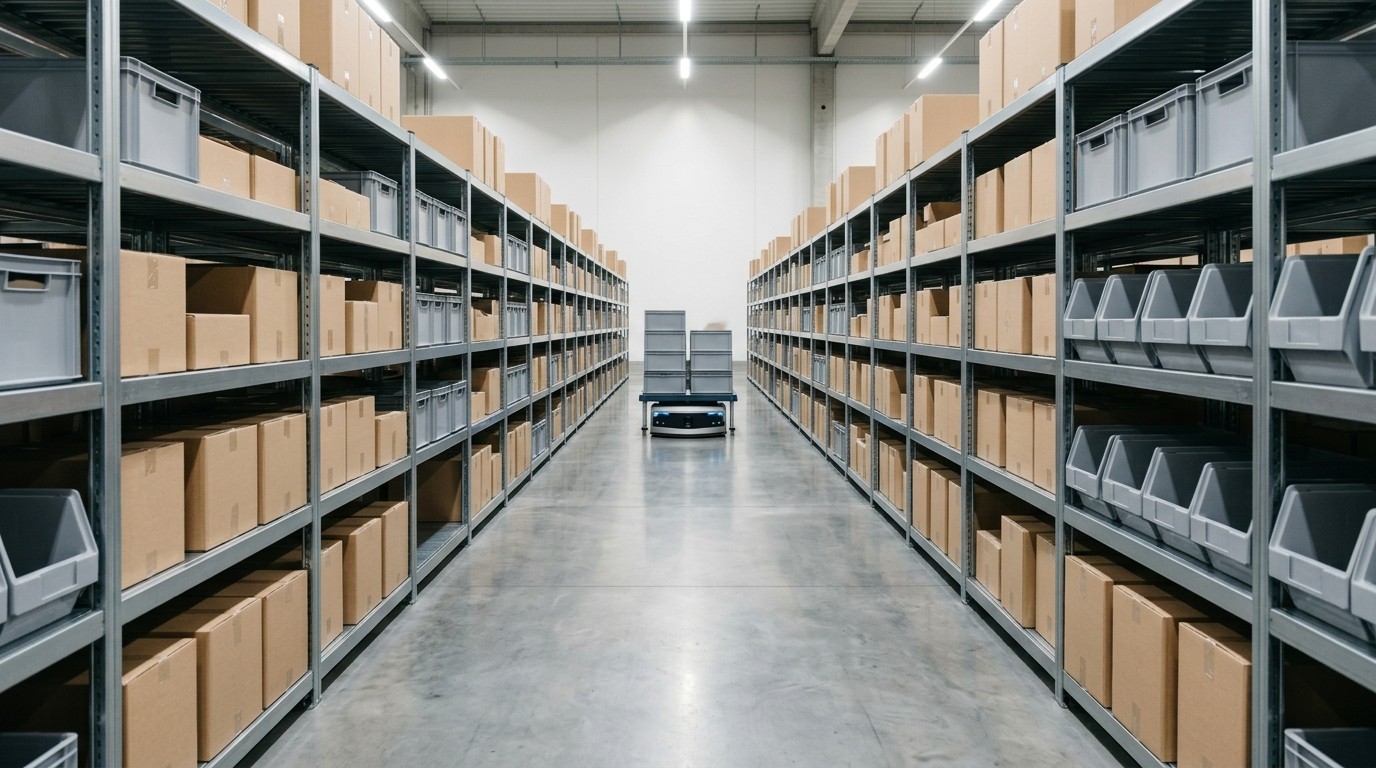
AMRs are not a futuristic concept anymore. They are a practical, increasingly accessible tool for warehouses looking to cut repetitive labor, improve consistency, and reduce the physical toll of manual material handling. For operations feeling the pressure of labor shortages and rising throughput demands, AMRs offer one of the more measurable ways to improve operations without a full infrastructure rebuild.


