
Who do you think is more creative, humans or AI? Definitely humans! But what if I tell you that in recent times, AI-assisted stories are being considered more creative, interesting, and well-written?
Like it or not, it is happening. AI is transforming the way we write stories. It seems like artificial intelligence might be the writing partner you never knew you needed.
This sounds so wrong. How can a machine, programmed with algorithms and data, truly contribute to the creative process?
How does AI bring creativity?
When we think of creativity, we often picture someone deep in thought, like Rodin’s thinker. But AI? That’s a computer, right? How can a machine possibly help with creativity?
Basically, AI is not creative at all. It does not even know what it’s doing. What happens is that AI, especially large-language models like ChatGPT, Claude, and Gemini, are trained on massive amounts of data.
They have read almost everything written in history, from classic novels to modern blogs. They know every style, pattern, and tone of writing.
This much data enables them to generate stories that are not just coherent but also innovative. They’re like a large reservoir of ideas and structures; whenever you ask, they will bring you something out of it.
Modern AI tools are so sophisticated that you can even set their creativity levels, number of words, language, and tone.
Like the AI story generator, it gives you control over each aspect of the output. Provide whatever you have in your mind: a topic, character, or even a moral; it can come up with a story.
Proof of AI being creative
1. AI-assisted stories were found to be more interesting.
Research published in the journal Science Advances in mid-2024 proves that AI is helping writers come up with better stories.
Three hundred writers had to write a short story against AI-assisted participants. AI’s story was found to be 26.6% better written and 15.2% more interesting.
However, the study was done with novice writers, and the stories written by AI were not unique. In fact, they were found to be quite similar. Just as I explained in the previous section, AI rephrases already-present data to generate something new.
It was new in the sense that it had not been described in these words before, but the idea was already present somewhere.
2. AI has more novelty.
Another study was done on the same topic but with a different approach. This time, the researchers divided 300 participants into three groups: no AI, using only ChatGPT, and using five AI-generated ideas.
Then, 600 people were asked to score the resulting stories. Results observed that the stories written by the most AI users were the most creative: almost 8.1% more creativity and 9% more novelty.
AI was able to incorporate emotions into the stories; researchers found that the AI-assisted stories were not only more emotional but also more funny and enjoyable.
3. AI improves creativity.
This research was based on the level of creativity of the writers. A Divergent Association Task (DAT) test was used to check the creativity levels of the writing participants.
They found that the writers with the lowest creativity levels benefitted the most from AI.
Their stories were found to be 26.6% better written, 22.6% more enjoyable, and 15.2% more interesting.
People with higher creativity levels didn’t get as much better.
Why are AI-assisted stories so successful?
Now the question arises: what makes AI-assisted stories better? What is in them that human-written stories lack?
Well! There could be many reasons; the most obvious reasons are:
- Data-driven inspiration: AI tools analyze vast amounts of data, including existing stories, cultural trends, and audience preferences. This provides writers with a lot of options, like new ideas and inspiration that they might not have considered otherwise.
- Improved character development: Again, the analyzing power of AI tools is too good. They analyze different archetypes and personality traits and then suggest deeper, more complex, and more relatable characters. They will go through your ideas and tell you what’s wrong with your character and what’s relevant to the story.
- Diverse perspectives: AI can offer unique perspectives that you might not consider. As they have read so much, they know what has been done and what has not. They also know what the audience likes and what not. So, they can suggest a plot twist that is completely unexpected but also highly effective.
- Increased efficiency: Other than being a creative engine of your storytelling, AI can also help streamline your writing processes, such as research and editing. So you can focus more on your creativity.
- Improved storytelling techniques: AI is familiar with every storytelling technique ever used in history; it has read almost everything. You can utilize this aspect to apply advanced storytelling techniques in your work.
Do you know foreshadowing, symbolism, and character arcs? AI does, and with AI, you can write them too.
The future of AI-assisted storytelling
As we discussed before, AI surely writes better; it’s creative, too, but it’s not unique, at least not for now!
With more innovative and creative stories emerging from this collaboration between humans and machines, we can predict that AI will eventually become a crucial tool for writers of all genres and skill levels.
The use of AI is rapidly enhancing. People write through AI, detect AI, and remove every hint of it. Then they upload it on search engines. This helps them use AI without the text being detected as being written by AI.
However, it is important to keep in mind that AI will not replace human creativity. While it can assist or improve our work, the human touch shapes stories and gives them a unique voice.
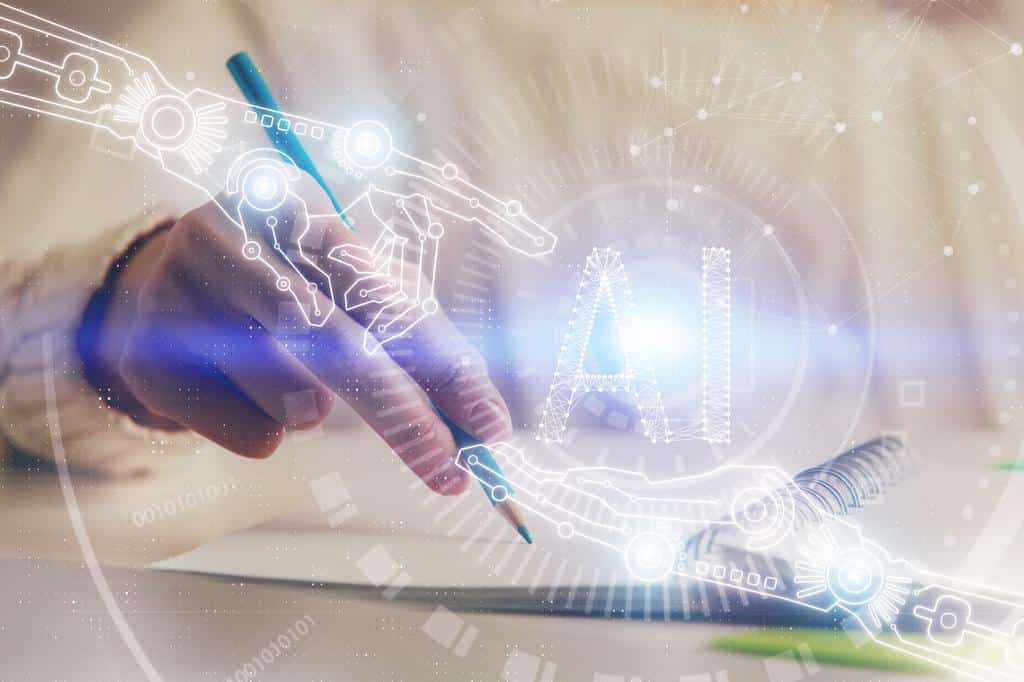
Conclusion
Storytelling with AI assistance is quite fascinating. Every other day, a new tool comes and claims to write better than its predecessors.
These rapid advancements hint that AI will soon be a necessity in story writing. Research also supports this argument.
Have you ever tried writing with AI? If not, now might be the perfect time to see what it can do for your storytelling!


