
Thinking about updating your home’s HVAC system? Consider adding some smart heating and cooling technologies to your living spaces. Smart heating, ventilation, and air conditioning technology is experiencing a surge in popularity since it offers increased comfort, energy efficiency, and long-term savings on operating costs. With more homeowners turning to IoT HVAC solutions, it is estimated that the smart HVAC market will reach $178,293.7 million by 2033.
Apart from the year-after-year price surge of fuel and electricity, industry experts report that the increasing popularity of home automation systems is driving the shift towards smart HVAC technologies. With continuous research and development expediting product advancements, homeowners now have a wide range of solutions to choose from to create a healthy and comfortable indoor climate. If you’re looking to future-proof your HVAC, here are some smart heating and cooling setups to consider for your home.
Communicating HVAC Systems
If you’re due for a new furnace or air conditioner, it may be a good idea to replace both since this translates to improved comfort all year round. For heating systems to operate safely, call in an expert, such as a heating engineer, to perform the boiler installment. This ensures legal compliance and maximum efficiency since they are trained to handle electronic controls, gas connections, and other sensitive components within your heating system. They also specialize in residential heating system maintenance, so if your boiler just needs a thorough clean, they can perform a power flush, which clears out sludge from heating systems to restore efficiency and reduce boiler noise.
To maximize your HVAC’s output and capabilities, think about installing technology that allows your heating and cooling appliances to ‘talk’ to each other. Communicating HVAC systems involves setting up individual components to exchange information with each other, specifically about the temperature inside the home. Then, a thermostat uses various sensors to adjust the settings on heating and cooling units to create and maintain the right temperature for different rooms. Since the thermostat is constantly working to provide the ideal temperature, no energy is wasted, and none of the units will be overworked, which helps to improve their longevity.
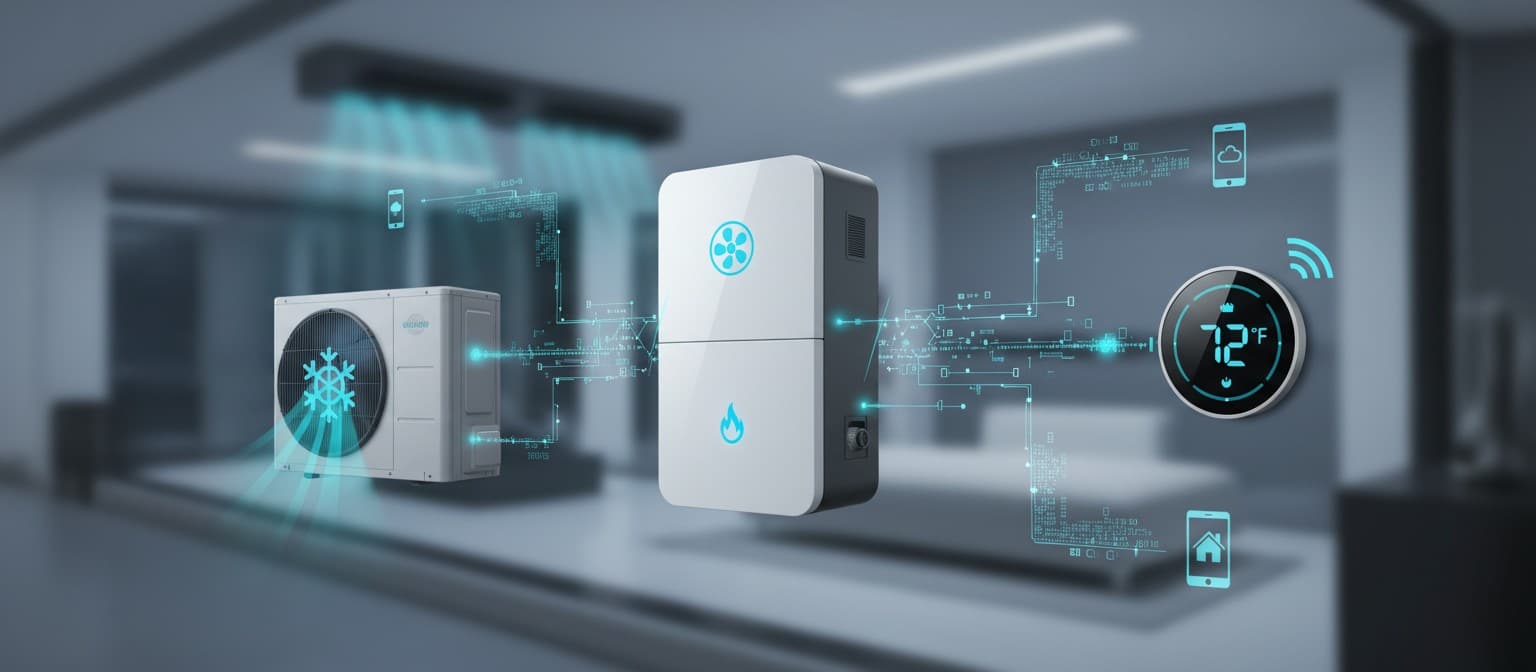
For the communication feature to work, it’s important that all of the units are compatible with each other, so this means that you may have to get the components from the same HVAC company. Though you may have to shell out a bit more, you’ll find that the extra expense is worth it since having better control over your gas furnaces, blowers, and air conditioners can reduce your energy costs and help your units to last longer.
Smart Air Quality Home Monitors
Maintaining a balanced indoor temperature is essential for comfort and productivity. But to prevent serious health issues and improve safety, it’s also important to keep your indoor air free of toxins and pollutants. Installing a smart air quality home monitor allows you to manage respiratory health and create a better environment since it provides real-time data on air quality. This enables you to track pollutants like VOCs from cleaning products, carbon monoxide, allergens, mold, or PM2.5 from dust and smoke. By having access to actionable data, you’ll know when to use a fan or open a few windows to improve ventilation or when to use an air purifier to clean the air.
Some of the best smart air quality monitors for homes on the market include the Airthings Wave Plus, which not only monitors VOCs and CO2, but also scans for the presence of radon, which is a radioactive gas that causes lung cancer. There’s also the Temtop LKC-1000S, which tracks VOCs, PM10, particle count, and formaldehyde. For a budget-friendly option, consider the Amazon Smart Air Quality Monitor, which works with Alexa for voice reports and notifications and creates routines for smart air purifiers.

Smart Thermostat
Imagine coming home to a perfectly cool house after working or walking in the sweltering heat. That’s one of the advantages of having a smart thermostat since you can remotely control it to turn your AC unit on. Earlier, it was mentioned how this device can work in tandem with communicating HVAC systems to create the ideal temperature for homes. However, it can do a lot more since a smart thermostat can provide you with data about your energy usage and estimated savings.
This device also helps you save energy since it has sensors that detect occupancy, and if you’re not home, it switches off heating or cooling systems all on its own. In addition to this, the smart thermostat works with voice assistants, smart blinds, smart lighting, smart locks and doorbells, and smart air filters, among others. Having an interconnected system can enhance efficiency and home automation, and it takes the guesswork out of managing your home’s temperature.
Smart heating and cooling technologies can create the perfect indoor environment for you and your loved ones. Consider these smart HVAC solutions for a healthier, safer, and more comfortable home.


