
Hospital readmissions are one of the biggest problems in healthcare worldwide.
While the numbers differ, a U.S. study of over 15,000 orthopaedic patients found that 4.5% were readmitted within 30 days of discharge. Country-wide, that’s possibly millions of patients back in a hospital bed just weeks after leaving, often due to complications that never fully resolved.
This revolving door puts a massive strain on both families and the healthcare system. The financial toll is also brutal. The average cost per readmission is more than $16,000. This is money that could be redirected toward preventive care and other critical health services.
But there’s good news. Certain new technologies are starting to help reduce hospital readmission rates. Remote patient monitoring (RPM) is one of them.
This article explores how it works and why it’s now such an important part of post-discharge care.
Why Do Patients Get Readmitted?
Most readmissions aren’t random. They follow patterns, and a lot of them are preventable.
The usual suspects include:
- Medication confusion after discharge
- Missed warning signs of worsening conditions
- Poor follow-up care
- Chronic disease flare-ups
- Poor communication between the patient and the care team
The last factor, communication, plays a more serious role than many people know. Patients leave the hospital, but there’s really no follow-up between discharge and their next appointment.
Judit Sharon, founder of an incident alert management company, highlights this gap:
“The transition from hospital to home remains fragmented, confusing, and characterized by poor communication. As a result, many patients land back in the hospital within days.”
This reflects exactly what happens in real life. Hospitals stabilize and release patients, but the home environment introduces too many unknowns.
Chronic disease is another big one. Congestive heart failure alone accounted for 17.3% of the total readmission rate in one study.
How Can Remote Patient Monitoring Catch Small Problems Before They Become Major?
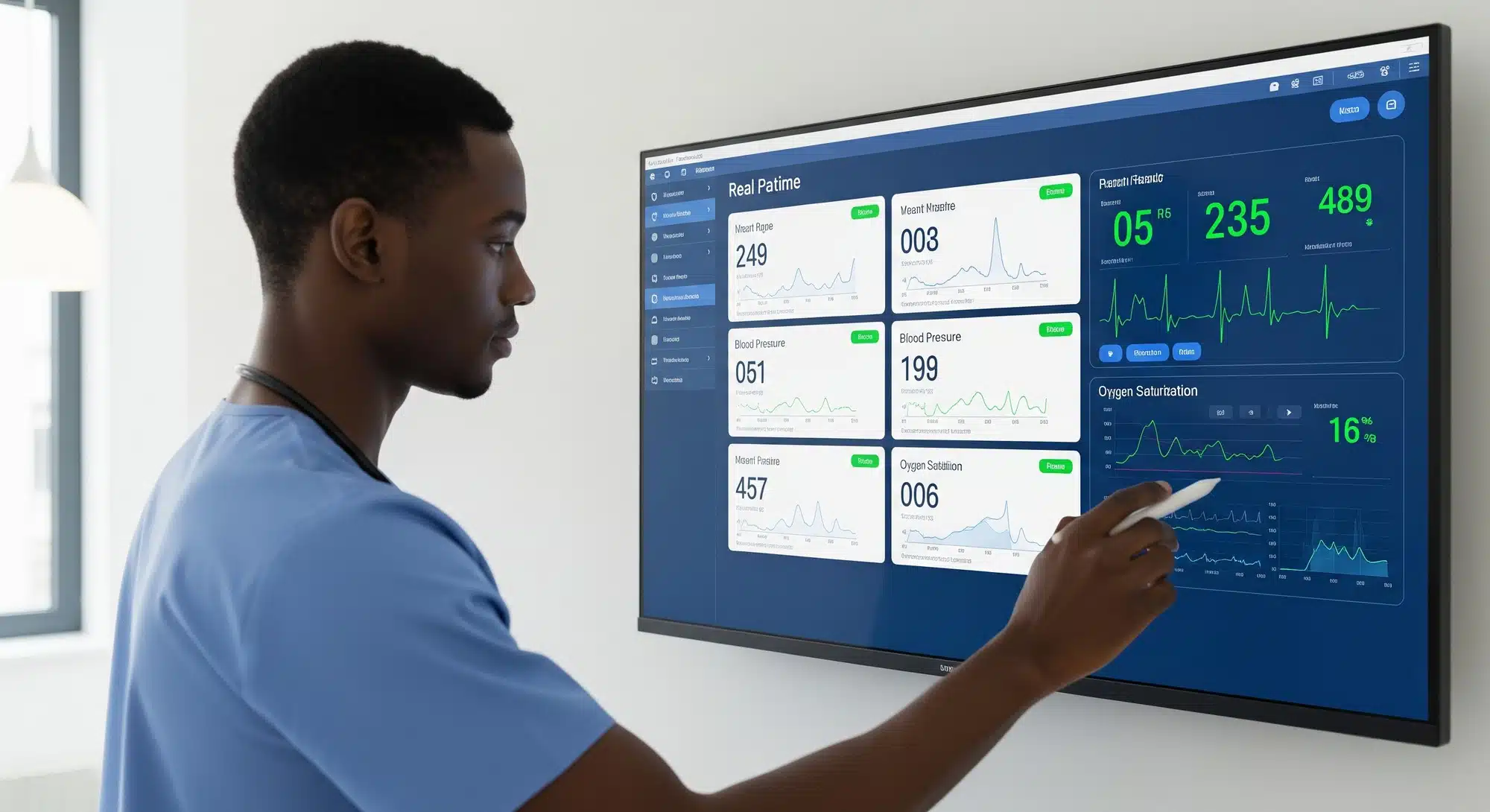
Remote patient monitoring (RPM) works by shortening the gap between “something is going wrong” and “someone notices it.” It uses connected tools like blood pressure cuffs, pulse oximeters, and wearables to feed real-time patient data into clinical dashboards.
Here’s how that works across five key areas.
Early Deterioration Detection
This is the biggest win. A small change might not look like much, but it could be the first indicator of something major.
Take someone with heart disease, for example. A sudden, unexplained weight gain can signify fluid retention. Left unchecked, that can result in stroke or even heart failure.
But with the right software for remote patient monitoring, these changes can be flagged early. That gives healthcare teams a chance to step in before things spiral.
Better Chronic Disease Management
Chronic conditions like diabetes, COPD, and hypertension need ongoing attention. RPM helps make that continuous care easier outside the hospital.
And it does make a difference. One study found that RPM reduced emergency room visits by 58% for COPD patients, showing how much impact consistent monitoring can have on long-term conditions.
Post-Discharge Monitoring and Support
The first few days after leaving a facility are the most dangerous window for a recovering individual. Implementing digital tracking immediately upon discharge provides an invisible safety net.
A good real-world example is UMass Memorial Health. This hospital cut 30-day readmissions for congestive heart failure by 50% using AI and remote care teams. This is a big change compared to the usual post-discharge care.
Data-Driven Clinical Decisions
Healthcare practitioners no longer have to rely on how a patient says they feel during a consultation, thanks to modern remote monitoring tools. They can simply check their system to see exactly what’s happening.
This gives them a clearer picture of the patient’s condition. It also helps them decide whether or not to adjust treatment plans.

Enhanced Patient Engagement
When people see their own numbers on a screen every morning, it changes how they think. They change from passive patients to active participants in their own recovery. Why? Because they can now connect the dots.
They can see exactly how a salty meal affects their blood pressure or how a short walk improves their oxygenation. In simple terms, RPM boosts patient engagement.
Which Patients Will Benefit the Most From RPM?
RPM is particularly needed for patients in high-impact groups. This includes:
- Heart failure patients
- COPD patients
- Post-surgical recovery patients
- Elderly patients with multiple conditions
- Diabetes and hypertension patients
There’s also a practical reality here for healthcare practitioners. Choosing the best remote patient monitoring software is crucial for ensuring that this care is effective and actually benefits the patients.
RPM is powerful on its own, but it can be more effective when paired with patient engagement strategy and Chronic Care Management (CCM) programs, notes CoachCare. Home healthcare software can further support these efforts by streamlining care coordination.
This combination gives patients regular coaching calls backed by real-time health data. The result? Better patient engagement and improved outcomes.
FAQs
Can remote monitoring devices replace regular doctor visits?
Absolutely not. RPM cannot replace face-to-face medicine. It acts as a bridge between appointments. The goal is to give doctors the continuous data they need to make in-person visits much more effective.
How does RPM reduce hospital readmissions specifically?
Remote patient monitoring reduces hospital readmissions by detecting problems early. It can, for example, catch weight gain in heart failure patients early. This early warning gives care teams enough time to intervene before things get complicated.
Are patients’ personal health data safe from hackers?
It depends on the RPM tool. Reliable healthcare platforms will use strict, bank-level encryption standards for secure information transmission. This ensures that private medical data remains fully protected under federal privacy laws.
Remote Patient Monitoring: Key Stats
| Stats | Details |
|---|---|
| 4.5% | Patients readmitted within 30 days after orthopaedic surgery. |
| $16,000+ | Average cost of one hospital readmission. |
| 17.3% | Readmissions linked to congestive heart failure. |
| 58% | Reduction in emergency room visits for COPD patients using RPM. |
| 50% | Drop in heart failure readmissions at UMass Memorial Health with RPM. |

RPM: A Big Help for Hospital Readmissions
Reducing the number of times people are forced back into a hospital bed requires a shift from reactive treatments to continuous support. Remote patient monitoring provides exactly that.
By catching little problems before they turn into major health scares, this technology keeps vulnerable individuals safe in the comfort of their own homes. It also reduces the enormous financial weight of hospital readmission on the healthcare system.
All in all, RPM is a meaningful step forward for chronic care management.


