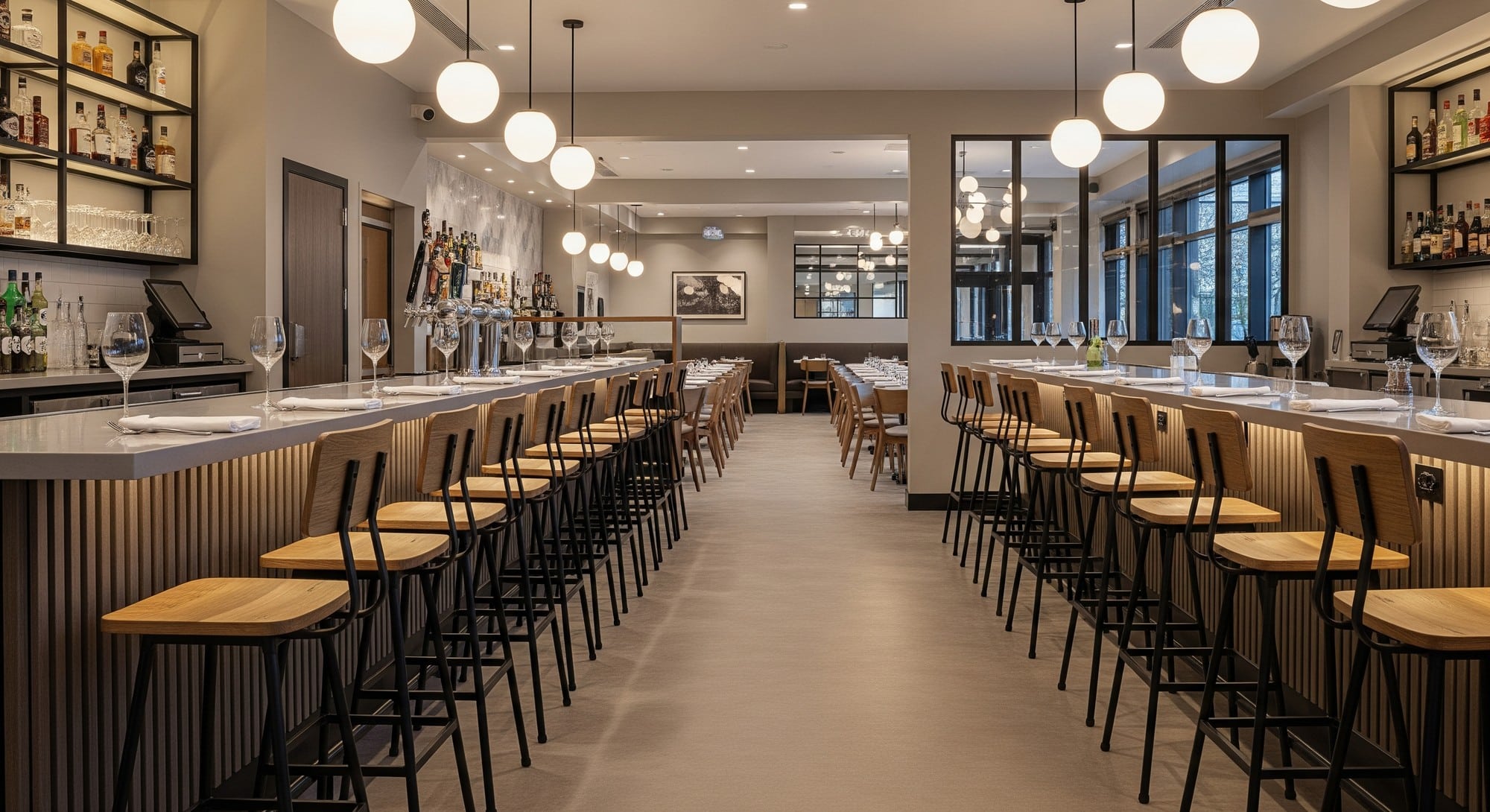
Why Industrial Bar Stools Work in Modern and Rustic Interiors
Modern and rustic restaurant designs may seem different, but both benefit from seating that feels authentic and functional. Industrial bar stools fit naturally into these spaces because they combine clean structure with raw materials. In modern interiors, their simple lines and minimal detailing complement sleek layouts and open floor plans. In rustic settings, exposed metal and wood textures add character and a sense of craftsmanship. This flexibility allows restaurant owners to create a cohesive look without relying on overly decorative furniture. The balanced appearance of these stools helps anchor bar areas while blending seamlessly with surrounding elements. Because industrial bar stools emphasize structure and material honesty, they enhance both polished and rougher design styles. Their ability to adapt makes them a dependable choice for restaurants seeking visual consistency and practical performance.
Design Features That Define Modern Industrial Bar Stools
Modern industrial bar stools focus on simplicity, proportion, and clean geometry. Straight legs, slim profiles, and uncluttered silhouettes help maintain a contemporary feel. Many designs avoid unnecessary ornamentation, allowing the materials themselves to stand out. Top interior design authorities like ELLE Decor regularly feature industrial-inspired bar stools as staples of contemporary commercial interiors. Metal frames are often finished in matte black, gunmetal, or neutral tones that align with modern palettes. Wood seats may feature smooth finishes and subtle grain patterns rather than heavy distressing. These design choices support a refined atmosphere while maintaining the durability expected in commercial environments. In modern restaurants, seating must complement lighting, countertops, and flooring without competing for attention. Industrial bar stools designed with modern aesthetics provide visual balance and support a streamlined dining experience that feels intentional and well-planned.
Rustic Design Elements Found in Industrial Bar Stools
Rustic interiors rely on warmth, texture, and a sense of authenticity, all of which can be reflected in industrial bar stools. In these settings, stools often feature thicker metal frames, visible welds, or distressed finishes that suggest handcrafted quality. Wood seats may showcase natural grain variations, knots, or reclaimed materials that add visual depth. These details help create a welcoming environment that feels relaxed and lived-in. Rustic designs often favor darker metals or weathered finishes that pair well with brick, stone, or wood accents. The combination of rugged materials and sturdy construction reinforces the durability needed in busy restaurants. Industrial bar stools with rustic elements support a casual yet intentional atmosphere that encourages guests to linger comfortably.

Material Choices That Enhance Industrial Bar Stools
Material selection plays a major role in how industrial bar stools support both modern and rustic designs. Metal frames provide the structural strength required for commercial use, while wood seats soften the overall look. In modern spaces, lighter woods or smooth finishes create contrast without overwhelming the design. Rustic environments often benefit from darker woods or reclaimed materials that add warmth and character. The interaction between metal and wood creates visual interest while maintaining functionality. In commercial dining spaces, materials like aluminium checker plate are also used on bar fronts and accent panels to reinforce the industrial aesthetic while providing durable, easy-to-clean surfaces. Protective coatings on both materials ensure resistance to spills, scratches, and daily wear. Choosing high-quality materials helps seating maintain its appearance over time, regardless of design style. When materials are selected thoughtfully, industrial bar stools become a long-term asset rather than a short-term solution.
Choosing Finishes and Colors for Industrial Bar Stools
Finishes and colors allow industrial bar stools to align closely with a restaurant’s design vision. Modern spaces typically favor neutral finishes such as black, gray, or brushed metal paired with lighter wood tones. These combinations create a clean, cohesive look that complements contemporary décor. Rustic interiors often lean toward distressed metals, bronze tones, or darker finishes that enhance warmth. Wood seats may be stained to highlight natural grain or aged to appear weathered. Matte finishes can help hide wear, while sealed surfaces simplify maintenance. The right finish not only enhances aesthetics but also protects the stool from daily use. By coordinating finishes with surrounding elements, industrial bar stools contribute to a polished and intentional dining environment.
Blending Industrial Bar Stools into Mixed Restaurant Designs
Many restaurants blend modern and rustic elements to create a unique identity, and industrial bar stools work well in these hybrid spaces. Their neutral structure allows them to bridge contrasting design features without clashing. For example, metal frames can echo modern lighting fixtures, while wood seats tie into rustic tables or wall accents. This adaptability helps create visual continuity across different areas of the restaurant. Seating can be used to subtly guide the overall aesthetic without overpowering other design elements. In mixed designs, consistency in material quality and finish is key to maintaining balance. Industrial bar stools offer the flexibility needed to support evolving concepts while preserving a cohesive look throughout the space.

Conclusion
Industrial bar stools offer a versatile seating solution for restaurants that embrace modern, rustic, or blended design styles. Their combination of strong metal frames and natural wood elements allows them to adapt to a wide range of interiors without sacrificing durability. Thoughtful design features, material choices, and finishes help these stools enhance both visual appeal and functional performance. Whether used in sleek contemporary bars or warm rustic dining spaces, they provide reliable seating that supports daily operations. Their adaptability makes them especially valuable for restaurants looking to create a distinctive yet cohesive atmosphere. By selecting industrial bar stools that align with design goals and usage demands, restaurant owners can achieve seating that balances style, comfort, and long-term value.