Persistent itching and white flakes often trigger a reflexive trip to the hair care aisle for the strongest medicated formula available. Most consumers assume that any flaking is synonymous with dandruff, yet this common misconception often leads to improper treatment cycles that damage the hair’s natural ecosystem. Identifying whether your discomfort stems from a fungal overgrowth or a simple lack of moisture is the critical first step toward lasting relief.
Your scalp’s health depends on a delicate balance between oil production and barrier integrity. When that balance shifts, the resulting irritation can look nearly identical regardless of the cause. Treating a parched, dehydrated scalp with harsh antifungal chemicals can strip away essential lipids, while applying heavy oils to a fungal condition may inadvertently provide more fuel for the underlying yeast.
Gaining a precise understanding of these biological differences ensures you can select ingredients that actually support your skin’s unique needs. While individuals suffering from moisture loss often find that a gentle, moisturizing natural shampoo for dry, flaky scalp provides essential relief, addressing problems for dry scalp specifically requires the integration of barrier-restoring ingredients like colloidal oatmeal or neem oil to achieve lasting physiological repair. This guide explores the distinct characteristics of each condition, providing the clarity needed to restore your scalp to its optimal, flake-free state.
Figuring out which one you have determines what works.

Understanding The Biological Causes of Fungal Dandruff
True dandruff originates from a fungal overgrowth known medically as seborrheic dermatitis in its severe forms. This condition is triggered by Malassezia, a yeast that resides naturally on the scalp; while most people coexist with it harmoniously, others experience a heightened inflammatory response. That inflammation causes the flaking.
Genetic predispositions often dictate how your skin reacts to Malassezia, particularly as the condition correlates heavily with sebum production. Because this specific yeast thrives on natural oils, a hyper-productive scalp creates an ideal environment for rapid fungal colonization. Internal factors such as heightened stress levels, fluctuating hormones, and specific medical histories frequently serve as catalysts for sudden and aggressive flare-ups.
How to Identify It:
Recognizing the specific appearance of dandruff is essential for a correct diagnosis. While dry skin often presents as small dust-like particles, dandruff exhibits distinct physical characteristics.
- Flakes typically appear yellowish or off-white with a noticeably oily, waxy texture.
- The scales are significantly larger and clumpier compared to standard dry skin.
- The scalp surface feels greasy to the touch rather than restricted or tight.
- Accumulation primarily occurs in sebum-rich areas like the hairline and behind the ears.
These oily clusters are a direct result of the inflammatory response to yeast activity. Monitoring where these flakes congregate can help you determine if a fungal treatment is the necessary next step.
The pattern matters. Dandruff persists year-round, worsening with stress rather than following seasons.
Treatment:
Since dandruff primarily stems from a fungal imbalance, successful intervention must directly inhibit yeast proliferation. While pharmaceutical-grade ketoconazole remains the most thoroughly researched active, widely available compounds like zinc pyrithione and selenium sulfide also deliver reliable clinical results. Those preferring a botanical approach might consider tea tree oil as a milder natural option, though its potency generally scales lower than its synthetic counterparts.
These antifungal ingredients generally require consistent use, as fungal activity often resumes once treatment ceases, making long-term management a more realistic goal than a permanent cure.

The Physiology of Dry Scalp and Barrier Dysfunction
Dry scalp lacks any fungal component, functioning instead as a moisture-retention and barrier dysfunction issue where the skin loses its ability to remain hydrated.
Various external factors can compromise your skin’s ability to retain hydration, leading to a chronically parched scalp. These environmental and lifestyle triggers often work in tandem to strip away protective lipids.
- Exposure to cold weather and environments with consistently low humidity.
- Proximity to indoor heating systems that actively deplete moisture from the air.
- Frequent washing using shampoos that contain aggressive cleansing agents.
- Utilizing excessively hot water during hair care routines.
- The use of harsh sulfates that remove natural oils faster than the body can replenish them.
When the protective skin barrier becomes compromised, internal moisture rapidly escapes. This dehydration leads to the fine, powdery flaking often mistaken for true dandruff.
The Signs:
Dry scalp flakes possess a unique aesthetic that distinguishes them from fungal scales. They typically appear white and fine, resembling the powdery residue found on dehydrated hands or shins. Unlike the greasy texture of dandruff, these flakes remain dry to the touch, and the scalp often feels uncomfortable or restricted, particularly immediately following a wash.
Observing how your skin responds to shifting seasons can provide profound insights into its underlying health. Many individuals find their symptoms peak during the winter months, when the combination of arid outdoor air and constant indoor heating rapidly dehydrates the skin surface. Conversely, these issues often subside in more humid environments. If you frequently notice parched skin on your hands or legs, or if you have a history of eczema, your scalp irritation is almost certainly a symptom of broader barrier dysfunction.
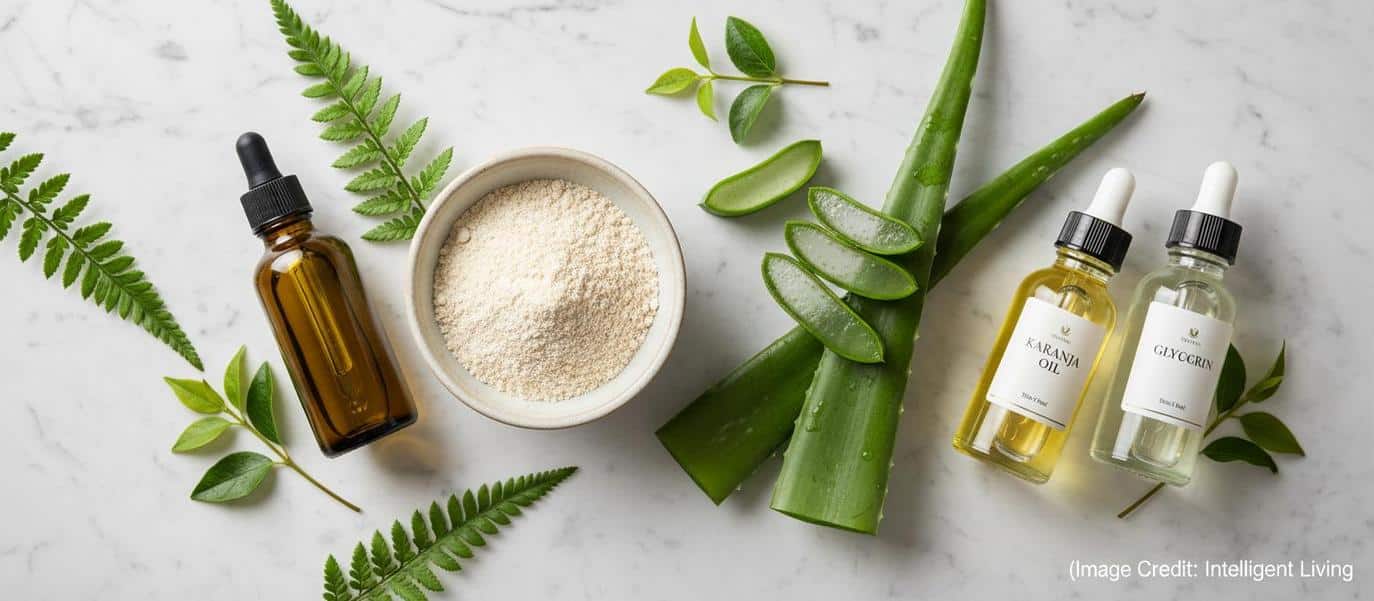
Natural Actives and Proven Ingredients for Scalp Repair
Selecting the right biological actives can significantly accelerate the repair of a damaged scalp barrier. Specific natural compounds are renowned for their ability to soothe inflammation and restore hydration levels.
- Colloidal oatmeal provides a protective layer that calms irritation and supports barrier repair.
- Neem oil delivers potent anti-inflammatory properties based on traditional botanical use.
- Karanja oil offers soothing relief for persistent itching and skin sensitivity.
- Aloe vera and glycerin work together to hydrate and lock in essential moisture.
Integrating these nutrient-dense ingredients into your routine helps the skin regain its natural elasticity. Consistent use often leads to a visible reduction in flaking within a short period.
Preventative measures are just as vital as active treatments when attempting to restore your scalp’s equilibrium. Opting for sulfate-free formulas ensures you aren’t stripping away the very lipids needed for repair. You should also consider extending the time between washes to allow your natural oils to replenish, and always ensure you are using lukewarm water to avoid thermal damage to the skin barrier.
Clinical studies show quality scalp treatments can reduce dry flaking by 1.5x or more, with most people seeing visible improvement within a week.
Quick Comparison
| Feature | Dandruff | Dry Scalp |
|---|---|---|
| Flake appearance | Yellowish, oily, clumpy | White, dry, powdery |
| Scalp feel | Oily, greasy | Tight, dry |
| Cause | Malassezia yeast | Moisture loss, barrier damage |
| Seasonal pattern | Year-round, stress-triggered | Worse in winter |
| Treatment | Antifungals | Gentle, moisturising ingredients |
A Diagnostic Checklist for Identifying Your Scalp Condition
Identifying the specific cause of your scalp irritation rarely requires a specialist; a few focused observations are typically sufficient to clarify the condition.
A simple visual inspection of the flakes can provide immediate clues regarding their origin. By catching a few particles on dark clothing, you can examine their color and consistency more closely. Yellow-tinged, greasy scales strongly suggest a fungal dandruff issue, whereas white, powdery specks are indicative of a dry scalp.
The sensation of your skin between washes serves as an excellent diagnostic tool; if your hair feels oily by the second day, you are likely dealing with dandruff, while a tight and uncomfortable sensation following a shower typically points toward a dry scalp.
Pay close attention to the chronological patterns of your irritation. If the flaking persists year-round and seems to intensify during high-stress periods, you are likely witnessing a fungal response. If the discomfort is strictly seasonal—flaring when the heat comes on and clearing up by the summer—the issue is rooted in environmental dryness.
Look for signs of irritation beyond the hairline to confirm your suspicions. Finding dry patches on your hands or shins strongly reinforces a diagnosis of dry scalp. However, if you notice flaking within your eyebrows or around the folds of your nose, it is highly probable that seborrheic dermatitis is the complicating factor.
Not sure? Some people have both—oily in some areas, dry in others. Some have psoriasis or contact dermatitis that mimics both. Severe flaking, patchy hair loss, or no improvement after six weeks of appropriate treatment means seeing a dermatologist.

Targeted Ingredients for Fungal Control and Moisture Retention
For dandruff (fungal):
Topical antifungals remain the gold standard for managing yeast-driven dandruff. Ketoconazole is widely available in varying strengths, while zinc pyrithione and selenium sulfide provide effective results through regular application. For those seeking a milder alternative, tea tree oil offers a natural route, whereas coal tar remains an option for reducing cell turnover despite its strong scent.
For dry scalp:
Addressing a dry scalp requires ingredients that focus on barrier restoration and deep hydration. Colloidal oatmeal and neem oil are particularly effective at calming inflammation, while karanja oil, aloe, and glycerin provide the soothing hydration necessary to prevent further moisture loss.
Steering clear of certain common additives is essential for anyone struggling with moisture retention. Harsh surfactants like sodium lauryl sulfate and sodium laureth sulfate can be devastatingly aggressive, while shampoos engineered specifically for fungal control often aggravate a parched scalp even further. Additionally, you should be wary of alcohol-heavy formulas that can rapidly compound existing dehydration issues.
When to See a Doctor
While most scalp issues are manageable at home, certain symptoms necessitate a consultation with a healthcare professional. You should seek medical advice if you experience any of the following:
- Persistent flaking that does not improve after six weeks of targeted treatment.
- Intense itching that is severe enough to disrupt your sleep or daily activities.
- The appearance of patchy hair loss or thinning in conjunction with scaling.
- Thick, silvery plaques that may indicate the presence of psoriasis.
- Oozing, crusting, or significant pain that suggests a secondary infection.
Securing a professional diagnosis is the only way to guarantee you aren’t mismanaging a complex dermatological condition. By intervening early, you not only avoid unnecessary discomfort but also take an active role in protecting the long-term health and vitality of your hair.

Effective Strategies for Long Term Scalp Wellness
Maintaining a healthy scalp requires consistent attention to the environmental and biological factors that influence skin behavior. Once you have identified the primary cause of your flaking—be it the fungal triggers of dandruff or the barrier dysfunction of a dry scalp—your focus should shift toward preventative care.
Prioritizing pH-balanced formulas and avoiding aggressive surfactants allows the delicate skin of the head to maintain its natural defenses against external stressors. Finding lasting relief requires a broader perspective on hair hygiene rather than a search for a singular miracle product.
You can often prevent minor irritation from escalating into a chronic concern simply by monitoring humidity shifts and adjusting your routine to match. Ultimately, a resilient skin barrier serves as your most effective shield against both fungal activity and moisture loss, keeping your hair healthy from the follicle to the tip.
Common Questions Regarding Scalp Care and Irritation
Can Dandruff Lead to Permanent Hair Loss?
Dandruff itself does not directly kill hair follicles, but the intense scratching and inflammation associated with seborrheic dermatitis can temporarily weaken roots and lead to thinning.
How Frequently Should I Wash a Dry Scalp?
Reducing your washing frequency to two or three times a week helps preserve natural oils, preventing the barrier from becoming overly stripped and dehydrated.
Does Using Coconut Oil Help Fix Dandruff?
Coconut oil can hydrate a dry scalp, but because Malassezia yeast feeds on certain fats, applying it to true dandruff might actually worsen the fungal overgrowth.
Can Hard Water Make Scalp Flaking Worse?
Mineral buildup from hard water can leave a film on the scalp that traps bacteria and irritates the skin, potentially exacerbating both dryness and dandruff symptoms.
When Is It Time to Switch to a Medicated Shampoo?
If gentle moisturizing routines do not reduce flaking within two weeks, transitioning to a formula containing ketoconazole or zinc pyrithione may be necessary to target fungal activity.