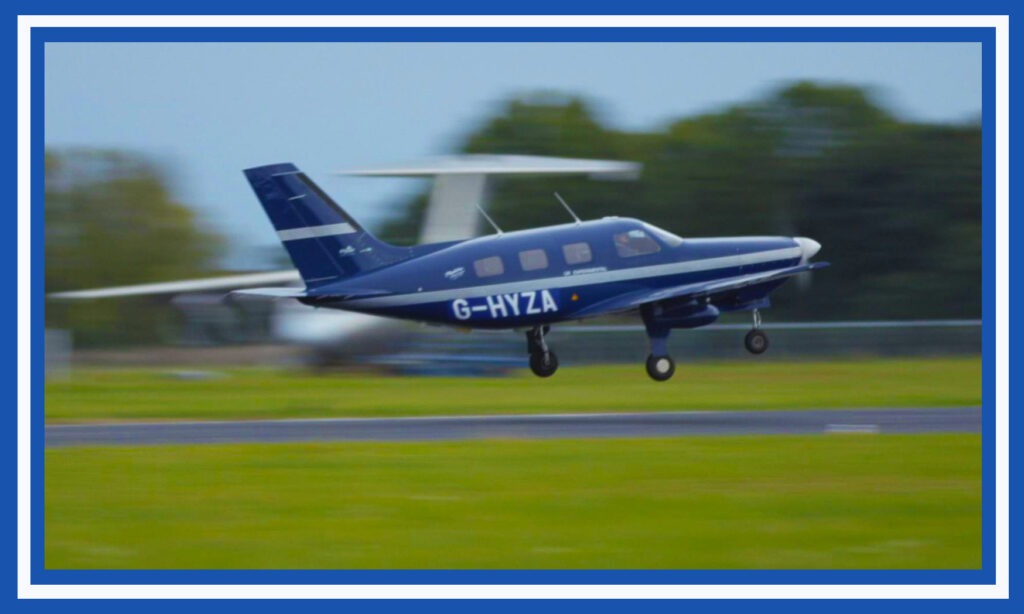
On September 24, a six-seater aircraft retrofitted with a hydrogen-powered engine completed its first flight. The Piper M-class plane accomplished a 19-mile demonstration at Cranfield Airport in England.
The aircraft, developed by ZeroAvia, emits only water vapor. The company aims to make hydrogen planes available commercially by 2023.
Val Miftakhov, the founder and CEO of ZeroAvia, said, “What we’re doing is replacing fossil fuel engines with what’s called hydrogen-electric engines. We also have a fuelling infrastructure set up that ensures zero-emission production of hydrogen itself.”
While prototype planes with the same kind of engine have taken to the skies before, those were demonstrator aircraft that are not designed to carry passengers. ZeroAvia claims this is the first time a commercially available plane has flown in the sky using hydrogen power.
The company notes that the science is already there for a long, zero-emissions aircraft by 2030. However, introducing hydrogen aircraft more widely would mean existing airport infrastructures will need renewing, and ground operations would have to be modified.
David Gleave, an aviation safety investigator at Loughborough University, explained, “It’s not just a question of putting hydrogen-based airplanes and getting them to work; we need the infrastructure on the ground to support everything. We have to work out how to refuel these airplanes because existing infrastructure won’t work and we have to work out other things such as the fire and rescue requirements for the airplane, so there’s quite a lot of work to do, but certainly, it’s very exciting going forward.”
After the 19-mile demonstration, ZeroAvia wants to step it up and is now working towards a 250-mile flight out of an Orkney airfield.
The UK government supports the project as part of its Jet Zero Council initiative, aiming to make net-zero emissions flights possible. UK ministers also hope it will bring economic benefit to the country.
Robert Courts, the UK aviation minister, said, “There’s also an opportunity, as we build back, to make sure that we’ve got environmental credentials at the heart of this. This is world-beating technology which has an economic opportunity for Britain as well as answering the global climate change challenge.”
Miftakhov points out that the technology is safe, and people will be able to fly guilt-free, knowing that they’re not contributing to destroying the environment. ZeroAvia’s hydrogen-electric technology continues to advance. In November 2025, the company partnered with Hybrid Air Vehicles to explore powering the Airlander 10, the world’s largest aircraft, with its ZA600 powertrains for all-electric flight by 2030.