Prime Minister of India, Narendra Modi announced the good news that the tiger population has increased by one third! The Indian tiger population has grown from 2,226 in 2014 to 2,967 in 2018, allowing India to account for 70 percent of the tiger population worldwide.
Modi says increase after conservation efforts is “historic achievement” according to an interview with The Guardian.
The number of free-roaming tigers in Asia has steadily increased from 1,411 in 2016. Between 13 countries, there are less than 4,000 tigers left in the wild. These countries include China, Russia, Thailand, and Nepal just to name a few. There are less than 100 tigers in many of these nations, and in a few, the evidence is very limited to show that they are still there.

A Comprehensive Survey
A comprehensive survey conducted every four years is based on information collected by wildlife officials across an area of 146,000 sq miles (380,000 sq km). They take statistics of data collected from almost 350,000 images taken by 26,000 cameras in known tiger habitats.
This rise in the tiger population was promising, but we should treat the figures with caution. Conservation experts say the rise may show better counting measures in place.
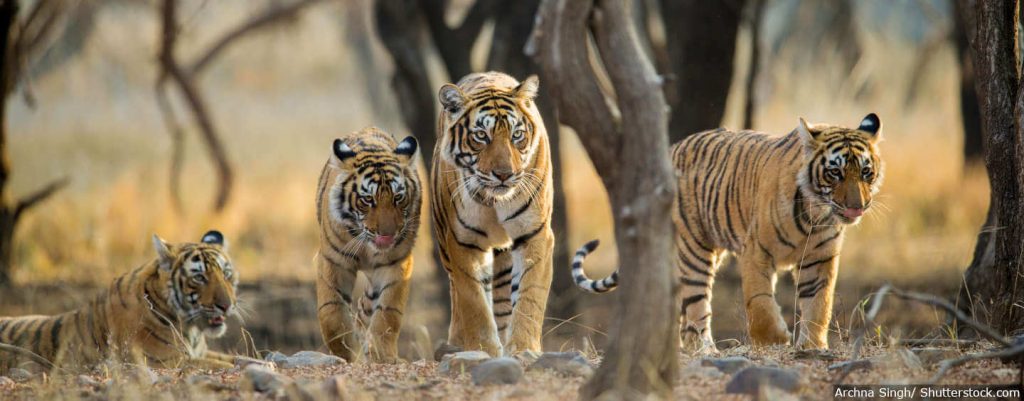
Neha Sinha, a wildlife conservationist, commented that the census may suggest more tigers are breeding in protected areas but there were worrying signs. Some of these signs show that tigers cannot safely disperse and find their own territory. Sinha also said:
Adult tigers need to create their own territory, and this territory is sometimes almost 200 sq km, so they need ample space, If you want the numbers to be stable, then tigers need to disperse.
Development projects like roads, canals, and railways continually affect tiger habitats. Tigers are continually under threat by human conflict. Asian communities leave poison because of attacks on humans or cattle being killed by tigers. According to Indian government data, on average, tigers or elephants kill one person a day.

Rising Tiger Population
“India has achieved a historic milestone. We reaffirmed our commitment to conserve the tiger population in the country on Global Tiger Day. We are doing whatever we can to conserve and save the majestic animal” said Prime Minister Modi, calling upon other countries to form the alliance of global leaders to eliminate the demand for illegal poaching in Asia.
They considered this extensive exercise to be the world’s largest wildlife survey. It covered 381,000 sq. km of forested habitats in 18 states where tigers live in India.
26 thousand camera traps produced 34.8 million photographs of wildlife, of which 76 thousand were of tigers.

Back in 1900, over 100,000 tigers roamed the planet. The figure had fallen to a record low of 3,200 by 2010. The decline prompted India and 12 other countries to sign an agreement to double their numbers by 2022. Modi said that India had achieved this goal four years ahead of its schedule.