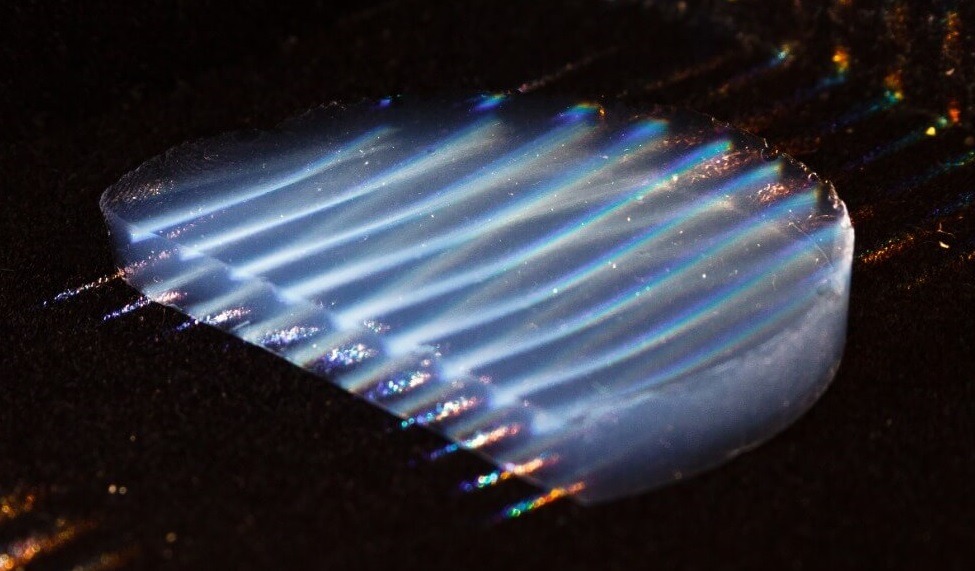
After 4 years of research grants from the ARPA-E Program by the Department of Energy the research at MIT is showing promise. Researchers can maintain a temperature of 220ºC, in freezing climates. There are no moving parts present in the device, only sunlight accompanied by a special aerogel.

Aerogel Innovation
The material is so transparent it defies the belief that new uses for it can be unlocked with solar heat. This new aerogel is a lightweight material that consists mainly of air, with a silica-made structure.
The material stops solar heat from escaping while sunlight passes through easily.
They describe the findings in the journal ACS Nano, in a paper by Lin Zhao, an MIT graduate student; Evelyn Wang, professor and head of the Department of Mechanical Engineering; Gang Chen, the Carl Richard Soderberg Professor in Power Engineering; and five others.
“The key to efficient collection of solar heat is being able to keep something hot internally while remaining cold on the outside,” Wang explains, “by using a vacuum between a layer of glass and a dark, heat-absorbing material, which is the method used in many concentrating solar collectors.”

Converting Sunlight To Heat
The material efficiently traps solar heat while remaining capable of transmitting solar light. The key was finding a good ratio of catalysts and silica materials to create the gel and properly drying it. They then dry the mixture out much faster than normal. A matrix, mostly air, remains but keeps the original mixture’s strength. This new rapidly-dried technique produces an aerogel with larger pore spaces between the grain which leads to more light scattering within the gel.
Solar collectors using aerogel technology may replace current solar hot water heaters with a much more affordable alternative. It could heat residential and commercial buildings at a lower cost compared to traditional heating equipment, and much less impact on the environment.

The material is inexpensive, and commercial quantities of the aerogel can be easily produced. The drying process is more costly.
Professor Wang further explains:
We do the drying phase batch by batch. This is not adaptable to the continuous roll to roll process used in industrial applications. The key to scale-up is how we can reduce the cost of that process.
An analysis shows that the system can be viable for some uses, especially in comparison with conventional systems that use glass surfaces bonded to a substrate with a vacuum in between.
Graduate Lin Zhao compares the basic function of the aerogel layer as “like a greenhouse effect. The material we use to increase the temperature acts like the Earth’s atmosphere does to provide insulation, but this is an extreme example of it.”
The Future
Like all breakthroughs, this one may be years away from commercial-scale manufacturing. But the promise of free heat from sunlight could be an important addition to the quest to decarbonize our environment. Structure heating consumes vast quantities of fossil fuels. Almost free zero-emissions heat provided by sunlight could be the greatest thing since solar panels.