
199,000 recycled glass and plastic bottles went into the making of a new 200-meter long concrete footpath in Hoppers Crossing, Melbourne. It is part of a project funded through the State Government’s 4.5 million Resource Recovery Market Development Program.
The footpath was made using an aggregate formed from a mass of shredded recycled plastics and leftover glass particles. This recycled aggregate material was bound directly into concrete using a similar technique to traditional aggregate materials. It literally paves the way to a circular economy.

The aggregate blend was developed by Sustainability Victoria and Swinburne University of Technology. It meets the required strength and standard requirements for footpath construction. Now, scientists are closely monitoring its performance to see if, or how, any plastics could potentially be released from the solid bound pavement.
Whatever they learn from this demonstration project will be logged and used to inform any future improvements to the product, said Sustainability Victoria Ex-CEO Stan Krpan. He continued:
By driving the development of innovative new products and materials made of recycled content like this, and by encouraging the government and local government to buy them we are building a better waste system here in Victoria. A system that diverts materials from landfill, consumes fewer natural resources and reduces carbon emissions.
Sustainability Victoria has been thinking circular for a long time. We can create more value from our waste by designing for reuse, keeping products circulating in the economy at their greatest value for as long as possible. A circular economy requires commitment from industry, government and the community, which is why we apply the principles to our program design and delivery. In fact, we encourage all Victorians to rethink, recover and reuse products wherever they can.
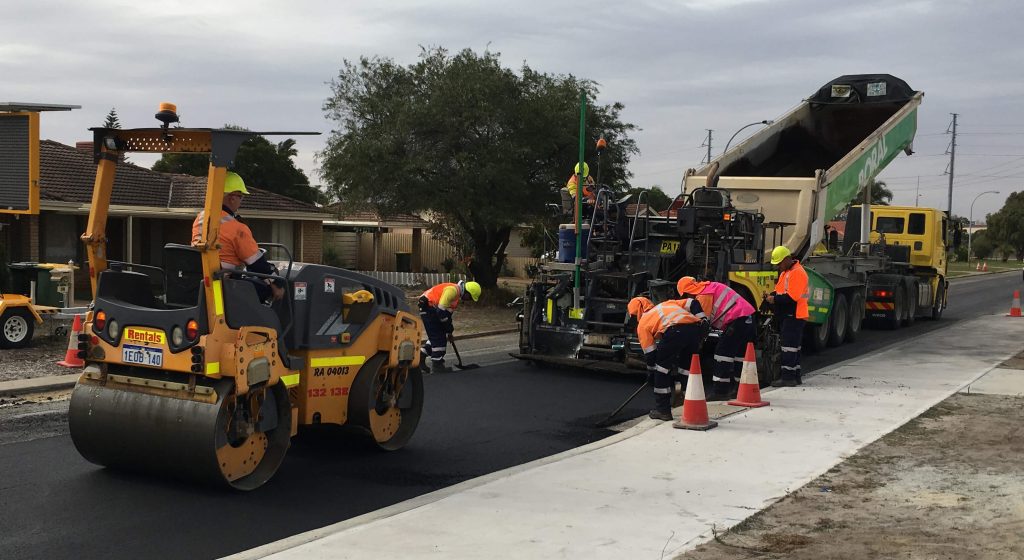
Another recycled pathway project happening in Australia, also with plastic and glass, is a new sustainable asphalt product being trialed in Melbourne’s City of Yarra precinct. This one is by a company called Green Roads PolyPave in collaboration with leading recycled aggregates producer Alex Fraser Group.
Here, 7300 two-liter plastic bottles and 55,000 glass bottles were used in the pavement of the two roads Richmond’s Stanley Street and Margaret Street. They plan to roll out with more of these roads in other areas soon. The city of Yarra has called for them to lay an additional 1000 tons of their sustainable asphalt, which will save another 25,000 plastic bottles from ending up in landfill.
The recycled material could reduce the usual carbon footprint of road manufacture by up to 65% and it’s stronger too. Brendan Camilleri, Asphalt General Manager, Alex Fraser Group, said:
Laboratory test results showed increased fatigue life, improved asphalt rut resistance, increased asphalt modulus/stiffness, and a better resistance to moisture ingress. We are confident PolyPave will perform well on heavily trafficked roads.
These two projects go to show that when government, industry, and community working together to build sustainable infrastructure with recycled materials, a circular economy could feasibly be achieved.


