Within the next 5 years, your ride to work may be an Uber taxi in the skies. A real-life, full-size model of the vehicle—called Nexus—was recently on display at the Consumer Electronics Show in Las Vegas in 2019. The hybrid-electric concept aircraft represents one of the most advanced flying taxi prototypes yet. Bell, the aerospace company behind the product, says it’ll be ready to take off as soon as 2023.
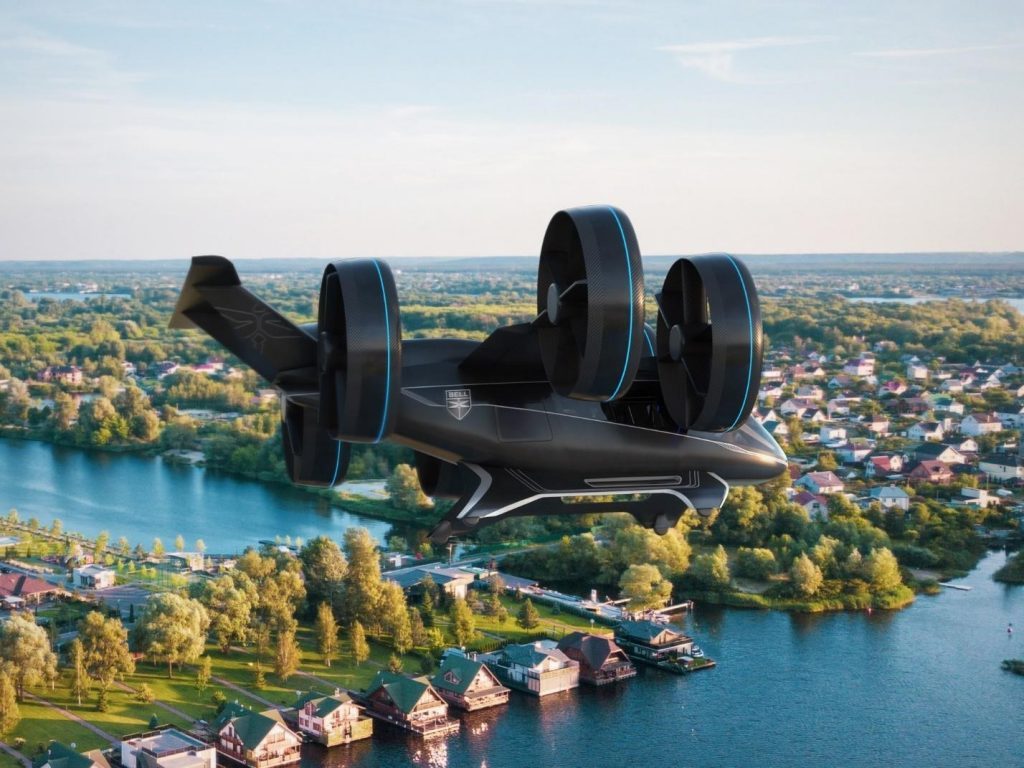
Uber has partnered up with Bell to make their flying taxi initiative—called Elevate—a reality. When Uber first released its ambitious plan to create a network of city-based flying taxis, Bell was one of the first aircraft manufacturers to team up with the ride-hailing company. They are eager and ready to jump into the eVTOL market. The aircraft is specially designed for ride-sharing apps.

Matt Louis, an aerodynamics engineer at Bell, said, “It’s an urban air mobility vehicle so what that means is we’re going to carry people or things in kind of an on-demand way. So similar to calling an Uber, we’ll have a network of these vehicles available as an air taxi, or if you’re a logistics company, we would have a network of these vehicles to take things from distribution center to distribution center.”
How It Would Work
You would pull out your Uber app and say, ‘I want an UberAIR’ (or maybe an Uber Bell). Once you have selected an UberAIR ride, the craft will fly to a ‘Skyport’—a series of launch pads spread across the city—nearest to your location to pick you up and then take you to another Skyport nearest your destination.
Transportation Duration
Trips from LAX to the Staples Centre during rush hour can be reduced from up to 1 hour 20 minutes on the ground to less than 30 minutes using UberAir. This prediction includes UberX transfers to and from UberAir launch pads—the flight over LA itself will take around four minutes.
Cost
According to Uber, the ‘electrical vertical take-off and landing vehicles’ (eVTOLs) differ from helicopters in that they are quieter, safer, more affordable, and more environmentally friendly. As far as cost goes, Uber estimates that an all-electric, 200mph (320kph) ride across the skies of Los Angeles will be price-competitive with an UberX trip of the same distance.
Features
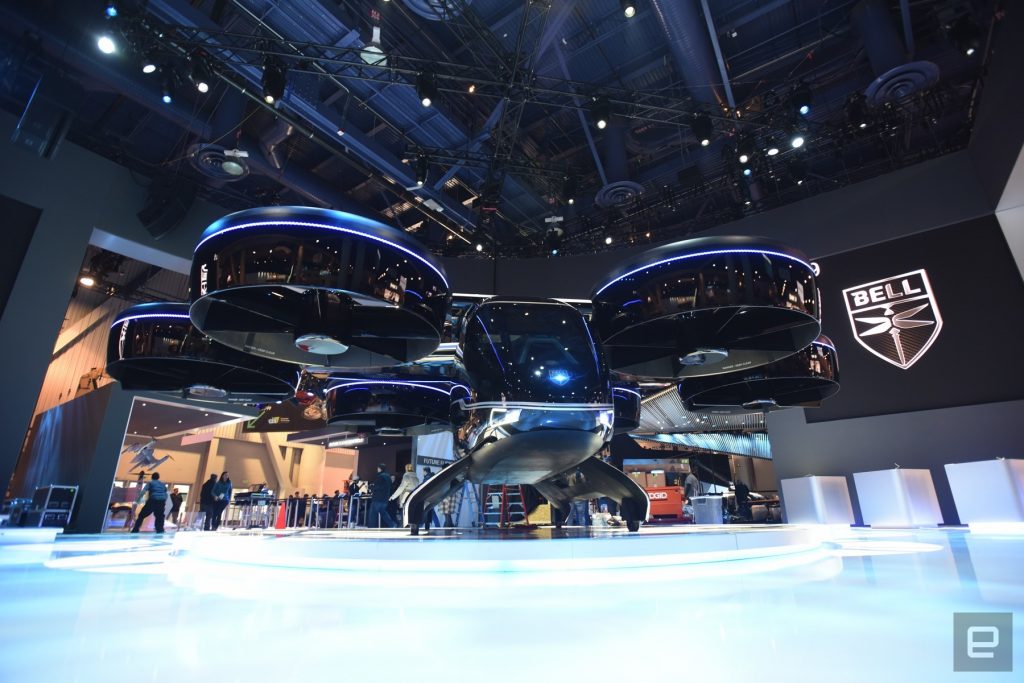
Nexus can reach speeds of 150mph with six 8-foot-diameter rotors that tilt up during takeoff and landing. The cabin seats four passengers and one pilot. As far as license requirements are concerned, Bell is currently working to develop advanced controls in an attempt to scale down the depth and breadth of flight training required.
However, safety is one of their main concerns. That is why the nexus system will be designed to fly safely even if one of the fans becomes disabled. They have designed it so if the turbine engine in the hybrid propulsion system fails, the onboard battery will kick in to enable safe landing and even continue the flight.
Nexus Flying Taxi Specifications:
- Weighs 6,500lbs
- Features six 8-foot-diameter rotors
- Rotors tilt to 90 degrees during takeoff and landing
- 150-mile range
- Speeds of up to 150mph
- Hybrid-electric design, with plans to become all-electric in the future
- Garmin touchscreen displays
Levi Bilbrey, creative services manager at Bell, explains the vision and what it will look like when users have the ability to book an UberAIR, “So you’ll have that option to get to a destination, but it’s much faster. You’re flying over the traffic instead of flying through the traffic.”

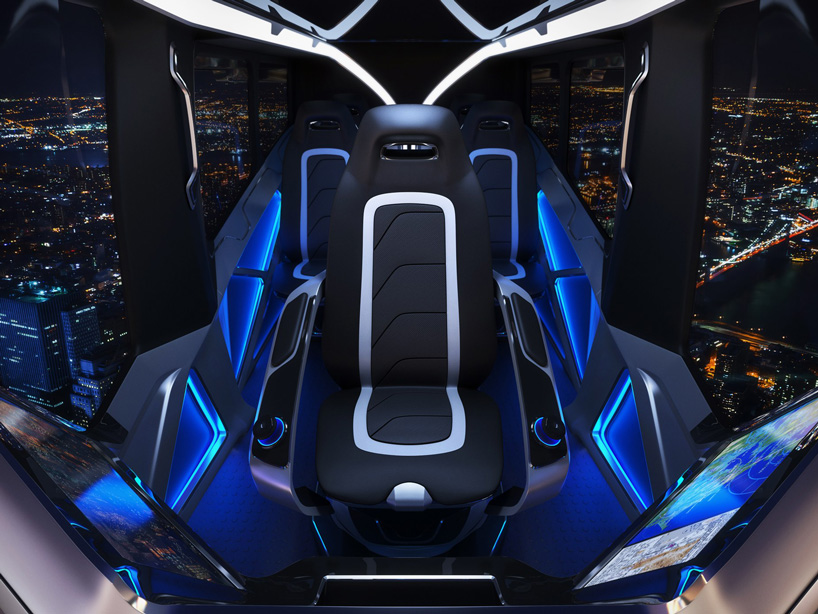
The interior is spacious with a massive screen on the ceiling and a high-tech cabin with Garmin touchscreen displays. The overhead display could be used for a number of different things, like interactive content and other uses tailored to would-be UberAIR passengers. In the cockpit, there’s a pinch-and-zoom display that lets pilots check vital information like how long it’ll take to reach their destination, altitude, and route information, among other things.
All of these design features are still in the conceptual phase. Bell says that possible applications range wider than just ride-sharing. For example, the interior of the vehicle can be modified for a variety of uses, ranging from military and emergency medical services.