
The car valeting industry has traditionally been associated with high water consumption, chemical-laden products, and significant environmental impact. However, as climate consciousness grows and consumers increasingly seek out businesses that align with their values, transforming your car valet business into an eco-friendly operation is no longer just good ethics; it is smart business. By implementing sustainable practices, you can reduce your environmental footprint, attract environmentally conscious customers, cut operational costs, and position your business as a forward-thinking leader in the industry.
Understanding the Environmental Impact of Traditional Car Valeting
Before diving into solutions, it is essential to understand the environmental challenges posed by conventional car valeting. A standard car wash can use anywhere from 150 to 300 litres of water per vehicle, whilst the cleaning products often contain phosphates, petroleum-based solvents, and harsh detergents that can contaminate water systems. Additionally, the runoff from traditional washing carries oil, grease, heavy metals, and other pollutants into storm drains and eventually into rivers and oceans.
The good news is that with thoughtful changes to your operations, you can dramatically reduce these impacts whilst maintaining, or even improving, the quality of your service.
Water Conservation: The Foundation of Sustainable Valeting
Water usage represents one of the most significant environmental concerns in car valeting. Implementing water-saving techniques should be your first priority when transitioning to a more sustainable business model.
Consider investing in a water reclamation system that filters and recycles water used during the washing process. These systems can reduce water consumption by up to 80%, resulting in substantial savings on water bills whilst conserving this precious resource. Whilst the initial investment may seem significant, the long-term savings and environmental benefits make it worthwhile.
Alternatively, steam cleaning technology offers an excellent low-water option. Steam cleaners use minimal water, often just a few litres per vehicle, whilst providing effective cleaning power. The high-temperature steam sanitises surfaces, removes stubborn dirt, and requires fewer chemical products, making it doubly beneficial for the environment.
For those seeking the most environmentally friendly option, waterless car washing products have evolved significantly in recent years. These specially formulated products use lubricating agents to encapsulate dirt particles, allowing them to be safely wiped away without scratching the paintwork. A complete waterless wash typically requires less than a litre of product, making it ideal for mobile valeting services or areas with water restrictions.
Choosing Eco-Friendly Cleaning Products
The chemicals you use in your car valeting business have a direct impact on the environment. Traditional car care products often contain harmful substances that can damage aquatic ecosystems and pose risks to human health.
Transition to biodegradable, phosphate-free, and pH-neutral cleaning products specifically designed for automotive use. These eco-friendly alternatives break down naturally without leaving harmful residues in the environment. Look for products certified by recognised environmental standards such as the EU Ecolabel or similar certification schemes that verify a product’s environmental credentials.
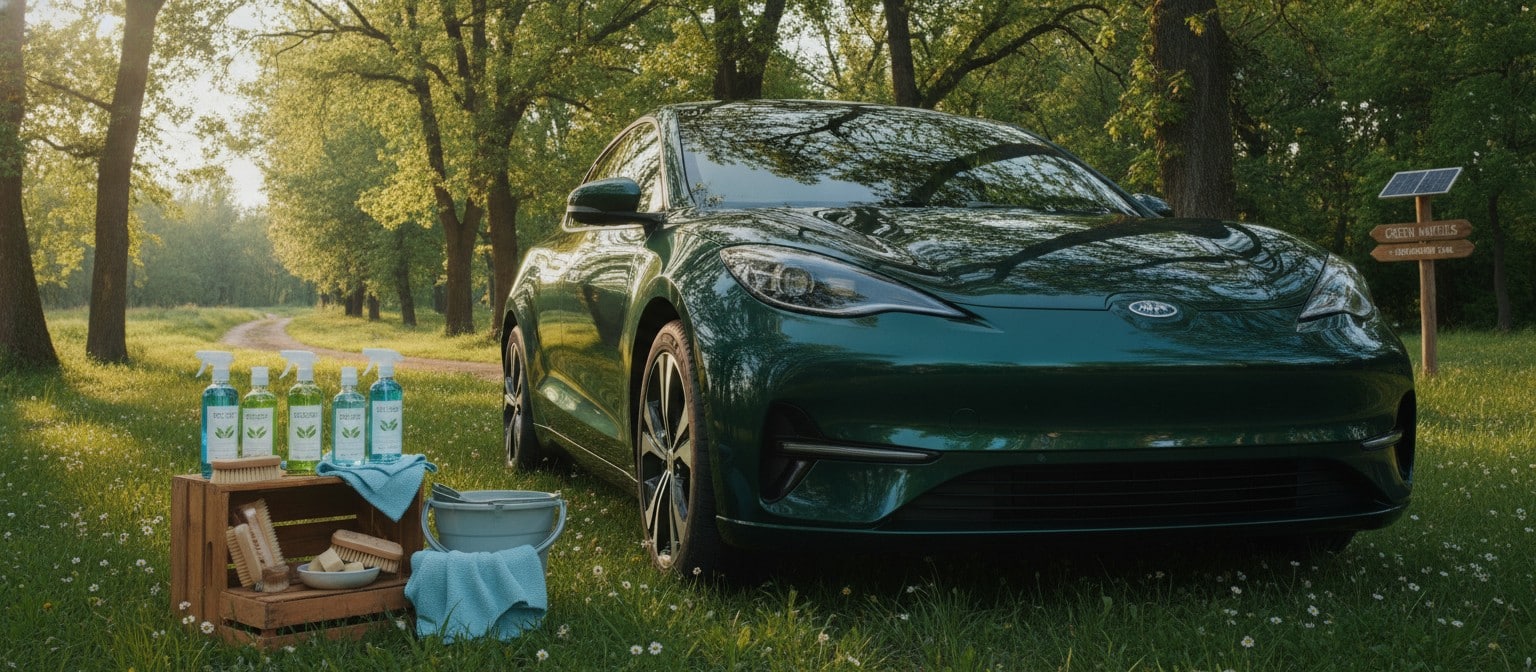
Natural ingredients such as citrus extracts, plant-based surfactants, and coconut-derived cleaners can be remarkably effective whilst being gentle on the environment. Many suppliers now offer comprehensive ranges of green cleaning products, from shampoos and degreasers to tyre cleaners and interior detailing sprays.
When introducing new products, test them thoroughly to ensure they meet your quality standards. Your customers need to see that choosing an eco-friendly service does not mean compromising on results.
Sustainable Equipment and Energy Use
Beyond water and chemicals, consider the environmental impact of your equipment and energy consumption. If your premises have adequate space and exposure, solar panels can provide clean, renewable energy to power your operations. Even a modest solar installation can significantly reduce your reliance on grid electricity and lower your carbon footprint.
Choose energy-efficient equipment, including LED lighting, high-efficiency vacuum cleaners, and modern pressure washers designed to maximise cleaning power whilst minimising energy consumption. When replacing equipment, prioritise durability and energy efficiency over simply the lowest initial cost.
For mobile valeting operations, consider investing in electric or hybrid vehicles for your service fleet. This demonstrates your commitment to sustainability and reduces emissions associated with travelling between appointments.

Waste Management and Recycling
Implementing a comprehensive waste management system is crucial for any sustainable business. Separate waste streams for recycling, with clearly labelled bins for plastics, cardboard, metals, and general waste. Many of the materials used in car valeting, from product containers to microfibre cloths, can be recycled or reused.
Microfibre cloths deserve special attention, as they are essential to modern car care but can shed microplastics when washed. Consider partnering with specialist laundry services that can properly clean and maintain these items, extending their lifespan and reducing microplastic pollution. Alternatively, invest in high-quality, long-lasting cloths and establish a proper maintenance routine.
For consumable items like applicator pads and brushes, choose products made from sustainable or recycled materials. Some manufacturers now produce detailing accessories from bamboo, recycled plastics, or other eco-friendly materials.
Educating Your Customers and Staff
Sustainability is a journey that involves everyone connected to your business. Train your staff thoroughly on eco-friendly practices, explaining not just the ‘how’ but the ‘why’ behind each sustainable choice. Engaged employees who understand the importance of environmental stewardship become ambassadors for your brand values.
Similarly, educate your customers about the environmental benefits of your services. Use your website, social media, and on-site signage to communicate your sustainability initiatives. Many customers are willing to pay a premium for services that align with their environmental values, but they need to understand what makes your business different.
Consider providing tips for customers on maintaining their vehicles between professional valets in an eco-friendly manner. This positions you as an expert whilst building customer loyalty and trust.
Certification and Credentials
Obtaining recognised environmental certifications lends credibility to your sustainability claims. Investigate programmes such as ISO 14001 environmental management certification or industry-specific eco-credentials. These certifications require you to meet specific environmental standards and demonstrate continuous improvement, providing assurance to customers that your commitment to sustainability is genuine and measurable.
Display your certifications prominently on your premises, vehicles, marketing materials, and website. These visible markers of your environmental commitment help differentiate your business in a competitive market.
The Business Case for Going Green
Whilst environmental responsibility is rewarding in itself, the business benefits of sustainable practices are substantial. Reduced water and energy consumption lower operational costs, whilst eco-friendly positioning attracts a growing demographic of environmentally conscious consumers. Many businesses and fleet operators now require their service providers to demonstrate environmental credentials, opening up lucrative commercial opportunities.
Furthermore, as environmental regulations become increasingly stringent, businesses that have already adopted sustainable practices will find themselves well-prepared for future compliance requirements, avoiding costly last-minute adaptations.
Conclusion
Transforming your car valet business into a sustainable, eco-friendly operation represents an investment in both the environment and your commercial future. By focusing on water conservation, choosing biodegradable products, investing in sustainable equipment, managing waste responsibly, and educating stakeholders, you can significantly reduce your environmental impact whilst potentially improving your bottom line.
The transition need not happen overnight. Start with the changes that offer the greatest environmental benefit or the best return on investment, then gradually expand your sustainable practices. Every step towards sustainability, no matter how small, contributes to a healthier planet and a stronger business. In an era where environmental responsibility is increasingly valued, making your car valet business sustainable is not just the right thing to do; it is a competitive advantage that will serve you well for years to come.


