
Researchers at Imperial College London have pulled off something that sounds like science fiction: they have engineered ordinary tobacco and lettuce plants to produce myoglobin, the animal protein that gives meat its characteristic red color, iron content, and savory umami flavor. The breakthrough, published on August 6, 2026, in Frontiers in Plant Science, marks the first time a higher plant has stably produced an animal muscle protein in its chloroplasts, the tiny solar-powered factories inside every green cell.
The implications could be significant. By turning crops into miniature protein factories, scientists may have opened a new path to making plant-based meat alternatives that taste more like the real thing, while dramatically reducing the environmental footprint of protein production.
What Is Myoglobin, and Why Is It the Secret to Meat’s Flavor?
Myoglobin is an iron-rich protein found in the muscle tissue of almost all vertebrates. Its primary job is to store and transport oxygen within muscle cells, but for cooks and eaters, it does something far more noticeable: it makes meat look, smell, and taste like meat.
When you see red liquid pooling around a rare steak, that is not blood. It is myoglobin mixed with water. As meat cooks, myoglobin undergoes chemical changes that shift its color from red to brown and release the complex aromatic compounds behind meat’s signature savory depth. This is why a well-marbled steak tastes fundamentally different from a plain soy patty. The protein is also what gives red meat its rich iron content.
For plant-based meat companies, myoglobin has long been the missing piece. Without it, even the most advanced vegetable-protein formulations struggle to replicate the full sensory experience of animal meat.
Inside the Breakthrough: How a Gene Gun Put Animal DNA Into Plants
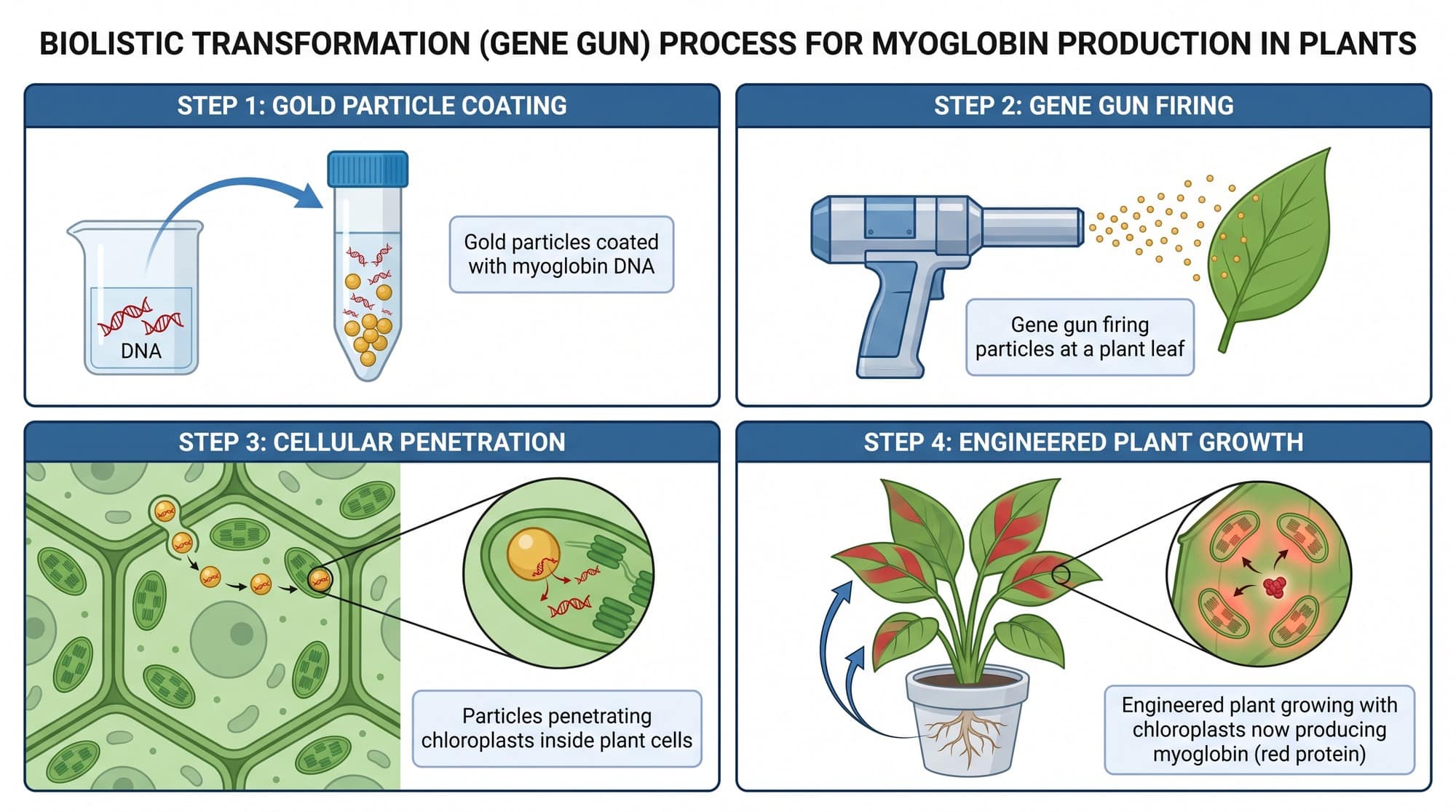
The research team, led by Dr. Alexia Groff at Imperial College London’s Department of Life Sciences and supported by the Bezos Centre for Sustainable Protein and biotech startup Kyomei Ltd, took an unconventional approach. Instead of inserting the myoglobin gene into the plant’s nuclear genome, where most genetic engineering happens, they targeted the chloroplasts.
Chloroplasts are the small compartments inside plant cells responsible for photosynthesis. They have their own tiny, circular genome, separate from the DNA in the cell nucleus, and each plant cell contains dozens of them. Scientists have previously hacked photosynthesis in crops to boost productivity, but this new research takes chloroplast engineering in a different direction: producing animal proteins. By inserting the gene there, the team achieved yields roughly three times higher than when the same gene was placed in the nuclear genome.
The delivery method was equally striking. Using a technique called biolistic transformation, the researchers fired microscopic gold particles coated with copies of pig and cow myoglobin genes directly into the chloroplasts of young tobacco and lettuce seedlings. The device, commonly referred to as a “gene gun,” is exactly what it sounds like: a tool that physically shoots genetic material into cells.
After confirming the DNA had integrated correctly, the team grew the plants to full adulthood. Independent experts consulted by the Science Media Centre described the work as a significant step forward in plant synthetic biology, noting that chloroplast engineering offers a more contained approach compared to nuclear genome modification. The engineered plants flowered, produced seeds, and passed the myoglobin-producing trait on to their offspring, demonstrating stable, heritable genetic modification.
Measurements by liquid chromatography-mass spectrometry revealed the following key results:
- Tobacco yields: approximately 800 milligrams of myoglobin per kilogram of dry weight.
- Lettuce yields: approximately 810 milligrams of myoglobin per kilogram of dry weight.
- Efficiency gain: roughly three times higher than inserting the same gene into the nuclear genome.
- Heritability: the engineered plants passed the trait on to their offspring through seeds.
Plant Molecular Farming: The New Frontier for Animal-Free Proteins
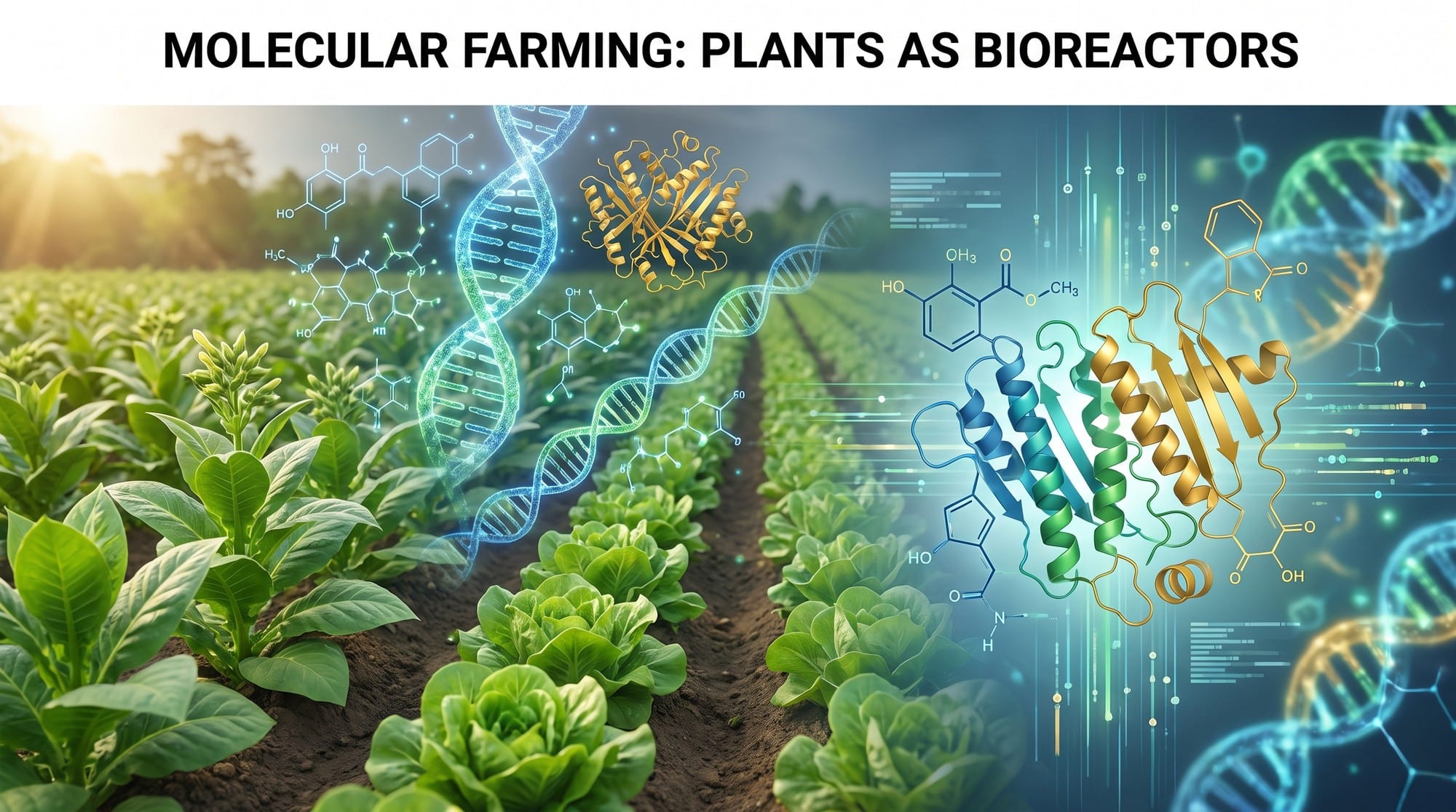
This research falls under an emerging field called plant molecular farming: using genetically engineered crops as living bioreactors to produce proteins and other molecules traditionally sourced from animals. The concept has been around for decades, mostly focused on pharmaceutical proteins like vaccines and antibodies. Applying it to food ingredients is a more recent but rapidly accelerating shift, as detailed in the Good Food Institute’s plant molecular farming fact sheet.
Several companies are already active in this space. Moolec Science has produced bovine myoglobin in pea seeds. IngredientWerks has grown heme protein in corn at what it calls unprecedented low cost. Kyomei, the Cambridge-based startup collaborating on this study, is focused specifically on producing animal proteins in plant chloroplasts for the alternative protein market. This builds on a broader wave of plant-based innovation, from spinach leaf skeletons used as scaffolds for growing real meat tissue to crops engineered for entirely new functions.
The advantage of plant-based production over other methods is straightforward. Plants grow using sunlight, water, and carbon dioxide. They do not require expensive stainless steel bioreactors, precisely controlled fermentation conditions, or the energy-intensive infrastructure that precision fermentation companies depend on. Once a stable transgenic line is established, scaling up simply means planting more seeds.
How Plant-Grown Myoglobin Could Fix Plant-Based Meat’s Biggest Flaw
For all the progress plant-based meat has made over the past decade, one complaint persists: it does not fully taste or feel like the real thing. The texture gap has narrowed considerably, with researchers even producing lab-grown meat with realistic muscle texture, but the flavor and color gap remains stubbornly wide. Myoglobin is the key to closing it.
The heme iron within myoglobin is what catalyzes the Maillard reaction and other chemical transformations during cooking, producing the complex, meaty aromas that make a burger sizzling on a grill so distinctive. It is the same reason Impossible Foods uses soy leghemoglobin, a plant-derived heme protein, in its products. But leghemoglobin is produced via precision fermentation in yeast, a process that requires significant energy inputs and specialized facilities.
Plant-grown myoglobin offers a simpler alternative. The protein is identical to the animal version because the same gene produces it. It could be extracted and purified from harvested leaves using standard industrial protein purification methods, then added as an ingredient to plant-based meat formulations. Alternatively, the researchers suggest the engineered lettuce could even be consumed directly as a fresh, iron-rich ingredient.

The Sustainability Math: Plants vs. Livestock vs. Fermentation
Producing protein through livestock is resource-intensive. According to the Food and Agriculture Organization, livestock supply chains account for approximately 14.5 percent of global greenhouse gas emissions. Beef production alone requires roughly 15,000 liters of water per kilogram of protein and is the single largest agricultural driver of deforestation. Even precision fermentation, while far more efficient than raising cattle, still requires energy for heating, cooling, and agitation in industrial bioreactors.
Plant molecular farming sidesteps most of these inputs, much like other novel approaches to sustainable protein production that use unconventional feedstocks. The plants themselves are the bioreactors, running on sunlight and pulling carbon dioxide out of the atmosphere as they grow. Once the crop is harvested, the myoglobin can be extracted using standard processing methods. The study’s authors note that the expected yield at scale could rival livestock farming while dramatically cutting water use and greenhouse gas emissions.
Here is how the three approaches compare:
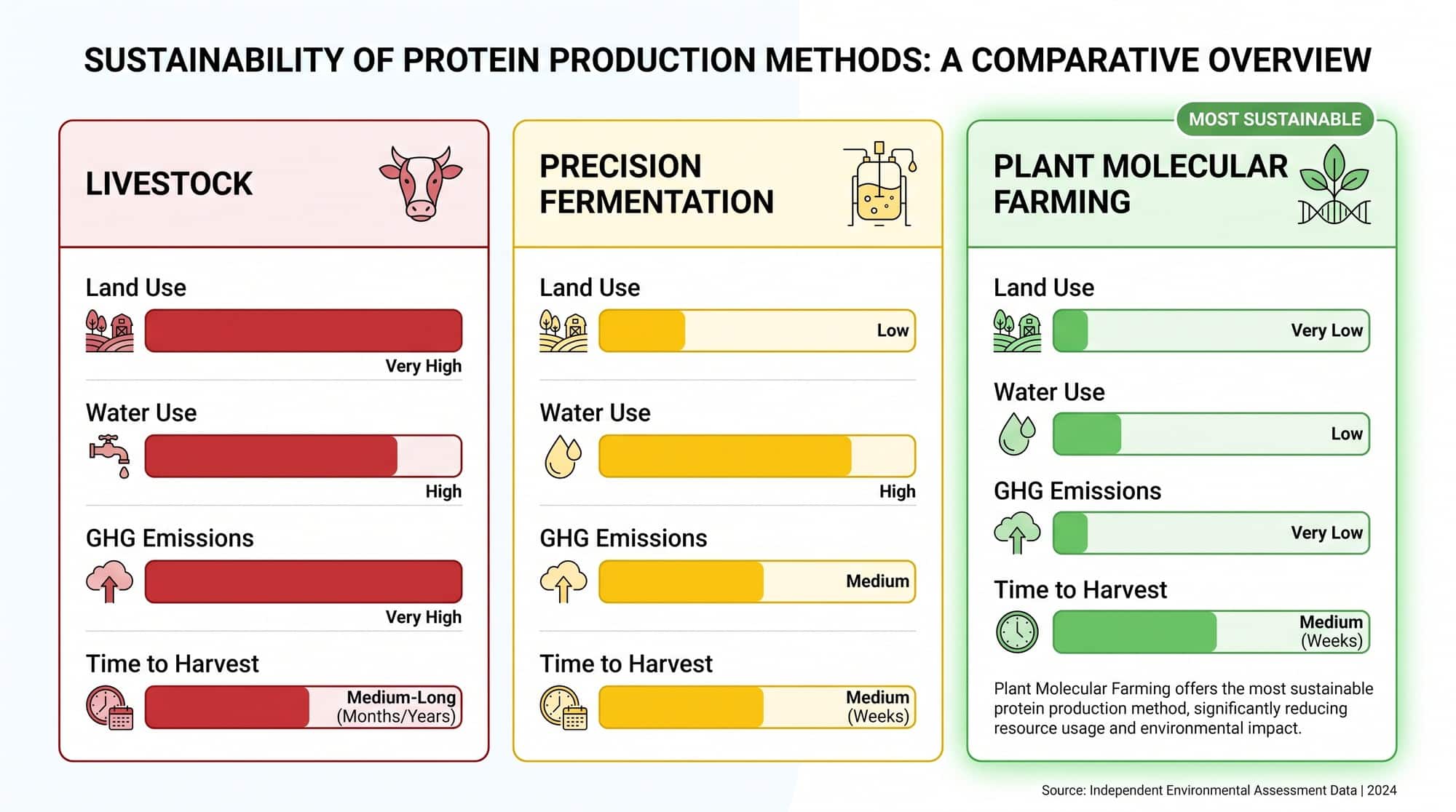
| Production Method | Land Use | Water Use | GHG Emissions | Time to Harvest |
|---|---|---|---|---|
| Beef Cattle (per kg protein) | Very High | ~15,000 L | ~60 kg CO2e | 18-24 months |
| Precision Fermentation | Low | Moderate | Moderate | Days |
| Plant Molecular Farming | Low | Low | Low (plants capture CO2) | Weeks to months |
From Lab Bench to Supermarket Shelf: The Road Ahead
The researchers are careful to describe their work as a proof of concept. Several hurdles remain before plant-grown myoglobin appears in commercial products.
- Yield optimization. While 800 milligrams per kilogram is promising at lab scale, commercial viability will likely require higher concentrations or more efficient extraction methods. The team plans to explore whether different plant species, growth conditions, or genetic tweaks can boost output further.
- Regulatory approval. Any genetically engineered food ingredient must pass safety assessments before entering the market. In the United States, the FDA would oversee this process. In Europe, the European Food Safety Authority would be involved, and the regulatory environment there has historically been more cautious around genetically modified organisms. Regulatory precedent does exist for novel food technologies: Singapore became the first country to approve the sale of lab-grown chicken in 2020, signaling that regulators are beginning to engage seriously with alternative protein innovations.
- Consumer acceptance. While plant molecular farming avoids some of the perception challenges that lab-grown cultured meat faces, consumers may still have questions about eating protein produced by genetically engineered plants. Transparent labeling and clear communication about the technology will be essential.
The collaboration with Kyomei, a company specifically founded to commercialize chloroplast-based protein production, signals that industry interest is real. If the economic and regulatory pieces fall into place, plant-grown myoglobin could reach the market within several years.
Frequently Asked Questions
What is the difference between myoglobin and blood?
Myoglobin is a protein found inside muscle cells that stores oxygen. Blood contains hemoglobin, a related but different protein that transports oxygen through the bloodstream. The red liquid in raw meat is myoglobin dissolved in water, not blood. All blood is drained from meat during slaughter.
Is plant-based meat actually healthy?
Plant-based meat products vary widely in nutritional profile. Many are comparable to animal meat in protein content and contain fiber, which animal meat lacks. However, some are highly processed and can be high in sodium and saturated fat from added oils. As with any food category, reading ingredient labels is the best way to assess individual products. The addition of plant-grown myoglobin could improve the iron content of plant-based meats, which is one nutritional area where they often lag behind animal meat.
Does plant-based meat really taste like meat?
Current plant-based meats have made substantial progress in texture but still fall short on flavor and aroma, largely because they lack the heme proteins responsible for meat’s characteristic taste. Myoglobin, the protein produced by these engineered plants, is precisely the ingredient that could close this sensory gap. When heated, myoglobin’s heme iron catalyzes the same chemical reactions that produce cooked meat’s distinctive flavor.
What diseases are linked to myoglobin?
In a medical context, elevated myoglobin in the blood can indicate muscle damage from conditions such as rhabdomyolysis, heart attack, or severe trauma. High myoglobin levels can also damage the kidneys if not treated promptly. These medical concerns are unrelated to consuming myoglobin as a food ingredient, which is safe and is a natural component of all animal meat.
What happens if your myoglobin is high?
Elevated myoglobin in blood or urine typically signals muscle injury. The protein is released when muscle cells are damaged, and at very high concentrations it can be toxic to the kidneys. This is a diagnostic marker used by doctors, not a concern for dietary intake. Eating myoglobin-rich foods does not cause elevated blood myoglobin in healthy individuals.
The Bigger Picture: Rethinking How We Make Protein
This research sits at the intersection of several converging trends: the global push for more sustainable food systems, rapid advances in genetic engineering tools, and growing consumer demand for meat alternatives that do not compromise on taste. Plant molecular farming may not replace livestock agriculture entirely, but it offers a compelling new piece of the protein puzzle.
“Here we show that plants can be engineered to produce the animal protein myoglobin in their chloroplasts, the energy factories for photosynthesis,” said Dr. Groff. “This could provide a more sustainable way to produce an important ingredient for plant-based meat products.”
The study also involved collaborators from the University of California and Nanchang University in China, underscoring the global nature of the effort to build a more sustainable protein supply. As the technology matures, the idea of growing meat protein inside everyday crops may shift from surprising headline to everyday reality.


