
Several global crises are going on simultaneously. Among them include:
- One, we are smothering the planet with plastic pollution.
- Two, our ever-growing population could reach over nine billion by 2050 (and 11.2bn by 2100) according to forecasts by United Nations, subsequently increasing the demand for food, which will put enormous pressure on food production systems and cause further food insecurity.
- Three, carbon dioxide in the atmosphere is exasperating climate change and causing global warming.
- Four, food waste is excessive, especially in agriculture. For example, the UN alone produced about 88 million tons of food waste in 2017, and 30% was generated during primary production on farms. And in America, the amount of food wasted equals over 20 pounds per person per month, according to the World Food Program. Globally the numbers are approximately 1.6 gigatons of food wastage, of which 1.3 gigatons are still edible when disposed of.
But there’s a single solution to all these problems; making edible protein. Plastic that ends up in the oceans, CO2 sucked from the atmosphere, and agricultural side-streams that would generally be sent to a landfill can all be turned into protein for human and animal consumption – which can then be used to reduce food insecurity.

Eating Our Plastic And CO2 Problems Away
Michigan Technological University biologist Stephen Techtmann and University of Illinois Urbana-Champaign bioengineer Ting Lu teamed up to turn plastic garbage into food. They literally made junk food and won a 1-million-euro ($1.18 million) prize (called the 2021 Future Insight Prize) for it! The technology involves a generator filled with microbes that degrade the plastics into edible protein. While it may not sound appetizing, the result is the same protein you’re eating already.
Merck said:
“The resulting foods contain all the required nutrition, are nontoxic, provide health benefits and additionally allow for personalization needs.”
Previously, Largus Angenent and colleagues at the University of Tübingen also developed a process involving microbes and captured CO2. It produces sustainable edible proteins that fit into a circular economy scheme. The microbes break down the sequestered carbon into protein for human consumption.
Finland-based company Solar Foods also developed a process that uses CO2 and renewable electricity to produce a cooking ingredient that looks like wheat flour and contains 50% protein.
Don’t Waste That Food!

Agricultural by-products can be a valuable resource. For example, proteins can be extracted from them and used by food processors to make things like yogurt, ice cream, sauces, cereals, baked goods, and others.
RuBisCO is the most abundant protein on Earth. It’s found in spinach, alfalfa, sugar beet, corn and carrot leaves, pea pods, and more.
Researchers at the NIZO Protein Centre are developing a method to extract RuBisCO from green plants, resulting in a protein ingredient that retains its solubility and gelling behavior – similar to animal proteins used for those features. As a result, food manufacturers can use it to replace dairy proteins in making products like desserts.
Meanwhile, there’s a partnership between 16 groups across seven EU member states called the Pro-Enrich project that is also working out how to recover food standard proteins from crop wastes, including fruits, vegetables, and seeds. They aim to make the protein for use in various industrial applications in human food, pet food, cosmetics, and adhesives. They’ve already conducted large-scale trials, producing multi-kilogram batches of protein powder from rapeseed/canola meal that industrial partners are currently evaluating.

Also, UK-based company Nutrapharma makes protein-rich powder for supplements from surplus fruits and vegetables. Nutrapharma CEO, Dr. Eric Hilton, was inspired to create the powder after observing the sheer amount of waste generated by the food industry in Lincolnshire. The English country produces about one-eighth of the UK’s food, including barley, cabbages, and sugar beets.
Hilton said:
“Finding commercial uses for discarded side streams has the potential to improve resource efficiency and create new high-value products. Yet when I looked into this, I found that nothing was being done about it.”
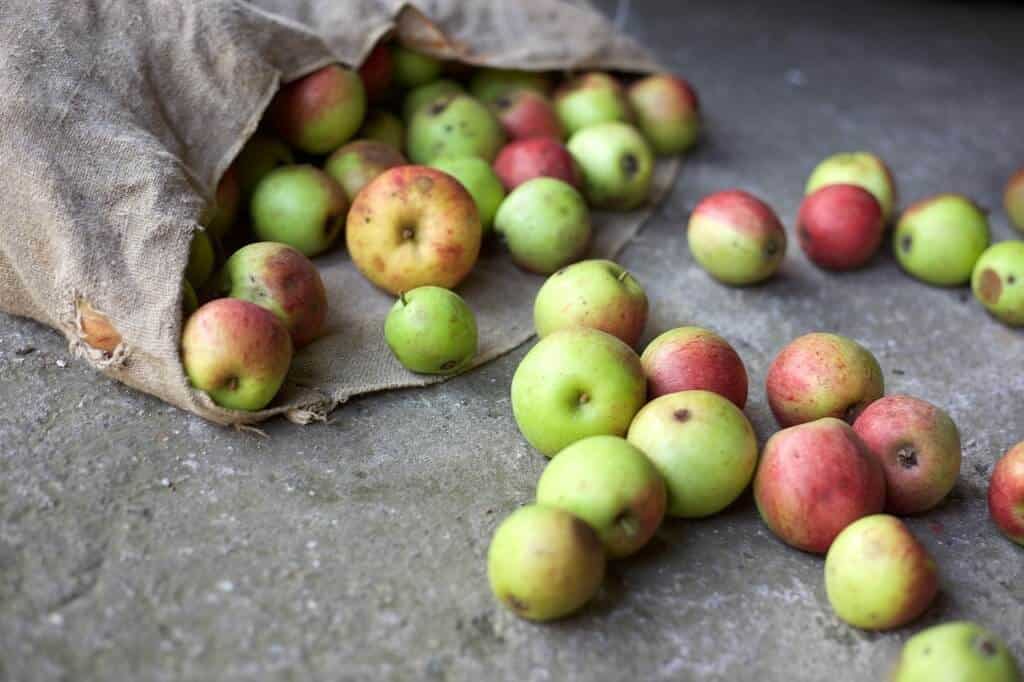
Researchers from CSIRO’s Food Innovation Centre also developed a method to redirect lost food-grade biomass into the food supply, turning it into value-added ingredients and food products. They use apple pomace as a model food source, but the process can be applied to other fruits, vegetables, and horticulture products, like broccoli, carrots, grapes, peaches, olives, and tomatoes. The process involves stabilizing the plant pomace to prevent its degradation and then converting it into flake, granule, paste, powder, or pellet to use as an ingredient or component in the manufacture of different food products.
Other projects include:
- Scientists at Virginia Tech and Virginia Polytechnic developed a method of extracting the protein and fiber from leftover grains of the beer-making process.
- University of Copenhagen scientists figured out how to turn leftover pig blood from pork farms into a flavorless protein powder for the food industry.
Eat Less Meat And More Bugs
A recent study found that even if the entire world stops using fossil fuels today, it wouldn’t be enough to curb climate change. So instead, it says we have to limit our meat consumption while removing gas-powered vehicles off the road and decarbonizing the power grid.
Food is among the world’s most significant contributors to greenhouse gas emissions from human activities, following electricity and transportation. Fortunately, adopting climate-friendly food isn’t as difficult as it may seem. In addition to the strange new forms of protein mentioned above, there are tons of other options. For example, you can switch to a bug-based diet.

Ok, that may still seem strange, but you’d be surprised how delicious cricket-based snacks and protein powders are! There is even a desktop, at-home LIVIN farm that allows users to harvest mealworms available. And in Thailand, Bangkok-based startup Exofood is making insect cuisine fashionable with its shop/laboratory that enables customers to visit the lab and learn first-hand about the insects they are eating.
Plus, University of Rome scientists published a study showing how different invertebrates are rich in antioxidants. And there you have it: eating bugs is very good for your health, so you minas well at least give it a chance.


