
Heart failure affects millions of people worldwide, and for those with severe cases, the options have historically been limited to medications that manage symptoms or a heart transplant that few will ever receive. Scientists have even grown functioning mini human hearts from stem cells, demonstrating the regenerative potential of this approach. A landmark clinical trial from China is now challenging that reality. Researchers at Nanjing Drum Tower Hospital have demonstrated that stem cell therapy can restore heart function in 90 percent of patients with severe heart failure, offering hope for a condition long considered irreversible.
The phase 2 HEAL-CHF trial, published in Nature Medicine in August 2026, represents the largest randomized controlled study to date using stem cell-derived heart muscle cells. The results suggest that combining bypass surgery with injections of lab-grown cardiomyocytes could do more than restore blood flow; it could actually regenerate damaged heart tissue.
What Is Heart Failure, and Why Is It So Dangerous?
Heart failure occurs when the heart muscle weakens or stiffens to the point where it can no longer pump blood effectively. The condition progresses through four stages, from mild risk factors to advanced symptoms that severely limit daily activity. Patients with severe heart failure may experience shortness of breath after walking just a few steps, the inability to lie flat at night, and frequent hospitalizations.
The numbers are staggering. Approximately 6.2 million Americans live with heart failure, while China has an estimated 13.7 million patients. Globally, the condition contributes to roughly one in eight deaths. For those with advanced heart failure, the five-year survival rate hovers around 50 percent, worse than many cancers.
Current treatments include medications like ACE inhibitors and beta-blockers, implantable devices such as defibrillators and ventricular assist devices, and ultimately, heart transplantation. But donor hearts remain critically scarce. In the United States, roughly 3,500 heart transplants are performed annually against a waiting list of over 3,500 patients. This gap between supply and demand has driven researchers to explore regenerative approaches that could help the heart heal itself.
How Stem Cell Therapy Works for Heart Failure
The process begins with ordinary adult cells, typically skin or blood cells, which are reprogrammed in the laboratory to revert to a pluripotent state. These iPSCs can then be coaxed into becoming virtually any cell type in the body, including cardiomyocytes, the specialized muscle cells that make the heart beat. Researchers culture billions of these cardiomyocytes, quality-test them, and prepare them for injection.
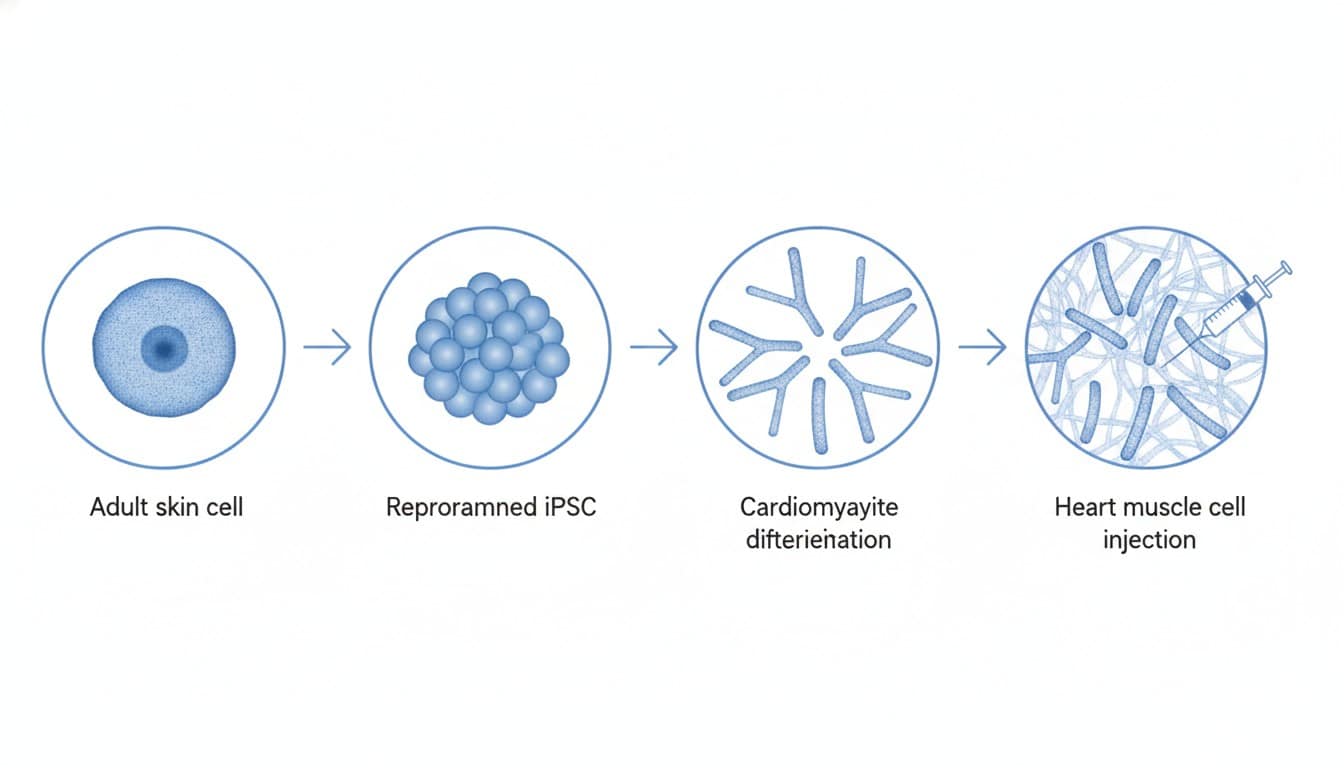
Stem cell therapy for heart failure aims to replace damaged heart muscle with new, functional cells. The approach used in the HEAL-CHF trial relies on induced pluripotent stem cells, or iPSCs, a technology that won Shinya Yamanaka the Nobel Prize in 2012.
The process begins with ordinary adult cells, typically skin or blood cells, which are reprogrammed in the laboratory to revert to a pluripotent state. These iPSCs can then be coaxed into becoming virtually any cell type in the body, including cardiomyocytes, the specialized muscle cells that make the heart beat. Researchers culture billions of these cardiomyocytes, quality-test them, and prepare them for injection.
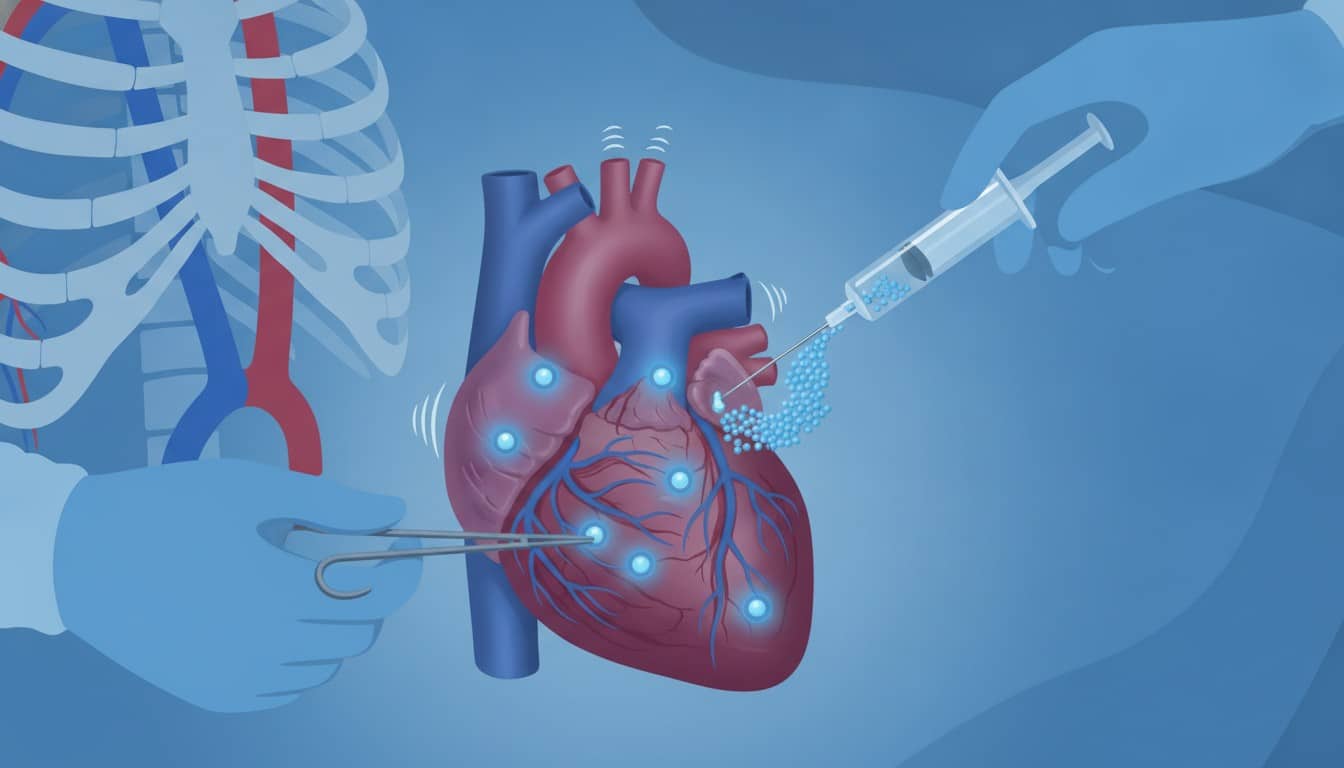
During the HEAL-CHF trial, surgeons injected approximately 100 million lab-grown cardiomyocytes directly into damaged heart tissue at multiple sites during coronary artery bypass grafting surgery. This dual approach combines the benefits of restoring blood flow through bypass grafts with the regenerative potential of new muscle cells.
Other stem cell approaches for cardiac repair include:
- Embryonic stem cells: Pluripotent cells derived from embryos, raising ethical concerns but offering similar differentiation potential
- Adult stem cells: Including bone marrow-derived mesenchymal stem cells, which have shown modest benefits in some trials
- Cardiosphere-derived cells: Heart-derived progenitor cells tested in the CADUCEUS trial, which demonstrated scar reduction but limited functional improvement
- 3D printed hearts: Researchers have also explored growing functional beating hearts from stem cells using 3D printing technology
- Stem cell patches: Another approach involves implantable stem cell patches that repair heart attack damage
- iPSC-derived cardiomyocytes: The approach used in HEAL-CHF, offering the advantage of unlimited cell supply from reprogrammed adult cells
The HEAL-CHF Trial: 90% Success Rate
The HEAL-CHF trial enrolled 20 patients with advanced ischemic heart failure at Nanjing Drum Tower Hospital. Researchers randomly assigned 10 patients to receive coronary artery bypass grafting combined with intramyocardial injection of HiCM-188, an iPSC-derived cardiomyocyte therapy. The control group of 10 patients underwent bypass surgery alone.
The results at 12-month follow-up were striking:
- 90 percent of patients receiving stem cell therapy recovered to NYHA Class II cardiac function, meaning they experienced only mild symptoms during normal daily activity
- In contrast, only 60 percent of the control group reached this level of improvement
- Patients in the cell therapy group showed nearly double the improvement in six-minute walking distance compared to the control group
- Stroke volume, the amount of blood ejected per heartbeat, increased in the treatment group but decreased in controls
- All 10 patients in the treatment group survived the 12-month follow-up period, while one patient in the control group died eight months after surgery
The trial achieved both of its primary safety endpoints. No treatment-related tumor formation was observed through 12 months, and no sustained ventricular tachycardia occurred through six months. Some patients in the cell therapy group developed a mild, short-lived heart rhythm change called accelerated idioventricular rhythm during the first month after surgery, but researchers did not consider this a serious safety concern.
“HEAL-CHF provides the first clinical evidence that delivering HiCM-188 intraoperatively during CABG may combine the benefits of revascularization with myocardial regeneration,” said Professor Dongjin Wang, lead author and director of the Department of Cardiothoracic Surgery at Nanjing Drum Tower Hospital.
iPSC-Derived Cardiomyocytes: A New Approach
HiCM-188, the therapy tested in the HEAL-CHF trial, is an allogeneic product, meaning it is derived from donor cells rather than the patient’s own tissue. This distinction is significant because it allows for mass production of standardized, quality-controlled cell batches that can be stored and used as needed, similar to how blood banks operate.
The therapy is jointly developed by HELP Therapeutics and CR Sanjiu, a Chinese state-owned enterprise. HiCM-188 holds the distinction of being the first iPSC-derived cardiomyocyte therapy to receive Investigational New Drug clearances, though off-the-shelf cardiac patches have also shown promising results in improving heart function from both the United States Food and Drug Administration and China’s National Medical Products Administration.
Key advantages of this approach include:
- Unlimited supply: Unlike donor hearts, iPSC-derived cardiomyocytes can be manufactured in large quantities
- Standardization: Each batch undergoes rigorous quality testing for purity, potency, and safety
- Off-the-shelf availability: No need to match donors to recipients, reducing wait times
- Regenerative potential: The cells can integrate with existing heart tissue and contribute to contractile function
The drug is currently being evaluated in pivotal clinical trials in China, with the goal of seeking regulatory approval for widespread clinical use.
Global Progress: Japan’s ReHeart and Other Trials
China is not alone in pursuing iPSC-based cardiac therapies. China’s stem cell research extends beyond heart failure, with recent breakthroughs in diabetes treatment as well. In February 2026, Japan made international headlines by approving ReHeart, the world’s first iPSC-derived regenerative medicine product for heart failure. The approval, granted under Japan’s conditional regenerative medicine pathway, marked a historic milestone for the field.
Japan has been a pioneer in cardiac stem cell research, largely through the work of Yoshiki Sawa at Osaka University. Sawa’s team developed iPSC-derived cardiac cell sheets that showed promise in early trials, though results at scale have been described as modest compared to the HEAL-CHF findings.
Other notable developments include:
- Heartseed HS-005: A Japanese biotechnology company is testing catheter-delivered iPSC-derived cardiomyocyte spheroids in a phase I/II trial called EMERALD. The first patient was dosed in March 2026 at Shinshu University Hospital
- CADUCEUS trial: An earlier study at Cedars-Sinai Medical Center and Johns Hopkins tested cardiosphere-derived cells delivered via catheter, demonstrating scar reduction but limited functional improvement
- HECTOR trial: A European study is evaluating embryonic stem cell-derived cardiomyocytes delivered via cardiac catheter for chronic ischemic heart failure
The competitive landscape suggests that iPSC-based cardiac therapies are advancing rapidly across multiple countries, with China and Japan leading the way in clinical development.

Safety Profile and Side Effects
Safety has been a primary concern for stem cell therapies, particularly regarding the risk of tumor formation and dangerous heart rhythms. The HEAL-CHF trial addressed these concerns directly.
Over the 12-month follow-up period, researchers observed:
- No tumor formation: A critical safety endpoint, as pluripotent stem cells have the theoretical potential to form teratomas if not properly differentiated
- No sustained ventricular tachycardia: A dangerous heart rhythm that could lead to sudden cardiac death
- Mild transient arrhythmias: Some patients experienced accelerated idioventricular rhythm in the first month, which resolved without intervention
- Immunosuppression requirements: Patients received immunosuppressive therapy for three months to prevent rejection of the allogeneic cells
The need for immunosuppression is an important consideration, as it carries its own risks, including increased susceptibility to infections. Researchers are also exploring encapsulated stem cell approaches that could reduce immune rejection. Researchers are exploring ways to reduce or eliminate this requirement through cell engineering techniques that could make the transplanted cells less likely to trigger an immune response.
Cost and Availability: Where Can You Get This Treatment?
As of 2026, iPSC-derived cardiomyocyte therapy for heart failure is not yet approved for general clinical use outside of clinical trials. Patients interested in this treatment must enroll in ongoing studies or seek care at specialized centers offering regenerative medicine under compassionate use or expanded access programs.

For those considering stem cell therapy for heart failure more broadly, costs vary significantly by country and treatment type:
| Country | Typical Cost Range | Notes |
|---|---|---|
| United States | $18,000 – $60,000+ | Limited to clinical trials; insurance rarely covers experimental treatments |
| Japan | $24,000 – $36,000 | ReHeart approved under conditional pathway; 70% insurance coverage for approved products |
| Germany | $20,000 – $35,000 | High regulatory standards; often limited to autologous approaches |
| Turkey | $7,000 – $15,000 | Most affordable option; often includes accommodation packages |
| China | $5,000 – $25,000 | Approved therapies available in Class 3A hospitals under 2026 regulations |
| India | $2,300 – $5,500 | Lower costs but variable quality and regulatory oversight |
It is important to note that many clinics worldwide offer unproven stem cell treatments with little scientific evidence. Patients should seek care only at accredited medical centers participating in registered clinical trials or offering therapies approved by national regulatory agencies.
Limitations and What’s Next
While the HEAL-CHF results are promising, several important limitations warrant consideration:
- Small sample size: The trial included only 20 patients, too few to draw definitive conclusions about efficacy or detect rare adverse events
- Phase 2 design: The study was designed primarily to assess safety, with efficacy as a secondary endpoint
- Short follow-up: Twelve months is insufficient to determine whether benefits persist long-term or whether late complications may emerge
- Specific patient population: All patients had ischemic heart failure requiring bypass surgery, limiting generalizability to other heart failure types
- Immunosuppression requirement: The need for three months of immunosuppressive therapy adds complexity and risk
The research team has launched pivotal phase 3 clinical trials at multiple hospitals in China to validate these findings in a larger patient population. If successful, the therapy could seek regulatory approval from China’s NMPA within the next few years.
Professor Wang noted that the results “provide the first clinical evidence that combining bypass surgery with cardiomyocyte injections could pair the benefits of restoring blood flow with regenerating damaged muscle.” This dual approach represents a paradigm shift in how cardiologists think about treating heart failure, moving from managing symptoms to actually repairing the underlying damage.
Frequently Asked Questions
What is the life expectancy for someone with stage 4 heart failure?
Stage 4 heart failure, also known as advanced or refractory heart failure, carries a poor prognosis. Without a heart transplant, the five-year survival rate is approximately 50 percent, though individual outcomes vary based on age, overall health, and response to treatment. Patients with stage 4 heart failure experience symptoms at rest and may require continuous intravenous medications or mechanical circulatory support.
How to recover from heart failure?
Recovery from heart failure depends on the underlying cause and severity. For mild cases, lifestyle changes, medications, and cardiac rehabilitation can significantly improve symptoms and quality of life. For severe cases, advanced therapies including ventricular assist devices, heart transplantation, and emerging treatments like stem cell therapy may be necessary. Early detection and treatment are critical for improving outcomes.
Can I live a long life with heart failure?
Many people with heart failure live for years or even decades with proper treatment and lifestyle management. The key factors that influence longevity include the stage of heart failure at diagnosis, adherence to medication regimens, dietary modifications, regular exercise within safe limits, and monitoring for complications. Advances in treatment continue to improve survival rates for heart failure patients.
Can stem cell therapy cure heart failure?
Current evidence suggests that stem cell therapy can improve heart function and symptoms in many patients with heart failure, but it is not yet proven to be a cure. The HEAL-CHF trial showed that 90 percent of patients receiving iPSC-derived cardiomyocytes experienced significant improvement in cardiac function, but longer-term studies are needed to determine whether these benefits persist and whether the therapy can truly reverse the underlying disease process.
How much does stem cell therapy for heart failure cost?
Costs vary widely depending on the country, clinic, and specific treatment protocol. In the United States, experimental stem cell therapies may cost $18,000 to $60,000 or more. In Japan, approved iPSC products like ReHeart cost approximately $24,000 to $36,000, with 70 percent covered by insurance for eligible patients. More affordable options exist in countries like Turkey ($7,000 to $15,000) and India ($2,300 to $5,500), though quality and regulatory oversight vary significantly.
Stem cell therapy for heart failure represents one of the most exciting frontiers in regenerative medicine. The HEAL-CHF trial results, combined with Japan’s approval of ReHeart and ongoing clinical trials worldwide, suggest that we are entering a new era where damaged hearts may actually be repaired rather than simply managed. While significant challenges remain, including the need for larger trials, longer follow-up, and solutions to the immunosuppression requirement, the trajectory is clear: stem cell-based cardiac regeneration is moving from laboratory promise to clinical reality.

