
Dark spots have a frustrating habit of lasting much longer than the problem that caused them. An acne breakout may disappear within days, yet the brown mark left behind can remain visible for months. Sun exposure can gradually create uneven areas of pigmentation, while melasma can produce larger patches that repeatedly become darker after time outdoors.
This is why hydroquinone continues to attract attention among people looking for a more targeted approach to persistent hyperpigmentation. Rather than being another general-purpose “brightening” cosmetic, hydroquinone acts directly on melanin production.
Melalite Forte is a topical 4-hydroquinone cream containing 4% hydroquinone w/w in a 30 g tube. Current pharmacy listings identify Melalite Forte as a topical treatment used principally for melasma and hyperpigmentation, with Abbott listed as its marketer.
For consumers who want to understand what makes a 4% formulation different, how hydroquinone works, and what precautions matter, it is useful to look beyond marketing promises and examine the dermatology behind the ingredient.
Why Do Dark Spots Develop?
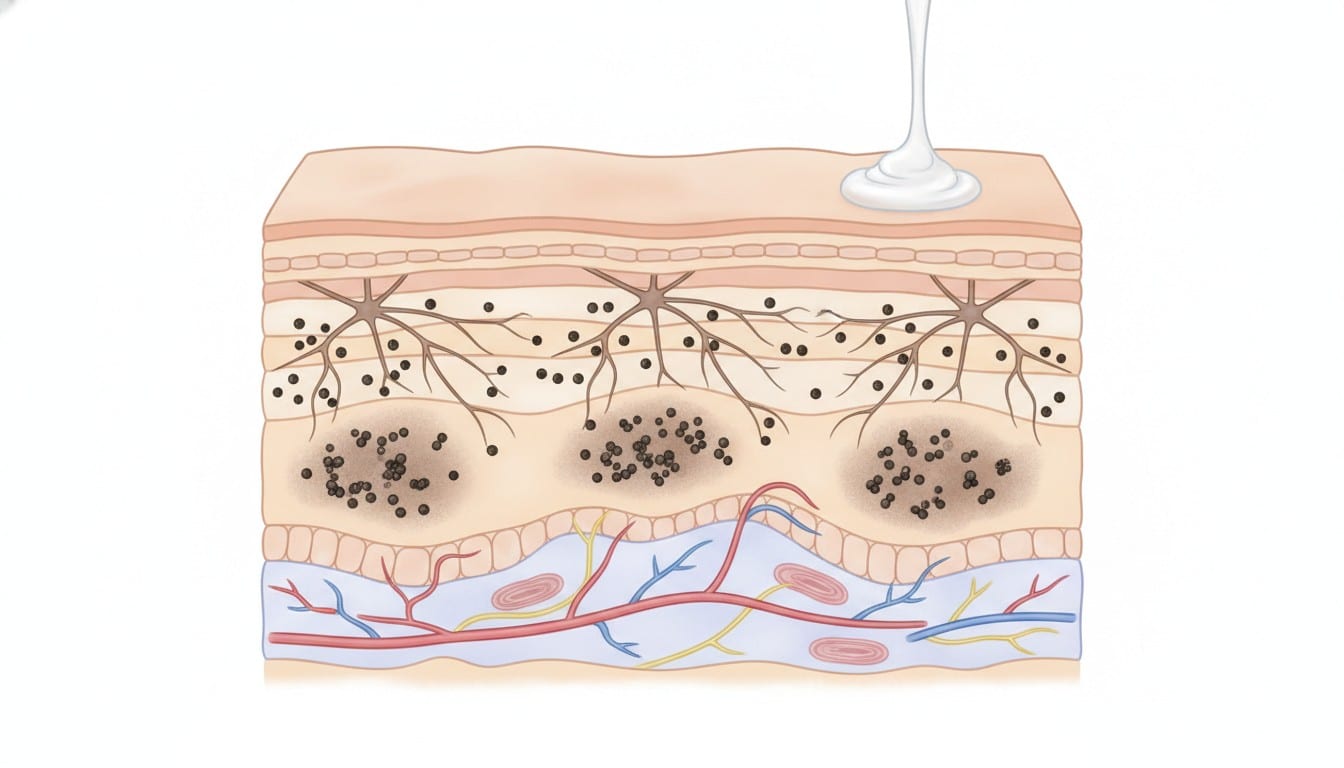
Skin color is largely determined by a natural pigment called melanin. Melanin is produced by specialized cells known as melanocytes and plays an important protective role in the skin.
Problems arise when certain areas begin producing or retaining more pigment than the surrounding skin.
This can happen after acne or other inflammation, following repeated ultraviolet exposure, because of hormonal influences, or as part of conditions such as melasma. The result is hyperpigmentation: areas that appear brown, grey-brown, or darker than the person’s normal surrounding skin.
Post-inflammatory hyperpigmentation is particularly common after acne. Even when the active blemish has healed, the inflammatory process can stimulate pigment production and leave a flat dark mark behind.
Melasma behaves somewhat differently. It frequently appears as symmetrical patches across areas such as the cheeks, forehead, and upper lip, and sunlight is an important factor in both its development and recurrence. Nutrition may also influence melasma, making a combined approach worth considering.
What Makes Hydroquinone Different?
Many cosmetic products approach pigmentation indirectly through exfoliation, antioxidants, or ingredients designed to support a more even-looking complexion.
Hydroquinone is different because it interferes directly with the pathway responsible for melanin formation.
One of its principal actions is inhibition of tyrosinase, an enzyme involved in melanin synthesis. Reduced melanin production can gradually make excessive epidermal pigmentation less noticeable as normal skin-cell turnover continues.
That mechanism explains why a 4-hydroquinone cream is generally considered a targeted pigmentation treatment rather than an ordinary face cream.
It also explains why results do not appear overnight. Hydroquinone reduces the formation of new pigment; existing pigment still needs time to move through the skin’s natural renewal process.
What Is Melalite Forte?
Melalite Forte contains 4% w/w hydroquinone and is supplied as a topical cream. Current Indian pharmacy listings describe the product as a treatment for melasma and hyperpigmentation and list Abbott as its marketer.
The formulation is straightforward: unlike multi-ingredient pigmentation creams containing retinoids, corticosteroids, or several depigmenting agents, Melalite Forte centers on hydroquinone as its primary active ingredient.
Consumers researching international availability and product information can buy Melalite online through OKDERMO, subject to the prescription, importation, and personal-use rules applicable in their own country.
What Types of Pigmentation Can Hydroquinone Address?
Hydroquinone is particularly associated with the treatment of epidermal hyperpigmentation, meaning excess pigment relatively close to the surface of the skin.
Dermatology references describe hydroquinone as useful for pigmentation problems, including melasma and post-inflammatory hyperpigmentation.
In practical terms, a healthcare professional may consider hydroquinone when dealing with concerns such as:
- Melasma
- Post-acne dark marks
- Post-inflammatory hyperpigmentation
- Freckles
- Sun-related pigmentation
- Some age-related dark spots
However, not every brown mark is simply excess epidermal pigment.
Pigmentation located deeper within the skin can respond differently, and some pigmented lesions should be diagnosed rather than automatically treated with a fading agent. A new, changing, irregular, or otherwise unusual lesion warrants professional evaluation.
This distinction matters because “dark spot” describes an appearance, not a diagnosis.
Why 4% Matters
Hydroquinone is available in different concentrations internationally, and 4% is a substantial dermatological concentration.
That does not mean that using more cream—or using it more frequently—will produce proportionally faster results. Irritation itself can worsen pigmentation in some skin types, so aggressive use can be counterproductive.
DermNet advises starting hydroquinone treatment cautiously, initially testing a small area for irritation and applying it only to affected pigmentation rather than indiscriminately over normal skin. It also recommends stopping treatment if significant redness, scaling, itching, or weeping develops.
The appropriate frequency and duration should therefore follow the product instructions and, where required, advice from a qualified healthcare professional.
Sunscreen May Be Just as Important as the Cream
Perhaps the most overlooked aspect of treating hyperpigmentation is that reducing existing pigment is only half of the strategy.
Sunlight can stimulate additional melanin production.
Someone can therefore use an effective pigmentation treatment while simultaneously encouraging new pigmentation through repeated ultraviolet exposure. This can lead to disappointing results or recurrence after an initial improvement.
For this reason, serious approaches to melasma and dark spots generally combine treatment with consistent photoprotection.
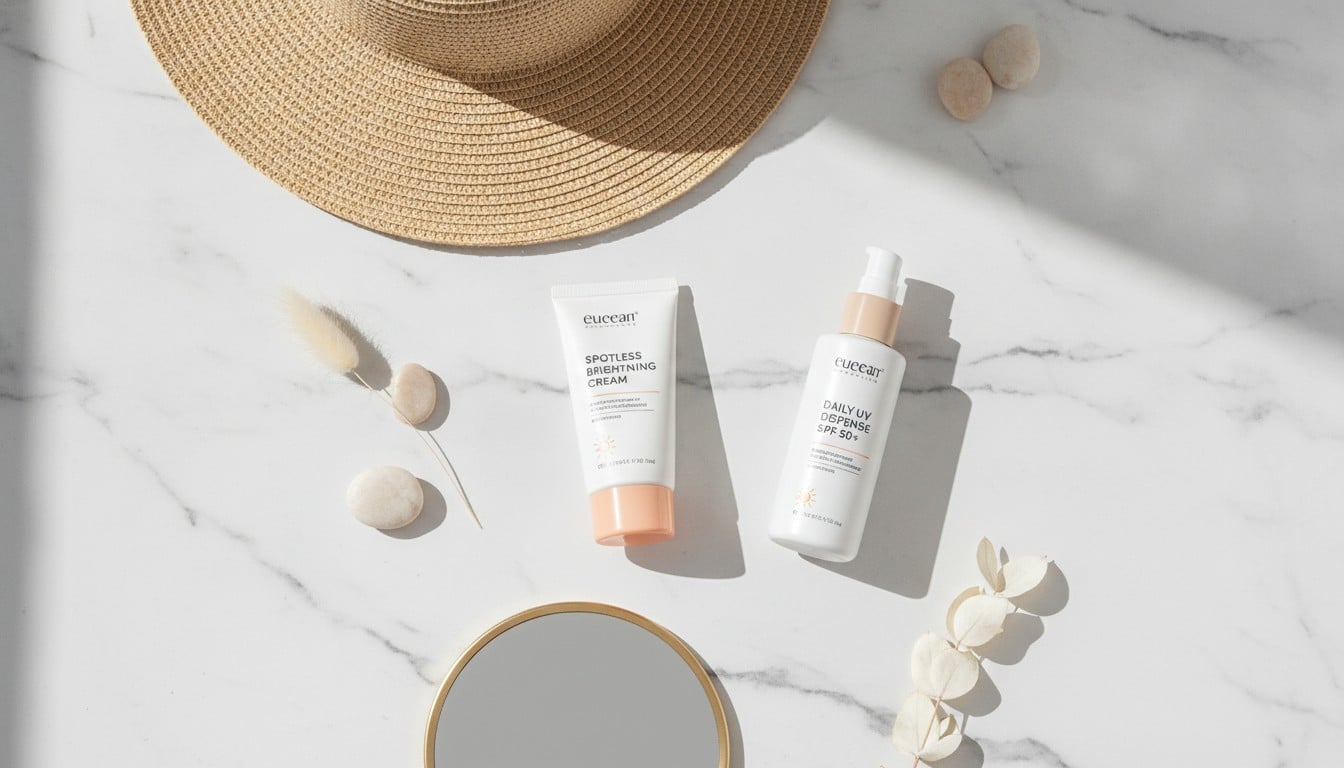
Broad-spectrum sunscreen, shade, hats, and minimizing intense sun exposure can help prevent treated pigmentation from becoming darker again. This is particularly relevant for melasma, which is well known for recurring after sun exposure.
In practical terms, the sunscreen sitting next to a pigmentation cream may be doing almost as much for long-term results as the active treatment itself.
More Is Not Better
Because hydroquinone has a long history in dermatology, it can sometimes be treated too casually.
A 4-hydroquinone cream should not be approached like an unlimited moisturizer or general cosmetic whitening cream.
Excessive application does not guarantee faster improvement. Prolonged unsupervised use is particularly undesirable because hydroquinone can cause irritation and, more rarely, a condition called exogenous ochronosis, which produces blue-grey or dark discoloration of the skin. An NIH clinical review of hydroquinone notes that higher concentrations and use beyond three months may increase this risk.
The U.S. Food and Drug Administration has received reports of adverse reactions associated with hydroquinone-containing skin-lightening products, including rashes, facial swelling, and ochronosis.
This is one reason treatment should have a defined purpose rather than becoming an indefinite part of a skincare routine.
DermNet recommends stopping hydroquinone if no benefit has occurred after approximately three months and addressing the underlying cause of the hyperpigmentation as well.
What About Acne Marks?
Post-acne pigmentation is one of the situations in which consumers frequently encounter hydroquinone.
There is an important distinction, however, between a dark acne mark and an acne scar.
A flat brown or grey mark left after inflammation is pigmentation and may respond to pigment-targeting treatment. A depressed, raised, or texturally altered scar involves structural changes in the skin and cannot simply be “bleached away” with hydroquinone.
Understanding the difference can prevent months of using the wrong treatment for the wrong problem.
Controlling active acne is also important. Continually developing new inflamed lesions means continually creating opportunities for new post-inflammatory pigmentation.
Regulation Depends on Where You Live
Consumers ordering dermatological products internationally should also understand that hydroquinone regulations are not identical around the world.
In the United States, the FDA states that hydroquinone-containing skin-lightening products are not approved for over-the-counter sale. Prescription hydroquinone-containing products may be available through healthcare professionals.
The rules in other jurisdictions vary.
Anyone considering Melalite Forte should therefore check the legal requirements applicable to hydroquinone in the destination country, including whether a prescription is necessary and whether personal importation is permitted.
A Smarter Way to Approach Pigmentation
The most productive way to think about hydroquinone is not as a product for making naturally healthy skin lighter. Its legitimate dermatological role is much more specific: reducing excessive pigmentation so affected areas move closer to the person’s normal surrounding skin tone.
That distinction changes the entire treatment strategy.
Instead of spreading a potent active over the whole face, the objective becomes identifying the actual areas of hyperpigmentation, treating them appropriately, avoiding unnecessary irritation, and preventing sunlight or inflammation from creating more pigment.
A well-designed routine may therefore be surprisingly simple:
- Identify what is causing the pigmentation.
- Use the appropriate targeted treatment.
- Protect the skin consistently from ultraviolet exposure.
- Avoid unnecessary irritation.
- Reassess the condition rather than using strong actives indefinitely.
Hydroquinone can fit logically into that framework when it is appropriate for the condition being treated.
The Bottom Line
Melalite Forte is a relatively simple product built around one well-known dermatological active: hydroquinone 4%. Current pharmacy and retailer information lists it as a 30 g topical formulation intended for conditions involving excessive pigmentation, particularly melasma and hyperpigmentation.
For consumers searching for a 4-hydroquinone cream, the most important question is therefore not simply whether hydroquinone is “strong.” It is whether hydroquinone is appropriate for the specific pigmentation they are trying to treat.
Used for the correct indication, with appropriate sun protection and attention to irritation, hydroquinone remains an important option in pigmentation management. Used casually, excessively, or without understanding the cause of the discoloration, it can create unnecessary risks.
The best results in pigmentation care rarely come from attacking the skin with the strongest possible product. They come from understanding why pigment is forming, treating it selectively, and preventing it from returning.

