
Residential outdoor design is shifting toward low-maintenance fiberglass pools and integrated patios, offering homeowners durable backyard retreats with less upkeep.
Many homeowners hesitate to build a swimming pool because they dread the endless cycle of acid washing, algae scrubbing, and expensive resurfacing that traditional concrete builds demand every few years.
Choosing a composite fiberglass shell paired with a thoughtfully planned hardscape changes that equation entirely. By selecting durable materials and integrating water features right into your patio layout, you create a cohesive outdoor living space that cuts chemical usage and protects your long-term budget.
Why Do Composite Fiberglass Shells Outperform Traditional Concrete?
Contractors excavate your yard, set the factory-cured shell in place, backfill the perimeter, and connect the plumbing in a fraction of the time it takes to cure plaster on-site. Beyond installation speed, the smooth gel coat finish changes how you care for your water. Concrete surfaces contain microscopic pores that trap algae spores and leach minerals into your water, forcing you to scrub the walls weekly and dump extra chlorine and acid into the system. A non-porous fiberglass surface resists algae buildup naturally, keeping your water balanced with fewer chemicals and zero acid washes.
You protect your wallet from major renovation bills down the road. Concrete pools require expensive replastering every 10 to 15 years, while vinyl liners tear and need replacement every 7 to 10 years. A high-quality composite shell flexes slightly with minor ground shifts without cracking, giving you decades of reliable use with minimal structural upkeep.
Why Does Regional Site Planning Matter Before Digging Starts?
Every property presents unique soil conditions, elevation changes, and weather patterns that dictate how your pool must be engineered. Skipping thorough site evaluation before excavation begins leads to shifting decks, poor water runoff, and avoidable construction delays. Working with experienced pool builders in Maryland or your specific region helps you navigate local soil composition, frost lines, and municipal permitting rules before heavy machinery ever touches your grass.
Water accumulation around the outside of a fiberglass shell creates hydrostatic pressure that can stress the structure when the pool is drained or during heavy spring storms. Your installation team must grade the surrounding yard so rainwater flows away from the patio. Installing French drains, channel drains along patio seams, and a dedicated sump pipe next to the shell keeps subsurface water under control year-round.
How Does Modern Pool Geometry Maximize Your Yard Space?
You can make even a modest suburban lot feel expansive by selecting clean, architectural pool shapes. According to Wetscapes Fiberglass Pools, rectangular designs lead residential backyard trends because their crisp lines and versatile layouts adapt easily to contemporary architecture. Straight edges align cleanly with home foundations, property lines, and outdoor kitchens, eliminating awkward, unusable corners in your yard.
Modern fiberglass molds pack high-end resort features directly into the shell structure. You no longer need to pay extra for custom masonry work to get comfortable seating or shallow lounging zones.
- Full-width tanning ledges: Shallow entry shelves let you set up lounge chairs in 6 to 12 inches of water so you can cool off while reading or watching kids play.
- Integrated perimeter benches: Deep-end swim-out benches give swimmers a safe spot to rest without obstructing lap lanes or open play areas.
- Built-in entry steps: Wide, textured steps integrated into the corner of the shell keep the main swimming area completely open for games and exercise.
What Makes Integrated Water Features Practical and Low-Maintenance?
You do not need elaborate, high-maintenance rock waterfalls to bring soothing movement and sound to your backyard. Modern hardscape design favors sleek, architectural water features that tie directly into your pool’s existing circulation system without creating extra cleaning headaches.
Laminar deck jets arch smooth streams of water from your patio directly into the pool, creating visual interest day or night when paired with LED lighting. Inside the pool, shallow floor bubblers aerate the water on your tanning ledge, keeping water circulating across the shallowest zone where sun exposure is highest. Both options run off your standard variable-speed pump, adding dynamic movement without extra filtration equipment.
How Do You Design Patios and Hardscapes Around Your Shell?
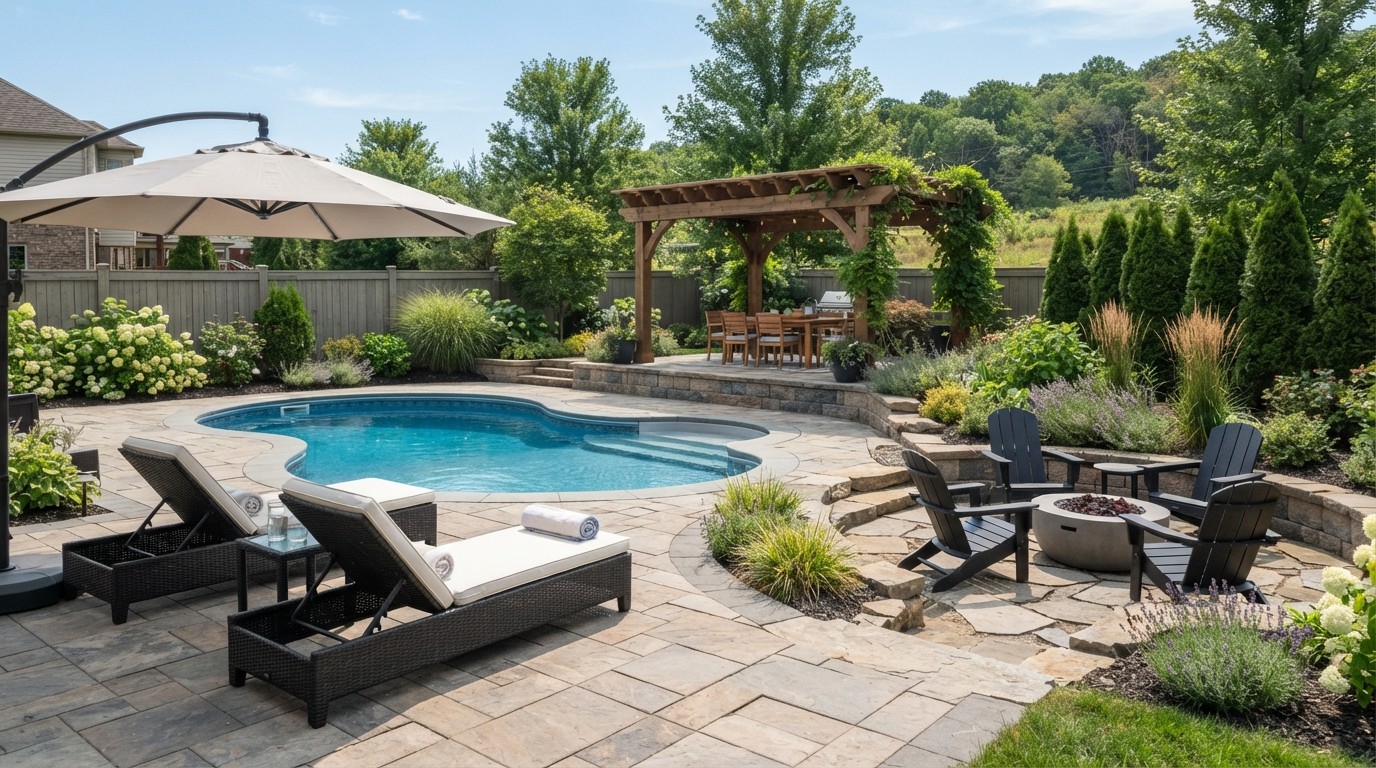
Your pool shell is only one piece of a successful outdoor living space. Surrounding your water with the right hardscape materials creates a unified transition between your indoor living room and your backyard retreat while preventing mud, grass clippings, and dirt from entering the water.
You get the most value from your backyard when you divide the patio into distinct activity zones rather than leaving a narrow strip of concrete around the water.
- Sunbathing and lounge decks: Leave at least 8 to 10 feet of unobstructed deck width along one side of the pool to fit chaise lounges and side tables comfortably.
- Covered dining pavilions: Position your outdoor kitchen or pergola near the house to simplify utility connections while keeping smoke and food spills away from the water.
- Fire pit gathering areas: Place a gas or wood-burning fire feature on a separate patio tier to extend your backyard season well into crisp autumn evenings.
How Can Smart Equipment Lower Your Ongoing Operating Costs?
Pairing a low-maintenance fiberglass shell with modern automation reduces your weekly chores to a quick check on your smartphone. As noted by Artisian, many contemporary fiberglass shells feature specific dimensions and hidden track recesses built to pair seamlessly with automatic cover systems. High-efficiency equipment lowers your monthly utility bills while keeping your water crystal clear with minimal manual intervention. Choosing energy-efficient pool pumps and equipment can further reduce operating costs over the life of the pool.
Saltwater chlorine generators convert a low concentration of dissolved salt into steady, gentle sanitizer, eliminating the harsh odor and skin irritation of traditional chlorine pucks. Because fiberglass gel coats do not react with salt the way plaster surfaces do, you enjoy silky water without worrying about premature surface erosion. Adding automated pH and sanitizer sensors monitors your water chemistry continuously, alerting your phone only when minor adjustments are needed.
What Landscape Choices Keep Your Pool Cleaner All Year?
The plants you place around your patio directly affect how much time you spend skimming leaves and cleaning filter cartridges. Thoughtful softscape architecture softens hard stone edges and adds privacy without dumping organic debris into your water.
Deciduous trees drop blossoms in spring, leaves in autumn, and sap all summer long, turning your pool into a giant leaf trap. Surround your immediate patio perimeter with clean, non-shedding evergreens, boxwoods, ornamental grasses, and structural succulents instead. Position larger shade trees well back from the water’s edge and downwind of prevailing summer breezes so falling foliage lands on your lawn rather than your tanning ledge.
Choosing durable composite materials, smart drainage, and cohesive patio layouts transforms your backyard into an asset that elevates both your daily lifestyle and your property’s resale appeal. When your outdoor space runs smoothly with minimal upkeep, you spend your warm-weather weekends actually enjoying the water with family and friends instead of working to maintain it.

