
You walk into a standard doctor’s office and immediately feel the buzz of harsh fluorescent lights. Crowded waiting rooms, loud intercoms, and rushed 15-minute visits can turn a basic checkup into an overwhelming ordeal for people with autism and intellectual or developmental disabilities (I/DD).
Healthcare networks are now redesigning that experience from the ground up. By opening sensory-friendly clinics with flexible schedules and integrated services, medical teams make routine preventive care comfortable, predictable, and accessible for you and your family.
Why Do Traditional Outpatient Clinics Create Barriers to Preventive Care?
Standard medical offices operate on speed and high volume. That fast pace leaves little room for patients who process sights, sounds, and physical touch differently. When a waiting room smells strongly of disinfectant and echoes with crying children or ringing phones, your nervous system can hit overload before a nurse even calls your name.
Communication gaps add another layer of stress during a typical appointment. Clinicians fire off rapid questions while typing on a computer, expecting quick verbal answers. If you use an augmentative and alternative communication (AAC) device, need extra time to process spoken words, or feel anxious around unfamiliar people, a rushed visit makes it hard to share your symptoms.
Specialized Clinical Training and Integrated Care Delivery
Most medical schools offer very little coursework on caring for neurodivergent patients, leaving many general doctors unsure how to adapt their approach. Specialized networks close that gap by training every team member, from front-desk receptionists to lab technicians, in neurodiversity-affirming practices.
Finding the right medical team changes how you experience healthcare every single year. Working with a dedicated autism primary care provider gives you access to clinicians who understand sensory processing, alternative communication tools, and trauma-informed physical exams. These trained providers adapt standard procedures, so routine care feels safe and respectful.
How Do Sensory-Friendly Exam Rooms Calm Your Nervous System?
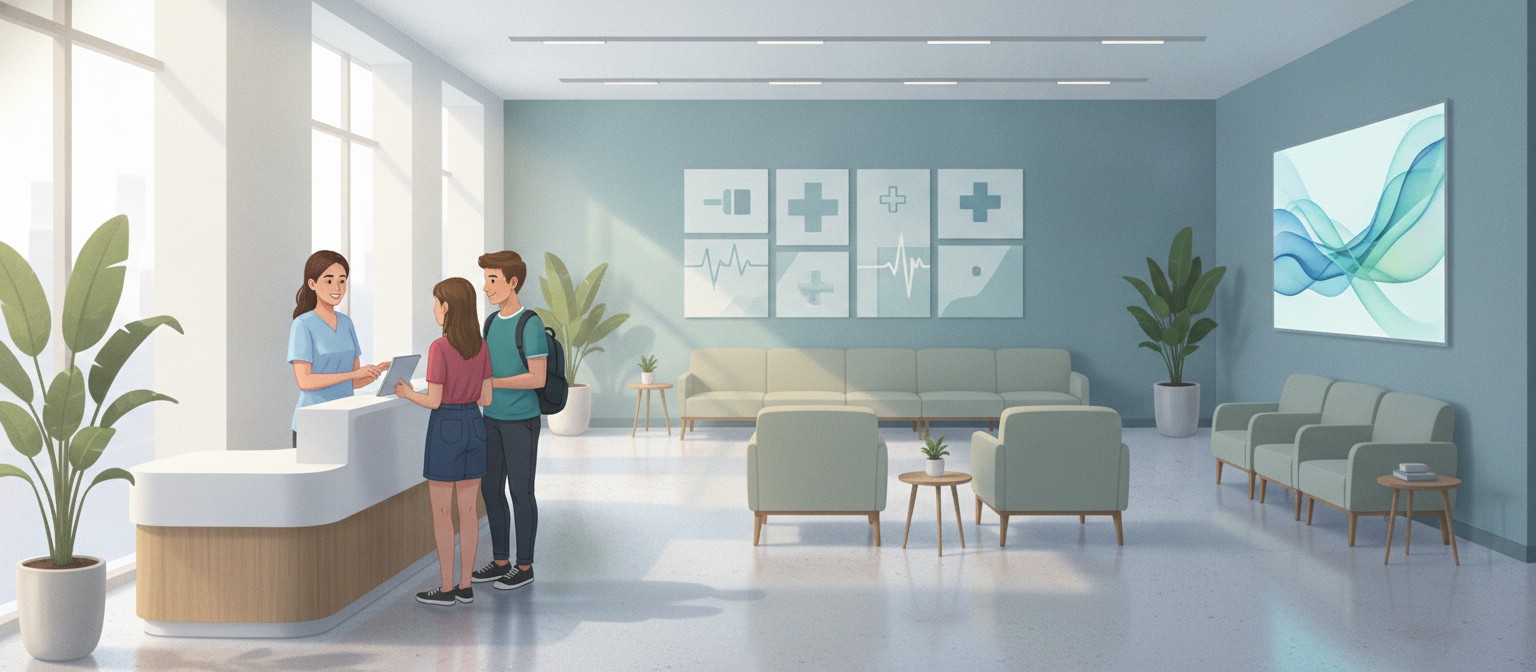
Specialized primary care centers rethink every physical detail of the clinic to lower sensory stress. Designers replace glaring overhead lights with dimmable, warm-toned bulbs and swap noisy linoleum floors for sound-absorbing materials. Soft wall colors and clutter-free exam rooms help your brain stay relaxed from the moment you step inside.
- Control the lighting: Staff dim exam room lights or turn off buzzing fixtures before you enter.
- Reduce background noise: Clinics install acoustic panels, offer noise-canceling headphones, and silence overhead paging systems.
- Provide sensory toolkits: Exam rooms stock weighted lap pads, fidget items, and visual timers to help you stay grounded.
- Offer flexible seating: You can choose a standard chair, a padded bench, or a floor mat instead of sitting on crinkly exam table paper.
What Happens When Clinics Rethink Appointment Scheduling?
A calm room only works when the schedule supports it. Traditional clinics book patients back-to-back, which guarantees long waits and hurried exams. Sensory-friendly clinics build breathing rooms directly into the calendar.
Instead of squeezing a full physical into 15 minutes, specialized clinics offer 30-minute to 60-minute appointments. Extra time lets you settle into the room, ask questions at your own pace, and take short breaks if a procedure feels intense. Your doctor can explain each step before touching you, which builds trust and removes unpleasant surprises.
How Does Whole-Person Care Bring Every Service Under One Roof?
Coordinating appointments across multiple clinics drains your time and energy. Driving to one building for a physical, another for blood work, and a third for behavioral health forces you to adapt to three different environments and three separate staff. Integrated sensory-friendly centers solve this problem by housing primary care, chronic condition monitoring, lab testing, and behavioral health under one roof.
Reporting from Autism Spectrum News highlights that accessible, well-coordinated medical care lowers the likelihood that adults with autism or I/DD will end up relying on emergency rooms and crisis services. Keeping your preventive care in one familiar location turns a fragmented system into a reliable medical home. You build lasting relationships with a team that knows your history, your triggers, and your health goals.
Preparing for a Smooth, Stress-Free Clinic Visit
Even at a sensory-friendly clinic, a little preparation helps you get the most out of your appointment. Taking a few proactive steps before you leave home puts you in control of the visit and gives your care team the details they need to support you.
Before you arrive, call or message the clinic a few days ahead to share your communication style and sensory preferences. Ask if the office provides a social story or photo tour on its website so you can preview the entrance, waiting area, and exam rooms.
- Book early slots: Request the first appointment of the morning or the first slot after lunch to avoid delays and crowded hallways.
- Pack comfort items: Bring your favorite headphones, sunglasses, a preferred snack, or a familiar fidget item from home.
- Write down questions: List your top 2 or 3 health concerns on paper or your phone so you do not have to rely on memory under pressure.
- Request visual aids: Ask your nurse to use a visual schedule or simple step-by-step checklist during exams and lab draws.
Why Does Lifelong Continuity Matter After Pediatric Care Ends?
Families often spend years building a trusted network of pediatricians, therapists, and school specialists. When a neurodivergent teenager turns 18 or 21, that entire support system can vanish overnight. Adult healthcare clinics rarely offer the same patience, sensory accommodations, or family coordination that pediatric offices provide.
According to Creative Spirit, Dr. Wendy Ross points out that many neurodivergent people stop receiving regular medical attention once they outgrow pediatric clinics, which drives up health complications, mortality risks, and overall medical expenses. Without a welcoming adult clinic to step into, young adults go years without basic screenings for blood pressure, cholesterol, or mental health.

Building Inclusive Healthcare Access for Every Life Stage
Expanding sensory-friendly clinics does more than improve individual checkups: it strengthens entire communities. When neurodivergent adults and families with I/DD know they can visit a doctor without facing sensory overload, they schedule regular checkups, stay current on vaccines, and manage chronic conditions with confidence.
Healthcare networks are proving that inclusive design benefits everyone. Calmer waiting rooms, clearer communication, and unhurried visits create a better medical experience for neurodivergent patients, caregivers, and clinicians.
Whole-person clinical models show that flexible scheduling and sensory-aware spaces lead to stronger preventive health outcomes for neurodivergent communities. You deserve a medical home that respects how you experience the world and supports your health at every age. As more healthcare networks adopt these integrated clinics, routine care becomes something you can approach with confidence.

