
After a long afternoon on the couch with a dog, it’s easy to blame everything in the room on the rug. Some of what you see is hair. Much of the rest is ordinary dust from people and the outdoors. Pet dander can also settle on fabric or travel through the air as the animal moves around. A humidity meter tells you something else entirely. When a room feels uncomfortable, start by figuring out which of those conditions you can actually change.
Follow the Spots Your Pet Uses Most
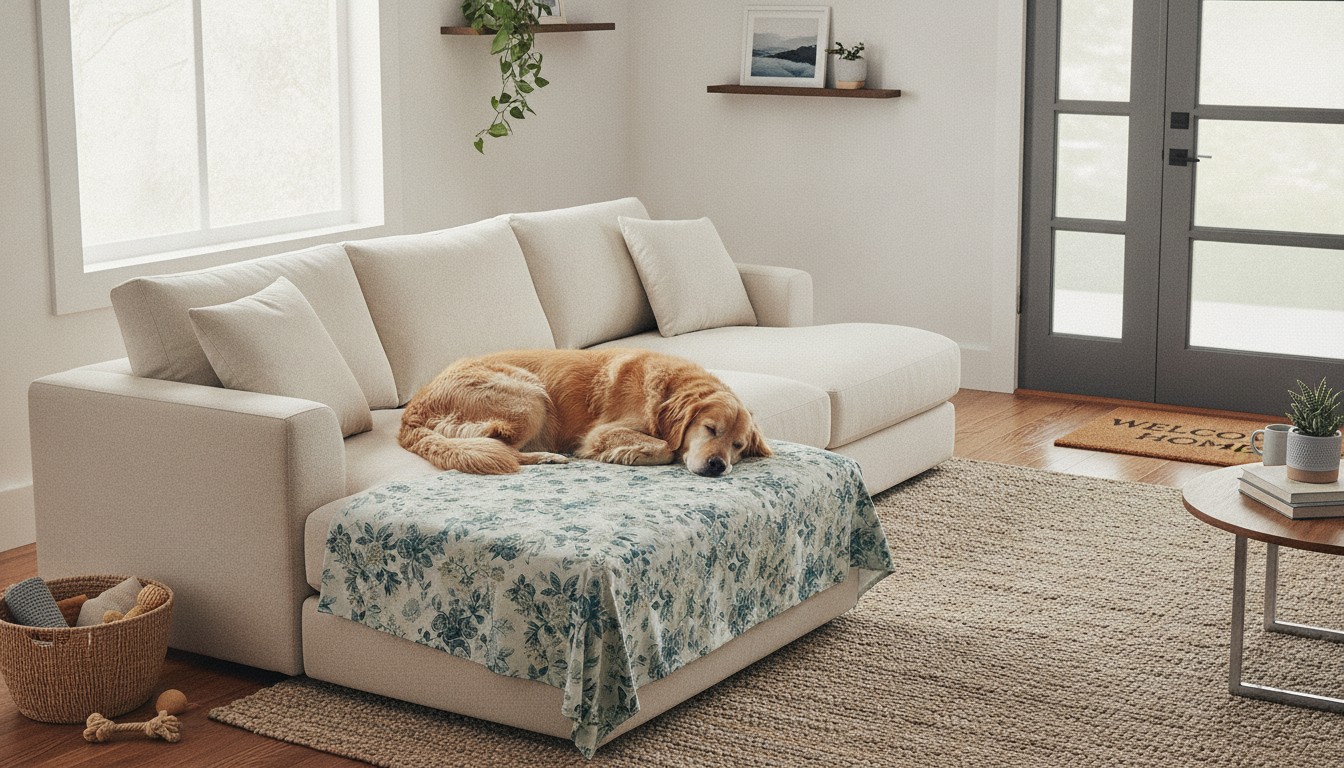
Walk through the room and think about what your pet does during a normal day. The back cushion, the end of the hallway runner and the blanket beside your desk may need more attention than the middle of the floor. A washable cover on one favorite spot can make weekly cleaning easier. Pick a fabric you can wash according to its care instructions and keep a spare if the first one takes a long time to dry. It may be easier to wash that cover than to vacuum a thick couch cushion every other day.
When you clean, work from higher surfaces down. A slightly damp cloth can pick up dust from a shelf or hard floor before you vacuum the area below. Brush or vacuum upholstery in the creases as appropriate for the material. The clumps of visible hair often come up quickly. The fabric itself takes longer, so spend most of the time where the pet actually naps. If hair gathers in a particular corner, check for airflow from a supply register or an under-door gap. That may be where loose material is being carried.
Keep the room’s entry in mind as well. A mat near the door can collect grit from paws and shoes. On a wet day, keep a dry towel where you can actually reach it when you get inside. Dry the mat between uses if it picks up a lot of moisture. Those simple changes can make the room easier to clean, even if your pet returns to the same couch cushion immediately.
Measure Humidity Before Making a Change
Put a humidity meter in an ordinary spot in the room with space around it. Take readings during the day and after the heat or air conditioning has been running. Keep the instrument away from a register, an open window or a water bowl. If the room already has condensation on the window, take that as a reason to investigate moisture instead of adding any. The EPA advises against raising indoor relative humidity above 50 percent when using a portable humidifier.
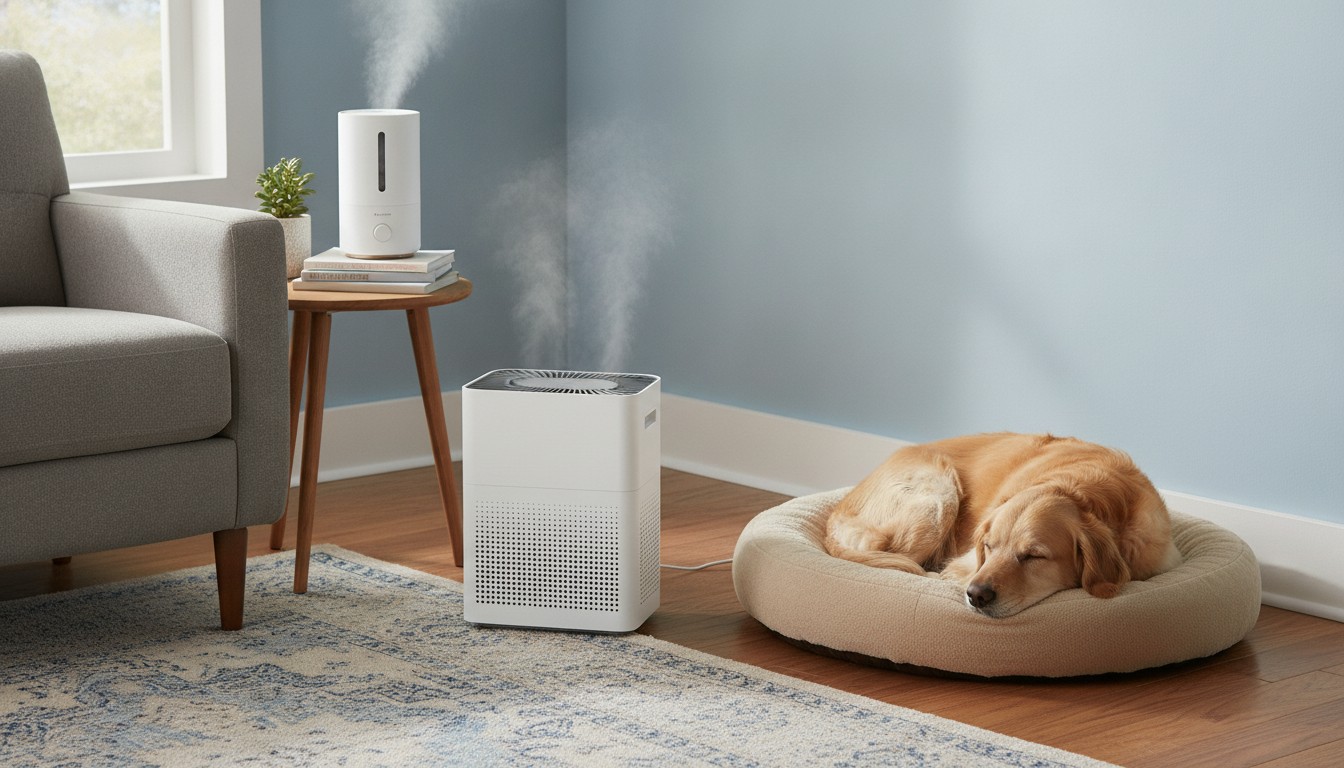
When the room stays dry, compare features on Levoit humidifiers or other units based on the size of the area and how easily you can reach the tank for daily care. Use low-mineral water if recommended and follow the instructions for emptying and cleaning the reservoir. Keep the unit beyond where a pet can nudge it and leave a clear path for the cord. Start with a low setting and check the meter again from a spot outside the mist.
Changes in humidity do not make dander disappear from furniture. If dander is the issue you’re working on, keep the cleaning routine going. If you think about the two jobs separately, you can put the humidifier away when the weather turns humid without losing whatever progress you made on keeping the room cleaner.
Decide Whether Airborne Filtration Would Help
Portable filters work on particles that pass through the unit. They can make sense in a room where somebody spends a lot of time with a pet, especially if the room is small enough for the unit’s airflow. When comparing Levoit air purifiers for pet-friendly homes, check the clean air delivery rate, usable fan speeds and how often the filter will need attention. Pick somewhere stable with open space around the intake and outlet. Behind the couch may be convenient for the cord, but the furniture can restrict the airflow.
Check the outside of the unit as part of your cleaning routine. Hair may gather around the intake or on a prefilter. Clean or replace those parts according to the manual. If the appliance sits across the room from a humidifier, make sure the moisture doesn’t visibly drift toward it. You can also adjust the fan speed while the room is occupied. A setting you can live with for longer may be easier to keep running than a loud one you often turn off.
Keep a Routine That Fits the Household
Choose a couple of jobs people will actually do. You might wash the favorite blanket once a week, clean the entry mat as needed and look at the humidity reading during periods when the heat runs often. Write a reminder for the filter if its prefilter collects hair quickly. If the room is still uncomfortable, pick the place where you spend the most time and test one change there first. You’ll learn more from making that one area easier to maintain than from rearranging furniture in rooms the pet hardly visits.
Leave one blanket where the pet likes it. That will give the hair somewhere predictable to land and make it a little easier to finish cleaning before both of you need the couch again.

