
Owning a swimming pool brings plenty of opportunities to relax, exercise, and spend time outdoors. It also comes with a routine of maintenance tasks that can quickly become repetitive. Checking water chemistry, adjusting pumps, managing heaters, and operating lights or water features all require attention. Pool automation brings many of these functions together through a central control system, making everyday management more convenient and consistent.
Before investing in an upgrade, however, it helps to understand what automation can control, whether your existing equipment is compatible, and which features are worth paying for. The right setup should simplify pool ownership rather than add another complicated system to manage.
What Pool Automation Actually Controls
Pool automation is more than an app that lets you switch on the spa from your phone. A properly configured system acts as a central control point for connected pool equipment. Depending on the model and installation, it may manage filtration schedules, variable-speed pump settings, heaters, spa modes, lighting, chlorinators, and water features.
Connecting separate components allows them to work together through one interface. For example, activating spa mode may require the system to adjust valves, start the appropriate pump settings, and call for heat. Automation can coordinate these actions without requiring you to operate several controls individually.
Some systems also provide equipment status information and alerts. You may be able to identify a schedule change, notice an unexpected temperature reading, or receive a notification about a system issue. These features provide useful visibility, although they do not eliminate the need for routine inspections and water testing.
Is Your Pool a Good Candidate for Automation?
Many in-ground pools can accommodate automation, but compatibility depends on the equipment already installed. Pools with heaters, spas, variable-speed pumps, LED lighting, salt systems, or water features may offer several opportunities for integration.
Older pools may also be suitable, although some components might need swimming pool renovation work or additional control equipment. An installer should review the pump model, heater communication requirements, valve actuators, electrical layout, and available connections before recommending a system.
This is where pool automation installation becomes a technical decision rather than simply a convenience purchase. The system must communicate properly with compatible equipment, operate electrical components safely, and coordinate functions without creating conflicts.
Why Manual Pool Management Becomes Inefficient
Managing each piece of equipment separately can make pool ownership unnecessarily time-consuming. You might run the pump longer than necessary, heat the water when nobody plans to swim, or forget to adjust settings after a gathering. Small inconsistencies can increase operating costs and create unnecessary equipment use.
Manual controls can also discourage people from using certain features. If the heater or lighting controls are located near the equipment pad, switching them on may feel inconvenient. Separate timers and control panels can make the routine even more confusing.
Automation helps establish repeatable schedules based on how frequently the pool is used. You can program filtration, heating, and lighting around your household’s routine rather than adjusting every component manually. The goal is not to eliminate judgment but to make regular operation easier to manage.
The Practical Value of App-Based Control
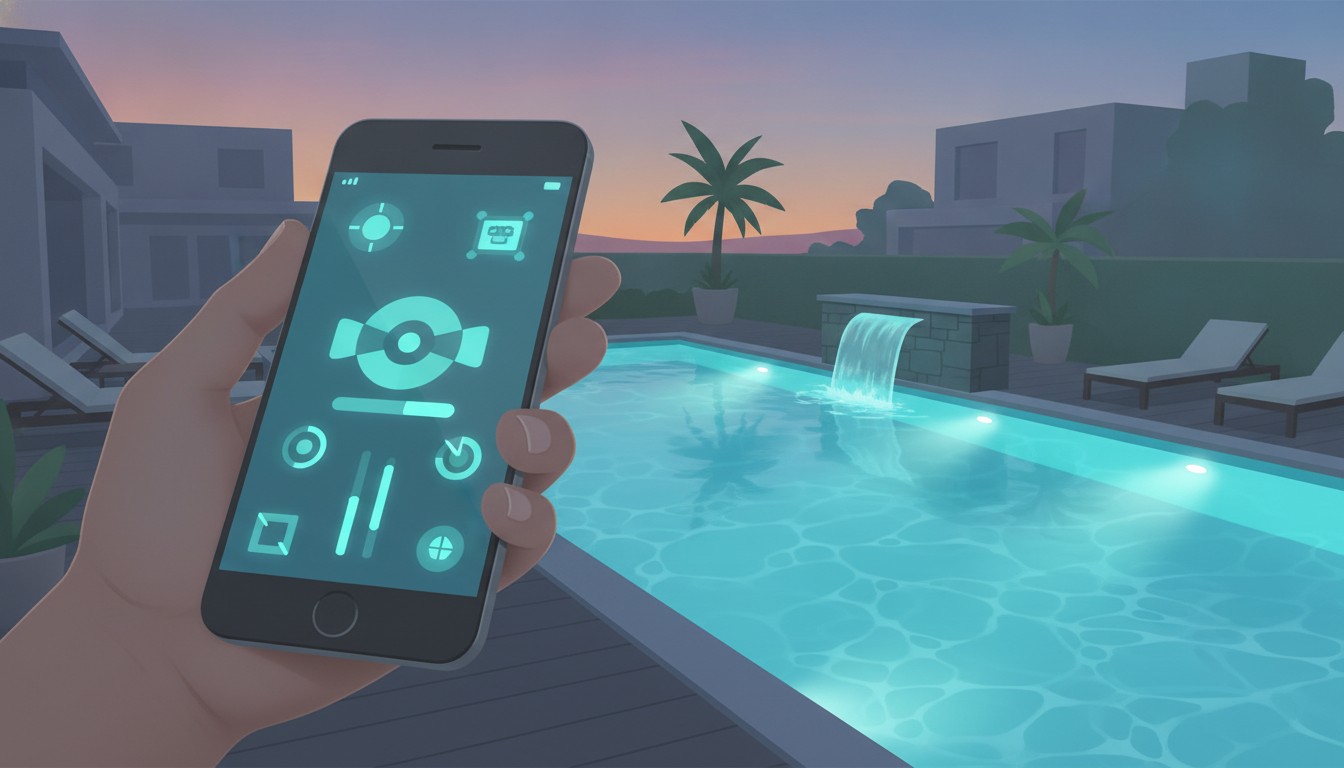
Mobile access is often the most noticeable feature of an automation system. Depending on the equipment, you may be able to adjust the temperature, activate spa mode, change lighting, or check operating status without visiting the equipment area.
This is particularly useful when plans change. If you decide to use the spa later in the evening, remote access may let you prepare it in advance. You can also check certain system settings while away from home, although remote monitoring should not be mistaken for a substitute for maintenance.
For households with several pool users, a shared interface can reduce confusion. Instead of relying on separate switches or timers, everyone can work from the same set of programmed controls. Access permissions and account security should still be considered when multiple people use the system.
What Happens During Installation?
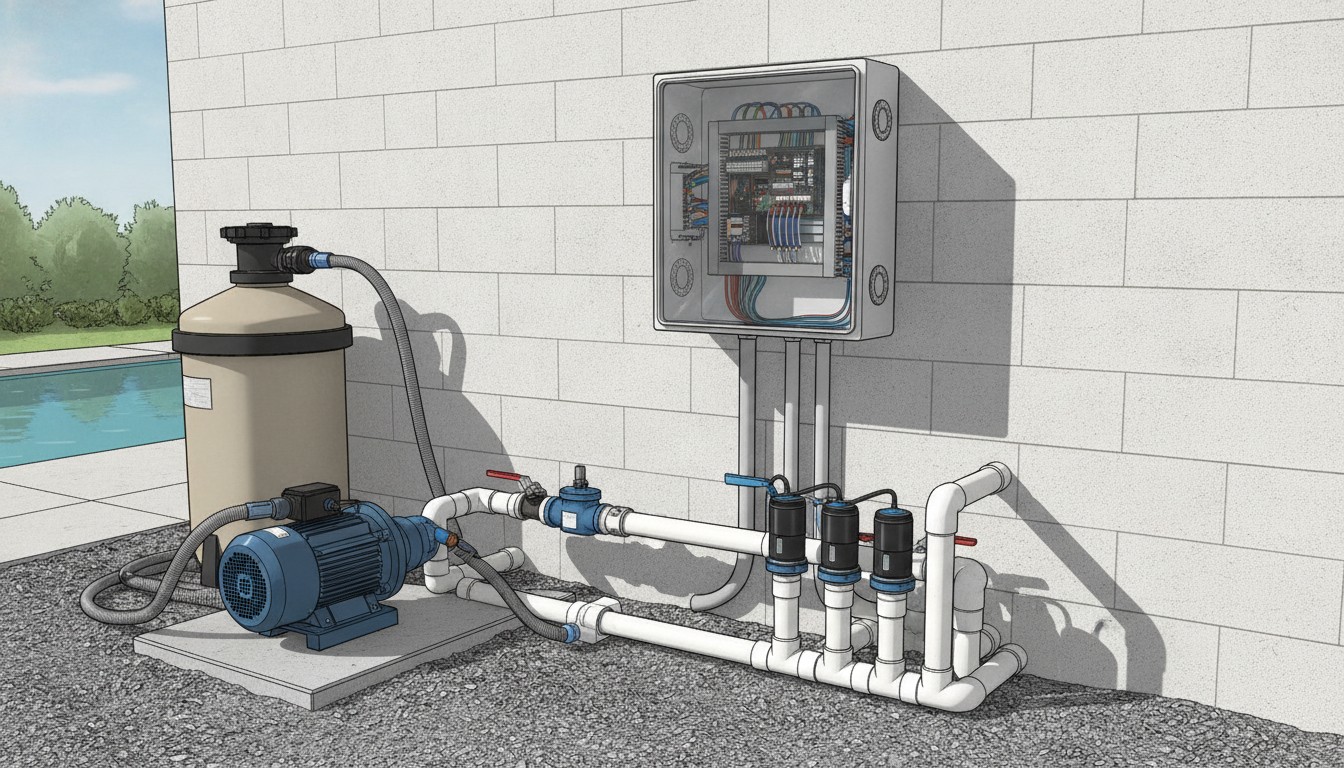
A complete installation usually involves more than mounting a control panel. Depending on the existing setup, the work may include connecting relays, sensors, valve actuators, heaters, pumps, lighting circuits, and other compatible equipment.
Electrical capacity and wiring condition also matter. An older or heavily modified equipment area may need additional attention before new controls can be connected. If mobile access is included, the installer should check whether the network signal reaches the equipment area reliably.
Commissioning is another important stage. Each connected function should be tested to confirm that schedules, heating, spa mode, lighting, and other features operate as intended. Ask the installer to demonstrate the controls and explain what to do if the system loses connectivity or displays an alert.
Features Worth Paying For
The most useful features are usually the ones that support everyday operation. Variable-speed pump scheduling, heater integration, freeze protection where relevant, and remote lighting or spa controls can make a noticeable difference.
Custom scenes may also be useful for households that entertain regularly. A programmed setting could coordinate lighting, water features, and spa operation through one command, reducing the number of individual adjustments required.
However, not every available feature deserves a place in your budget. If you rarely use decorative water features, extensive controls for them may offer little practical value. Voice assistant integration may also be unnecessary if your household prefers a straightforward mobile interface.
Choose functions based on actual habits rather than the length of a product’s feature list.
Cost, Energy Use, and Long-Term Value
The cost of automation depends on equipment compatibility, system complexity, the number of controlled functions, and the electrical work involved. A basic setup for a pump, heater, and lights will generally be less involved than a system controlling multiple pumps, valves, a spa, and several water features.
Potential savings depend on how the system is configured and used. Scheduling can help avoid unnecessary pump operation, while better coordination may reduce avoidable heating cycles. ENERGY STAR explains that variable-speed pool pumps can adjust their speed to match different operating needs, helping reduce energy use compared with running at one high speed. Its pool pump guidance provides useful information when evaluating pump efficiency.
Remember that automation does not automatically guarantee lower bills. Poor scheduling, incorrect settings, or inefficient equipment can limit the benefits. Ask for realistic operating expectations rather than relying on broad savings promises.
How to Choose the Right System
Start by listing the equipment you currently own and the features you use most. Ask installers which components can connect directly, which require additional hardware, and whether the system can accommodate future upgrades.
Find out how schedules can be changed, what happens during a power interruption, and whether remote access requires a separate subscription or ongoing service. Request a demonstration before making a decision.
The best automation system is not necessarily the most expensive or advanced. It is the one that works reliably with your equipment and makes routine pool management easier.
Enjoy More and Manage Less
Pool automation can make ownership more convenient by bringing everyday controls into one place. However, it works best when the system is properly selected, installed, and maintained.
Choose features that match your routine, confirm equipment compatibility, and understand what the controls can and cannot do. With a suitable setup, you can spend less time managing separate switches and schedules and more time enjoying your backyard pool.

