In 2019, German company NOWlab unveiled a fully 3D-printed motorbike called Nera. Every single piece of the Nera electric motorbike (excluding the electrical components) was 3D-printed. Now, an Australian company tops this concept with a fully sustainable design aimed to reduce global waste.
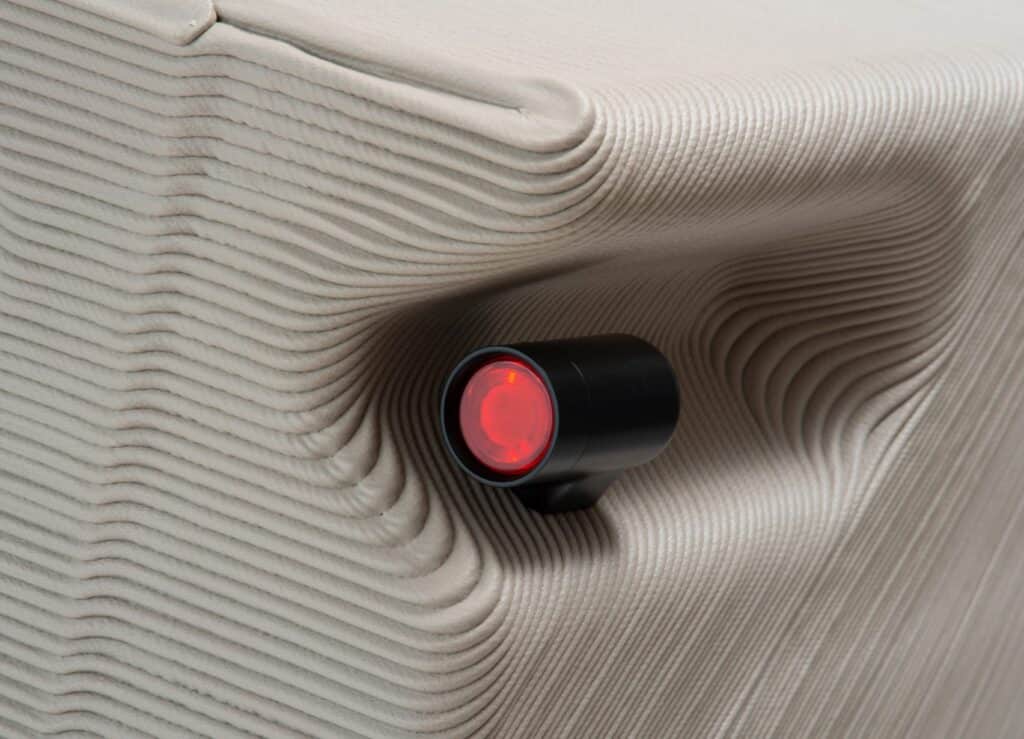
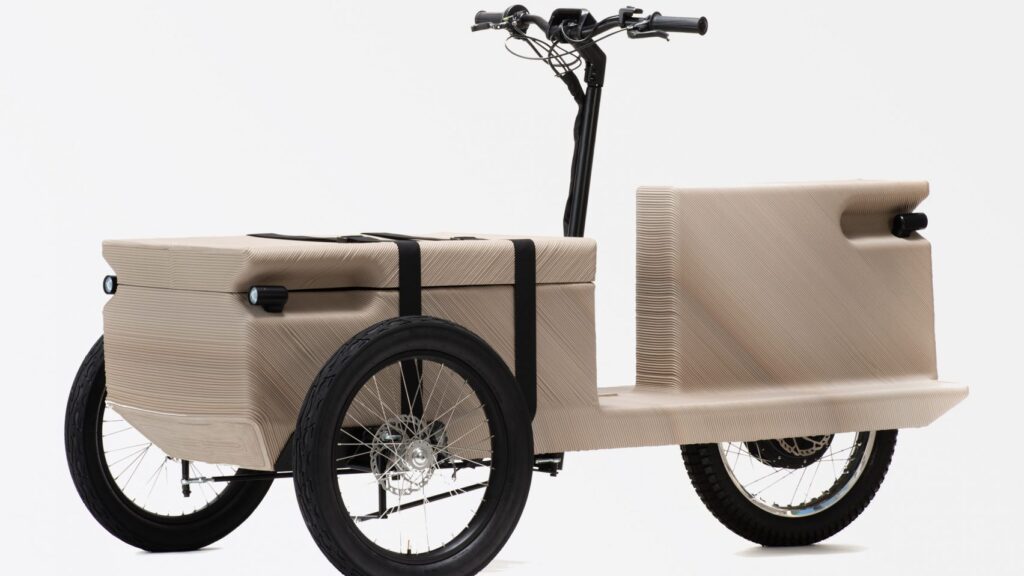
EOOS has developed a prototype electric tricycle, dubbed ZUV, made from 70 kilograms of recycled plastic packaging waste sourced from supermarkets. ZUV, short for ‘zero emissions utility vehicle,’ can be 3D-printed locally rather than being shipped across the globe.
The vehicle was created by EOOS NEXT, the social design arm of Austrian studio EOOS, collaborating with an additive manufacturing company called The New Raw. It was commissioned for MAK’s Climate Care exhibition as part of the Vienna Biennale for Change.
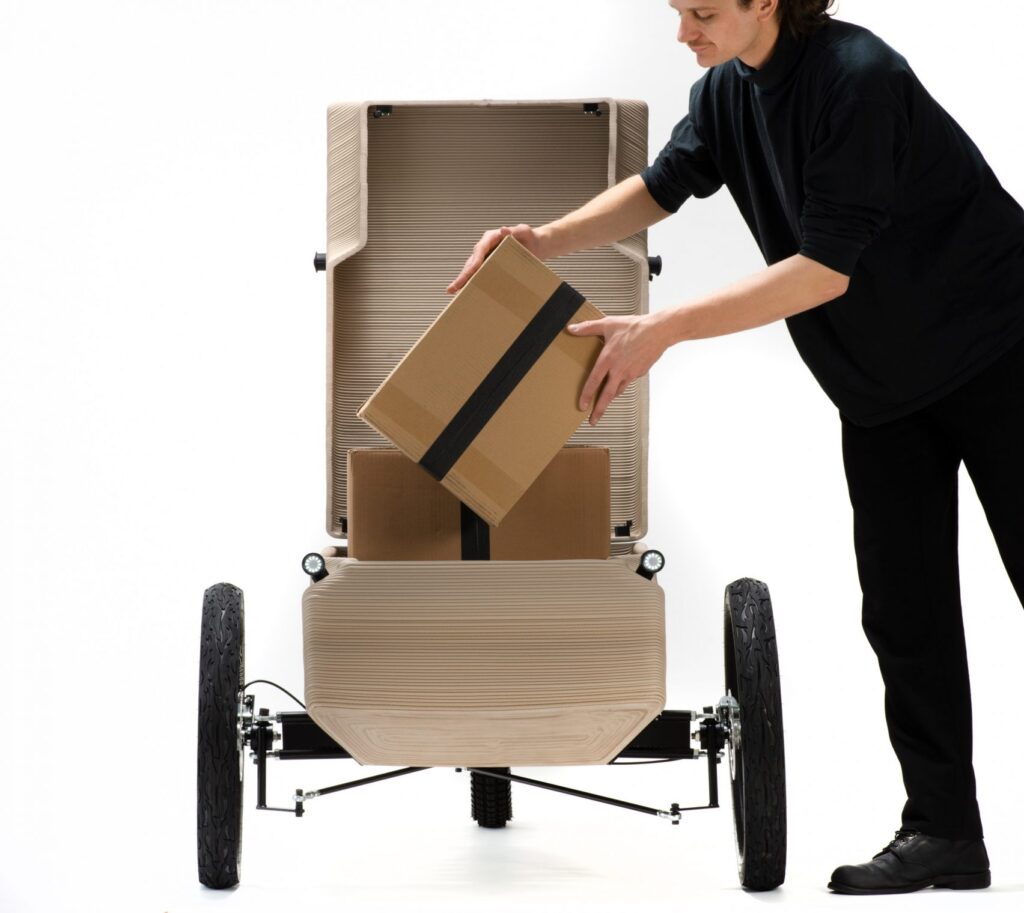
The plastic used to build the tricycle is locally sourced, ensuring its sustainability. In addition, bikes are usually manufactured in Asia, then shipped to Europe or America, which results in substantial energy loss. Harold Gründ, the founder of EOOS, envisions a future where every city in the world has its own ZUV production facility, eliminating the need for shipping.
Gründl told Dezeen:
We wanted to design around local, affordable production, because of the high labor costs in Europe, almost every bike frame is produced in Asia. But we want a local ZUV production facility in every city around the world.
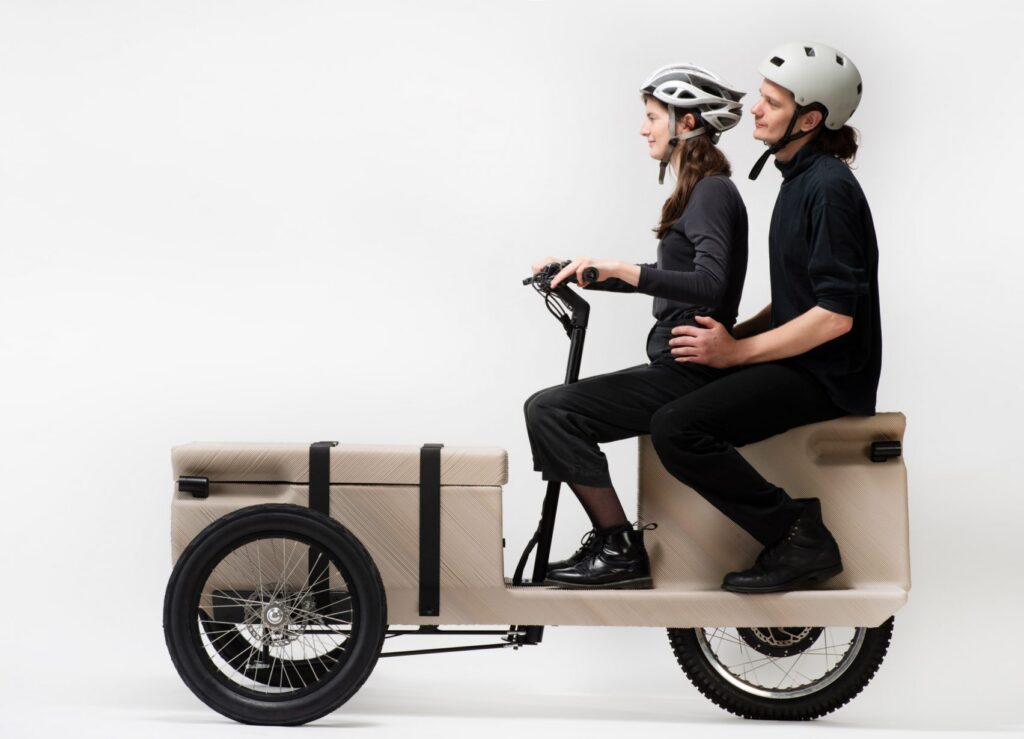
ZUV uses a simplified design: the bike is powered via a rear-wheel hub motor, eliminating the need for a bike chain or pedals. In addition, ZUV will provide a local economic cycle, where users can 3D-print the chassis at a lab. Then, they could go to any bike workshop to bolt on a motor at its predefined position along with the brakes, handlebars, and three wheels.
The tricycle has a longer than average lifespan, as individual components could be repaired and replaced locally. Eventually, the plastic chassis could be shredded and re-printed to form another ZUV should the need arise.
Gründ explained:
What we envision is a circular economy of mobility. Service schemes with a designed ‘take back’ will be the future. And it’s way easier to close the loop if you do it locally rather than sending around ships full of waste as we do today, which is stupid.
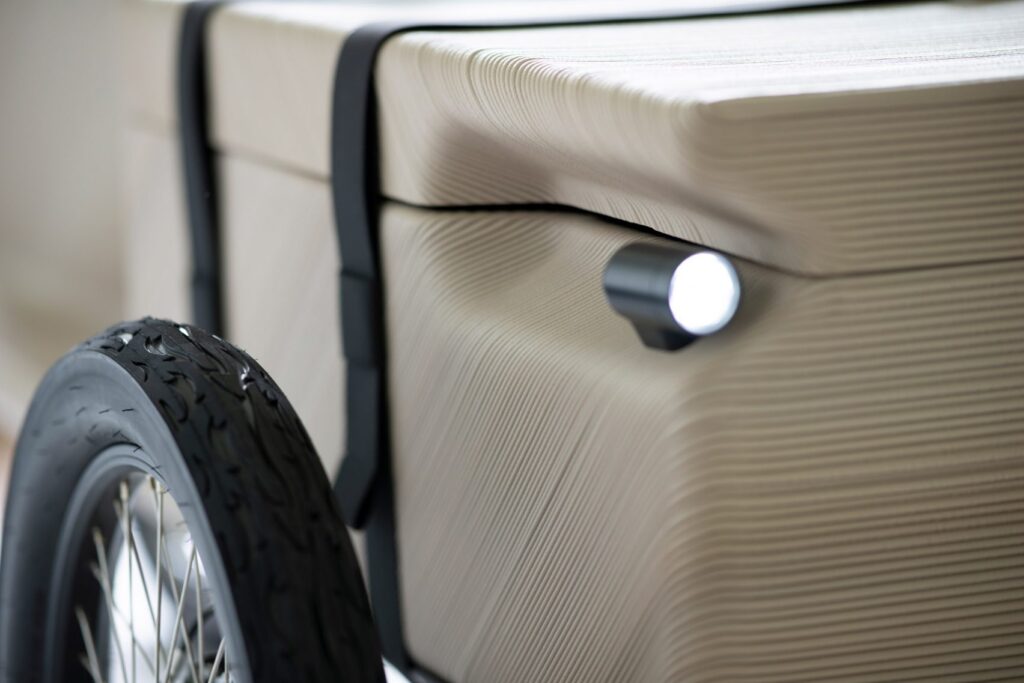
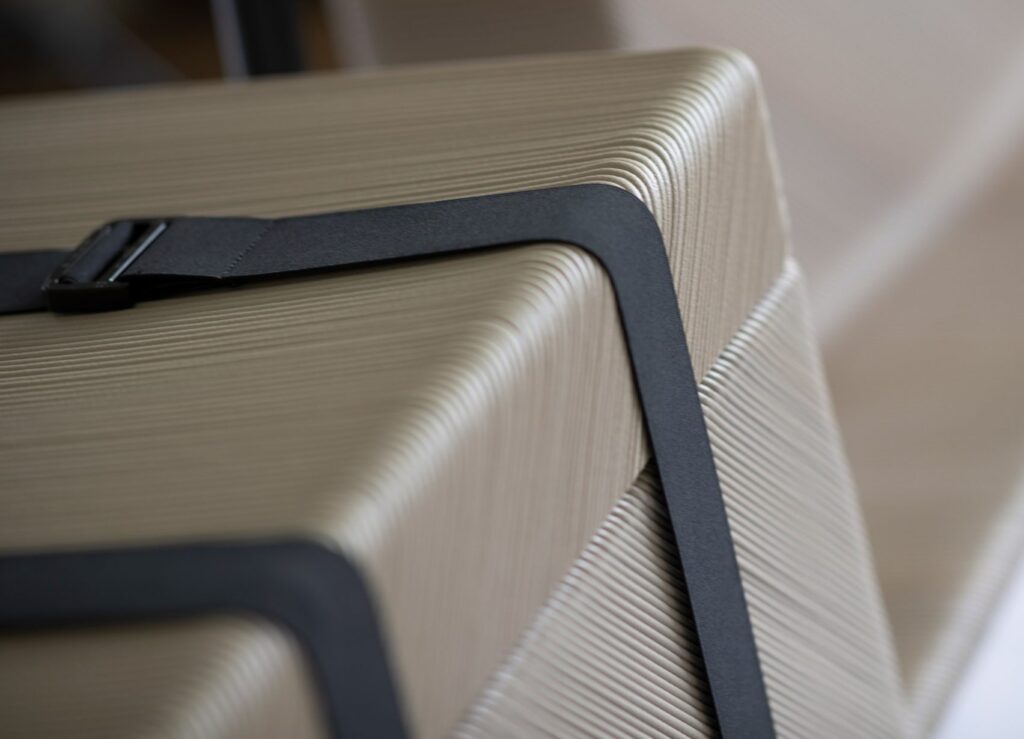
Furthermore, the New Raw uses custom machinery built from a disused industrial robot so that the 3D printing process also minimizes waste. In addition, this robot can print diagonal layers rather than horizontal or vertical ones, meaning no additional falsework is required to support the structure while it’s being printed.
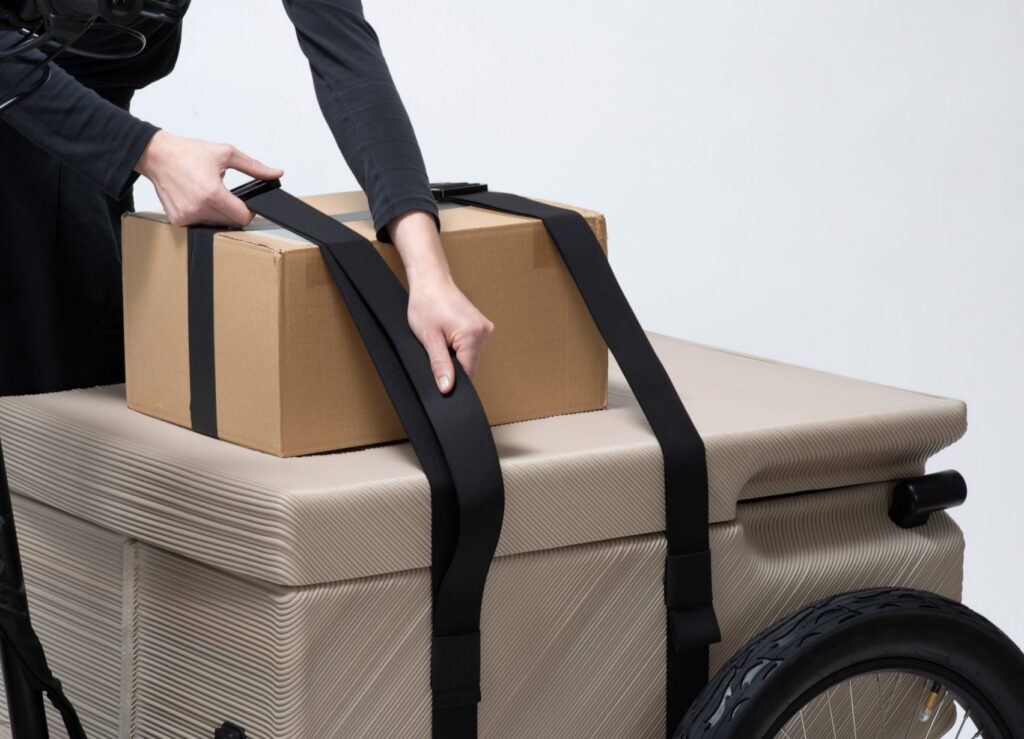
The vehicle, which weighs only 100 kilograms, requires less energy to operate and can carry two adults on its bench seat and two children or an equivalent amount of cargo in the transport box at the front.
The designers aimed for the lightweight tricycle to fulfill heavy-load, short-distance journeys, for which people usually default to a car. “A car has maybe 800 kilograms of battery while a bicycle has eight, and it does the job for many of the journeys that we want to make in a city,” Gründ said.
He added:
A lightweight vehicle has the benefit of having less effort in the production, but it also uses less energy to transport people. So, the more sustainable you want to make a mobility system, the less weight it should have.
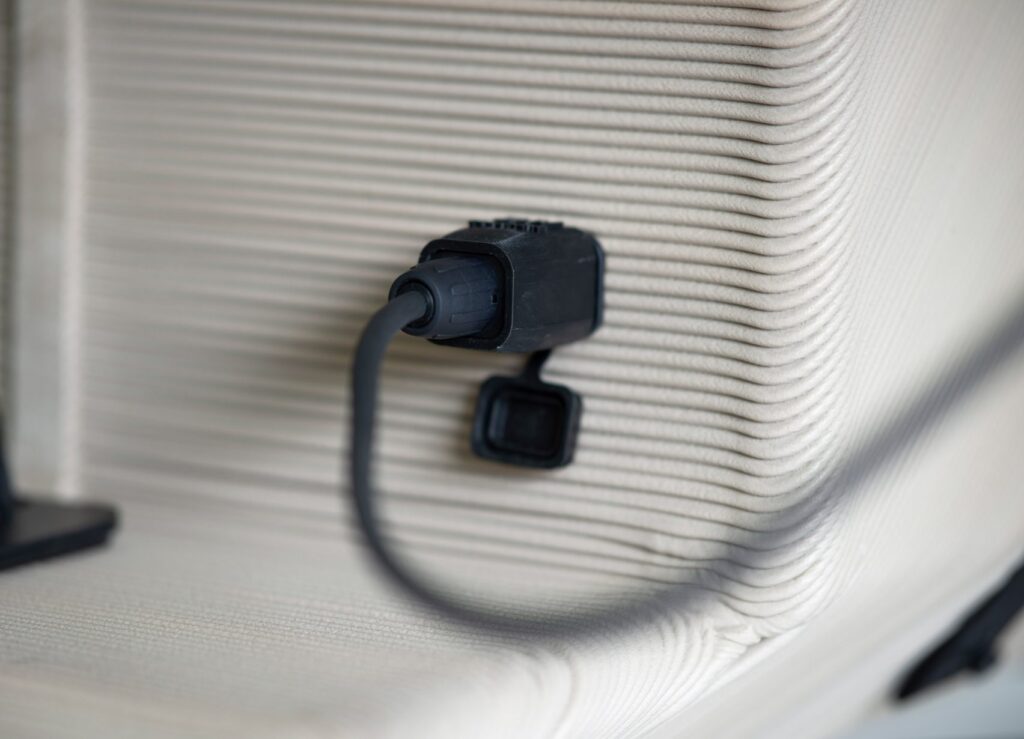
Whether the final electric vehicle will indeed be “zero emissions” in use depends on the city’s energy mix where it’s being charged and how much of that energy comes from renewable sources.
Gründ explained:
The reuse of post-consumer plastics is a big step towards net-zero carbon emissions. Every new vehicle will be, in a way, carbon neutral as long as the 3D printer is operated with energy coming from renewables.
The ZUV isn’t wholly emissions-free, considering the amount of carbon released while producing the supermarket packaging in the first place. However, this could only be avoided once the industry decides to move away from single-use plastics altogether.
Gründ argues:
When supermarket plastic in Vienna goes to recycling, they’re just burning it. And this creates another three tonnes of CO2 emissions, which we could avoid.
Other exciting examples of how waste can be transformed into vehicles include the ‘Flipflopi vessel’ – the world’s first sailboat made entirely of recycled plastic and flip flops, and Dancer; an electric city bus that has a body made of recycled materials.