
Amsterdam’s beautiful canals were used for transportation long before pollution-causing cars and trucks began clogging its narrow roads.
The city’s more than 60 miles (100 kilometers) of waterways are trialing prototypes of futuristic, fully autonomous EV boats, dubbed Roboats. The small autonomous vessels will perform tasks such as transporting passengers and collecting garbage, alleviating the pressure off of the city’s narrow streets.
The Roboat project collaborates with the Massachusetts Institute of Technology’s Computer Science and Artificial Intelligence Laboratory (CSAIL), the Amsterdam Institute for Advanced Metropolitan Solutions (AMS Insitute), and the Senseable City Lab. The researchers aim to develop new ways to navigate waterways autonomously.

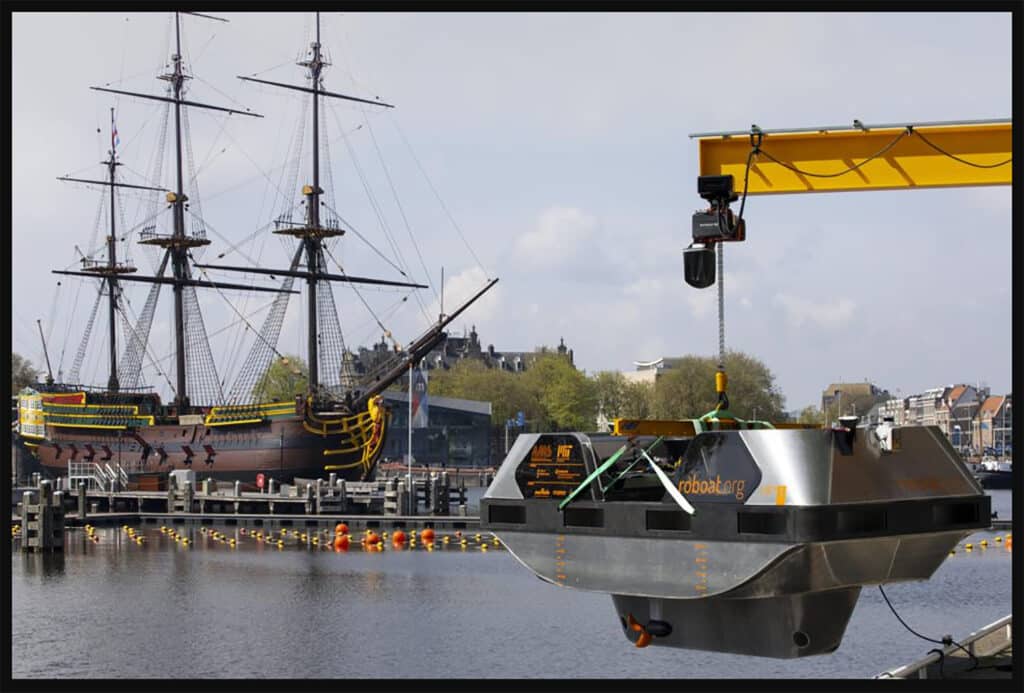
According to MIT, the project has been developed over the past five years and has gone through three phases: a quarter-scale model, half scale, and finally, the full-scale model. The full-scale model is 4 meters (13 feet) long and can hold four passengers. This project is part of a more significant movement to push transportation from the land to the sea.
The team also mapped the city’s canals and developed navigation and control algorithms for the communication and collaboration of the boats. This feature is vital since Amsterdam’s canals are busy waterways full of tourist cruises and private yachts.

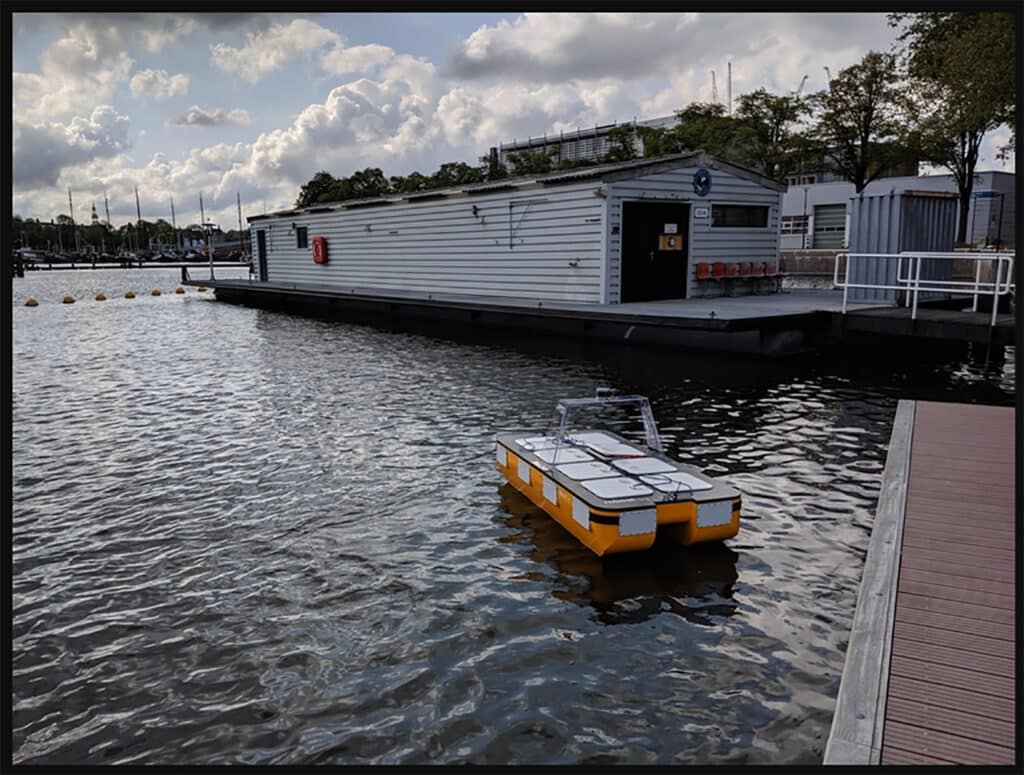
Stephan van Dijk, AMS’s director of innovation, told AP:
The autonomous EV technology is very relevant in highly complex port operations, where you have a lot of vessels and a lot of ships and a lot of quays and piers. There you can really improve the safety with autonomous systems, but also make it more efficient and into 24/7 operations approach.
The new prototype Roboats have orange propellers and four thrusters that are fully powered by an electric battery. It has top speeds of 4 mph (6 kph) and can run for 12-24 hours, depending on the weight of the cargo.
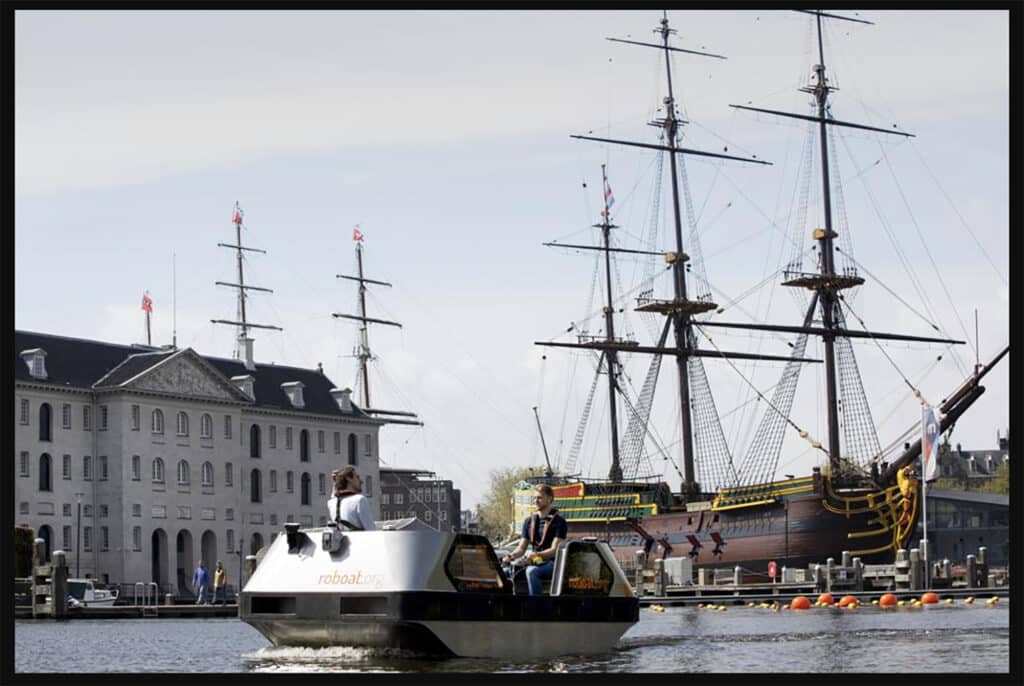

The Roboats are currently in the testing stage and will take some time before the public can use them. According to the developers, it will take another two to four years before the self-steering is perfected enough for the autonomous vessels to be ready for commercial use. “It’s mostly because we want to be absolutely sure that we can navigate safely in the canals. Right now, we have the autonomy in place, but one of the next steps is to make sure that we can actually handle any kind of situation that we might encounter in the canals,” explained mechatronics engineer Rens Doornbusch.
There are still some privacy and legislative issues to iron out since the autonomous system uses data from cameras and scanners. However, the city supports the project, and these hurdles will undoubtedly be settled soon. Before you know it, Roboats will be used in Amsterdam and other cities with wide-ranging waterways.


