
Anna Creek Station, in the far north of South Australia, spans roughly 23,800 square kilometers. That is larger than Connecticut, larger than Israel, and roughly the size of three million rugby fields. It runs 17,000 head of cattle across gibber tableland and sand hills that receive just 140 millimeters of rain a year, about 5.5 inches, drier than Phoenix, Arizona. And the entire headquarters of this operation, the largest working cattle station on Earth, now draws its primary power from a 49-kilowatt solar array.
To put that number in perspective, the average Australian household rooftop system installed in early 2026 came in at 10.3 kilowatts, according to the Clean Energy Regulator. Anna Creek runs on less than five suburban systems. That figure should stop you cold, not because it is underwhelming, but because it reveals something important about how off-grid solar is transforming even the most remote corners of the world.
A Property Bigger Than Connecticut, Powered Like a House
What needs electricity at Anna Creek is not the cattle. Seventeen thousand head of livestock draw no current, and 9,200 square miles of outback ask for nothing. The electrical load belongs to a cluster of buildings and the people inside them: a manager, up to eight station hands, a plant operator, and a cook. Eleven people, at most.
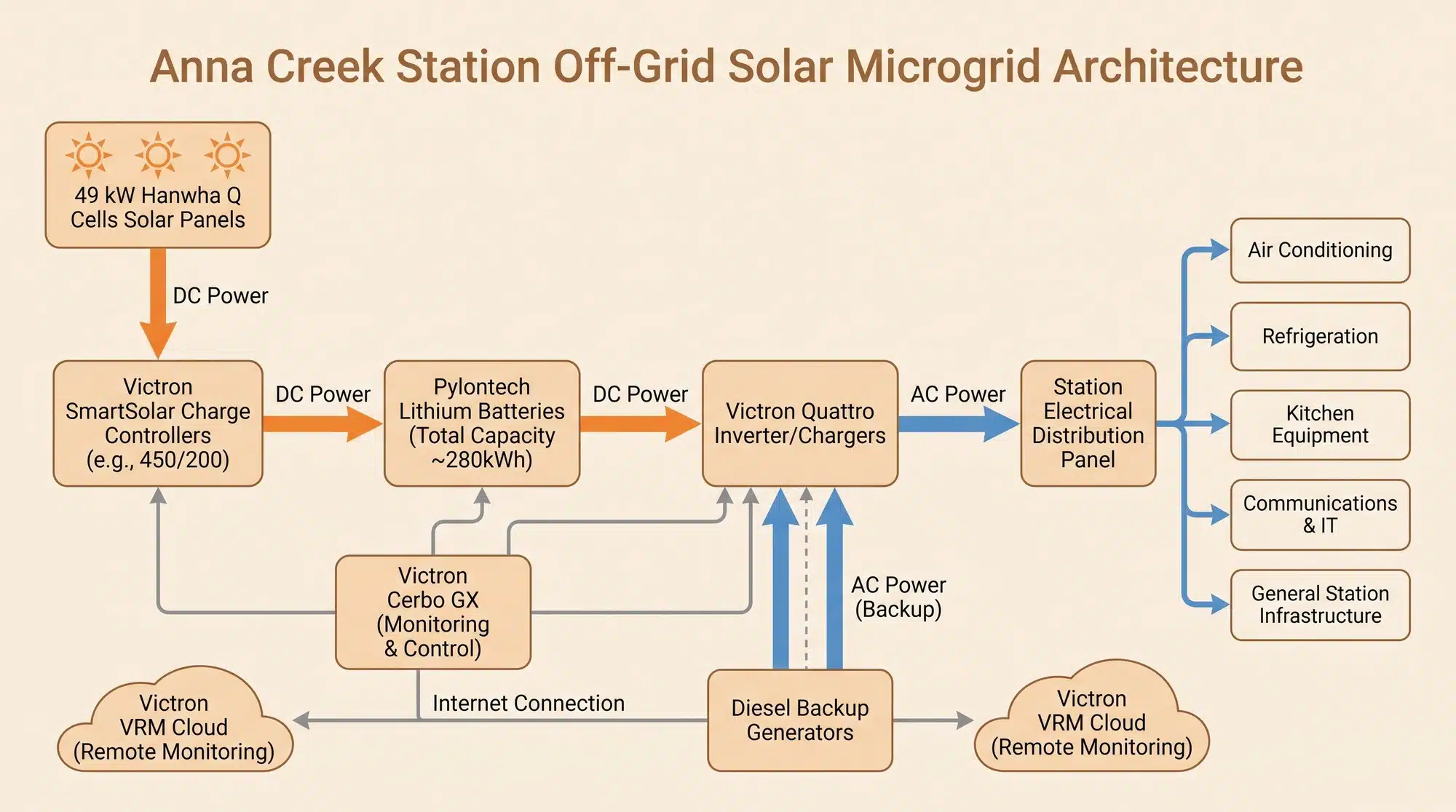
The 49-kilowatt system feeds air conditioning, refrigeration, kitchen equipment, communications gear, and general station infrastructure. That is the entire job. The moment you stop thinking of it as a power plant for a ranch and start thinking of it as a power plant for a big house in a hot place, a long way from anything, the sizing makes perfect sense.
The hardware is standard off-grid equipment rather than anything exotic.
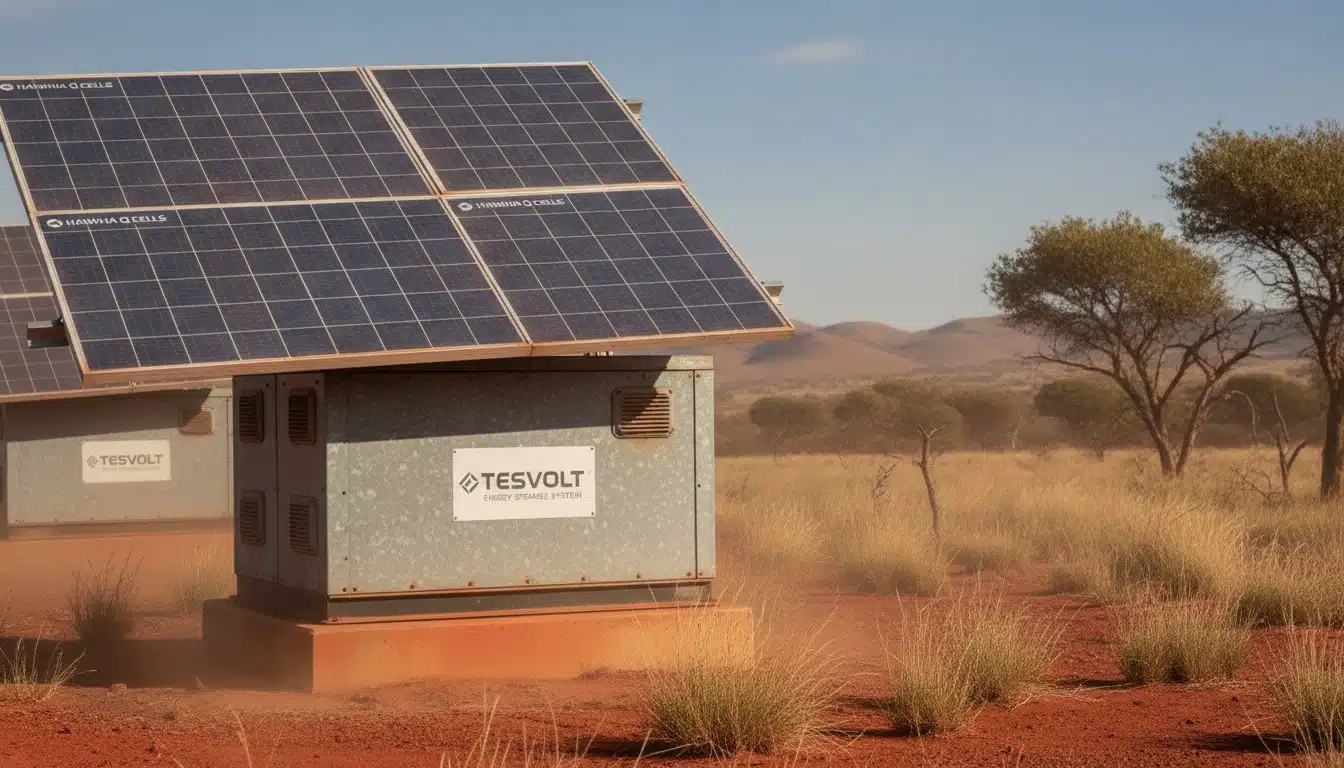
The system uses Hanwha Q Cells solar modules, Pylontech US3000 lithium batteries, Victron Quattro inverter/chargers, Victron SmartSolar 450/200 charge controllers, Fronius Symo inverters on the AC-coupled side, and a Victron Cerbo GX handling monitoring and control. It was installed by MyEnergy Engineering, a South Australian remote power specialist, and it has been carrying the station for years; the installer published its account of the build in January 2024.
Why 49 Kilowatts Is Exactly the Right Number
On a suburban rooftop, remote monitoring through a platform like Victron VRM is a nice-to-have for an off-grid solar system. At Anna Creek, it decides whether a fault costs a phone call or a thousand miles of driving. The station sits 160 kilometers east of Coober Pedy and 16 kilometers west of William Creek. Neither of those places stocks a spare Victron charge controller.
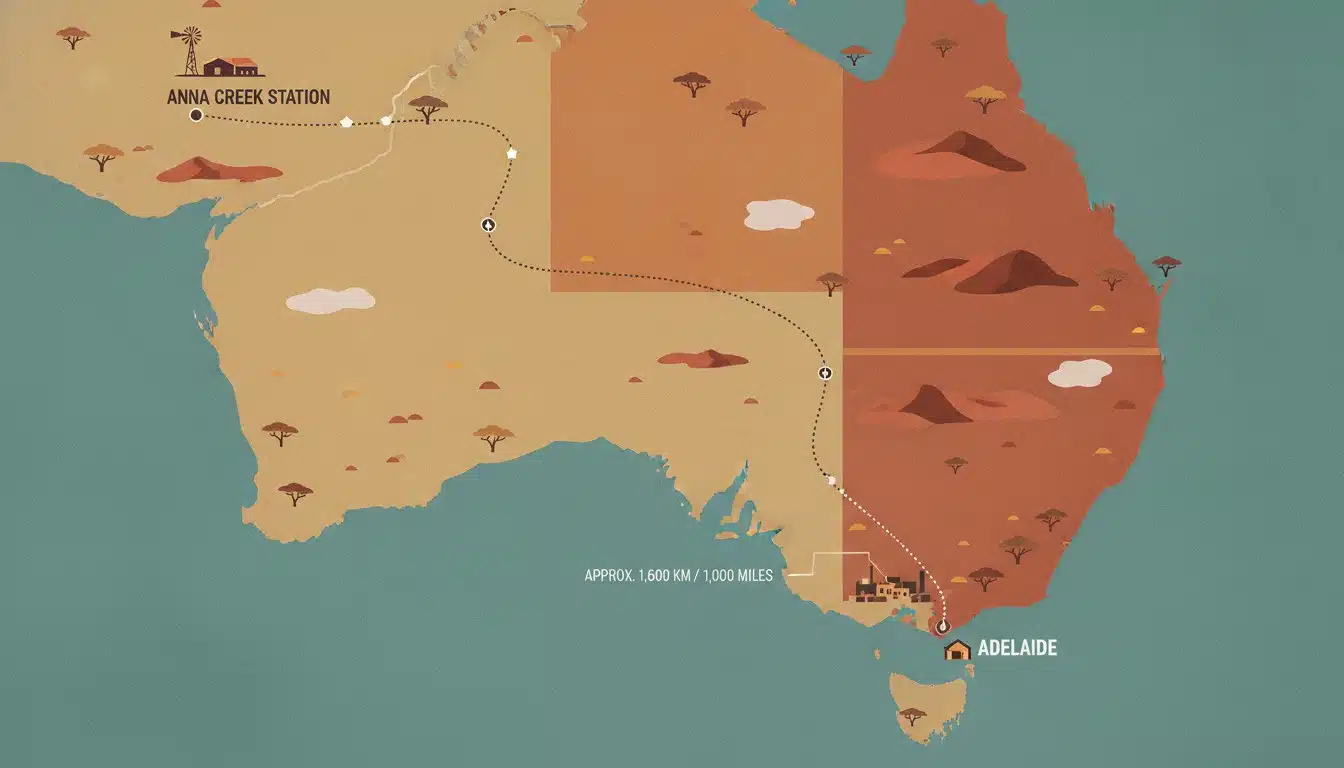
Ciaram Granger, managing director of MyEnergy Engineering, told pv magazine Australia that the size of the system was never the hard part; the location was. Planning had to be exhaustive, because “additional materials, equipment or support could not simply be collected nearby.” If a single component failed to make it onto the truck, the round trip back to Adelaide measures roughly 1,800 kilometers, or about 1,120 miles. That is a two-day errand to fetch a part worth a couple of hundred dollars.
The array was one of seven remote power systems that MyEnergy delivered for Williams Cattle Company across Far North, South Australia, a program valued at more than AU$1.5 million, roughly US$1 million. Spread across seven sites, that represents a modest capital line for an operation of this scale, and it buys out a recurring fuel bill along with a recurring reliability problem. The system also had to cope with high temperatures, dust, and loads that swing depending on what the station is doing that week.
The Solar Rebate That Missed the Biggest Cattle Station on Earth
On August 5, 2026, Australia’s federal government announced a major expansion of the Small-scale Renewable Energy Scheme. The STC eligibility threshold, the upfront rebate that has driven Australian rooftop solar adoption for years, will increase from 100 kilowatts to 1 megawatt starting October 1, 2026, pending final regulations. The government describes the roofs it is targeting as Australia’s “missing middle”: the factories, warehouses, cold stores, farm sheds, and shopping centers that sit between household rooftops and utility-scale solar farms.
Climate Change and Energy Minister Chris Bowen estimates the change will cut upfront installation costs for commercial, industrial, and agricultural buildings by around 20 percent. A 250-kilowatt system could save nearly AU$68,000, and an 850-kilowatt installation could reduce upfront costs by more than AU$230,000. The Smart Energy Council called it “a permanent bill slasher” for farms, factories, and warehouses.
Anna Creek gets nothing from any of this. Its 49-kilowatt system was finished years before the announcement and never came close to the old 100-kilowatt ceiling, let alone the new one. The largest cattle station on Earth makes an awkward poster child for a reform written to fix systems twenty times its size. As Granger noted, the expanded scheme should make larger commercial solar systems more financially attractive, but he also flagged a risk: more certificates in circulation could drive STC prices down and reduce the actual rebate value if demand does not rise at the same rate.

Diesel Did Not Disappear: It Got Demoted
It is worth being precise here, because remote solar stories tend toward oversimplification. Anna Creek’s diesel generators are still installed and still integrated. They come on in poor weather or when demand spikes. What changed is the running order: solar and battery carry the site by default, and the engines cover the gaps rather than the whole day, a model that off-grid solar systems are increasingly adopting worldwide.
That same pattern is showing up across industry at wildly different scales. The Bellevue gold mine in Western Australia recently ran 155 straight hours with every engine switched off, powering underground workings, a processing plant, and a workers’ village on solar, wind, and battery storage, with an average site load around 12 megawatts, nearly 250 times the entire Anna Creek array. A salmon farm above the Arctic Circle now covers more than 90 percent of its load with floating solar and has barely touched its generator since. In none of these cases does diesel disappear. It simply stops being the thing you plan the week around.
There is a neat inversion in the livestock angle, too. Most stories about animals and solar run the other way, with panels going up first and sheep brought in afterward to manage the grass. That is how the world’s largest solar farm in China ended up needing 20,000 of them. At Anna Creek, the cattle were there first by about 160 years, and the panels sit on the roof of the house.
Frequently Asked Questions
Who owns the biggest cattle station in Australia?
Anna Creek Station is owned by Williams Cattle Company, a family-operated pastoral business that also runs seven other properties across Far North, South Australia. The station itself covers approximately 15,746 square kilometers, though the record-book figure of 23,800 square kilometers includes The Peake, an outstation the company purchased alongside Anna Creek in 2016.
What is the main drawback of an off-grid solar system?
The primary drawback is maintenance logistics. When components fail in remote locations, replacement parts and qualified technicians are not readily available. At Anna Creek, the 1,800-kilometer round trip to Adelaide for a missing component demonstrates why remote monitoring, careful planning, and generator backup remain essential even for well-designed systems. Heat, dust, and variable loads add further stress that suburban installations rarely face.
Can cattle graze under solar panels?
Yes, cattle can graze under solar panels in ground-mounted installations designed for agrivoltaics, though sheep are more commonly used because of their smaller size and gentler grazing behavior. At Anna Creek, however, the panels are mounted on the roof of the station headquarters; the cattle roam 9,200 square miles of open rangeland far from the array, making this a rooftop solar story rather than an agrivoltaic one.
Why do some farmers oppose solar farms?
Concerns typically center on the loss of productive agricultural land to large-scale solar installations, visual impacts on rural landscapes, and in some cases, community tensions around energy infrastructure siting. Remote systems like the one at Anna Creek avoid these conflicts entirely by using existing building rooftops rather than converting pasture, demonstrating that solar adoption on agricultural properties does not have to mean sacrificing farmland.
What Anna Creek Teaches Us About Remote Solar
None of this makes 49 kilowatts a template. A processing plant or a pump field needs an order of magnitude more power, which is precisely what Australia’s certificate expansion is designed to address. What Anna Creek demonstrates is that the headline capacity figure is the wrong thing to look at first. The number that mattered here was 1,800 kilometers, the distance a replacement part travels when something goes wrong, and the array was sized around it.
For the 11 people who live and work at the world’s largest cattle station, the switch to solar has not been about making an environmental statement. It has been about turning sunshine into the one input nobody has to truck across the outback and making sure the generators only wake up when they are genuinely needed.


