
What happens when a food plant has excellent SOPs, but two shifts interpret them differently? The answer can show up in rework, inconsistent sanitation, missed checks, quality deviations, or an unwelcome audit finding. The problem is not always a lack of rules. Often, teams lack a shared understanding of what “good” looks like at the moment.
A single gap can cost hugely. A standard only works when employees know what it requires, understand why it matters, and can apply it consistently under real production pressure. A sanitation step skipped during a rushed changeover, an undocumented deviation, or a quality check handled differently across shifts can create problems that reach far beyond one workstation.
The challenge for food manufacturers is not simply writing better procedures. It is creating operational standards that teams can understand, repeat, verify, and improve. When production, quality, sanitation, maintenance, and leadership work from the same expectations, consistency becomes part of the process rather than something teams have to chase after problems occur.
When Standards Exist on Paper but Not on the Floor
Operational standards only work when people know exactly what they need to do, when they need to do it, and what can go wrong if they skip a step. It is high time that food safety culture became an integral part of everyday operations, rather than something that appears only in training manuals or audit discussions.
Sanitation is a good example because it often involves several teams at different stages of the production process. A production operator may need to follow a cleaning procedure, a quality team may need to verify it, and a supervisor may need to stop production when something looks wrong. If each person follows a different interpretation of the standard, even a well-written procedure can fall apart during a busy shift.
Fayette Industrial points to this broader role of sanitation in building safe food practices. Consistent cleaning and hygiene practices, proper documentation, leadership involvement, and communication across teams all help turn food safety expectations into routine workplace behavior and not just a one-off.
Turn Standards Into Observable Work
Start with the point where confusion creates risk. Instead of giving employees a 40-page procedure and assuming they will interpret it consistently, define the few actions that must happen every time.
For a production line, that might mean specifying start-up checks, allergen changeover steps, escalation triggers, cleaning verification, and what happens when a reading falls outside the expected range.
Make each expectation observable. “Maintain hygiene” sounds responsible but gives a worker little guidance. “Complete the pre-op inspection before releasing the line” creates a clear action.
The distinction matters beyond food safety. A 2025 Gallup survey reported that only 46% of employees strongly agreed that they clearly knew what their employer expected of them, a sharp decline from 56% in 2020. Clear standards cannot solve every engagement problem, but unclear expectations make consistent execution harder.
Make Frontline Leaders the Translation Layer
A standard becomes real through supervisors and team leaders. They decide which topics to discuss at shift huddles, what to check on the floor, and what to correct immediately.
McKinsey’s 2025 research on manufacturing workforce productivity found that manufacturers face growing proficiency gaps as experienced workers leave the industry. The share of manufacturing employees aged 55 and over has risen to about 25%, compared with about 10% in 1995.
At one manufacturer, targeted skill development increased the hiring of skilled-trade workers by about 70% without increasing the HR budget. Another manufacturer paired experienced and newer workers around a critical operation and achieved a 15% increase in throughput.
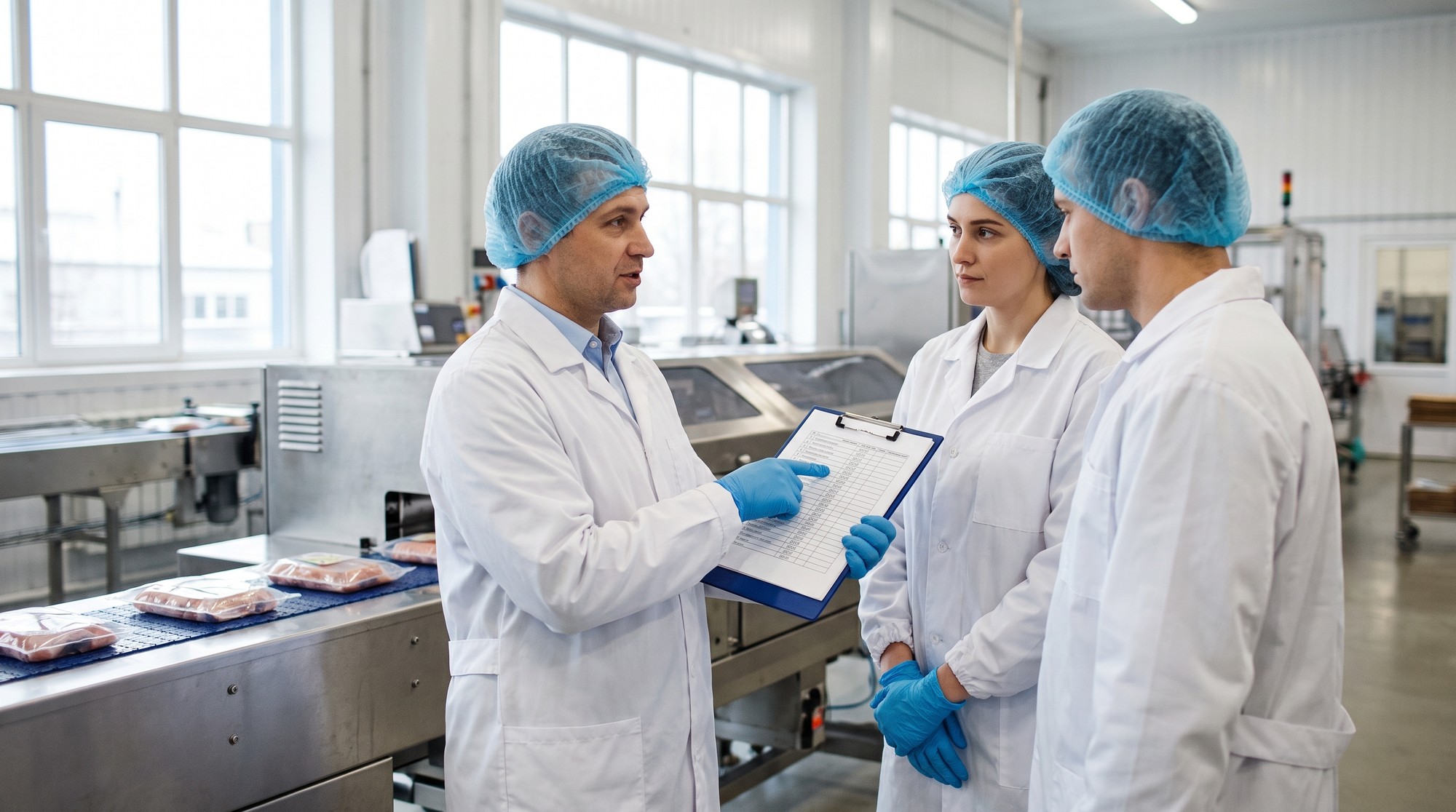
Those examples point to a bigger principle: operational standards should transfer knowledge, not merely record it. Leaders can ask workers to demonstrate the standard, explain why it matters, and flag where the standard clashes with real conditions.
For a growing food manufacturer, the aim is one shared standard across the network alongside site-level ownership of execution. For operational teams, that means standardization should set what cannot change, while frontline teams adapt execution to their specific operating environment.
Create One Rhythm for Every Shift
Alignment improves when every shift follows the same basic rhythm: a short start-of-shift briefing, a few visible performance measures, routine verification, and a clear escalation path. This gives teams a common reference point without adding unnecessary bureaucracy.
That consistency becomes more important when manufacturers struggle to fill skilled operational roles. Deloitte’s 2025 survey of 600 manufacturing executives found that 48% faced moderate to significant challenges filling production and operations management positions. Meanwhile, 48% reported having a training and adoption standard for smart manufacturing.
- The practical lesson is simple.
- Do not let each shift develop its own way of working.
- Give teams the same critical expectations.
- Allow employees to flag where a procedure creates problems in real conditions.
When recurring issues surface, leaders should review the standard rather than simply tell workers to follow it. This creates a feedback loop where standards become clearer, easier to apply, and more useful on the production floor.
Measure Adherence and Improve the Standards
A mature food manufacturing operation does not simply ask whether employees completed a checklist. It asks whether the standard produced the intended result.
Track a few measures that reveal execution. These can include sanitation verification failures, repeat deviations, changeover errors, corrective-action closure time, training completion, and recurring audit findings. Then review patterns by shift, line, and process.
Clear standards should also have owners and review dates. Regulations, products, equipment, staffing, and risks change. A standard that never evolves can become a source of risk itself.
Frequently Asked Questions
How should food manufacturers standardize processes without slowing frontline teams?
Standardize the outcomes, control points, safety requirements, and escalation rules that cannot vary. Let sites decide practical details such as staffing sequences, local handoffs, or equipment-specific execution. This protects consistency where risk is highest without forcing every facility into identical workflows, which can slow daily decisions and frustrate frontline teams.
Which metrics reveal whether an operational standard actually works?
Track leading and lagging indicators together. Leading measures include training verification, pre-op completion, observation findings, and escalation response. Lagging measures include deviations, sanitation failures, repeat corrective actions, and complaints. Reviewing these measures helps leaders separate weak execution from a weak standard and decide where coaching or process changes are needed.
How can manufacturers prevent knowledge loss when experienced operators leave?
Treat critical know-how as part of the standard, not tribal knowledge. Capture decision points, visual checks, troubleshooting steps, and escalation triggers. Pair experienced employees with newer operators, observe competence, and review recurring deviations. This helps manufacturers identify knowledge gaps early instead of discovering them through failures or missed safety controls.

Food Manufacturing Standards: Key Evidence and Actions
| Evidence or insights | What it means for manufacturers | Practical action |
| 46% of employees strongly agreed they knew what was expected of them at work (Gallup data). | Expectations can remain unclear even inside established workplaces. | Turn broad SOP language into observable actions and verification points. |
| 25% of U.S. manufacturing workers are aged 55+. | Plants risk losing process knowledge as experienced employees exit. | Pair experienced operators with newer staff and document critical decisions. |
| 70% increase in skilled-trade hiring at one manufacturer after targeted development. | Structured capability building can strengthen the workforce without simply adding resources. | Build role-specific learning around the highest-risk processes. |
| 15% throughput increase in one McKinsey example using experienced-newer worker pairing. | Knowledge transfer can influence operational performance, not just training completion. | Use experienced operators as active coaches during critical work. |
| One shared standard across the network | Consistency does not require every facility to execute identically. | Standardize critical controls while allowing site-level operational flexibility. |
| Best operating test: Can a different shift repeat the same result? | A documented procedure is not enough if execution changes by person or shift. | Test standards through observation, handoffs, metrics, and recurring deviation reviews. |
A food manufacturing standard should never become a document that employees follow simply because an auditor might ask for it. Its real value appears when people can use it confidently during a busy production run, a difficult changeover, or an unexpected deviation.
The strongest food manufacturing teams therefore treat operational standards as living systems. They define the expected action, explain why it matters, and make the right behavior easy to recognize on the floor. Frontline leaders reinforce those expectations through shift meetings, observations, coaching, and timely feedback. Teams then measure whether the standard produces the intended result, rather than measuring compliance alone.
Most importantly, manufacturers should be willing to change a standard when evidence shows that it no longer works. Clear ownership, regular review, and feedback from the people doing the work can turn operational standards from static instructions into a practical system for consistency, safety, quality, and continuous improvement.


