
A mature tree can look perfectly settled in a landscape while trouble is forming out of sight. What you see on the surface rarely reflects how the structure is holding up inside, especially in older specimens that have weathered years of stress. The gap between appearance and condition is often what leads property owners to consider tree removal in Noosa before small warning signs turn into real safety concerns.
What a Healthy Canopy Can Hide Behind Appearances
From ground level, a full canopy can suggest everything is as good as it looks. Leaves maintain colour, branches respond to wind, and the structure appears balanced. Yet that outer impression often masks what is happening within the trunk and major limbs. Trees isolate damage by sealing off affected areas, which allows outward growth to continue while internal conditions change.
Small shifts in branch spacing or slight bark irregularities can be early indicators, but they are easy to dismiss without trained observation. This is where misjudgement tends to occur, as visual health gets confused with structural reliability. A tree can look composed while internal strength is already being redistributed in response to unseen weakness.
Internal Decay That Remains Hidden Within Trunk Structures
Internal decay often begins when moisture enters through old wounds, pruning cuts, or storm damage. Once inside, fungi can spread through the wood fibre without altering the external appearance in any obvious way. The tree responds by compartmentalising the affected area, redirecting growth to maintain stability. This process can disguise the extent of internal breakdown until cavities expand and reduce structural support.

At that stage, what appears solid may rely on only narrow sections of sound wood. Without inspection tools such as resistance recording drills or sonic tomography, which the International Society of Arboriculture describes as established methods for assessing internal defects, these internal changes remain difficult to detect. Trees in built environments carry added risk because failure can impact structures or access areas, making early identification a practical safety step rather than a theoretical concern.
Structural Weak Points That Develop Under Environmental Stress
Branch unions and heavy limbs create natural stress zones in mature trees. When growth patterns are uneven or past damage has altered balance, these points carry additional load that is not always visible externally. Repeated movement from wind or weight can weaken connections between branches and the trunk, gradually reducing their ability to hold under pressure.
Arborists often focus on these junctions during assessments because they reveal structural risk that cannot be judged from appearance alone. Even when a tree looks unchanged, internal strain can concentrate in specific areas, increasing the chance of sudden branch failure. These weaknesses do not necessarily show warning signs until the load threshold is exceeded, which is why inspection plays an important role in long-term safety decisions.
Weather Events That Expose Underlying Tree Instability Risks
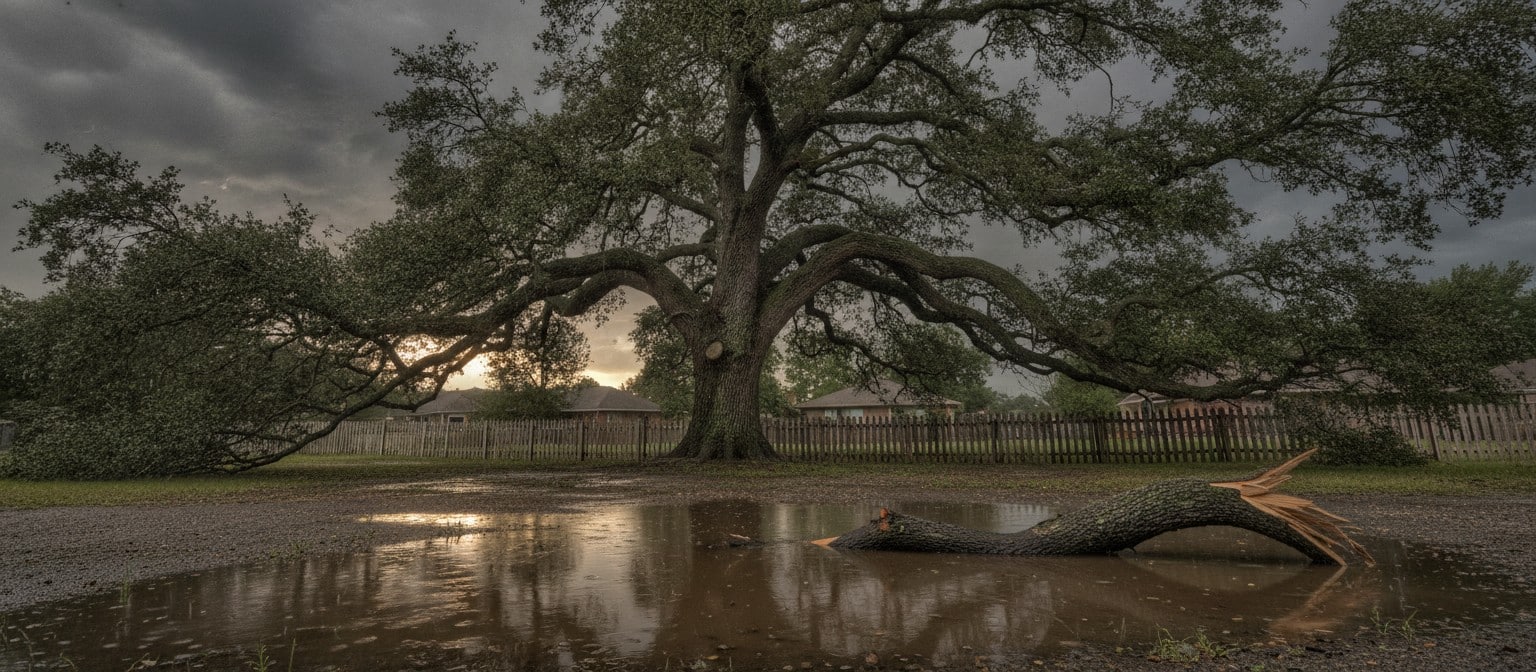
Wind, heavy rain, and saturated soil conditions can change how a mature tree responds to load. Roots lose holding strength when ground becomes waterlogged, while wind pressure increases leverage across the canopy. When these forces combine with existing internal weakness, the likelihood of failure rises. Trees that appear stable during calm conditions can behave differently when exposed to sudden environmental stress. This shift is often when hidden structural problems become visible, sometimes in the form of branch breakage or unexpected leaning.
Post event inspection helps identify issues that were not previously obvious, offering a clearer picture of structural condition. In many cases, it is this moment that prompts reassessment of risk and potential intervention before further damage occurs.
Final Thoughts
A mature tree can hold both value and uncertainty within the same structure, depending on what lies beneath its surface. What seems reliable from a distance may conceal internal changes that only become apparent under closer examination. Regular assessment helps separate stable growth from developing risk, giving property owners a clearer sense of when action may be needed.
In many situations, informed decision making comes down to recognising subtle shifts before they escalate into visible failure. Careful evaluation supports safer outcomes and reduces the chance of unexpected damage, particularly in environments where trees stand close to people or property.


