
Climate resilience can sound like something reserved for governments, engineers, and major infrastructure projects. Cities certainly need those investments. But adaptation also happens at a much smaller scale.
The vast majority of greenhouse gases driving climate change come from fossil fuels, which account for about 75% of global emissions. Yet individual actions can still create wider effects across local environments and ecosystems.
A garden may seem insignificant beside that global challenge. But it can influence how a small area handles heat, rainfall, soil moisture, and biodiversity. When many gardens work together, those benefits can extend across an entire neighborhood.
This matters because climate change is creating more difficult growing conditions. Gardens increasingly face hotter periods, heavier rainfall, drought, and unpredictable temperature shifts. Climate-resilient gardening offers a practical response while making urban spaces more useful and enjoyable.
Green Spaces Can Become Small Pieces of Urban Climate Infrastructure
Parks and gardens are often treated as pleasant additions to cities. Their climate value is considerably greater.
Research from Tshwane, South Africa, shows how green spaces can perform several functions simultaneously. Researchers examined three public spaces and found that parks and community gardens can help lower temperatures and reduce flooding. They can also provide places for people to gather during heatwaves and other disruptions.
One example is Moja Gabedi, a former illegal dumpsite transformed into a food garden and therapeutic space. The site grows vegetables, fruits, and herbs while providing fresh food for a transitional shelter. Its vegetation and ponds also help cool the surrounding environment.
That example reveals something important about urban gardening. A green space doesn’t have to perform one environmental function. With thoughtful design, it can support food security, cooling, social services, and biodiversity at once.
The same principle applies on a smaller scale. A residential garden can provide shade, retain moisture, and create habitat. Several gardens spread across a neighborhood can collectively create a greener urban environment, functioning much like the integrated green and blue infrastructure described in our guide to urban nature design as core climate infrastructure.
Designing Around Temperature Swings Can Protect the Root Zone
Plants don’t experience climate change as an abstract global trend. They experience it through the soil around their roots.
Rapid temperature changes can make growing conditions particularly challenging. Pennsylvania has seen unusual temperature swings in recent springs that delayed planting, with warm spells giving way to sharp cold snaps. Such wide swings can leave soil temperatures unsuitable for healthy growth.
Gardeners can reduce some of this stress by choosing sheltered locations, adding mulch, and selecting plants suited to local conditions. Container depth also matters because more soil can provide greater insulation around the roots. The container itself can become part of this strategy. Custom planters that are specially insulated to reduce temperature fluctuations can help internal soil retain moisture.
This can protect roots while helping sustain the beauty of a carefully planned plant design, as noted by PolyMade. Suitable drainage is equally important, especially during periods of heavy rainfall.
A more stable root environment can help soil retain moisture during periods of heat or irregular rainfall. Good drainage also prevents excess water from remaining around roots after heavy rain.
The goal isn’t to make plants immune to extreme weather. It’s to create steadier growing conditions that help them cope with it.
Water-Smart Gardening Can Prepare Plants for Both Drought and Heavy Rain
Climate resilience often requires solving an apparent contradiction. Gardens need to cope with periods of too little water while also handling sudden excess rainfall.
Mark Dwelly, head gardener at Audley Stanbridge Earls, recommends choosing plants that need less summer water while tolerating changing weather. He specifically mentions lavender, poppies, and catmint as versatile choices.

The soil itself is equally important. Dwelly recommends adding mulch and compost because they help soil retain moisture during warmer months. He also suggests creating shallow dips or drainage areas to capture or redirect rainwater and reduce flooding.
Surface materials can influence this process as well. Dwelly recommends gravel paths instead of solid paving because they allow rainwater to soak into the ground. Gravel can also help distribute heat more effectively during summer.
These choices create a garden that responds to weather rather than constantly fighting it. A water-smart garden doesn’t simply use less water. It makes better use of the water that arrives naturally.
Community Gardening Can Turn Individual Adaptation Into Collective Resilience
The biggest potential of urban gardening appears when people stop treating each garden as an isolated space.
The World Economic Forum has described collective action as a key tool for building climate resilience. Community-led projects can help people organize around challenges that individual households cannot address alone.
The Tshwane research reinforces this point. Its authors found that public spaces were most effective when communities helped create and maintain them. Local participation builds belonging and shared responsibility. It also allows spaces to evolve as local needs and climate conditions change.
That lesson is easy to overlook. A beautifully designed park can still struggle if the people who use it have little involvement in its future.
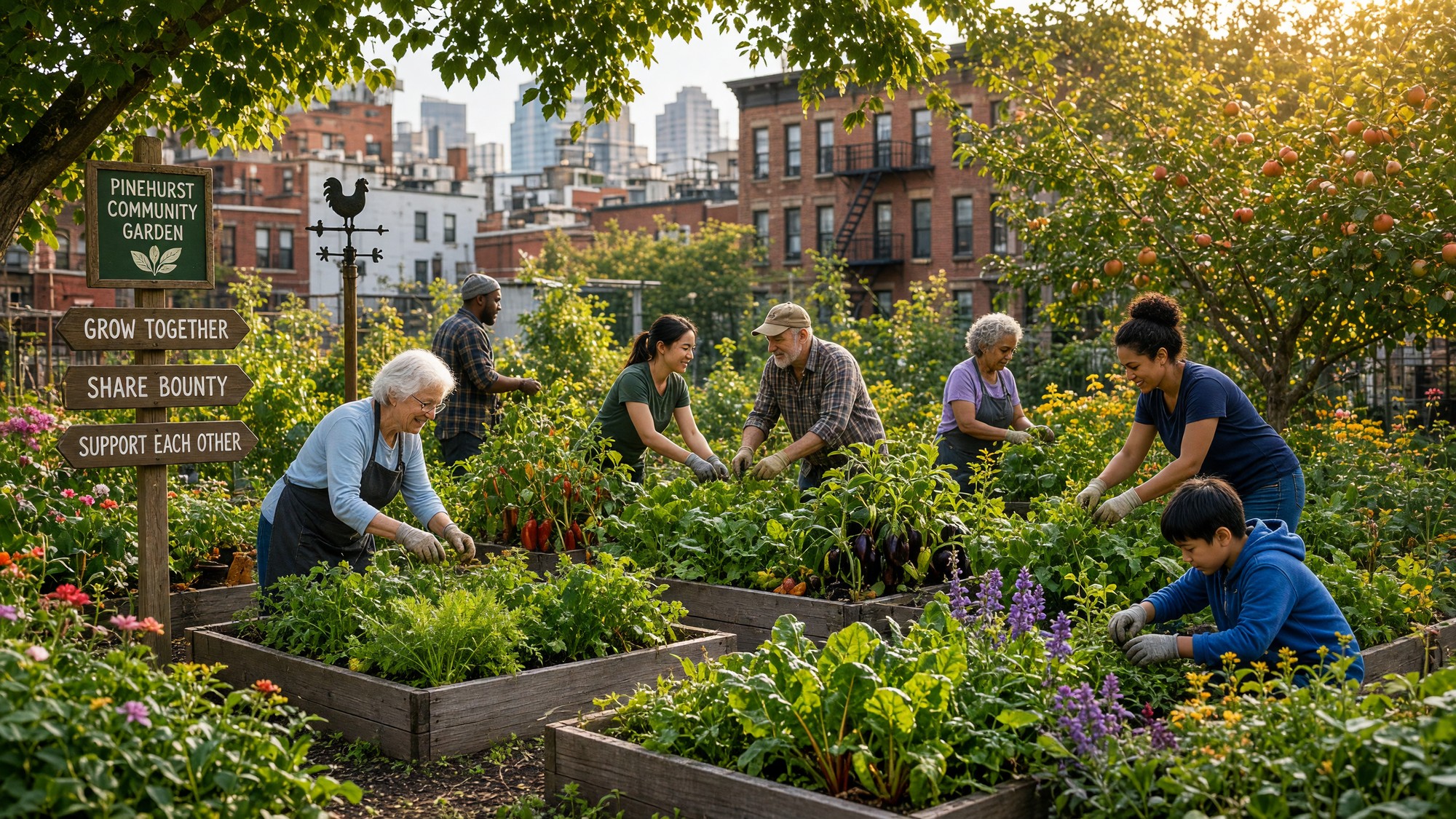
Community gardens can work differently. Residents can identify suitable plants, manage growing areas, organize watering, and adapt spaces when conditions change. They can also create places where people meet and support one another during difficult periods.
This turns gardening into more than an environmental activity. It becomes a form of local resilience.
FAQs
Can balconies support climate-resilient gardening?
Yes, balconies can support herbs, vegetables, flowers, and pollinator-friendly plants with suitable containers. Check the space’s sunlight, wind exposure, and structural load before adding multiple planters. Windbreaks can also protect delicate plants from sudden gusts and excessive moisture loss.
Which garden features can support pollinators?
Choose flowering plants that provide nectar and pollen across different seasons. Include varied flower shapes and avoid relying on a single plant species throughout the garden. Shallow water sources, sheltered areas, and pesticide-free planting can also make urban gardens more welcoming to pollinators.
How can gardeners reduce maintenance during extreme weather?
Choose plants according to local growing conditions rather than selecting species solely for appearance. Group plants with similar sunlight and watering requirements to simplify routine care. An automated drip irrigation system can also deliver water directly to roots while reducing unnecessary evaporation.
Key Climate-Resilience Insights at a Glance
| Fossil fuel use is the dominant source of greenhouse gas emissions. | About 75% of global greenhouse gas emissions come from fossil fuels. |
| Urban green spaces can provide multiple climate and social benefits. | Parks and community gardens can reduce heat, manage flooding, and support food security. |
| Unpredictable weather can disrupt planting and plant growth. | Sharp spring temperature swings in Pennsylvania have delayed planting in recent years. |
| Gardens can be designed to use water more efficiently. | Drought-tolerant plants, mulch, compost, drainage areas, and gravel can improve resilience. |
| Local participation can strengthen climate adaptation. | Collective action is a key tool for building climate resilience. |
Urban gardens won’t replace major climate infrastructure, but they can help cities prepare for its effects. Resilient gardens use suitable plants, conserve water, manage rainfall, protect soil, and support wildlife.
These spaces can take many forms, from community gardens and rooftops to balconies and patios. Thoughtful planters can protect roots, while smart garden layouts can manage rainwater and create habitats for pollinators. When communities care for these spaces together, their benefits can extend beyond individual properties.
Each change may seem small on its own. Together, they can make urban spaces greener, cooler, and better prepared for unpredictable weather.


