
Precision in modern imaging relies on the seamless synchronization between high-speed sensor logic and optical clarity. As scientific disciplines push toward more granular data sets, the hardware responsible for capturing these moments must function with near-absolute fidelity. Traditional imaging solutions often struggle to maintain this balance, creating a gap between observation and actionable results.
Hardware from companies like Tucsen bridges this divide by integrating advanced sensor architectures with proprietary optimization protocols. These systems do not merely record light; they translate complex photons into high-fidelity digital assets suitable for rigorous analytical scrutiny. By prioritizing signal integrity, these tools empower researchers to look beyond the surface of their subjects.
In environments ranging from automated industrial lines to sterile biological laboratories, the demand for visual certainty has never been higher. Specialized developers maintain an established presence within the optical sensor sector. Leveraging long-standing engagement with optical sensor development, companies produce camera solutions designed for precise, replicable imaging.
Specialized CMOS cameras from companies like Tucsen prioritize high-speed data acquisition and accuracy to support diverse laboratory environments. Technicians in both research facilities and manufacturing hubs utilize these imaging systems to eliminate visual ambiguity and streamline complex tasks.

The Critical Role of High-Fidelity Imaging in Modern Scientific Protocols
The necessity for visual clarity extends across diverse professional landscapes where accuracy remains the primary metric for success. In these demanding environments, reliable imaging hardware acts as the silent partner in complex problem-solving.
Diverse sectors rely on these systems to maintain operational integrity:
- Researchers utilizing sharp optics to analyze intricate biological samples.
- Quality control engineers relying on clear visuals to detect manufacturing anomalies.
- Academic institutions providing students with high-fidelity tools for discovery.
Utilizing optimized imaging technology streamlines the transition from observation to data-driven insight. This synchronization of effort ensures that every project reaches its full analytical potential.
Sophisticated imaging hardware mitigates these operational risks by providing a level of visual certainty that standard sensors cannot replicate. The hardware stability prioritized by developers ensures that every frame captured contributes to a broader understanding of the task at hand.
The primary objective remains the attainment of precision through enhanced imaging protocols.
Core Architectural Advantages of Modern CMOS Sensor Technology
CMOS architectures represent a significant leap over legacy CCD sensor designs by offering superior data throughput speeds. Furthermore, these modern sensors maintain high operational efficiency while significantly reducing power consumption during prolonged imaging sessions.
Modern imaging requirements demand sensors that can handle high-capacity data loads without overheating or introducing electronic artifacts.
Specialized manufacturers like Tucsen utilize these advanced CMOS sensors and optimize them specifically for scientific and industrial needs. This targeted engineering ensures that every captured frame delivers consistent and accurate results regardless of the environment.
CMOS architectures provide several distinct operational benefits over legacy sensors:
- High frame rates for real-time imaging
- Excellent sensitivity in low-light conditions
- Reduced noise levels
- Compact and lightweight designs
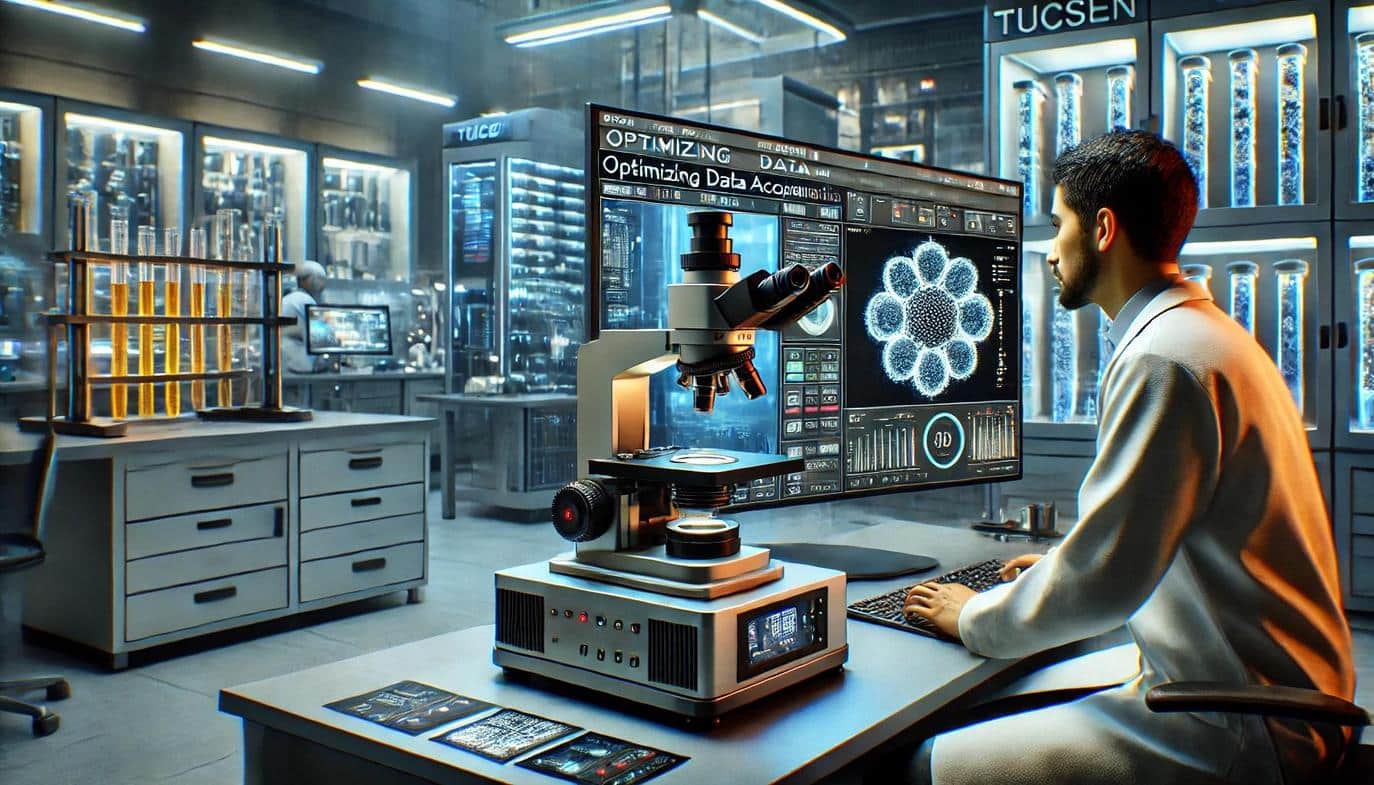
Optimizing Data Acquisition with CMOS Camera Hardware
A central component of the hardware portfolio is the Tucsen CMOS camera series. The design of CMOS hardware in this category centers on its function as a data collection tool, emphasizing empirical accuracy over visual aesthetics. The architecture emphasizes accuracy, hardware stability, and operational efficiency.
1. High Resolution for Fine Details
By capturing sharp, high-resolution images, operators can distinguish fine textures and structural edges that lower-quality sensors often obscure. This level of visual granularity proves indispensable within specialized technical disciplines:
- Microscopy
- Life sciences research
- Semiconductor inspection
- Material analysis
Clear details help professionals make better decisions with confidence.
2. Low Noise and High Sensitivity
Noise can hide important information, especially in low-light environments. Specialized imaging systems are designed to minimize noise while maintaining strong sensitivity.
The result is:
- Cleaner images
- Better contrast
- More accurate measurements
This balance is critical for applications like fluorescent imaging and detailed scientific observation.
3. Fast Image Capture for Real-Time Work
High-speed imaging protocols utilize the elevated frame rate capabilities found in hardware to monitor dynamic processes without the interference of motion blur or temporal lag.
This benefits:
- Live cell imaging
- Industrial automation
- Dynamic testing environments
Real-time imaging helps users respond quickly and work more efficiently.

Multi-Disciplinary Integration Across Specialized Imaging Environments
CMOS imaging hardware integrates seamlessly into varied hardware configurations and research protocols. Its CMOS cameras are designed to work across multiple fields and integrate easily with existing systems.
Biological and Clinical Research Applications
Common applications include:
- Biological and medical research
- Academic laboratories
Industrial Metrology and Automated Inspection Systems
- Industrial inspection
- Machine vision systems
- Quality control processes
Imaging systems maintain compatibility with microscopes and analytical software, facilitating efficient setup.
Balancing Operational Simplicity with High-Performance Output
The integration of sophisticated hardware into an existing workflow should be a seamless experience that prioritizes operator productivity. Manufacturers like Tucsen address this challenge by balancing complex internal logic with an external design that emphasizes ergonomic reliability.
Operators experience several key benefits when deploying these systems:
- Rapid installation protocols that minimize initial setup time.
- Stable long-term operation during high-stakes research sessions.
- Rugged hardware designs that withstand demanding laboratory conditions.
- Direct access to professional technical support for complex configurations.
By reducing technical friction, hardware allows professionals to focus entirely on their primary research objectives.
Imaging logic remains effective across varying levels of technical expertise, providing a scalable interface that accommodates both rapid surveys and complex, deep-tissue analysis.
Ensuring Longitudinal Stability in High-Stakes Imaging Workflows
Hardware resilience serves as the foundation for successful longitudinal studies where data gaps can compromise entire projects. By maintaining peak performance during extended use, these systems ensure that research continuity remains uninterrupted.
Institutional efficiency improves through several direct hardware advantages:
- Minimization of unplanned downtime during critical observation windows.
- Preservation of consistent data parameters across multiple imaging cycles.
- Optimization of lab throughput by reducing the need for recalibration.
These technical safeguards allow laboratories to maintain high productivity levels without sacrificing the integrity of their visual datasets.

Strategic Technical Advantages of the Tucsen Imaging Ecosystem
Deciding on an imaging partner requires a careful evaluation of how a specific brand’s technology aligns with long-term institutional goals. The Tucsen architecture integrates a suite of functional features designed to mitigate standard obstacles found in precision imaging.
The platform’s operational effectiveness is demonstrated through several key performance metrics:
- Superior image output characterized by high spatial resolution.
- Implementation of the latest advancements in CMOS sensor logic.
- Precise data capture protocols that ensure temporal accuracy.
- Versatile compatibility across a wide spectrum of software interfaces.
- Demonstrated stability within global research centers.
The technical frame for institutions evaluating upgrades to their existing imaging infrastructure centers on these attributes. Institutional stakeholders gain access to a validated technology platform that replaces speculative observation with empirical visual evidence.
The Evolution of Future-Ready Sensor Development in Companies like Tucsen
Iterative improvements in sensor architecture and quantum efficiency optimization define the current trajectory of CMOS hardware. As technical requirements for data resolution intensify, the focus remains on engineering hardware that anticipates the next generation of scientific inquiry.
Acquiring Tucsen hardware provides professionals with a sustainable technical asset capable of adapting to increasingly rigorous analytical standards.
Strategic Advancements Through High-Fidelity CMOS Hardware
Investing in sophisticated CMOS sensor technology represents a commitment to long-term data integrity and operational efficiency. As imaging requirements become increasingly complex, the ability to rely on hardware that maintains peak performance under rigorous conditions is indispensable. The focus of companies like Tucsen on minimizing electronic noise while maximizing spatial resolution provides a platform for researchers who cannot afford visual ambiguity in their results.
Implementing imaging systems that prioritize empirical accuracy ensures that research findings are supported by high-fidelity visual evidence. The collaboration between the advanced sensor logic found in hardware from companies like Tucsen and operator-driven requirements results in a robust imaging environment where replicable data becomes the standard for every scientific and industrial endeavor.
Essential Guidance on CMOS Imaging Technology
What distinguishes Tucsen CMOS sensors from standard digital cameras?
Tucsen optimizes its sensors for scientific-grade data acquisition, prioritizing low-noise circuitry and high quantum efficiency over consumer-level aesthetics.
Are these cameras compatible with third-party microscopy software?
Yes, the hardware supports standard drivers and interfaces, allowing for seamless integration into most existing laboratory and industrial software ecosystems.
How does high resolution impact industrial inspection workflows?
Increased pixel density allows for the detection of microscopic defects and structural irregularities that lower-resolution sensors frequently overlook.
Can Tucsen cameras handle high-speed imaging without motion blur?
The high frame rate capabilities of CMOS architecture ensure that fast-moving subjects or dynamic biological processes are captured with sharp temporal precision.
What support is available for hardware integration?
Tucsen provides professional technical support and comprehensive documentation to ensure hardware is correctly configured for specific research or manufacturing protocols.


