
China’s state telecom giant has paired brain-inspired silicon with domestic GPUs for large language model inference, claiming more than double the output at more than 40% lower operating cost than a pure GPU cluster running the same DeepSeek workload.
The public debut happened at the 2026 China Computing Power Conference in Langfang, Hebei. China Mobile Cloud presented what it calls the country’s first production-grade heterogeneous inference system combining domestic GPUs with neuromorphic chips, built jointly with the China Electronics Technology Nanhu Research Institute, neuromorphic silicon vendor Lynxi, GPU vendor Iluvatar CoreX, and researchers from Tsinghua University and Peking University.
For anyone watching AI’s energy use, this announcement matters more than most chip news. Inference is where the electricity bill lives. Efficiency at the deployment layer is one of the most powerful levers available today.
What China Mobile Cloud Actually Announced
The presentation came during the “Computing Power First Launch” showcase on September 12, 2026. Du Yujian, technical director of the Brain-inspired and Optical Laboratory at China Mobile Cloud Company, presented what organizers billed as the country’s first production-ready heterogeneous inference stack pairing domestic GPUs with neuromorphic processors.
In conference remarks covered by financial wire services, Du framed the neuromorphic silicon as a “turbocharger” for existing GPU fleets rather than a rip-and-replace upgrade. The pitch targets cloud buyers watching cost per token, not those shopping for a new accelerator.
The project’s stated benchmarks position it against NVIDIA’s Vera Rubin paired with Groq’s language processing units, an architecture NVIDIA has pitched as its own answer to heterogeneous inference. Conference materials list token factories, AI coding, text-to-video, multi-agent collaboration, smart manufacturing, finance, and communications security as target use cases.
The consortium holds 15 granted patents and 6 software copyrights covering scheduling, chip design, and compiler tools. The system is currently in small-batch trial production.
Wire coverage adds context on positioning: China Mobile Cloud aims for autonomous controllability in AI inference infrastructure, an explicit policy priority as US export controls restrict access to leading-edge NVIDIA silicon. For broader context on China’s domestic AI silicon push, our coverage of DeepSeek V4’s move onto Huawei Ascend 950PR hardware documents how seriously Beijing-backed operators are working on NVIDIA alternatives.
How Neuromorphic AI Inference Works in This Split Architecture
Transformer models do two different types of work in each layer. Attention queries relationships across the token sequence and keeps a growing cache in high-bandwidth memory. Feed-forward blocks transform each token on its own. In mixture-of-experts models, feed-forward blocks are split across many small expert networks.
China Mobile Cloud’s stack splits these two workloads. Attention and the prefill stage stay on domestic GPUs from Iluvatar CoreX. GPUs handle this well. Attention benefits from general-purpose throughput, flexible memory access, and mature compiler support for the fused kernels it needs.
Feed-forward network blocks move to neuromorphic silicon from Beijing-based Lynxi Technology (灵汐科技). Lynxi chips favor compute-in-memory architectures with large on-chip SRAM. This fits the bandwidth-sparse, pattern-repetitive workload that mixture-of-experts layers present. The neuromorphic approach eases the memory and power pressure that pure GPU clusters hit under heavy token serving.

The choice of validation model makes the workload fit clear. DeepSeek V4 Flash, as documented in NVIDIA’s NeMo model reference, runs a 43-layer all-MoE backbone with 256 routed experts plus one shared expert per block, using top-6 routing. Every layer is a mixture-of-experts layer; no dense MLP layers are present. The feed-forward workload dominates the inference compute profile, making it the natural target for specialized silicon.
For background on DeepSeek’s MoE design and why expert routing shapes deployment economics, our DeepSeek V4 MoE architecture analysis covers the fine-grained MoE structure in detail.
Software the consortium built in-house orchestrates the split. A custom model compiler breaks the Transformer graph across the two fabrics. A high-speed interconnect protocol keeps latency bounded between the GPU and neuromorphic zones. A unified inference engine handles co-scheduling, task dispatch, and result aggregation. Conference materials call this a PD/AF separation. Prefill and decode stages are decoupled from attention and feed-forward placement.
The Measured Gains on DeepSeek V4 Flash
Conference data presented by China Mobile Cloud makes specific claims, benchmarked against what the consortium calls a “pure domestic GPU cluster of similar investment scale.”
The validation hardware for the heterogeneous configuration:
- Three TianShu Zhixin (天数智芯) GPU servers
- Three LingXi Technology (灵汐科技) neuromorphic compute racks
- Model: DeepSeek V4 Flash
Against the peer domestic GPU cluster baseline, the consortium reports:
- More than 2× higher inference output
- More than 2× higher energy efficiency
- More than 40% lower business operating cost
Note that wire coverage references different GPU vendor names in different reports. Pandaily coverage cites Iluvatar CoreX, while Futu News and Chinese financial wire coverage cite TianShu Zhixin, and the consortium involves both. Both are Shanghai-based domestic GPU designers active in China’s post-NVIDIA inference market.
| Metric | Pure domestic GPU cluster | GPU + neuromorphic mixed stack |
|---|---|---|
| Inference output | Baseline | More than 2× |
| Energy efficiency | Baseline | More than 2× |
| Business operating cost | Baseline | More than 40% lower |
| Validation hardware | Not disclosed | 3 TianShu GPU servers + 3 LingXi neuromorphic racks |
| Validation model | Not disclosed | DeepSeek V4 Flash |
| Independent third-party benchmarks | Not applicable | None published as of launch |
| Deployment stage | Production | Small-batch trial production |
[interactive_interactive_chart]{“type”:”column”,”themeMode”:”light”,”background”:”#f8fafc”,”title”:”China Mobile Cloud Claimed Gains vs. Domestic GPU Cluster Baseline”,”subtitle”:”DeepSeek V4 Flash inference, baseline indexed to 100″,”source”:”China Mobile Cloud via Pandaily, 2026 China Computing Power Conference”,”sourceUrl”:”https://pandaily.com/china-mobile-cloud-gpu-neuromorphic-hetero-llm-inference”,”dataLabels”:true,”categories”:[“Inference Output”,”Energy Efficiency”,”Business Opex”],”series”:[{“name”:”Pure domestic GPU cluster (baseline)”,”data”:[100,100,100]},{“name”:”GPU + neuromorphic mixed stack”,”data”:[200,200,60]}],”colors”:[“#1e3a8a”,”#b45309″],”yAxis”:{“title”:”Indexed (baseline = 100)”},”allowDownload”:true}[/interactive_interactive_chart]
For context on why operating cost per token has become the metric that matters more than raw peak FLOPs, our coverage of how DeepSeek V3.1’s FP8 format cut inference cost on Chinese silicon covers a complementary angle on the same economics.
Why This Matters for AI Inference Energy Costs
The numbers behind AI inference demand are worth pausing on.
Global data center electricity consumption reached 565 TWh in 2026, up 26.4% from 447 TWh in 2025. AI-optimized servers alone account for 175 TWh in 2026, roughly 31% of all data center power, growing 84.2% year-over-year. Trajectory estimates put AI server demand at 258 TWh in 2027.
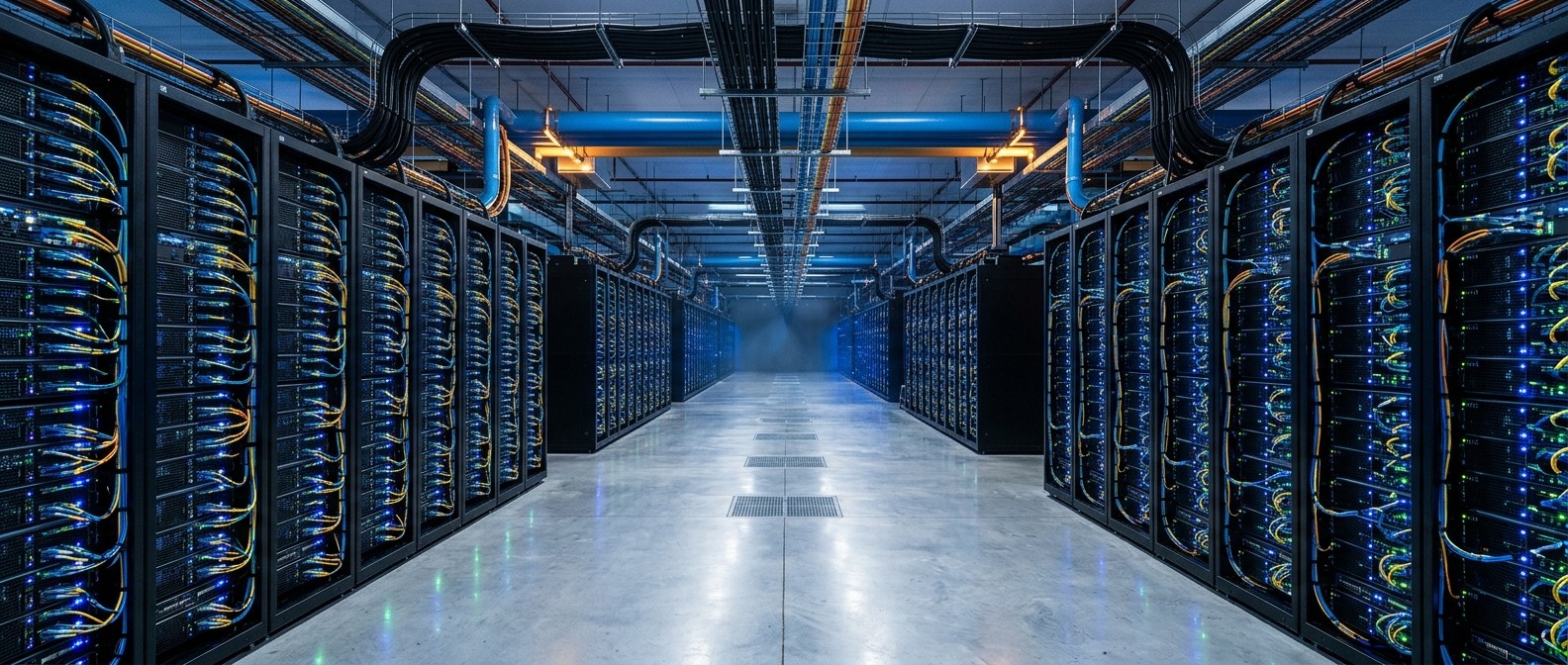
Within AI compute, inference is where the volume lives. Industry estimates put inference at 80 to 90% of AI compute activity, with the International Energy Agency projecting inference will represent roughly 75% of total AI energy demand by 2030. Every efficiency gain at the inference layer compounds across a workload that runs continuously.
This is why real-world efficiency matters more than peak benchmark numbers. A 40% cost cut at hyperscale saves more than money. It means less electricity, less cooling water, and less strain on local power grids.
Our coverage of LLM market share dynamics and the story of two AI empires traces how datacenter power constraints and chip supply shape which AI ecosystems scale.
China’s Chip Self-Sufficiency
Every chip vendor named in the China Mobile Cloud announcement is a domestic Chinese designer. Iluvatar CoreX and TianShu Zhixin both design general-purpose GPUs in Shanghai. Lynxi (LingXi Technology) designs neuromorphic processors in Beijing. The research partners include the China Electronics Technology Nanhu Research Institute, Tsinghua University, and Peking University.
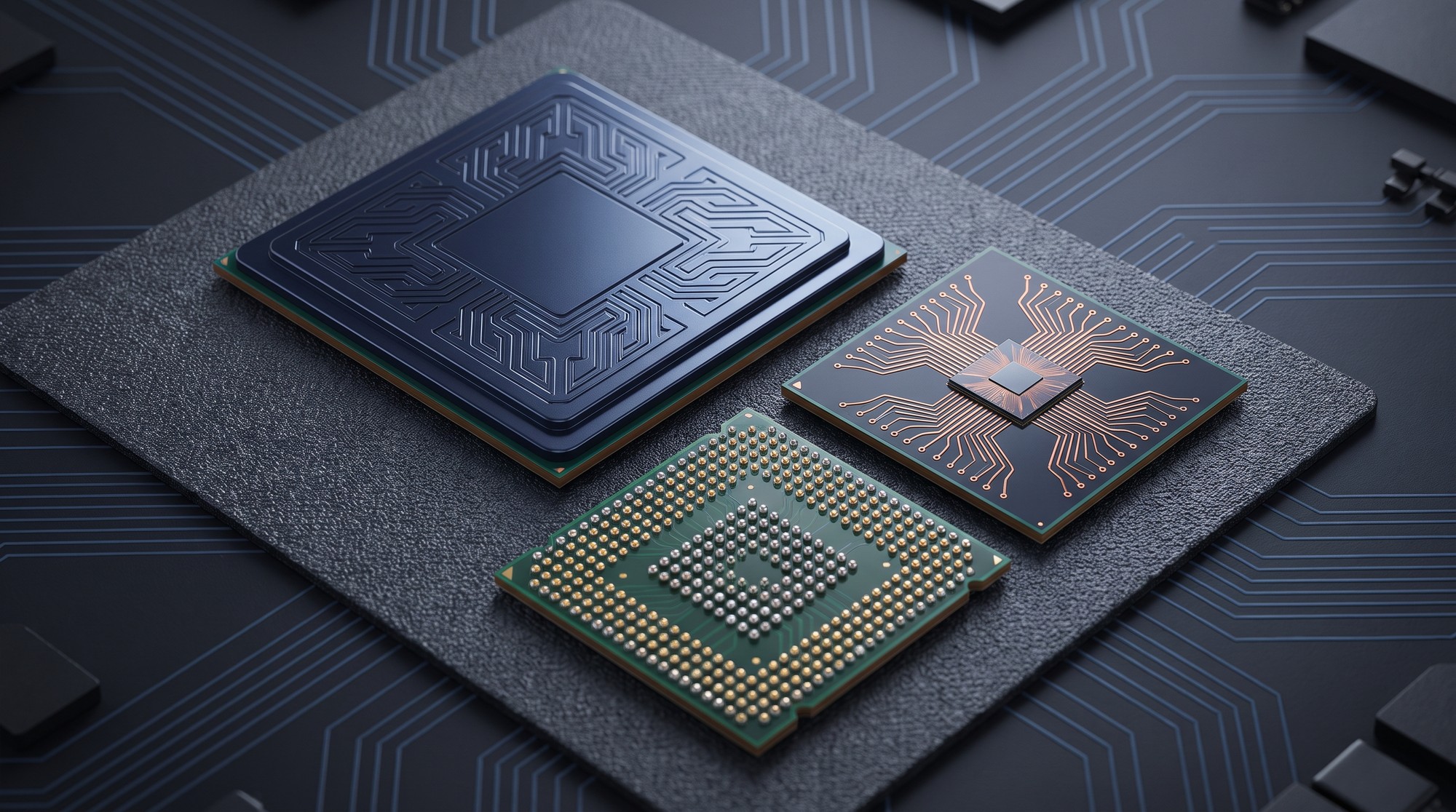
This matters because the benchmark comparison is not against NVIDIA hardware. It is against other domestic GPU clusters of similar investment scale. The claim being made is not that the stack beats an H200, but that it can roughly double the useful output of hardware China can actually ship at scale under current export controls.
Conference materials describe the stack as benchmarked against NVIDIA’s Vera Rubin paired with Groq LPUs. That framing positions the Chinese system as a domestic copy of an approach US vendors are also pursuing. Whether the comparison holds under real workloads has not been tested in public.
The consortium has stated it will gradually open core framework components to other domestic GPU and neuromorphic vendors, and to compute operators beyond China Mobile Cloud. If that commitment materializes, the value of this announcement shifts from one carrier running a demo to a reproducible heterogeneous inference recipe Chinese operators can adopt.
IL has documented the surrounding domestic chip push in adjacent stories: China’s DFSX DF1000 accelerator that outperforms NVIDIA’s H200 on memory bandwidth and the evolving posture captured in our coverage of China’s shifting relationship with NVIDIA imports and GaN-powered 800VDC AI racks.
What the Numbers Don’t Show
The numbers come with a caveat worth repeating. Nothing independent has been published. Every figure cited at Langfang came from the project partners themselves, on one model, in a test setup that has not been described in detail.
The baseline is fuzzy too. China Mobile Cloud compares against “peer domestic GPU clusters of similar investment scale” without saying which chips they used, how much power the baseline drew, or what workload it ran. A 2× claim against an unnamed baseline is hard to judge.
Two other gaps stand out. The results cover DeepSeek V4 Flash only, with no evidence yet that the gains carry to other models. The stack is also in small-batch trial production, meaning it has not been tested at production traffic. Neuromorphic silicon has a track record of posting impressive narrow benchmarks that do not always survive contact with real LLM serving loads.
- The peer baseline is described only as “peer domestic GPU clusters” or “similar investment scale,” without hardware specs, power budgets, or workload configurations disclosed
- The 2× output and energy figures reference DeepSeek V4 Flash specifically; generalization to other models is untested
- Neuromorphic silicon has historically delivered efficiency gains on narrow inference workloads that do not always transfer to full LLM serving stacks, so whether the PD/AF separation holds this time is exactly the open question
- The comparison to NVIDIA Vera Rubin plus Groq is architectural positioning, not a benchmark against those systems
- Small-batch trial production means the stack has not yet been exercised at production traffic volume
None of that makes the announcement hollow. A working recipe for splitting Transformer work across two chip types is worth having, and 15 granted patents suggest real engineering behind the demo. But until a third party runs this stack under production conditions, the 2× and 40% figures are vendor claims, not measured fact.
Frequently Asked Questions
What is neuromorphic AI inference?
Neuromorphic AI inference runs trained models on processors that mimic biological neural architectures. These chips typically use compute-in-memory designs. Computation happens close to or inside memory cells, rather than shuttling data between separate compute and memory units. The approach targets memory and power bottlenecks that GPUs hit on bandwidth-heavy inference workloads.
How does a neuromorphic chip differ from a GPU?
A GPU is a general-purpose parallel processor. It has a flexible memory hierarchy and handles many types of computation well. A neuromorphic chip is specialized silicon. It performs specific operations, typically matrix-vector products, directly in memory arrays. This trades flexibility for energy efficiency on workloads that match its architecture. In the China Mobile Cloud stack, GPUs handle attention and neuromorphic chips handle feed-forward blocks, playing to each fabric’s strengths.
What is heterogeneous AI inference?
Heterogeneous AI inference splits a model’s workload across different types of compute hardware. Each type handles the operations it performs best. Instead of running an entire Transformer on GPU clusters, orchestrating software breaks the graph so each layer runs on the silicon best suited to it. This contrasts with homogeneous inference, where all layers run on the same accelerator.
What is DeepSeek V4 Flash?
DeepSeek V4 Flash is a mixture-of-experts language model from the Chinese AI lab DeepSeek. It has 284 billion total parameters but only 13 billion activated per token. Contexts run up to one million tokens. Its 43-layer backbone uses mixture-of-experts at every layer, with 256 routed experts plus one shared expert per block. The FFN-heavy MoE structure makes it a natural validation target for heterogeneous inference.
Is neuromorphic computing more energy efficient than GPUs?
On workloads that match neuromorphic architectures, such as bandwidth-bound feed-forward processing and pattern-repetitive matrix operations, neuromorphic silicon can deliver substantial energy efficiency advantages. China Mobile Cloud claims more than 2× energy efficiency on DeepSeek V4 Flash inference versus a peer domestic GPU cluster. Independent verification is pending. On workloads that do not match neuromorphic strengths, such as flexible control flow and dynamic memory access, GPUs typically outperform.
Who are Lynxi and Iluvatar CoreX?
Lynxi (also written LingXi Technology, 北京灵汐科技) is a Beijing-based neuromorphic chip designer with research ties to Tsinghua University. Iluvatar CoreX is a Shanghai-based domestic GPU designer focused on AI inference and training accelerators for the Chinese market. TianShu Zhixin (上海天数智芯), also a Shanghai GPU designer, appears in wire coverage as a hardware partner on the validation build. All three sit within China’s post-NVIDIA domestic silicon ecosystem.
Conclusion
China Mobile Cloud’s neuromorphic AI inference debut looks solid on paper. It matters for China’s chip independence. For now, though, the numbers come only from the vendor.
The split of Transformer workloads is a principled response to a real problem. Attention runs on domestic GPUs. Feed-forward blocks run on neuromorphic silicon. DeepSeek V4 Flash’s all-MoE backbone produces exactly the bandwidth-sparse feed-forward workload that compute-in-memory silicon is built to serve. If the reported 2× output and 40% cost cuts hold under independent verification, this recipe would be worth copying well beyond China Mobile Cloud.
What to watch next:
- Independent third-party benchmarks on production workloads
- Whether the consortium actually opens the heterogeneous inference framework to outside vendors and operators
- Cost per token at scale once the stack exits small-batch trial production
- Whether other Chinese cloud operators adopt the PD/AF separation pattern
For now, the honest summary is narrower than the launch headlines suggest. A domestic GPU plus neuromorphic silicon stack has shown a reproducible inference recipe on DeepSeek V4 Flash. The vendor-reported gains await independent reproduction. That is a meaningful engineering result. It is not yet a shipping alternative to anything.
The deeper lesson transcends this announcement. Architectural efficiency at the inference layer compounds across a workload that already consumes 80 to 90% of AI compute activity. Squeezing more tokens per watt out of hardware operators can actually ship is where AI’s sustainability story will be won or lost.

