
The reality of a San Antonio 18-wheeler accident extends far beyond physical healing; it pulls you into a strategic legal landscape that moves faster than most people expect. When a massive commercial vehicle disrupts the rhythm of I-35 or Loop 410, the immediate chaos often masks the long-term implications for health and financial stability. Questions often arise regarding liability, insurance tactics, and the preservation of critical evidence that can vanish in hours.
This guide is built for real life in San Antonio. Not a perfect checklist, not legalese, and not a sales pitch. Just the information that tends to matter when a commercial truck is involved and things get complicated fast. Every decision made in the first few weeks—from medical evaluations to how adjusters are engaged—shapes the trajectory of recovery. The focus here remains on the practical details that empower the protection of rights while surrounding noise attempts to rewrite the facts of the event.
Think of these first steps as a mission to stabilize the future. By prioritizing medical health and meticulously documenting the scene, a factual foundation is created that stands up to scrutiny. Whether dealing with hidden soft tissue injuries or navigating the complexities of trucking company liability, a clear-eyed approach is the most effective tool in restoring balance.
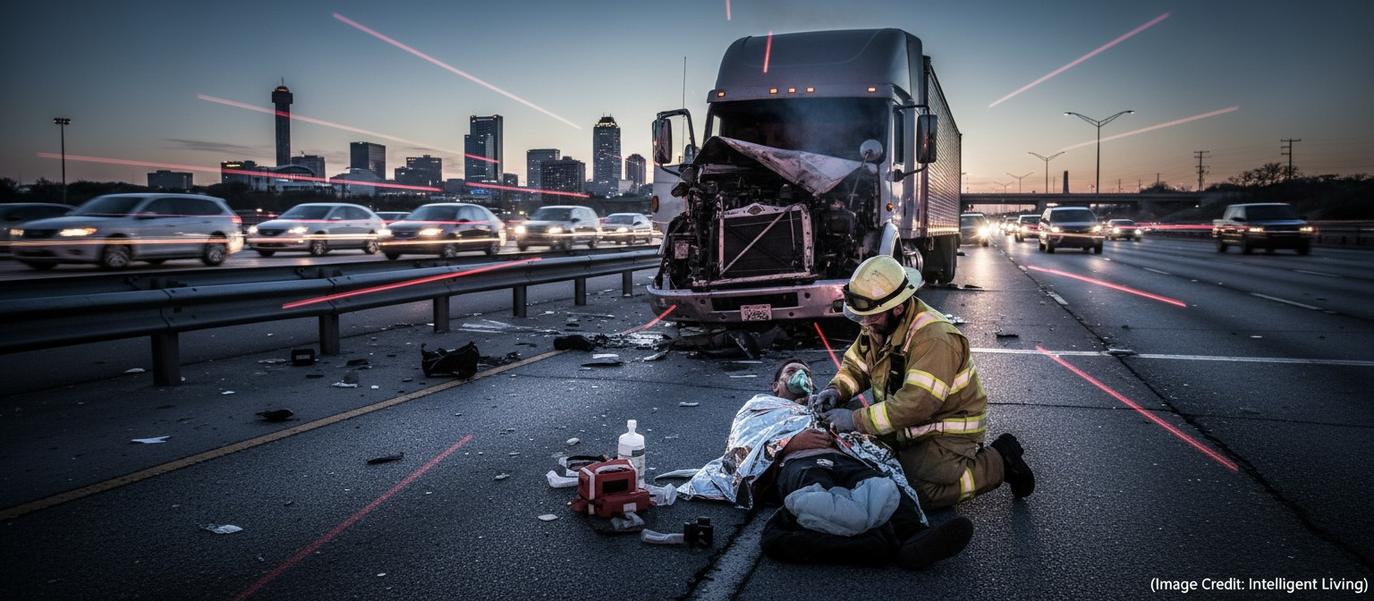
Immediate Actions Following a San Antonio 18-Wheeler Accident
Moments after a collision, the brain often fights two conflicting impulses—freezing in shock while simultaneously trying to multitask through the chaos. This cognitive dissonance frequently results in a state where an individual feels physically fine one moment and intensely shaky or unnaturally calm the next.
You can begin regaining control of the situation by accepting these responses as standard physiological reactions to extreme stress. When safety permits, the primary objectives are clear: prioritize medical health and document every physical detail.
Documenting Physical Evidence at the Crash Scene
A few practical moves help more than is often realized:
- Prioritize a medical evaluation, regardless of how minor the impact appears. Adrenaline frequently masks concussions and soft tissue damage that only become evident once the body settles. Back injuries operate similarly, with significant pain often surfacing late that night or the following morning.
- Take photos as if collecting evidence for a legal case. Vehicle positions, skid marks, company logos on the truck, the license plate, the DOT number on the tractor, damage close-ups, road conditions, traffic signs, and anything unusual should be recorded.
- Collect names and contact info for witnesses. Witnesses often disappear shortly after an accident; their accounts are vital to ensuring the story remains accurate.
- Limit communication with insurance adjusters, as they often employ a friendly and concerned demeanor to establish trust. These interactions are strategically designed to lock individuals into a specific version of events before the full scope of the facts is established.
When trying to understand the legal framework of a trucking case without being buried in jargon, reading resources such as a San Antonio 18 wheeler accident attorney can help frame what typically happens after a truck crash and why the process differs from a routine car wreck.
A vital reminder: avoid guessing when discussing injuries. “Probably fine” can cause complications later. Similarly, statements made in shock—such as admitting fault prematurely—become permanent once recorded.

Navigating the Unique Complexities of Commercial Trucking Liability
The assumption that a truck accident claim is simply a larger version of a normal crash claim is common but incorrect.
The investigation into an underlying cause must scrutinize several critical factors to be effective:
- Determining the ownership of the tractor and trailer units.
- Reviewing the hiring practices and training records of the driver.
- Analyzing maintenance logs to identify potential brake or mechanical failures.
- Evaluating driver logs for evidence of fatigue or hours-of-service violations.
- Assessing whether the cargo load was properly balanced and secured.
- Investigating dispatch records for unrealistic deadlines that compromise safety.
These inquiries are routine components of reconstructing the truth behind a trucking company’s liability.
High-Risk Transit Corridors and Evidence Preservation
Evidence remains highly volatile in San Antonio, where high-traffic corridors ensure that scene details vanish shortly after the initial response.
Some common examples:
- Driver logs and electronic data. Modern trucks can contain electronic logging info and other data that can reveal patterns like speed, braking, or driving hours. If not preserved, this data is often lost or overwritten.
- Dash cam footage. Timing is critical, as footage is frequently deleted automatically after a set period.
- Maintenance records. A truck can appear “road legal” on paper while being a mechanical hazard. Proving this requires access to internal records.
- Company investigations. Trucking companies often dispatch investigators to the scene immediately to shape the collection of evidence.
The process involves reconstructing the truth through every minute detail—until those small facts become the most critical pieces of a case. Complexity is the primary reason many feel overwhelmed, especially when the opposing side utilizes a prepared playbook.

Identifying and Documenting Hidden Injuries After a Truck Wreck
Not every injury announces itself at the scene. Some arrive like an uninvited guest the following day.
The aftermath of a commercial truck collision often brings a specific set of injuries that surface only after the initial shock has subsided:
- While whiplash is the most recognized injury, neck and shoulder strains frequently occur even without a sudden whipping sensation, leading to muscle tension that severely limits sleep and mobility.
- Back pain. Whether muscular or disc-related, back pain can derail work and daily routines quickly.
- Head injuries. A mild traumatic brain injury can manifest as fatigue, irritability, trouble focusing, and light sensitivity. These symptoms are often mistaken for stress until they persist.
- Chest and rib pain. Seat belts perform a vital function, but the resulting bruising or deeper injuries require a professional evaluation.
Assessing the Psychological Impact of Commercial Wrecks
- Emotional fallout. Night driving or merging into highway traffic can suddenly feel threatening. Changes in sleep patterns or heightened anxiety are common responses that require attention.
Rigorous documentation serves as the vital link between the accident and recovery, providing a factual timeline of medical notes, follow-up evaluations, and specialized referrals. Timelines are essential when challenges arise regarding the origin of an injury.
Practical roadmaps for post-crash decisions also support health and mental clarity. Resources like what to do if injured in a car accident serve as useful reminders of the steps often forgotten during periods of exhaustion and physical recovery.

Common Pitfalls That Jeopardize Your Truck Accident Claim
Most people inadvertently weaken their position by attempting to be cooperative or rushing back to a normal routine—an understandable but risky response to trauma.
A few common actions can cause significant damage to a claim later:
Avoiding Recorded Statements During the Initial Recovery Phase
If physical symptoms are still evolving, providing a recorded statement can inadvertently minimize the perceived severity of injuries.
Insurance adjusters often use these early recordings as leverage to challenge a claim once the true extent of the damage becomes apparent. Statements like “feeling fine” are often permanent once recorded, making it essential to wait until a complete medical diagnosis is available.
Waiting too long for medical care
Gaps in treatment invite arguments that the injury was not serious or was unrelated to the accident. Even if a delay is caused by a busy schedule or the hope that pain will fade, the risk to the claim remains high.
Posting details online
A brief social media post mentioning “feeling better” can be misconstrued. Photos showing participation in social events can be used to suggest a full recovery, even if significant pain persisted throughout the activity.
Repairing or disposing of the vehicle too fast
The vehicle itself often serves as evidence. If it is disposed of or repaired before a full inspection, the opposing side is left to speculate on the force of the impact.
Understanding the Role of Insurance Providers
Understand that insurance providers operate as businesses focused on loss mitigation rather than charitable assistance; this is a matter of financial logic, not cynicism.
Regional Factors Affecting San Antonio Highway Accident Cases
A unique traffic rhythm defines the local landscape, where specific high-risk variables frequently contribute to devastating commercial truck collisions. The status of San Antonio as a major transit hub requires navigating:
- Congested interchanges and heavy commuter flow during peak hours.
- Extensive construction zones where lanes shift and visibility is compromised.
- High-density tourist traffic near the downtown corridor.
- A constant stream of long-haul trucks transiting through the region.
This environment demands heightened awareness, yet even the most cautious drivers can be caught in a chain reaction caused by equipment failure or driver fatigue. While not every truck crash stems from negligence, the massive scale of these vehicles ensures the consequences remain severe.
Understanding Professional Support Options After a Serious Collision
Many individuals hesitate to seek legal counsel, fearing the process will appear overly dramatic or signal the start of a prolonged conflict.
It does not have to be that way.
In solid truck accident cases, the goal is grounded in practical outcomes:
- Preserving evidence.
- Understanding liability.
- Calculating losses realistically.
- Avoiding a quick, quiet resolution that does not match the real impact.
The objective is not to initiate conflict but to restore professional and physical balance after an unforeseen event has disrupted stability. If injuries linger, bills stack up, and work becomes harder, the person who was hit should not be the one to carry that weight automatically.

Securing Your Future After a Commercial Truck Collision
Real progress occurs when you transition from reacting to the immediate crisis to making informed, proactive decisions about long-term stability. The weight of medical bills, lost wages, and physical pain can feel overwhelming, yet taking a methodical approach to a claim ensures that the financial burden of a catastrophic wreck is shared by the responsible parties.
By focusing on evidence preservation and understanding the nuances of trucking company regulations, individuals position themselves to hold negligent parties accountable. Transitioning to a phase of informed decision-making is essential for healing.
Professional guidance is available if the complexity of a case begins to interfere with recovery. With the right documentation and a firm grasp of San Antonio traffic laws, it is possible to navigate this transition with the clarity and confidence needed to rebuild.
Frequently Asked Questions Regarding San Antonio Truck Wrecks
What should I do immediately after an 18-wheeler crash in San Antonio?
Prioritize safety by moving out of traffic, then call emergency services to ensure a police report is filed. Document the scene with photos of all vehicles, logos, and road conditions before seeking a medical evaluation, even if no pain is immediately felt.
How is trucking company liability determined in Texas?
Liability often extends beyond the driver to the trucking company, maintenance providers, or cargo loaders. Investigations look for violations in driver logs, equipment failure, or unrealistic dispatch schedules that force the bypassing of safety protocols.
Why are truck accident injuries often hidden?
Adrenaline can mask significant soft tissue damage, concussions, or internal bruising for hours or days. Seeing a doctor immediately is critical to documenting these conditions, as insurance companies often use gaps in treatment to minimize the severity of a claim.
Is legal assistance necessary for a semi-truck accident in San Antonio?
While not mandatory, legal assistance is recommended due to the aggressive tactics trucking insurers use to limit payouts. Professional support helps preserve black box data and prevents the making of recorded statements that could jeopardize recovery.
How long is the window to file a truck accident claim in San Antonio?
In Texas, the statute of limitations for personal injury claims is generally two years from the date of the accident. However, waiting is risky because critical evidence like dash cam footage and electronic logs can be legally destroyed or overwritten within a short timeframe.

