
Imagine a future where your favorite shirt monitors your heart rate and your skin becomes a seamless interface for medical diagnostics. This isn’t the distant dream of a science fiction novelist but a tangible reality emerging from the laboratories at Linköping University. By harnessing the simple power of ordinary LED light, researchers have found a way to grow functional electronic circuits directly on organic surfaces, ranging from silk fabrics to human tissue.
This breakthrough shifts the paradigm of how we manufacture the tools that keep us healthy. Instead of relying on rigid, factory-made components that feel foreign against the body, we can now use light-triggered chemistry to print soft, conductive sensors exactly where they are needed. This process isn’t just about making electronics smaller; it’s about making them a natural extension of our physical selves through sustainable, water-based innovation.
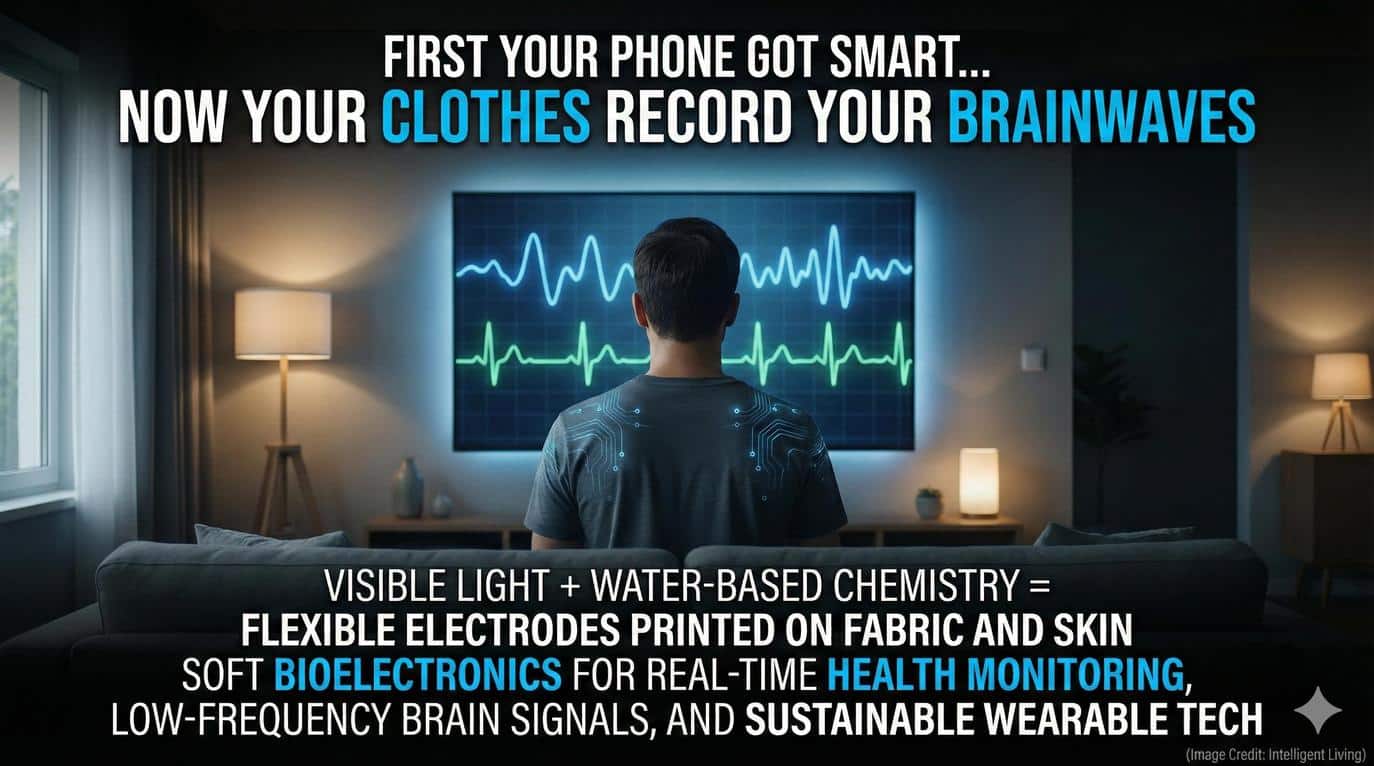
Key Milestones in Visible-Light-Driven Electrode Research
- The research introduces an initiator-free visible-light-driven aqueous polymerization (November 2025) method using water-soluble monomers to create conductive polymer electrodes.
- Visible light replaces UV in this process, enabling fabrication on sensitive surfaces, including skin and textiles.
- No hazardous chemicals or metal catalysts are required; the method works entirely in water.
- Demonstrated on living skin, the electrodes recorded brain signals from anesthetized mice more effectively than conventional metal electrodes.
- The process could lead to next-generation wearable medical sensors, flexible electronics, and sustainable manufacturing pathways.
Translating Light into Conductive Polymer Reality
Claims of creating matter with light often evoke images of particle physics or complex laboratory theory. High-energy physics experiments frequently focus on creating particle pairs from a quantum vacuum. While creating matter out of nothing from intense electromagnetic fields explores theoretical physics, the current study provides a practical application for materials science.
This study offers a practical application by using light-triggered chemistry to convert liquid precursors into conductive polymers for integrated circuits. The team engineered specific chemical building blocks to ensure the process remained safe and efficient.
Key features of this chemical breakthrough include:
- Monomers designed to be entirely water-soluble for easier application.
- Molecular units that respond specifically to visible light wavelengths.
- Targeted illumination that triggers the formation of long polymer chains.
- Thin, flexible films that maintain high electrical conductivity.
These specialized units connect instantaneously when exposed to light, producing a conductive surface that remains stable. The resulting material provides a reliable foundation for complex electronic circuits on nearly any surface.
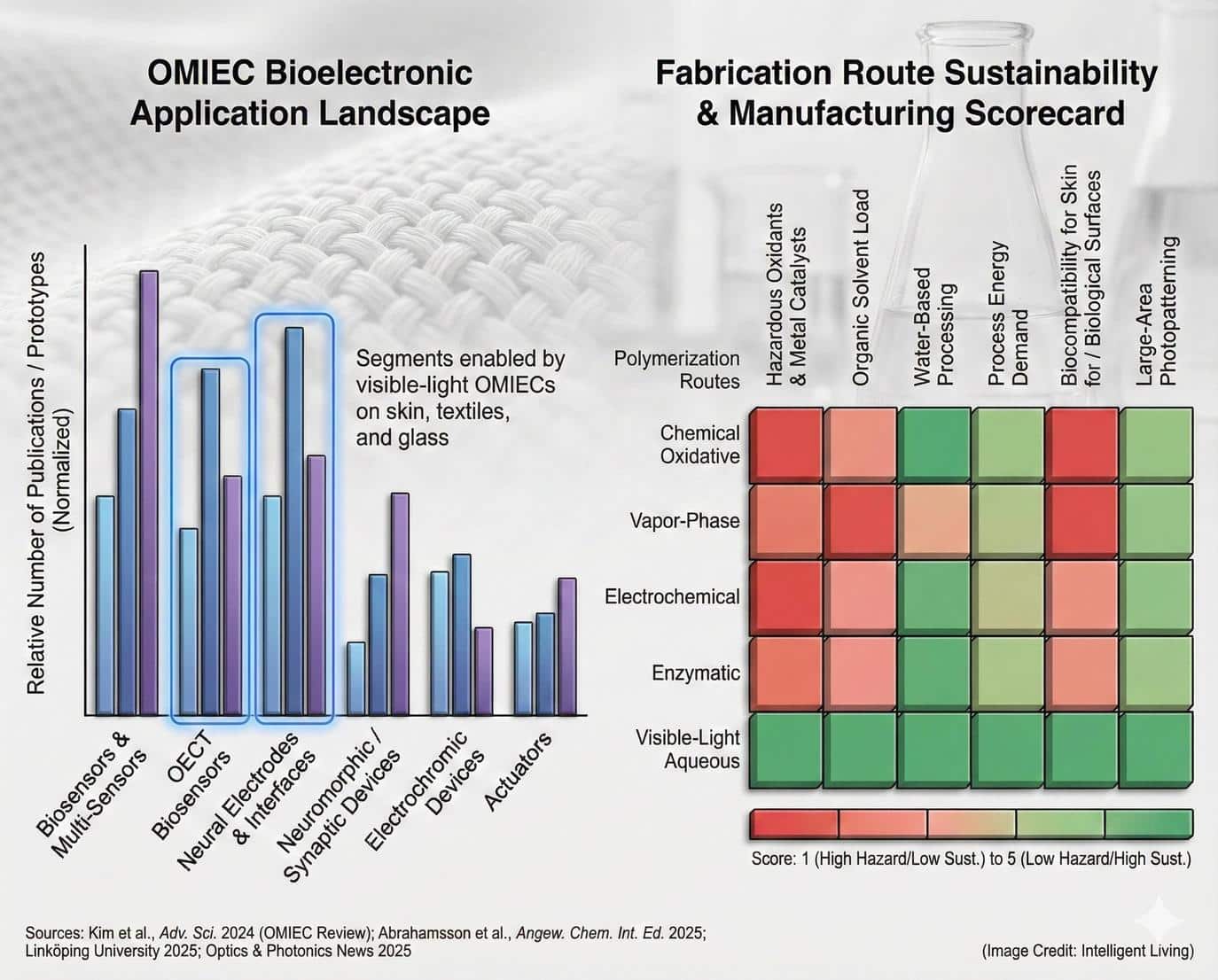
This polymerization process is groundbreaking because it operates entirely in water, without the harmful oxidants or catalysts usually needed to make conductive polymers. Light acts like a molecular switch that initiates the reaction, forming electrodes precisely where the light shines. It is an elegant example of chemistry and materials science working together to simplify electronics manufacturing while also making it safer for people and the environment.
Popular science and technology reporting has leaned into the dramatic headline language of creating matter with light while still pointing back to the underlying materials science. The real breakthrough is not mystical matter creation but a clean, controllable way to grow functional electronic structures with nothing more than light and a carefully prepared solution.
The Methodology of Visible-Light Aqueous Polymerization
The team at Linköping University began by developing a conductive polymer precursor that dissolves easily in water and responds to visible wavelengths. They applied this solution to various surfaces, including glass, textiles, and even the skin of anesthetized mice.
Researchers utilized standard visible-light sources, mirroring the output of everyday LED lamps, to illuminate targeted areas. This exposure caused the monomers to connect rapidly, forming a stable, conductive polymer film. Washing the surface with water removes any unreacted monomers, revealing precise, stable electrode patterns. These light-printed electrodes were flexible, stable, and showed excellent electrical performance.
A comparative study between the new electrodes and traditional metal alternatives revealed a significant performance gap. The light-printed versions recorded low-frequency neural signals with unprecedented precision, proving the material is both biocompatible and functionally superior for medical diagnostics. This innovation allows for electrodes to turn skin and clothing into sensors using inexpensive, accessible equipment, suggesting that future devices might even be custom-made directly on a patient’s skin for continuous health monitoring.
The entire process avoids harsh ultraviolet light, which can damage biological tissue and degrade sensitive materials. It also eliminates the need for hazardous solvents or complex manufacturing tools.
The Role of Organic Mixed Conductors in Advanced Bioelectronics
The new method centers around organic mixed ionic-electronic conductors (OMIECs). These polymers transport both ions and electrons, making them ideal for bridging the gap between biological systems and electronics. Traditional circuits rely on electrons, but human tissues like nerves and muscles use ions for electrical signaling.
OMIECs permit the seamless flow of both charge types, bridging the communication gap between digital hardware and biological tissue. This capability provides the foundation for advanced sensors and neuromorphic devices that integrate naturally with human physiology.
Aligning Bioelectronics with Global Sustainability Goals
By using visible light and water instead of industrial-grade chemicals, the process aligns with the sustainability goals shared across the tech industry. The same logic behind cleaner fabrication methods also supports low-waste sustainable manufacturing. As scientists continue to refine these methods, light-triggered fabrication could become the foundation for a new generation of organic electronics that are softer, greener, and more in tune with the human body.

The Demo that Makes it Real: Better Low-Frequency Brain Recordings in Mice
To demonstrate the performance of their new light-printed electrodes, researchers tested them on anesthetized mice. The electrodes were applied directly to the skin and illuminated to form conductive pathways capable of detecting neural signals. Experimental data confirmed that polymer-based electrodes capture low-frequency brain activity with greater fidelity than standard metal alternatives. This performance sets a crucial benchmark for the future of EEGs and noninvasive neural monitoring.
This improvement stems from the soft, skin-conforming nature of the polymer electrodes. Unlike rigid metals that can cause noise or signal distortion, the flexible organic material maintained closer contact with the skin, improving the clarity of readings. This flexibility and biocompatibility suggest future devices could record signals over long periods with greater comfort and accuracy.
Where this Could Go Next: Wearables, Smart Garments, and Gentler Medical Sensors
The potential applications for light-printed electrodes extend across the growing field of wearable technology. Because they can be printed directly onto skin or fabric using nothing more than visible light, this process could transform how health monitors and rehabilitation sensors are manufactured.
Future products may include smart garments with built-in biosensors that track movement, hydration, or muscle activity without the need for rigid hardware. These designs expand the capabilities of near-field communication and sensing directly into clothing.
Integrating Energy Harvesting and Long-Term Medical Monitoring
At the system level, these textiles will join a broader ecosystem of smart technologies driving the future of healthcare. This network combines wearables with telemedicine and data analytics to keep users closely connected to their health.
These innovations connect directly to emerging energy-efficient technologies such as wearables that harvest body heat into electricity. Together, these advances point to a future where health monitoring becomes seamless, comfortable, and sustainable. Light-printed sensors could also support gentle medical electrodes for long-term patient monitoring, reducing irritation and improving signal quality.

Sustainable Pathways for Clean Organic Electronics Manufacturing
In addition to biomedical and consumer applications, one of the most transformative features of this technology is its environmental benefit. The light-driven polymerization process operates in water and requires no toxic oxidants or catalysts. By eliminating hazardous chemicals, it significantly reduces the environmental footprint of conductive polymer manufacturing. This supports global efforts to make electronic production more eco-friendly and aligns with the ongoing trend toward low-waste, additive manufacturing.
Traditional fabrication methods often rely on complex chemical baths and high-energy curing processes that produce toxic byproducts. These conventional routines pose significant environmental challenges and require extensive safety protocols. In contrast, light-printed polymerization simplifies the workflow into a clean, energy-efficient process with minimal environmental cost. As manufacturing adopts cleaner methods like sustainable 3D printing, visible-light polymerization provides a vital route toward responsible production.
Technical and Scalability Challenges for Commercial Deployment
Despite its promise, several challenges must be addressed before this technology can move from lab experiments to commercial products. First, durability remains a key concern. Electrodes printed on skin or fabric must withstand motion, sweat, and washing without degrading or losing conductivity. Researchers also need to confirm long-term biocompatibility to ensure that repeated skin contact remains safe and irritation-free.
Scalability poses a major technical challenge. Replicating laboratory precision across expansive surfaces requires more sophisticated light-delivery systems. Successful real-world deployment also necessitates seamless integration with current power systems and electronic hardware. These steps are essential to ensure that light-printed electrodes communicate reliably with other hardware components.

The Future of Human-Centric Bioelectronic Innovation
The visible-light fabrication of conductive polymers represents a major leap forward in how we think about creating electronics that merge with the human body. This technique bridges sustainability, functionality, and human-centered design, marking a shift from rigid, factory-made components to flexible materials formed in place.
As ongoing research improves the durability and precision of these light-printed electrodes, the line between biological and digital systems will continue to blur, ushering in a new era of sustainable, on-demand electronics. Prioritizing water-soluble chemistry and gentle light over industrial toxins establishes a sustainable blueprint for the electronics industry.
This transition suggests a future where health monitoring evolves into a quiet, invisible component of daily life rather than an invasive medical requirement. These soft, light-printed sensors ensure that the future of wearable technology is as comfortable as it is capable, keeping us connected to our well-being without compromising our natural environment.
Common Questions About Visible-Light Printed Sensors
How does visible light create functional electrodes?
The process uses a specific liquid precursor that reacts to visible wavelengths, causing molecules to link together into a solid, conductive polymer.
Is printing electronics on skin safe for long-term use?
Current tests use biocompatible materials and gentle LED light, though clinical trials are necessary to confirm long-term safety for consumer use.
Can these light-printed sensors survive a washing machine?
Improving the durability of fabric-printed electrodes against moisture and mechanical stress is a primary focus for researchers moving toward commercial products.
Why is water-based polymerization better for the environment?
It eliminates the need for toxic catalysts and hazardous solvents, significantly reducing the chemical waste typically associated with electronic manufacturing.
Will these electrodes replace traditional metal biosensors?
They offer superior signal clarity for low-frequency signals and better comfort, making them a likely successor for wearable and long-term medical monitoring.


