
Sustainability has become a non-negotiable priority for businesses across various industries – and for good reason. Extreme weather, deforestation, and pollution are just some of the environmental issues we all face and will continue to deal with in the upcoming years.
In the current climate (no pun intended), the impact of traditional manufacturing on the environment – from resource depletion to waste generation – is becoming increasingly hard to ignore. For this reason, consumers, governments, and even businesses themselves are pushing for more sustainable practices and environmentally friendly processes.
But these pressures aren’t just coming from external sources.; internally, businesses also recognize that sustainable practices often lead to cost savings, improved efficiency, and a stronger brand reputation. This is, at least partly, the reason why 3D printing, also known as additive manufacturing, is becoming increasingly popular.
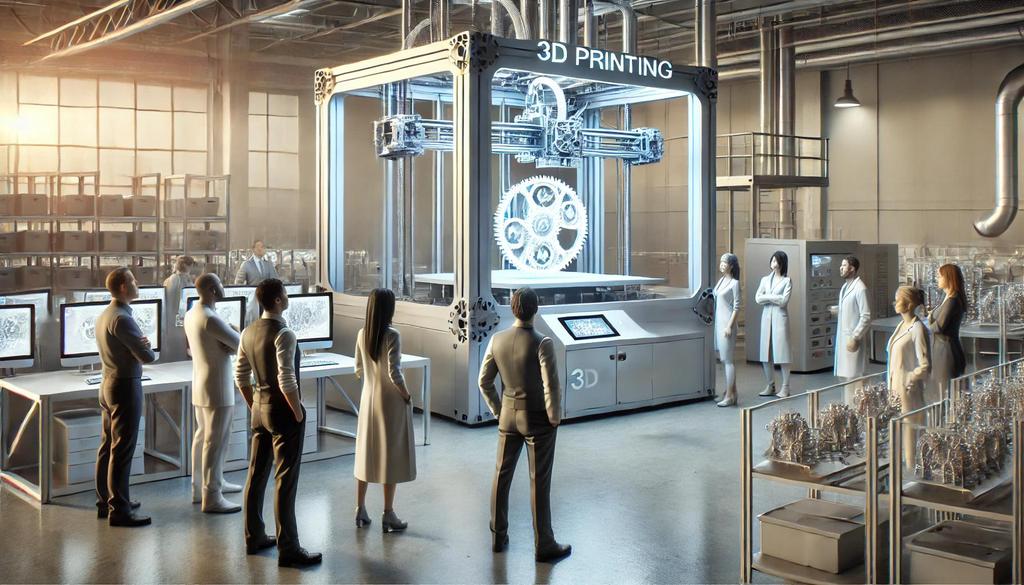
What Is 3D Printing and Why Should You Care?
If you’ve been in the manufacturing sector for a while, you’ve seen technologies come and go. But 3D printing has staying power largely because of the versatility it offers.
But first, what is 3D printing? In short, 3D printing involves creating three-dimensional objects from digital files by layering materials – like plastic, metal, ceramics, or even organic matter – on top of each other. This method allows for a high degree of precision and customization, which can be a huge asset in various manufacturing scenarios.
Best of all? 3D printing can drastically reduce waste, a significant advantage over traditional subtractive manufacturing processes. Instead of carving out parts from larger blocks of material, which often leaves excess waste, 3D printing uses only the material that’s needed, minimizing waste from the get-go. And that’s just scratching the surface of its sustainability benefits.
Here are some of the ways 3D printing is revolutionizing sustainable manufacturing at the moment.
1. Cutting Down Waste
In conventional manufacturing, producing a part often means cutting away excess material – a inefficient and costly process. By contrast, 3D printing builds objects layer by layer, using only what’s necessary.
This cuts down on raw material waste and reduces the energy required to produce the item. You’re looking at a method that inherently supports a circular economy model, where waste is minimized and resources are reused.
On top of this, 3D printing allows for on-demand production, meaning you can print exactly what you need when you need it. This means there’s no need to have large inventories, which has two benefits: it cuts down on the resources required for storage and decreases the likelihood of excess products going to waste.

2. Innovative Materials
Another way 3D printing is revolutionizing sustainable manufacturing is through the use of innovative materials. In recent years, there’s been a surge in the development of eco-friendly printing materials, such as biodegradable plastics, recycled composites, and even materials derived from waste products.
For instance, companies are now experimenting with materials made from recycled ocean plastic and food waste. This reduces waste and repurposes it, turning a problem into a solution.
3. Software Advancements
The software behind 3D printing is just as crucial as the hardware. Tools like Autodesk Fusion 360, Onshape, and Creo PTC are transforming the design-to-production process.
These platforms enable intricate design simulations and optimize material usage, ensuring that every print is as efficient and waste-free as possible. With these tools, you can test multiple designs virtually before committing to a physical prototype, cutting down on material usage and energy consumption.
For example, the capabilities of PTC 3D Creo offer a robust environment for parametric and direct modeling, making it easier to refine designs and achieve optimal efficiency. With augmented reality design visualization, it’s easy to handle even the most complex geometries and assemblies, which is vital in ensuring that the 3D printing process remains both sustainable and precise.

4. Localized Production
One of the most exciting advantages of 3D printing is its potential to localize production. What does this refer to? Well, by printing products on-site, companies can greatly reduce the need for shipping and transportation, which are major contributors to carbon emissions.
When you think about it, the possibility of reducing or even eliminating the need to ship products halfway around the world is nothing short of revolutionary. But this kind of localized production isn’t just a possibility – it’s already happening in various industries, from aerospace to healthcare.
5. Transforming Supply Chains
3D printing is changing not only how products are made but also entire supply chains. How? By producing parts and products on demand, companies can drastically reduce lead times and respond more quickly to market changes. This can not only make businesses more competitive but also help reduce the environmental impact of traditional, often inefficient, supply chain models.
Finally, 3D printing also supports the trend toward mass customization. Instead of producing thousands of identical items, companies can now create tailored products that meet specific customer needs without the waste associated with mass production.
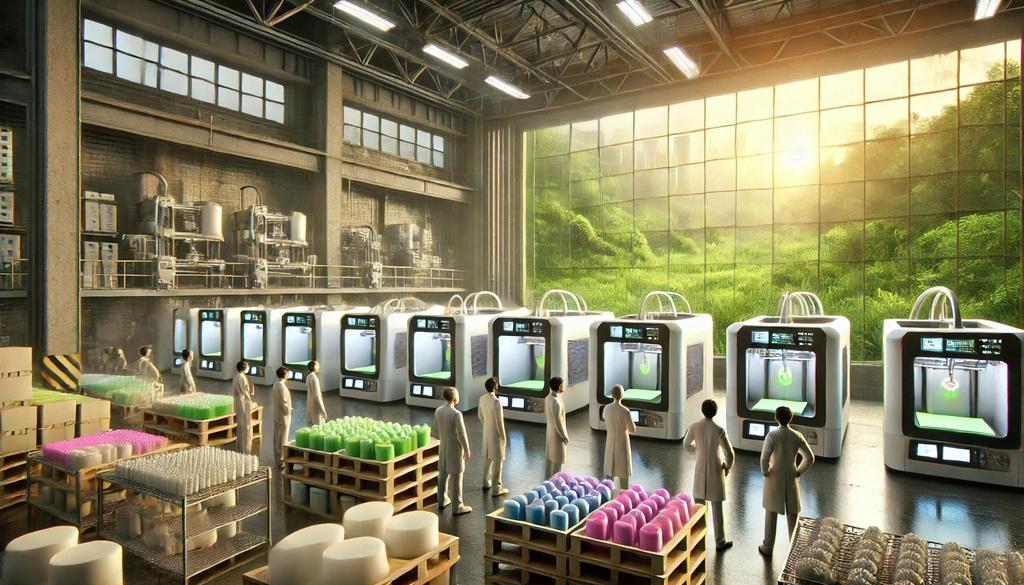
3D Printing Marks Future of Sustainable Manufacturing
As we delve deeper into a world increasingly marked by ecological challenges, integrating 3D printing into sustainable manufacturing practices is not merely an option; it’s a vital necessity. This technological innovation offers a blueprint for how industries can pivot from traditional methods that often exploit and exhaust natural resources toward processes that harmonize with the environment.
The benefits discussed—from waste reduction to innovative material use and localized production—unfold a narrative that paints a brighter future not just for manufacturers but for every stakeholder involved. It’s about reshaping the very fabric of the supply chain and redefining customer relationships through heightened adaptability and responsiveness. Such transformation leads us to recognize that sustainability is less about sacrificing efficiency and more about reinventing it.
Moreover, adopting advanced software tools in 3D printing enhances design innovation while adhering to eco-conscious principles. This symbiosis of technology and environmental stewardship fosters a culture of responsible production where continual improvement is rooted in an ethos of care for our planet and future generations.
As businesses increasingly progress towards these sustainable practices, the challenge now rests upon consumers, businesses, and policymakers alike to encourage and amplify these efforts. We play an integral role in this burgeoning revolution by supporting companies that prioritize sustainability and advocating for policies that enable these practices. The future of manufacturing is here, and it beckons us to join in the quest for solutions that not only meet today’s needs but ensure the well-being of our environment for years to come.
Let’s not just stand by as observers; instead, let’s become advocates for sustainable manufacturing practices that redefine our relationship with manufacturing and the world at large. With 3D printing leading the charge, the potential for transformative change is immense, and our collective responsibility is to nurture it.


