
The whole world relies on Biodiversity and Ecosystem Services (BES) – services based around natural ecosystems. BES include water security, food provisions, regulation of air quality, and all necessities coming from nature vital to maintaining the stability and health of economies and communities. More than 55% of global GDP ($42tn/£32tn) depends on high-functioning BES – meaning tens of trillions of dollars are at stake.
Unfortunately, major economies in Europe, Southeast Asia, and the United States already have deteriorating BES. According to a new report by the Swiss Re Institute, thirty-nine countries (20% of the world) have ecosystems in a fragile state on more than 30% of their land. These countries are at risk of ecosystem collapse due to a decline in biodiversity caused by the destruction of wildlife and their habitats.
Lead author of the research, Oliver Schelske, said:
If the ecosystem service decline goes on [in countries at risk], you would see then scarcities unfolding even more strongly, up to tipping points.
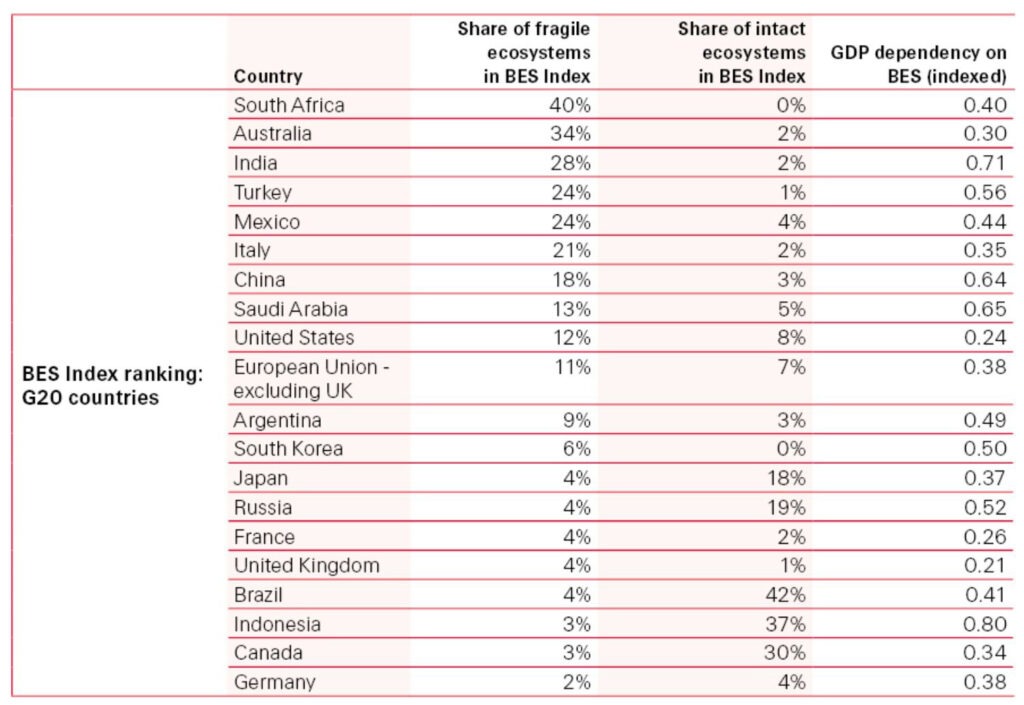
The Swiss Re Institute provides a BES Index which enables governments and businesses to factor in ecosystem issues into economic decision-making. Insurance companies can use the data to develop relevant solutions for protecting communities at risk due to poor-functioning BES.
Swiss Re’s Chief Executive Officer, Christian Mumenthaler, said:
There is a clear need to assess the state of ecosystems so that the global community can minimize the further negative impact on economies across the world. This important piece of work provides a data-driven foundation for understanding the economic risks of deteriorating biodiversity and ecosystems. In turn, we can inform governmental decision-making to help improve ecosystem restoration and preservation. We can also support corporations and investors as they fortify themselves against environmental shocks. Armed with this information, we can also ensure the provision of stronger insurance services.
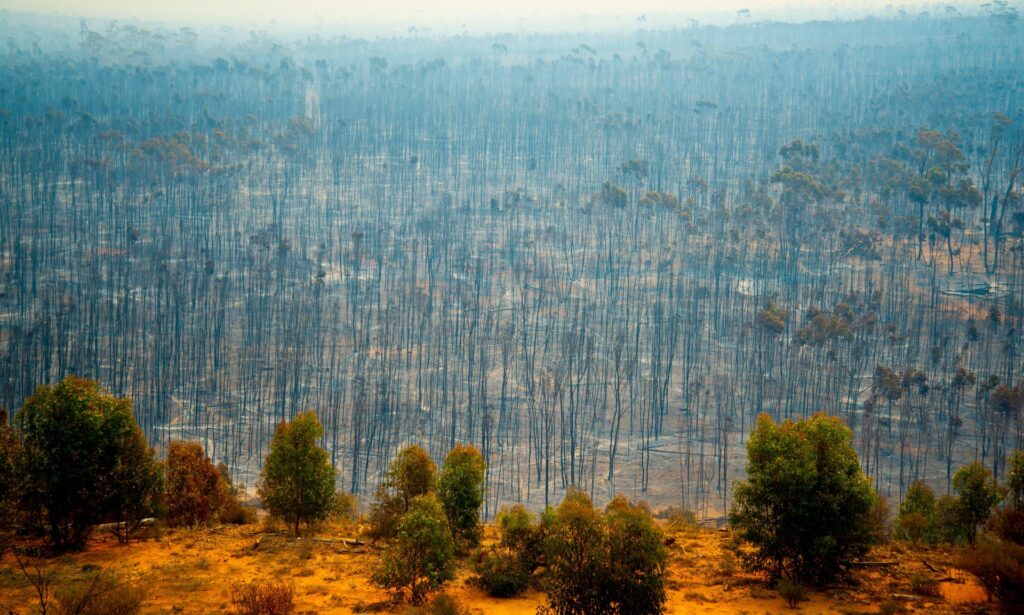
The countries with the lowest BES ranking include Australia, Bahrain, Cyprus, Israel, Kazakhstan, Malta, and South Africa. Others at risk include Belgium, India, Kenya, Nigeria, Pakistan, Spain, and Vietnam. These countries have a higher risk of harming their BES, mainly because a substantial portion of their economy relies on farming or natural resources, so they have more to lose. The index highlights the importance of conservation and sustainable development for the world’s economies’ long-term sustainability.
Swiss Re’s chief research officer, Jeffrey Bohn, said:
This is the first index to our knowledge that pulls together indicators of biodiversity and ecosystems to cross-compare around the world, and then specifically link back to the economies of those locations. The index was designed to help insurers assess ecosystem risks when setting premiums for businesses. Still, Bohn said it could have a wider use as it allows businesses and governments to factor biodiversity and ecosystems into their economic decision-making.
Last month, the UN announced that the world’s governments have all failed to meet a single target to stem biodiversity losses over the previous ten years. According to the Swiss Re report, only one in seven countries has intact ecosystems covering over 30% of their country’s area.
Duke University’s professor of public policy, economics, and environment, Alexander Pfaff, said:
Societies, from local to global, can do much better when we not only acknowledge the importance of contributions from nature – as this index is doing – but also take that into account in our actions, private and public. It’s important to note that the economic impacts of the degradation of nature began well before the ecosystem collapse. Naming a problem may well be half the solution, [but] the other half is taking action.
A functioning economy depends on a strong BES. Global medical research also depends on thriving ecosystems. Almost half of all medicines are sources from natural habitats.


