
Modern marketing no longer struggles with a lack of data. It struggles with overload.
Every second, conversations happen across social media platforms, forums, blogs, news sites, review pages, and video comments. Customers express opinions, competitors launch campaigns, influencers shift narratives, and trends emerge and fade in real time.
The challenge is no longer finding information — it is understanding what actually matters.
This is why a growing category of digital intelligence tools has become essential in modern marketing stacks: social listening and brand monitoring platforms, including solutions such as BrandMentions, which help organizations track, structure, and interpret large-scale online conversations across the web.
These tools sit at the intersection of marketing, analytics, and reputation management, translating unstructured digital noise into actionable insight.
Marketing Has Shifted From Publishing to Listening
For a long time, digital marketing focused heavily on output:
- publish content
- run ads
- optimize keywords
- increase reach
- grow followers
But today, that model is incomplete.
Audiences are already talking, with or without brands participating. The most valuable insights often come from conversations that were never intended for marketing analysis in the first place.
Social listening changes the direction of strategy. Instead of starting with “What should we say?”, brands now ask:
- What are people already saying?
- What problems keep appearing?
- What language do customers actually use?
- Where are frustrations or unmet needs forming?
At the center of this shift is online brand monitoring, a discipline supported by tools like BrandMentions that track mentions, sentiment signals, and contextual associations across the digital ecosystem.
The Real Value Is in Patterns, Not Posts
A single mention rarely matters. A pattern does.
When dozens or hundreds of unrelated users begin discussing the same issue, product feature, or sentiment, it signals something deeper than engagement — it signals market reality.
Modern digital teams increasingly look for:
- recurring complaints about a competitor
- rising demand for specific features
- sudden sentiment shifts after product updates
- emerging language trends used by customers
- unexpected communities forming around a topic
This is where social listening moves beyond “tracking” and becomes strategic interpretation.
Why Traditional Analytics Is No Longer Enough
Web analytics tools are powerful but limited. They show what happens on owned platforms, websites, landing pages, and apps.
But most brand perception is shaped elsewhere:
- Reddit discussions
- X (Twitter) threads
- YouTube comments
- niche forums
- review platforms
- blogs and news mentions
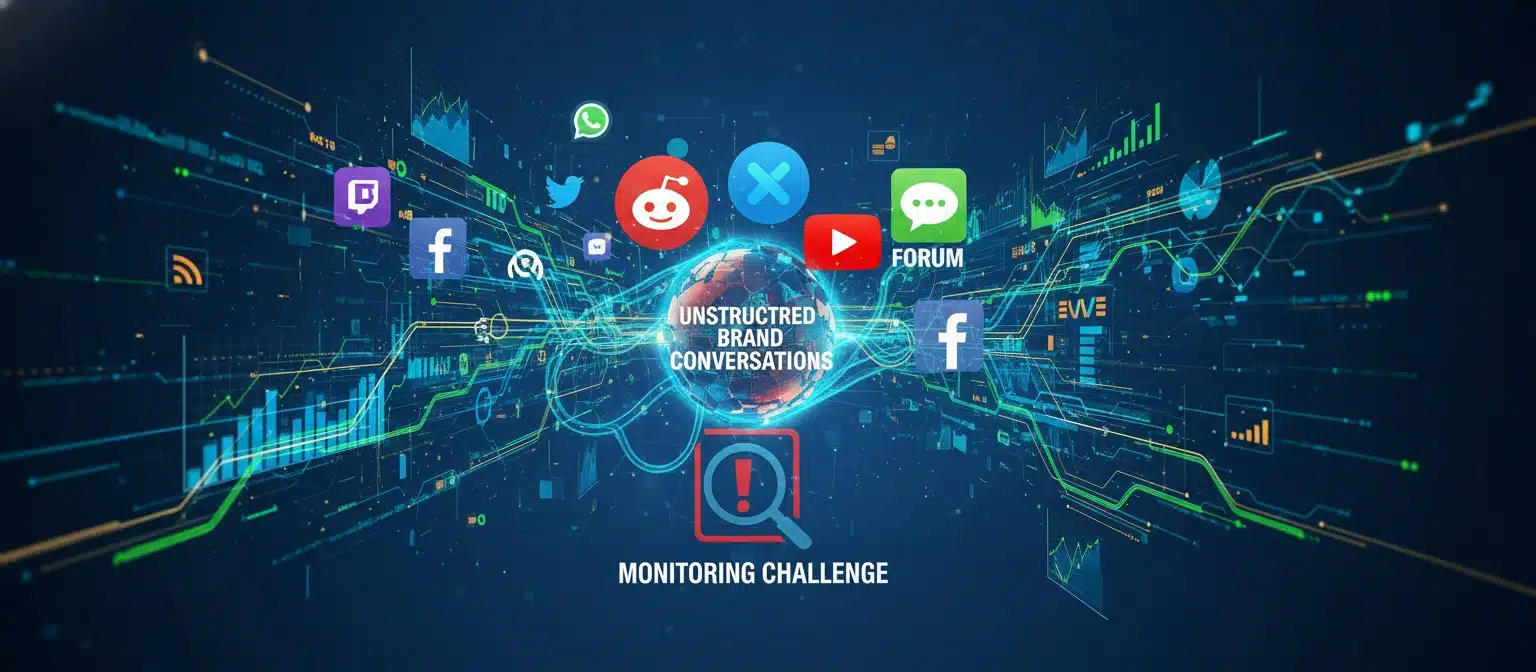
These spaces are unstructured, fast-moving, and often ignored by traditional reporting systems.
Yet they frequently influence buying decisions more than official brand messaging.
This is why the category of brand monitoring and social intelligence tools has expanded rapidly, with platforms like BrandMentions playing a role in helping businesses unify fragmented signals into a single operational view.
The Rise of Conversation-Driven Strategy
Forward-thinking marketing teams are increasingly organizing strategy around conversation signals rather than campaign cycles.
Instead of planning purely based on quarterly calendars, they adapt based on:
- emerging discussions
- sentiment volatility
- viral topics
- competitor visibility spikes
- audience frustration points
This creates a more responsive marketing loop:
listen → interpret → act → measure → adjust
Within this loop, tools like BrandMentions function as the listening layer, feeding real-time insights into decision-making systems.
From Brand Awareness to Narrative Control
In the past, the goal of marketing was simple: increase awareness.
Now, awareness is only the beginning. The more important question is:
“What narrative is forming around the brand when we are not in the room?”
That narrative is shaped across thousands of micro-interactions online. Effective online reputation management is essential for maintaining control of that narrative.
Social listening platforms, particularly brand monitoring systems such as BrandMentions, allow companies to detect:
- misconceptions before they spread
- product issues before they escalate
- advocacy from unexpected users
- competitor comparisons in real time
- sentiment shifts after campaigns or releases
This turns reputation from a static metric into a continuously evolving system. As Forbes notes on brand reputation management, staying ahead requires constant vigilance across all digital touchpoints.
Why Speed Matters More Than Volume
One of the most underestimated advantages of social listening is timing.
Most companies eventually see trends. The difference is when.
Early detection of signals can lead to:
- better product decisions
- more effective campaigns
- faster crisis response
- stronger competitive positioning
In this context, BrandMentions and similar platforms are not just analytics tools, they are early-warning systems for digital perception shifts.

The Future of Digital Marketing Is Interpretive
Marketing is increasingly becoming an interpretive discipline.
Success will depend less on how much content a brand produces and more on how effectively it understands:
- what audiences are signaling
- how narratives form online
- where attention is shifting
- what meaning is being created in real time
In this environment, the most valuable marketing teams will not be those that speak the loudest.
They will be the ones that listen best and act fastest on what they hear.


