
A few years back, scientists invented something called the Molecular Solar Thermal (MOST) system – it takes solar energy and stores it in a liquid medium then later releases it as heat. Now, the team at Sweden’s Chalmers University developed a special window film using this technology. The clear MOST film can be applied to the inside of windows in energy-efficient buildings to absorb heat and block it from entering the room during the day, then release that heat at night.
The film incorporates a norbornadiene–quadricyclane molecule that has the unique ability to capture energy from the sun’s rays and release it later as heat. The process causes the transparent polymer film to take on an orange-yellow color when not being directly exposed to sunlight. The researchers that developed this have published a report in the scientific journal Advanced Science showing how it works.
Normally, on a hot summer day, it is necessary to turn up the air conditioning or fans as a means to deal with the suns heat. As a result, we are constantly combating the thermal energy with other forms of energy (energy-intensive systems) to make our stay indoors bearable. That’s why the researchers are proposing a method that utilizes the heat and distributes it evenly over a longer period instead.
Chemist Kasper Moth-Poulsen, who is leading the research, said:
The aim is to create a pleasant indoor environment even when the sun is at its hottest, without consuming any energy or having to shut ourselves behind blinds. Why not make the most of the energy that we get free of charge instead of trying to fight it?
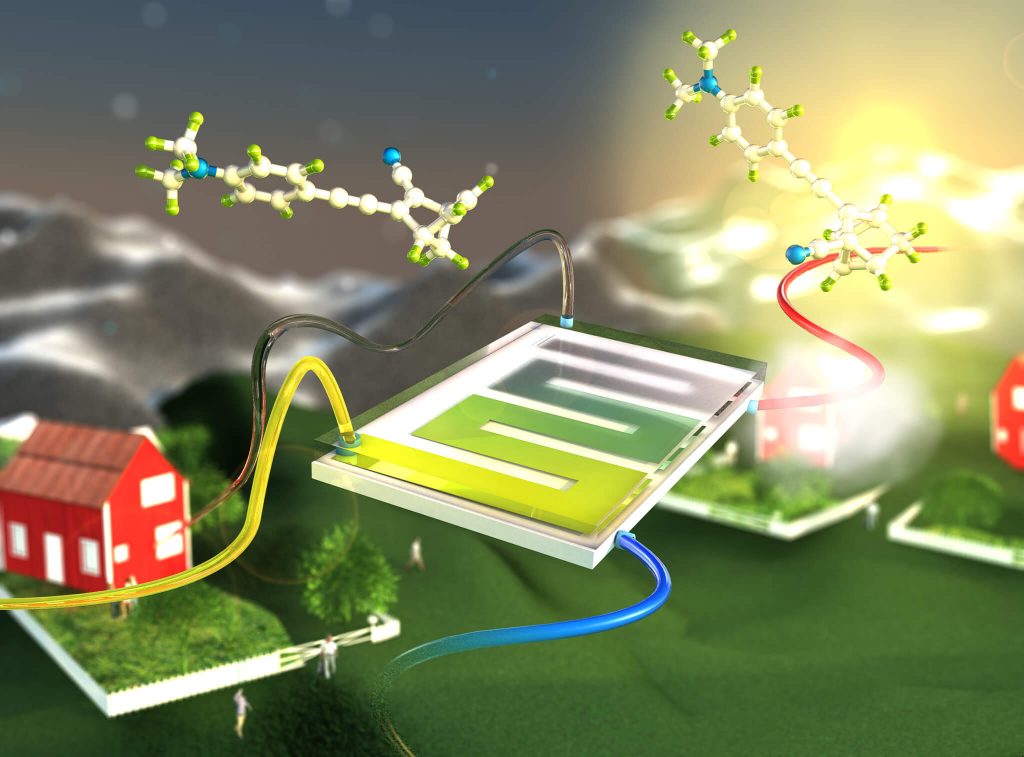
How does the molecule work? When it’s struck by the sun’s rays it captures photons and simultaneously changes form. In other words, when it captures the rays incoming photons it temporarily becomes another type of molecule with exactly the same atoms but in a different arrangement – the molecule is isomerized. Then, when the sun sets and is no longer shining on the window film, the molecule reverts back to its original form, and in so doing, releases heat for up to eight hours after the sun has set.
When this happens, the need for electricity goes down because the film holds onto much of the solar heat, keeping it from getting into the room. The need for air conditioning during the day is reduced as the interior of the building stays cooler. In addition, the need for heating during the night is reduced as the heat being released warms up the interior of the building.
Businesses could save a lot of money on electric bills using this film. Moth-Poulsen said:
For example, airports and office complexes should be able to reduce their energy consumption while also creating a more pleasant climate with our film, since the current heating and cooling systems often do not keep up with rapid temperature fluctuations.
To make this film available to the public, the researchers are now working on both bringing down the price of the molecule and increasing its concentration within the film. But according to Moth-Poulsen they are very close to making it happen.


